Kate Andrews

Kate Andrews

Kate Andrews is deputy editor of The Spectator’s World edition.

What does Europe teach the UK about a Covid second wave?

21 min listen

As the UK seems to enter a second wave of coronavirus infections, Europe is again the guide on the trajectory of the virus and the best strategy to tackle it. But from Sweden to Belgium, which European country should we follow, and is anyone in government listening? Kate Andrews talks to Fraser Nelson and Swedish economist Fredrik Erixon.

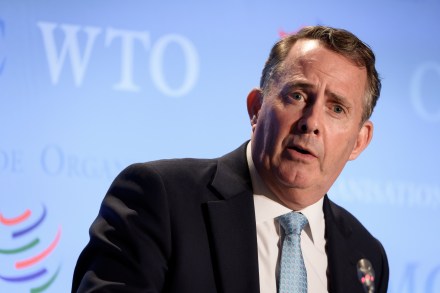
Fox trot: Liam Fox’s plan for a free trade revolution

I meet Liam Fox at a tavern on St Martins Lane. It’s spitting with rain outside the pub, covered in wood panelling floor-to-ceiling and eclectic memorabilia on every wall. We’re amongst just a handful of patrons, surrounded by empty tables spread out in accordance with social distancing guidelines. ‘People will say in my own constituency that they’re operating at about 40 per cent capacity’, Fox mentions when we’re talking about the prospects of a V-shaped recovery. He’s not optimistic: ‘It's really hard to say... maybe is the answer’.

What’s the logic behind local lockdowns?

One in seven Britons is now under increased lockdown restrictions, after a return of measures in the north-east added an additional two million people to the list. Those in Northumberland, Newcastle, Sunderland, North and South Tyneside, Gateshead and County Durham will not be able to mix with other households (outside of support bubbles) from midnight, while restaurants, bars and pubs will be subject to a 10 p.m. curfew. Health Secretary Matt Hancock announced the latest lockdown measures in the House of Commons this morning, citing a rise of Covid-19 cases in the area. Despite more than ten million people in the UK now being subject to some level of increased restrictions, the official metrics for deciding whether an area will be put into lockdown has not been published.

Is unemployment about to surge?

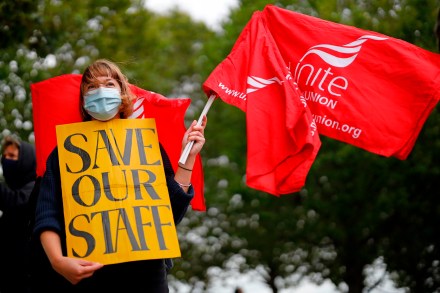
Despite experiencing the largest economic contraction in over 300 years, UK unemployment figures haven’t budged for months. The furlough scheme seems to have proved successful in shielding many jobs from getting the immediate axe, while those who were made redundant often didn’t appear in the official figures as they were not immediately looking for work. But today’s labour market overview from the ONS shows they have started to tick upward: unemployment is now at 4.1 per cent, 0.3 percentage points up from last year and 0.2 points up from the last quarter.  Breaking down the rate by age, it’s clear the young have suffered the most so far: unemployment for 16 to 24-year-olds is up 76,000 this year, now totalling over half a million.

Is Biden better for Brexit Britain?

9 min listen

While Congress Speaker Nancy Pelosi this week gave an ultimatum to the British government over the latter's plans to breach international law, it's clear that London frequently finds Trump a difficult partner. So at the end of the day - is Biden better for negotiating a trade deal? Freddy Gray talks to the Spectator's Economics Correspondent, Kate Andrews.

Will the economy continue to bounce back?

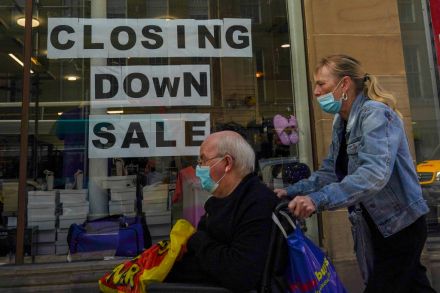
The UK economy continues to bounce back – but it’s the coming months that could pour cold water on a V-shaped recovery. The economy grew 6.6 per cent in July, according to data from the Office for National Statistics, with the return of pubs, restaurants, hairdressers and more non-essential shops giving us another boost back towards pre-Covid levels. But there’s still a long way to go: despite a record-breaking growth rate between May and July, Britain is still nearly 12 per cent below its GDP level in February 2020, having experienced a record-breaking contraction – the biggest seen in 300 years, and the worst of any major economy during the crisis so far.

A question of priorities: should tackling climate change trump all else?

24 min listen

In the last episode of this miniseries on climate change, Bjorn Lomborg argues that climate change is important, but solving it shouldn't come above all else. So what are the trade offs involved with a green agenda, especially when it comes to lifting the poorest in the world out of poverty? Kate Andrews discusses with Bjorn and Matt Ridley and asks - is it really an either/or?Bjorn Lomborg is the President of the Copenhagen Consensus Center and author of False Alarm. Matt Ridley is a Conservative peer, journalist, and author of How Innovation Works. To hear all episodes in this series, click here.

The vaccine goalposts have shifted

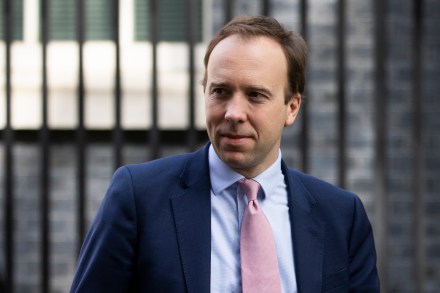
Matt Hancock provided a vaccine update on Monday, explaining that the chances of a drug being ready by early next year are ‘looking up’. With trials pending in the UK, USA and Brazil, the Oxford-AstraZeneca vaccine could be approved this year, although the Health Secretary he conceded it would more likely come in spring 2021. He added that doses are already being manufactured so that it will be ready to roll-out the moment it does receive approval.  We’ve heard this all before.

Road to Net Zero: how to achieve a green economic recovery

34 min listen

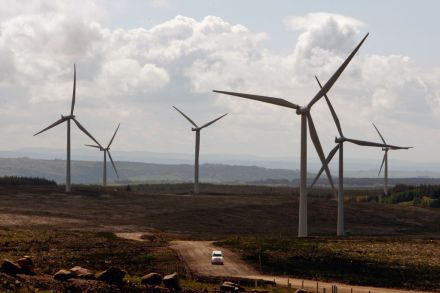
As the UK faces its worst economic contraction in 300 years, there have been growing calls to adopt a ‘green recovery’. But what does that mean? While renewable energy may be getting cheaper, can it really meet our energy demands? And has the Covid crisis set back the government on its path to reaching net zero carbon emissions by 2050? To answer all this and more, Kate Andrews, the Spectator’s economics correspondent, is joined by Kemi Badenoch MP, minister for equalities; Chris Stark, chief executive of the Committee on Climate Change; and Keith Anderson, chief executive of Scottish Power. This podcast is kindly sponsored by Scottish Power.

Is innovation the answer to climate change?

20 min listen

Can human innovation stop climate change, or will it simply manage and delay the challenges it poses? In the second of this mini podcast series featuring Bjorn Lomborg and Matt Ridley, host Kate Andrews discusses with Bjorn and Matt whether their optimism is misplaced.

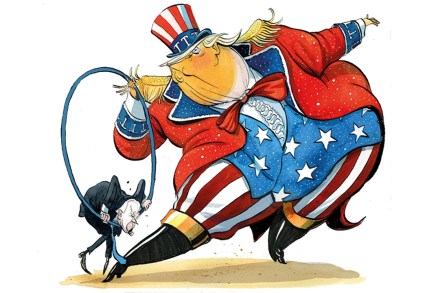
The Trump Show: he could just win again

35 min listen

With protests in American cities continuing and the Democrat and Republican conventions drawing to a close - are there signs that Donald Trump could win again? (00:45) Plus, could planning reforms be the next Tory battle? (13:05) And finally, can daily commutes really be enjoyable? (25:45)With editor of the Spectator's US edition Freddy Gray; the Spectator's economics correspondent Kate Andrews; the Spectator's political editor James Forsyth; economist and author Liam Halligan; the Spectator's features editor; and author Sara Yirrell.Presented by Cindy Yu. Produced by Cindy Yu and Max Jeffery.

Will the next U-turn be on face masks at work?

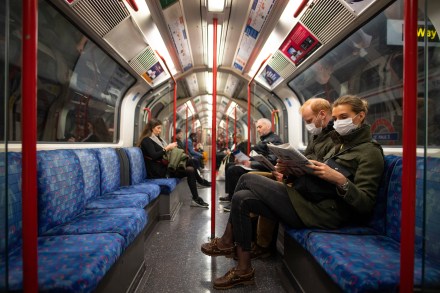
There’s a new trend emerging when it comes to Covid-19 policy: where Scotland leads, England follows. In recent weeks, decisions taken by Nicola Sturgeon have – eventually – been adopted by the UK government for England: first, the U-turn on how A-level and GCSE results would be attributed, and today another U-turn on face masks in schools.When Scotland announced face masks would be made mandatory for pupils earlier in the week, the government remained adamant that this would not be required in English schools. But within days, the advice quite substantially changed, now requiring secondary school students in local lockdown areas to wear them in the corridors and communal areas.

Don’t Panic! How to talk about climate change

23 min listen

Can the conversation around climate change all too often get heated, hysterical, and panicked? Should we be appealing for more calm in the climate debate? In the first of this mini podcast series featuring Bjorn Lomborg and Matt Ridley, host Kate Andrews challenges Bjorn and Matt on their views over the best way to conduct what some say is the most important debate of our lifetimes.

Britain’s £2 trillion debt problem

12 min listen

UK debt has hit £2 trillion, the Office for National Statistics said today - an increase of over £200 billion on last year. What does this mean for the economy, how does the UK compare to the rest of Europe, and does Boris Johnson plan to keep on spending? Katy Balls speaks to Fraser Nelson and Kate Andrews.

Can Britain get its record-high debt under control?

Last month, Britain joined the club of countries whose national debt is greater than 100 per cent of economic output. According to an Office for National Statistics update, public debt exceeded £2 trillion, taking the debt to GDP ratio over 100 per cent for the first time in 60 years. A fast economic recovery will prove vital for getting the Britain’s deficit under control Crossing this mark doesn’t come as much of a surprise given the copious amounts of spending the UK has done on Covid-related policy. July saw the fourth highest borrowing of any month on record – the top three coming in the previous three months when the UK was under strict national lockdown.

Where will the next local lockdown be?

10 min listen

Birmingham and Oldham are on the brink of reentering lockdown, with cases in both rising significantly in comparison to the rest of the country. But how severe is the outbreak, and can the government risk shutting down the UK's second largest city? Cindy Yu speaks to Kate Andrews and Katy Balls about the contenders for Britain's next local lockdown, and also asks whether there are alternatives to the 14-day quarantine for returning holidaymakers.

Why has the government scrapped Public Health England?

12 min listen

Matt Hancock today confirmed that Public Health England will be scrapped and replaced by a new National Institute for Health Protection, which will be led by Baroness Dido Harding - who currently runs the Test and Trace scheme. John Connolly speaks to Katy Balls and Kate Andrews about why.

Public Health England scrapped over handling of Covid crisis

Health Secretary Matt Hancock is set to scrap Public Health England (PHE) – the body that was tasked with preparing the UK for a pandemic – according to the Sunday Telegraph. The paper reports it will be replaced by the National Institute for Health Protection. Its remit will include pandemic planning and oversight of the NHS Test and Trace programme. The government is moving quickly, with plans to overthrow PHE and have the new body up and running by September. The timeline of a potential resurgence of Covid-19 this autumn is firmly in mind. PHE, a seven-year-old quango, has faced waves of criticism during the Covid crisis.

Should France have been kicked off the greenlist?

12 min listen

After much speculation, France has been put on the quarantine list, along with Netherlands, Monaco, and Malta. But do the numbers really back it up? Cindy Yu talks to Fraser Nelson and Kate Andrews about this decision. Also on the podcast, further lockdown easing and, are schools actually returning?