Kate Andrews

Kate Andrews

Kate Andrews is deputy editor of The Spectator’s World edition.

Is the UK taking advantage of its vaccine success?

From our UK edition

UK GDP ever so slightly edged up in February, growing 0.4 per cent according to today’s update from the Office for National Statistics. No surprises here: there were no changes to lockdown restrictions between January and February, which gave the economy little room for manoeuvre. The ONS has revised January’s GDP fall from 2.9 to 2.2 per cent: still a contraction, but another good indicator that businesses have significantly adapted to lockdown rules, which has meant that this winter’s lockdown didn’t plunge GDP down to record levels as it did last spring.

Why is Boris talking down Britain’s vaccine success again?

From our UK edition

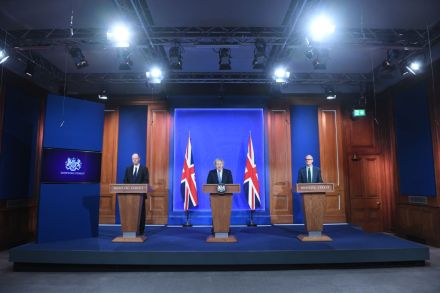
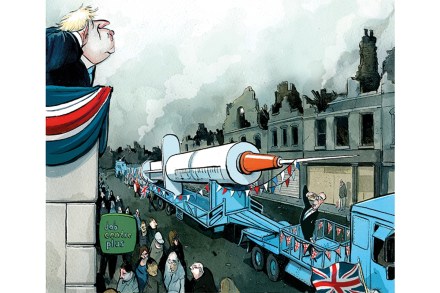
A few months ago, the Prime Minister was describing the jabs as the 'scientific cavalry’ that was on its way to save us from our Covid – and lockdown – woes. But now the cavalry has arrived in the form of a vaccine rollout of unqualified success, the rhetoric has changed. The vaccine is no longer enough, according to Boris. Today we've seen another worrying shift in the PM’s words. In an interview with the BBC, Johnson broke the link between the UK's ability to reopen and its vaccination programme success: The reductions in these numbers, in hospitalisations and in deaths and in infections, has not been achieved by the vaccination programme...

A windfall tax would only hurt our weakened economy

From our UK edition

The calls for tax hikes is ramping up. Last December the Wealth Tax Commission recommended a ‘one-off’ 5 per cent levy on the assets of Britain’s wealthy to pay for the growing costs of Covid-19. In January Oxfam followed suit, using its yearly inequality report to call for big taxes on wealth and high incomes. Now, it’s the International Monetary Fund’s turn, recommending not only a temporary income tax hike for high earners, but also a windfall tax — that is, a tax on ‘excess profits’ — on businesses that faired well and profited during the pandemic. The concept of wealth taxes on individuals is bad enough.

Roadmap to nowhere: will life ever return to normal?

From our UK edition

38 min listen

Will life ever return to normal? (00:50) Is the government pandering to statue protestors? (14:30) And what’s Prince Harry’s new job? (27:55)With Kate Andrews, the Spectator's economics editor; Spectator columnist Matthew Parris; Spectator contributor Alexander Pelling-Bruce; Historic England CEO Duncan Wilson; Dominic Green, deputy editor of the Spectator's US edition; and Sam Leith, literary editor of the Spectator.Presented by Lara Prendergast.Produced by Max Jeffery, Cindy Yu and Arsalan Mohammad.

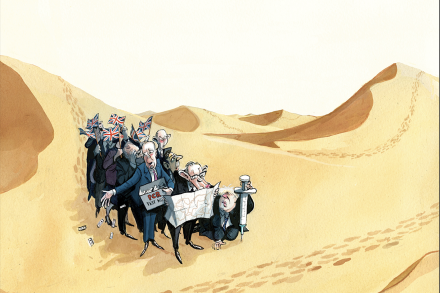
Britain’s vaccine success was supposed to lead to freedom. What happened?

From our UK edition

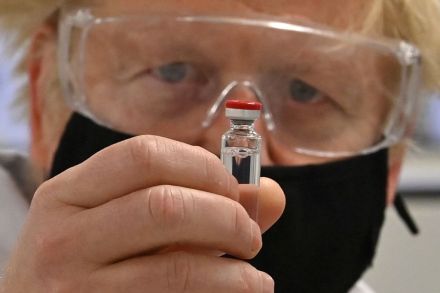
In November, when cases were surging and a second lockdown was under way, Boris Johnson made a big promise: things might look bleak, he said, but the ‘scientific cavalry’ would arrive. It duly did, with a vaccination programme that became the envy of Europe. The mood of the country lifted. Today, Britain is still on course to become the first country in Europe to vaccinate its way out of the pandemic — and lockdown. The economy can reopen in time for summer: truly a great escape. Science achieved the seemingly impossible. Produced in record time, Covid vaccines are proving more effective than most predicted. In Britain, cases and deaths have fallen by 95 per cent since the latest peak, a stunning descent.

Weathering the pandemic: has cloud computing become essential?

From our UK edition

28 min listen

The pandemic has led to a surge in digitisation in so many aspects of our lives. Cloud computing, in particular, has been a cornerstone of this time - not least for stay at home employees to maintain their productivity during a turbulent time. But what actually is cloud computing, and is it all that it's set out to be? Are privacy and security concerns adequately addressed? Kate Andrews speaks to DCMS Minister Matt Warman and Public First's Rachel Wolf about its potentials and pitfalls.Sponsored by AWS.

Is the exit roadmap still what it seemed?

From our UK edition

12 min listen

The next stage of lockdown easing is going as planned, but some caveats around international travel and vaccine passports are being floated for further down the line. What did the government's announcements today clear up? Cindy Yu talks to Katy Balls and Kate Andrews.

Does vaccinated Britain need mass-testing?

From our UK edition

13 min listen

Brits will be offered two lateral flow tests a week, it was announced last night. The expansion of testing, the government says, will allow those who haven't been vaccinated to continue life as normal. But is it really necessary? Cindy Yu speaks to Fraser Nelson and Kate Andrews.

Talking down vaccines is a short-sighted tactic

From our UK edition

How strange to have spent a year in a world where to hug someone outside of your household is not allowed. For the past five days, six people in England have been able to meet up outdoors again, but only in a socially distanced way. Previously, the argument for crackdown on such instinctive human behaviour centred around hospitals being overrun. Today, the Covid data tells a very positive story, with infections, hospitalisations and deaths all down by 90 per cent or more since the most recent peak. Meanwhile, the right data is going up, with over half of the UK adult population having received at least their first dose of a Covid vaccine, and the top nine priority groups still on track to have been offered a first jab in less than two weeks' time.

Is Starmer really against vaccine passports?

From our UK edition

17 min listen

Keir Starmer said that needing a vaccine passport to go to the pub would go against 'British instinct', in an interview today. But is he really against the proposals? Katy Balls speaks to Kate Andrews and James Forsyth.

pfizer

Pfizer trial finds vaccine ‘100 percent effective’ against South African variant

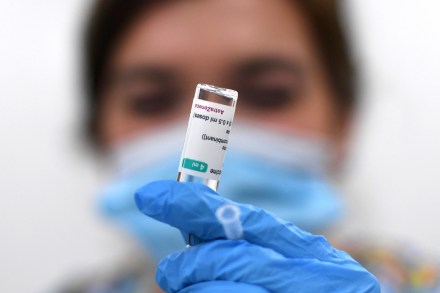
Pfizer and BioNTech have released some extraordinary findings from a Phase 3 trial involving 46,307 participants, between seven days and six months after a second dose was administered. The vaccine was found to have a 91.3 percent efficacy rate. These findings line up with the real world data coming out of Israel, which has used the Pfizer vaccine to inoculate its population, and reported several weeks ago that it proved 94 percent effective in preventing symptomatic illness. But on top of the overall efficacy rate came even better news: Pfizer is reporting that the ‘vaccine was 100 percent effective in preventing severe disease’ as defined by the Centers for Disease Control.

Pfizer trial finds vaccine ‘100% effective’ against South African variant

From our UK edition

Pfizer and BioNTech have released some extraordinary findings from a Phase 3 trial involving 46,307 participants, between seven days and six months after a second dose was administered. The vaccine was found to have a 91.3 per cent efficacy rate. These findings line up with the real world data coming out of Israel, which has used the Pfizer vaccine to inoculate its population, and reported several weeks ago that it proved 94 per cent effective in preventing symptomatic illness. But on top of the overall efficacy rate came even better news: Pfizer is reporting that the ‘vaccine was 100 per cent effective in preventing severe disease’ as defined by the US Centers for Disease Control.

Can we see the vaccine effect?

From our UK edition

Britain’s Covid data is moving in the right direction. Today’s update from the Office for National Statistics confirms this on one of the most critical measures: excess deaths. For the second consecutive week, deaths in England and Wales are below the five-year average. In the latest week ending 19 March, there were 10,311 registered deaths — 676 fewer deaths than the week before and down 8 per cent on the average. The good news doesn’t stop there. Not only are deaths down (more than 90 per cent below the peak of the latest wave) but the vaccine factor is also showing its effect.

Can Rishi Sunak get people back into the office?

From our UK edition

To what extent do workers want to return to the office? It’s a question on everyone’s mind – none more so than Rishi Sunak. If Covid working habits stick post-lockdown, with a majority of people continuing to work from their living room, it’s not just the working day that will be fundamentally altered, but the wider economy too. The economic implications for the shops and services designed to cater to the office worker will be drastic: large parts of city centres and high streets may find themselves without customers, or enough business to turn a profit. But these were not the main points the Chancellor made in his interview with the Daily Telegraph and the Sun, as part of a Conservative fringe event hosted by iNHouse Communications.

Does the data support renewing Covid emergency powers?

From our UK edition

Last night MPs voted by 484 to 76 to renew the Coronavirus Act, which grants the state emergency powers to further control – and shut down – most parts of society. The Liberal Democrats voted against the extension, along with 35 Conservative MPs who rebelled and voted against the government, citing as their main concern the widening gap between these unprecedented powers and the danger Covid-19 presents in the UK. The latest iteration of the bill has been renewed until September – three months after the last date in Boris Johnson’s roadmap – and includes the toughest restrictions on international travel yet.

Vaccines should mean more freedom – not less

From our UK edition

Do vaccines lead to freedom – or to more lockdown rules? That very question would have seemed bizarre a few weeks ago, when Matt Hancock told this magazine that he’d ‘cry freedom’ when the most vulnerable had been protected. But now, things are swinging the other way. The end of the second wave in Britain (infections and intensive care admissions are down 95 per cent from the peak) has not been followed by reopening. Instead, it’s being used as rationale to continue lockdown for months to come. The latest is international travel: the freedom to leave the country.

Are we there yet? Realising the future of electric cars

From our UK edition

41 min listen

Unreliable, slow and you'll never find a charging point - those are some of the things that come to mind when thinking about electric vehicles for many drivers. But are these outdated myths? The government has less than a decade to meet its 2030 ban on new petrol and diesel cars. With the future of electric vehicles just around the corner, Kate Andrews talks to a panel of special guests about how much progress has been made in the industry, and how much still needs to be doneWith Grant Shapps, the Secretary of State for Transport; Mike Hawes, the CEO of the Society of Motor Manufacturers and Traders; and Chris O'Shea, CEO of Centrica.Sponsored by Centrica.

Why did unemployment dip as Covid restrictions tightened?

From our UK edition

Slowly but surely, forecasts for unemployment in the UK have been revised downwards. Alongside Rishi Sunak’s Budget earlier this month, the Office for Budget Responsibility significantly changed their prediction for peak unemployment: from the 11.9 per cent predicted in the July forecast down to 6.5 per cent. This was spurred on by an extension of the furlough scheme, a growing economic resilience to lockdowns and, of course, the spectacular rollout of the vaccines (over half the adult population has now been vaccinated with at least one dose). But the latest update from the Office for National Statistics, published today, has provided an early surprise. The headline unemployment figure has fallen slightly again: from 5.