Kate Andrews

Kate Andrews

Kate Andrews is deputy editor of The Spectator’s World edition.

Starmer’s fundamental economic mistake

From our UK edition

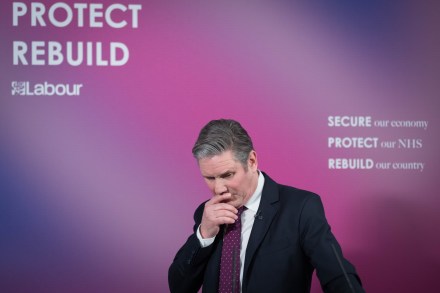
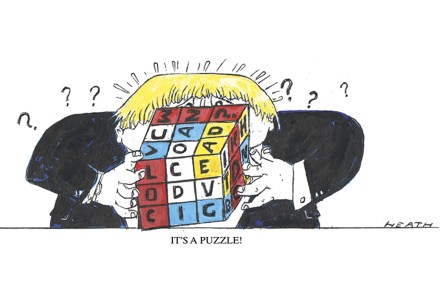
Keir Starmer’s speech on economic recovery, delivered at Labour’s Southside HQ on Thursday, was hyped as one of the most pivotal moments of his leadership so far. A Labour insider told Politico it had been 'six months in the making with a huge amount of work going into it’. It was designed to establish a clear ‘fork in the road’ between the Conservatives’ and Labour’s economic visions, both in the short term — leading up to the Budget next month — but also in the future, as Starmer pledged to shape the economy ‘to look utterly unlike the past’. But for a speech that was supposedly months in the making, there was surprisingly little substance.

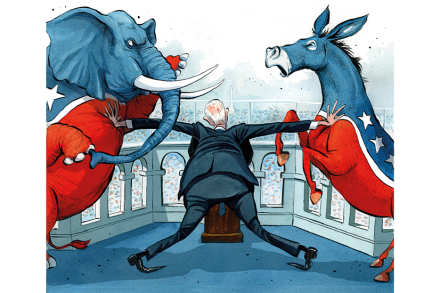
What Trump’s acquittal means for the future of American politics

From our UK edition

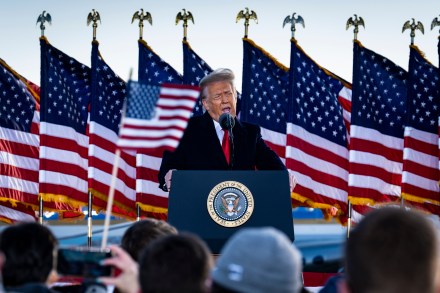
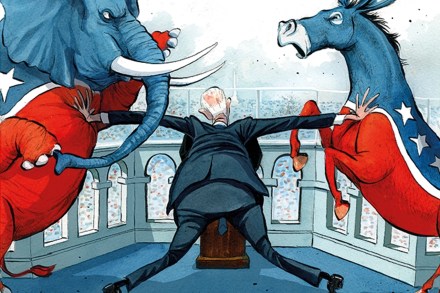
Former President Donald Trump was acquitted by the Senate today, in what has turned out to be the shortest impeachment trial in American history, after the House of Representatives voted to impeach him last month after the riot at the Capitol building. Despite being the first president impeached twice during his time in office - this time charged with inciting insurrection - the Senate once again failed to secure two-thirds majority to convict him. When Trump was first impeached in 2019, the Senate voted along near-partisan lines - only Utah senator and former presidential candidate Mitt Romney broke party lines.

France’s vaccine volte face

From our UK edition

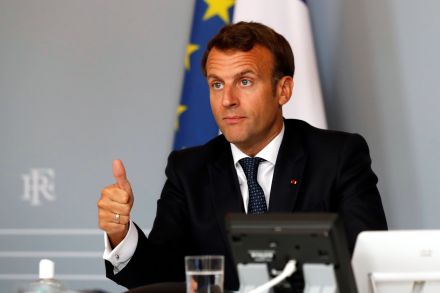
France has become the first country in the world to recommend a different vaccine regime for those who have recovered from the virus. The country’s public health authority has recommended that people previously infected with Covid-19 only receive one jab, rather than two. The advice is based on preliminary data, including two studies from the United States, that show the combination of antibodies built up from having the virus, plus one jab, creates immunity that ‘is equal to or even exceeds’ having two vaccines. It wasn’t long ago that French ministers were publicly criticising the UK’s strategy It’s too early to definitively say whether France’s strategy will work. For one thing, the government hasn't signed it off yet.

Will the economy bounce back after lockdown?

From our UK edition

18 min listen

Despite the GDP figures from the ONS today, the Bank of England's chief economist Andy Haldane has written an optimistic commentary today, arguing why he thinks the British economy will bounce back after Covid restrictions end. Katy Balls talks to Kate Andrews, the Spectator's Economics Correspondent, and James Forsyth about that possibility.

What a record GDP slump means for economic recovery

From our UK edition

It’s been no mystery that the UK economy took a severe beating in 2020: two lockdowns, a host of circuit-breakers and fire-breakers, Christmas cancelled for millions of people. The experience of an economy forced to hibernate for months on end last year is reflected in today’s GDP update from the Office for National Statistics, showing the economy contracted 9.9 per cent last year — the ‘largest yearly fall on record’ and biggest contraction in 300 years. The fall isn’t quite as stark as the Office for Budget Responsibility forecast alongside the Chancellor’s spending review last November (an estimated 11.3 per cent), but it still represents one of the largest economic hits among the big economies.

Hancock launches his quarantine crackdown

From our UK edition

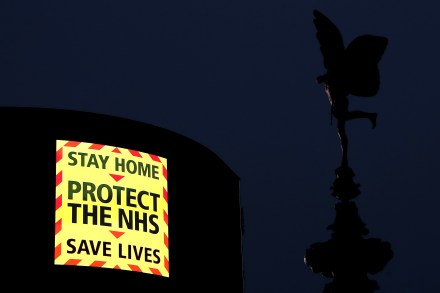
The search for the right balance on border policy continues, as Health Secretary Matt Hancock announced this afternoon a host of new measures that travellers coming to the UK will face. From Monday, all arrivals will need to take two PCR tests: one on day two and another on day eight of self-isolation. This will apply to everyone, regardless of where they are travelling in from or whether they are quarantining in a hotel or in their home. This means anyone arriving in the UK will now be taking a total of three Covid-19 tests, as a negative test within 72 hours of travel is also required.

What the EU still doesn’t understand about Britain’s vaccine strategy

From our UK edition

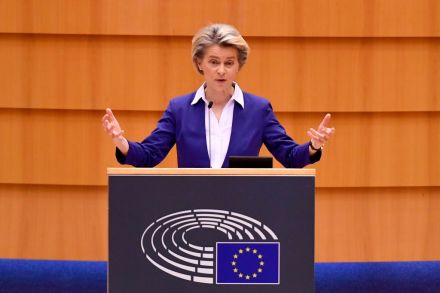
Since the outrage caused last Friday, when the European Union looked set to undermine the Northern Ireland protocol less than one month after the Brexit deal came into force, there has been little apology from those in charge. This is not terribly surprising: European Commission President Ursula von der Leyen has a reputation for passing the buck whenever possible. It’s also thought that last week’s mistakes are particularly hard for the EU to grapple with: desperate to prove Brexit was a mistake, it has been difficult for Brussels to watch Britain's reputation for handling the Covid crisis change so quickly for the better. Yesterday we got a hint of acknowledgement from von der Leyen that perhaps there are some benefits to being outside the EU.

How serious is No. 10 about immunity passports?

From our UK edition

How seriously is the government considering immunity passports? It seemed we had a definitive answer in December when vaccines minister Nadhim Zahawi categorically ruled them out on Spectator TV. He told viewers: ‘There will not be an immunity passport... as far as vaccinations [go], we're not looking at immunity passports at all.’ This followed comments from Cabinet Office minister Michael Gove days before also confirming there were ‘no plans’ for such a scheme. But these promises haven’t exactly aligned with government action. The Telegraph disclosed last month that £450,000 worth of government grants had been dished out to at least eight different schemes to create digital vaccine passports.

What the latest vaccine news means for lifting lockdown

From our UK edition

As more good news about vaccine efficacy rolls in, questions are already starting to be asked about what it means for the Prime Minister’s lockdown timetable. Boris Johnson has committed to publishing his ‘roadmap’ out of lockdown — but news from the last few days may be influencing what that roadmap looks like, especially the PM's top priorities of getting children back to school and lifting major social distancing restrictions. Today’s antibody survey from the Office for National Statistics shows 15.3 per cent prevalence in England, up from 10.7 per cent last month. This time around, the increase is not just due to infections: vaccines are playing their part too.

The EU’s vaccine opportunism will not be forgotten

From our UK edition

At first, it sounded like empty rage. The European Union had spent all week making wild statements about controlling vaccine exports — even challenging the notion of contract law. On Friday, it has started to act on its words and announced it will introduce controls on vaccines made in the EU — potentially giving itself the power to stop Pfizer sending Britain the vaccines it has paid for. Worse, when it made the announcement, it included Northern Ireland. The EU was set to use the ‘last resort’ mechanism in the recently-agreed Northern Ireland Protocol, Article 16, that can unilaterally impose a land border: something both the UK and EU spent years trying to avoid.

The Johnson & Johnson jab is a game changer

From our UK edition

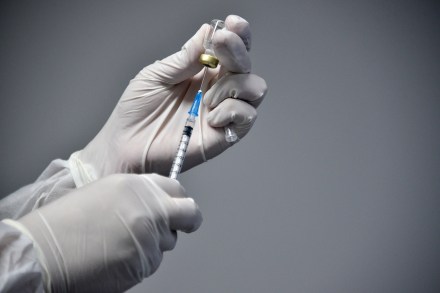
Good vaccine news has been pouring in today — this afternoon it was the turn of the Janssen vaccine, made by US company Johnson & Johnson. An international trial, in which the vaccine was tested against various strains of the virus, has found the jab to have 66 per cent overall efficacy. This is a lower efficacy rate than the trial conducted in the United States — which found the jab to be 72 per cent effective. But the international trial was designed to test the vaccine against more aggressive strains of the virus in a bid to answer questions about the new mutations.

Germany has just undermined the EU’s vaccine argument

From our UK edition

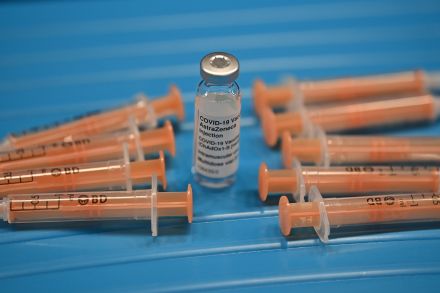
Germany’s vaccine committee has advised the Oxford-AstraZeneca vaccine only be given to under-65s. The announcement marks a major twist in a week of muddled vaccine reports. On Tuesday, the German newspaper Handelsblatt suggested that German officials believed the Oxford vaccine was only 8 per cent effective for the over-65 groups (no evidence has been produced to support the 8 per cent claim). It has been heavily and extensively rebuffed by both AstraZeneca and the German government. Yet the German reporter who broke the story doubled down on the claims, raising the stakes as to whether he was making precarious reporting worse, or whether the European Medicines Agency may indeed conclude that the vaccine's efficacy is too low.

Capital punishment: why wealth taxes don’t work

From our UK edition

No new year would be complete without the traditional Oxfam survey showing that a few of the richest people on the planet own more assets than the poorest 50 per cent of the world’s population combined. The figures change, but the gist is the same. January is usually a slow month, and it makes for startling headlines, intended to get us thinking about capitalism’s shortcomings. It’s also been tradition, for those of us more positive about free markets, to offer a retort: before Covid, global poverty was falling at the fastest rate in history. Global inequality was narrowing because of capitalism, not despite it.

Boris’s border crackdown raises some big questions

From our UK edition

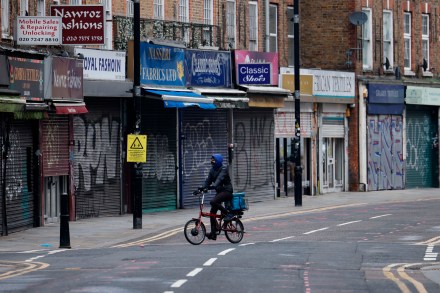
Throughout the pandemic, Britain has taken a relatively relaxed approach to controlling its borders. Restrictions on travel have come and gone since last March, but, on the whole, Britain has always leaned towards openness. The government has trusted people to make sensible judgements and follow quarantine rules upon return. Now attitudes have shifted. This afternoon, Home Secretary Priti Patel laid out the details of the government’s new, quasi-Australia style quarantine policy. Arrivals from 22 ‘high-risk’ areas will soon be forced to quarantine in a hotel when they arrive in Britain. There will be no exceptions to the rule, and travellers must stay put for ten days, even if they test negative for Covid-19.

When will unemployment peak?

From our UK edition

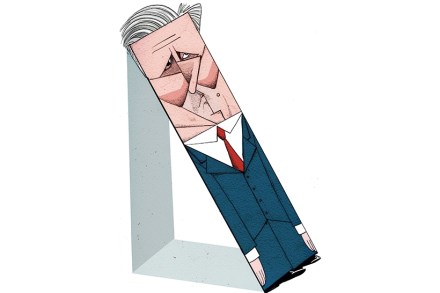
Unemployment continues to rise. Today’s update from the Office for National Statistics estimates that unemployment in the three months to November hit 5 per cent — that’s an estimated 1.7 million people out of work, a 0.6 per cent rise on the previous quarter.    Not every figure is as positive as the surface data would suggest The gradual climb suggests that the furlough scheme continues to hold off mass redundancies and provides further evidence that England’s second national lockdown didn’t hit as hard as the first. But the unemployment rate is set to worsen before it improves, with more optimistic forecasts estimating a peak of around 6 per cent later this year, while others (including the Bank of England) estimate around 8 per cent.

Biden time: can he stop America’s ‘uncivil war’?

From our UK edition

35 min listen

Can Joe Biden unite America? (01:05) Why is the UK's vaccine rollout its most important economic policy? (12:10) And how can re-enactments bring history to life? (22:15)With The Spectator's economics correspondent Kate Andrews; US editor Freddy Gray; political editor James Forsyth; Capital Economics chairman Roger Bootle; re-enactor Chris Brown and historical consultant Justin Pollard.Presented by Lara Prendergast.Produced by Max Jeffery, Alexa Rendell, Sam Russell and Matt Taylor.

Can Joe Biden stop America’s ‘uncivil war’?

From our UK edition

Having won more votes than any presidential candidate in American history, Joe Biden might have hoped for a triumphant entry into Washington. Instead, he travelled to the inauguration in a private plane to deliver his speech to more members of the National Guard than guests. A combination of the pandemic and security fears ruined normal proceedings: the event had become a target, crowds too great a risk. The emptiness embodies the problem Biden needs to overcome: not just the spats between left- and right-wing politicians, but the unravelling of trust in American politics. His challenge goes beyond governing.

Has the economy developed lockdown immunity?

From our UK edition

This morning’s update from the Office for National Statistics has boosted optimism about the prospect of the UK’s economic recovery. GDP fell 2.6 per cent in November last year, reversing the trend of six consecutive months of increases since April’s significant contraction. This takes GDP back down to 8.5 per cent below last February’s levels — wiping out the recovery gains made between roughly the end of July and November. Not, on the surface, good news — but there is a case for optimism. Cast your mind back to the economic conditions in November: England’s second lockdown had just been announced and there was a host of fire-breakers and circuit-breaks throughout the UK.

trillion

Biden’s $1.9 trillion gamble

Less than a week away from his inauguration, President-elect Joe Biden has announced his proposed roadmap to navigate COVID-19: a $1.9 trillion stimulus package to provide direct support to families, roll out a mass-inoculation program and send hundreds of billions of dollars the way of businesses and local governments. It is being framed as an extension of last month’s package, which after months of gridlock and political infighting was finally passed by Congress. This near $2 trillion more in spending, we are told, will ‘finish the job’. If it passes, every eligible American will receive an additional $1,400 direct payment, boosting December’s commitment of $600 to $2,000 in total.