Kate Andrews

Kate Andrews

Kate Andrews is deputy editor of The Spectator’s World edition.

It is becoming impossible to ignore the problems with the NHS

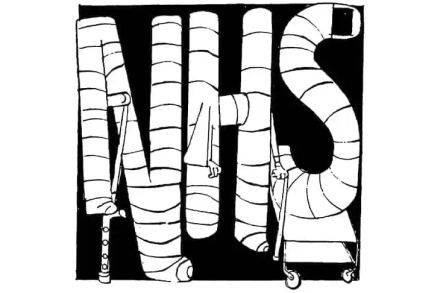
One of the most remarkable things about the National Health Service is the extent to which it avoids national criticism. Only a few years ago it was borderline blasphemy to point out problems with the NHS; for politicians, to do so was to dig your own political grave. For the first time in the survey’s history, the majority of the British public are ‘dissatisfied’ with the health service In the aftermath of the pandemic, things have started to change. Several politicians have spoken about the poor outcomes delivered by the health service. Most notably the Labour party is distinguishing itself from the Tories, not simply by offering more money, but by insisting on patient-centric reforms too.
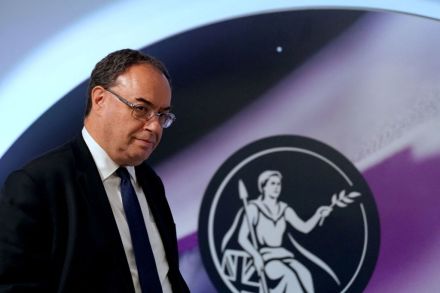
Can the Bank of England escape the blame for the inflation spike?

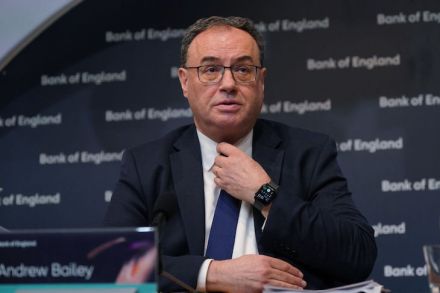
Who, or what, is responsible for the UK’s sky-high inflation rate? Not me, says the Bank of England's governor. Andrew Bailey has pointed the finger at a number of causes: pandemic and lockdowns, Russia’s war against Ukraine and Britain’s tight labour market. But he singled out one group in particular – early retirees – as a contributing factor for the recent inflation spike: ‘If those workers have accumulated enough savings to sustain a desired level of consumption much like the one they had before their early retirement, at least for a while, aggregate demand will not have fallen by as much as aggregate supply…we should expect this to put upward pressure on inflation in a way that would call for a higher level of interest rates to dampen demand.

Solving Britain’s energy crisis: could demand be the answer?

18 min listen

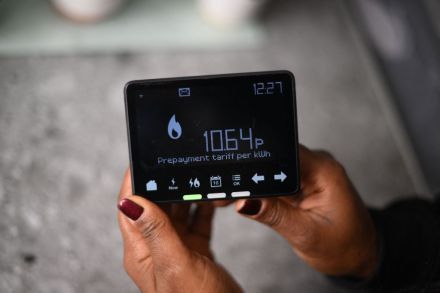
Britain’s high energy prices, insecure supply, and climate change commitments mean people’s relationship with energy will need to change. How could consumers change their attitude to energy consumption so that they use less? Will doing so give them a worse standard of living? On this podcast, Kate Andrews, The Spectator’s economics editor, is joined by Dan Brooke, the CEO of Smart Energy GB, a not-for-profit campaign to help Britons understand the benefits of smart meters. This podcast is sponsored by Smart Energy GB.

What’s behind Starmer’s trans U-turn?

13 min listen

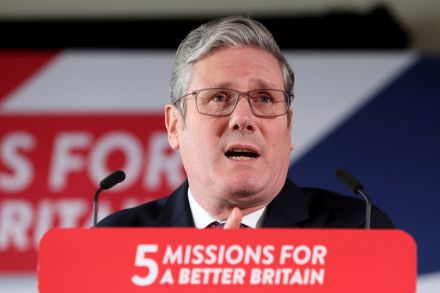
Keir Starmer today seemed to change his party’s stance on self-identification for transgender people. Before, Starmer said Labour would update the Gender Recognition Act so transgender people could self-identify as whatever gender they wanted. Today, he said that ‘if you’re going to make reforms, you have to carry the public with you.’ What’s changed? Max Jeffery speaks to Katy Balls and Kate Andrews.

Will the interest rate hike be enough to tame inflation?

There was no easy option for the Bank of England's Monetary Policy Committee (MPC) this week. Raising interest rates, even by a small amount, could add to financial instability following the collapse of Silicon Valley Bank and takeover of Credit Suisse over the past few weeks. But holding the base rate at 4 per cent might lead to accusations of ignoring double-digit inflation, which rose on the year in February for the first time since the Consumer Prices Index (CPI) peaked last October. Today, the MPC opted for the latter – voting 7-2 in favour of raising the base rate by 0.25 percentage points, from 4 per cent to 4.25 per cent. It’s the eleventh consecutive hike since the UK emerged from a period of ultra-low interest rates during the pandemic.

Why is inflation going back up?

For the past few months, the debate over inflation in Britain has centred around just how fast the rate might fall. Both the Bank of England and the Office for Budget Responsibility’s most recent forecasts have been very optimistic, showing inflation falling back down to something approaching the Bank’s target of 2 per cent by the end of the year. Despite a slow start to the year, and CPI (core price inflation) remaining in the double digits, virtually everyone has assumed the headline rate was on a one-way track, heading downwards.  This makes this morning’s update a surprise and a blow to the economic consensus, as the Office for National Statistics has reported that CPI rose on the year in February, up from 10.1 per cent to 10.4 percent.

Has government borrowing really been brought under control?

To what extent have the public finances really been brought under control? This morning’s update from the Office for National Statistics reveals that public sector net borrowing reached £16.7 billion in February. This is more than double the figure from February 2022 of £7.1 billion, and also well above the consensus estimate of around £11 billion.    It is the highest February borrowing figure since records began, primarily driven upward by the Energy Price Guarantee, which continues to see the government cap the unit price of energy and subsidise the rest.

Is the banking system on the brink?

Has a full-scale banking crisis been avoided? UBS has announced a takeover of rival Credit Suisse for just over $3 billion – half of its valuation on Friday and a tenth of its valuation just two years ago. The deal, timed to conclude before the Asian markets opened, is intended to stop any domino effect that might have been created had Credit Suisse folded this week and started to call into question the viability of other banks. Reflecting the announcement, UBS shares fell 14 per cent in early trading. Credit Suisse calls it a 'merger', UBS calls it a 'takeover' but it can also be called a 'bailout'.

Welcome to Big State Toryism

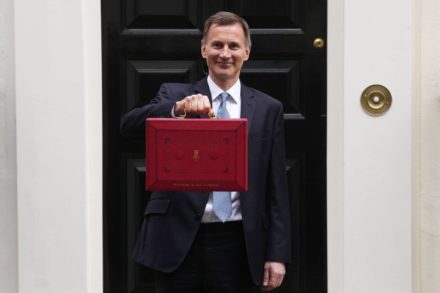
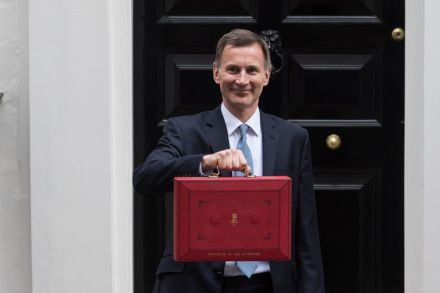
A million pounds is very small change in the context of wider government spending – especially compared to the £20 billion of extra giveaways Jeremy Hunt has announced for the next few years. But sometimes that small change tells you more about a government’s priorities, and its sense of direction, than the big announcements. I suspect that was true in this week’s spring Budget. Alongside billions dished out for freezing fuel duty and extending the Energy Price Guarantee for another three months, the Chancellor also announced a government-sponsored prize, to run for the next ten years, ‘to the person or team that does the most ground-breaking British AI research’. What’s so telling about this?

Are NHS strikes about to end?

11 min listen

The day after Jeremy Hunt's Spring Budget has been fairly muted compared to recent Budget hangovers. What has been the overall reaction? On the global markets, Kate Andrews looks at the international response after Credit Suisse shares fell by more than 30 per cent yesterday. And what's behind today's breakthrough in negotiations between NHS Unions and ministers? Natasha Feroze speaks to Katy Balls and Kate Andrews.

Crash test: the new era of economic uncertainty

40 min listen

On the podcast: The Spectator's economics editor Kate Andrews looks back on a week of economic turbulence and asks whether we should be worried, for her cover piece in the magazine. She is joined by the economist – and former 'Trussketeer' – Julian Jessop, to discuss whether we are entering a new era of economic uncertainty (01:06). Also this week: In the magazine, The Spectator’s deputy features editor Gus Carter says that the culture of toxic masculinity has gone too far, and that young men are being marginalised in schools and online as they are repeatedly told that they are a danger to women. He is joined by the Times columnist Hugo Rifkind, to explore how today's sexual politics is impacting young men (13:21).

Budget special: what did we learn?

15 min listen

Jeremy Hunt, the Chancellor has unveiled his spring Budget, which was accompanied by forecasts predicting that the UK will avoid recession this year and that inflation will drop to below 3 per cent by the end of the year. But do the measures go far enough? Katy Balls speaks to Kate Andrews and Fraser Nelson.

The biggest Budget surprise wasn’t one of Jeremy Hunt’s announcements

The biggest surprise from today’s Budget was not an announcement, but the forecasts that gave Jeremy Hunt room for manoeuvre.  The Office for Budget Responsibility has revised its forecasts for economic growth and inflation towards the upside. The OBR no longer expects the UK to enter into a technical recession (two consecutive quarters of negative growth). Overall, it is predicting a small contraction of 0.2 per cent this year, which will be followed by an average of 2 per cent growth (1.8 per cent in 2024, 2.5 per cent in 2025, 2.1 per cent in 2026 and 1.9 per cent in 2027).  Moreover, the OBR predicts a big fall in the headline rate of inflation, from 10.7 per cent at the end of last year, down to 2.

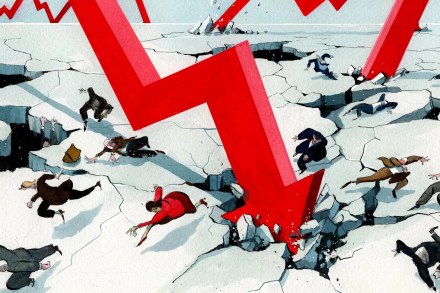
Crash test: the new era of economic uncertainty

Why did nobody see it coming? When the late Queen asked this question about the crash of 2008, on a visit to a London business school, no one had a clear answer. Why, in a financial world crawling with regulators, did no one spot that subprime mortgages were toxic, on the brink of falling apart?  The simple answer is that we got too comfortable. We assumed that times had changed and dropped our guard. It looks as if we’ve dropped our guard again. On the way out of the financial crash, we seem to have simply and blindly assumed another set of false beliefs: that ultra-low interest rates, designed to help tackle recession, were here to stay. Entire business models were built on this premise. But then inflation returned – and interest rates shot up.

Britain’s cooling labour market could spell trouble for Hunt

Is the UK’s labour market cooling down? While unemployment remains unchanged at 3.7 per cent, according to today's update from the Office for National Statistics, the number of job vacancies ‘fell on the quarter for the eighth consecutive period’, down 51,000. The overall number of vacancies, however, still remains above a million. But the biggest indicator things are changing is wage growth: the rise in average total pay fell to 5.7 per cent between November last year and January this year, down from 5.9 per cent in the previous three months. Adjusting for inflation, this means real wages fall by 3.2 per cent – the biggest fall since the pandemic hit, not to mention one of the biggest falls since records began in 2001.

Does the triumph of Gary Lineker spell disaster for the BBC?

10 min listen

Two stories dominated the news agenda over the weekend, one concerning a household name and the other involving a bank which – before Sunday – few had heard of. What is the political significance of Gary Lineker's row with the BBC? And after the fall of Silicon Valley Bank, are we heading for a regional banking crisis?  Cindy Yu speaks to Katy Balls and Kate Andrews. Produced by Cindy Yu and Oscar Edmondson.

Jeremy Hunt defends the Tories’ long-term economic record

A Chancellor’s Sunday media appearance before a Budget often serves as a ‘free pass’ – not because difficult questions aren’t asked, but because they can quite easily get out of answering by saying some polite version of: ‘you’ll have to wait and see.’ So instead of focusing on the upcoming Budget this Wednesday, the BBC’s Laura Kuenssberg decided to ask Jeremy Hunt this morning about his party’s long-term record. Those questions he had to answer. It wasn’t an easy task. Kuenssberg presented Hunt with two tricky metrics: housing prices and average wages. The former, Kuenssberg notes, has skyrocketed, while average wages are failing to keep up with inflation. Many people (especially young people) she noted, will be feeling worse off.

What the right gets wrong on illegal immigration

The government’s plans for the Illegal Migration Bill – which would see virtually all people arriving outside formal, legal channels deported – has raised many uncomfortable questions. Is a trafficked Romanian girl sold into sex slavery in Britain really exempt from protection under the Modern Slavery Act? Would an Iranian gay man, afraid for his life, showing up in a UK airport with forged papers really be sent back out again? The government’s blanket approach to all ‘illegal’ migrants has, curiously enough, completely obscured how the UK will respond to genuine human rights abuses. Or perhaps it hasn’t: as the details come out, we may discover that these victims are being forced down the priority list in pursuit of a short-term political agenda.

GDP grows by 0.3% – but the UK economy remains stagnant

This morning’s release from the Office for National Statistics shows the UK economy grew by 0.3 per cent in January – an improvement on December 2022 figures, which saw the economy contract by 0.5 per cent. There are no revisions to the last update: the UK still avoids the technical definition of recession, and January’s growth was higher than expected (the consensus was that it would be 0.1 per cent). But overall, the economy remains stagnant: the three months to January produced precisely zero growth. What really sticks out in today’s release is just how dependent the UK economy is these days on one-off interruptions.

Two problems with Rachel Reeves’s bid to woo businesses

Shadow chancellor Rachel Reeves has promised to tackle what businesses tend to fear the most: instability. ‘In recent years, corporation tax has gone up and down like a yo-yo, while the government has papered over the cracks with short-term fixes like the super-deduction,’ Reeves told the manufacturing group Make UK's annual conference this morning. Under a Labour government, she pledged, there will be a clear ‘roadmap for tax which lasts over a parliament’. Reeves said this would give business leaders a better sense of what to expect, hopefully creating an atmosphere for investment. Promising a review also puts pressure on Reeves to come up with answers to some of the biggest tax frustrations Reeves is on a mission to lure the business community over to Labour.