How bad is the mortgage time bomb?
11 min listen
Katy Balls speaks to Kate Andrews and Fraser Nelson about the developments in the mortgage markets and how Tory MPs are expected to vote on Partygate.


Kate Andrews is deputy editor of The Spectator’s World edition.
11 min listen
Katy Balls speaks to Kate Andrews and Fraser Nelson about the developments in the mortgage markets and how Tory MPs are expected to vote on Partygate.
No one wants to talk about the pandemic anymore. Not even partygate. Understandably so: we’ve all put hard work into suppressing and burying miserable memories over that two-year period. Why dredge it all back up? But as one of the people in this country who still deeply cares about partygate – the hypocrisy of it, the abuse of power – I simply want to say that today’s report from the Privileges Committee into whether Boris Johnson misled parliament is remarkable. It’s a delivery of justice that the Sue Gray report wasn’t: one which some of us have quietly been holding out for.

13 min listen
Having said she'll step down, Nadine Dorries has now said that she won't formally resign as an MP until later this year... It's hard to see this as anything other than revenge taken on Rishi Sunak, so as to prolong the by-election pain, Katy Balls says. Cindy Yu also talks to Kate Andrews about the economic pain in the country at the moment – from lacklustre GDP growth to rising mortgage rates. Produced by Cindy Yu.
The economy grew by 0.2 per cent in April, following on from a confirmed 0.3 per cent contraction in March. This fits the trend this year of small ebbs and flows in GDP, which all together add up to extremely little overall growth this year. This is now what the big forecasters have predicted, from the Office for Budget Responsibility, to the OECD and IMF. Overall services grew by 0.3 per cent, the ‘main contributor’ to April’s uptick in growth. The biggest sub-sector for growth was ‘wholesale and retail trade’ which is thought to have improved due to the lack of train strikes and transport hiccups in April. Consumer-facing services had a small recovery overall, growing by ‘1.0 per cent in April 2023, after a fall of 0.8 per cent in March 2023’.
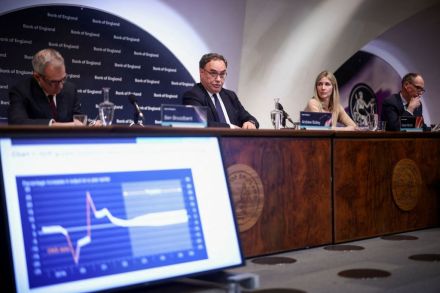
‘There are obviously lessons to be learned,’ said Bank of England Governor Andrew Bailey at today’s House of Lords Economic Affairs Committee. It was a point he repeated many times over, in reference to the inflation crisis that has plagued Britain for close to two years now. ‘We have to learn lessons from the experiences we’ve had, of course we must... We have to work out what those lessons are.’ But despite repeating this sentiment over and over again, Bailey could not meaningfully come up with one good example of such a lesson, nor could he go into much detail on the mistakes the Monetary Policy Committee has made over the past two years.
19 min listen
Kate Andrews, Katy Balls and Fraser Nelson react to the news that Boris Johnson has decided to stand down as an MP. Will the former Prime Minister go quietly? Produced by Natasha Feroze.
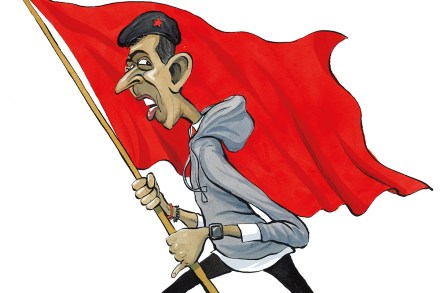
Is the government ready to start cutting taxes? After taking the burden to a post-war high, it seems ministers are preparing to change direction – in one area, anyway. This morning Jeremy Hunt announced that the energy levy on oil and gas companies, known as the ‘windfall tax’, will come to an end in 2028 – a direct response to growing fears that the effective 75 per cent tax on profits was driving business and investment out of the country. Divestment from the North Sea has become a heavily contested topic. Keir Starmer announced that Labour would ban all new production in the North Sea, perhaps putting into perspective for the Tories just how far their windfall tax has shifted what is politically possible.
13 min listen
It was prime ministers questions today and while Rishi Sunak is away in the US Oliver Dowden stood in. The Covid inquiry was a hot topic of debate. Rishi Sunak says he is not worried about being embarrassed by messages seen by the inquiry, but is he right to be so calm? Also on the podcast, the OECD has forecasted that the UK will narrowly avoid recession. But with growth at only 0.3 per cent for 2023, can we consider this a good outcome? James Heale speaks to Katy Balls and Kate Andrews. Produced by Oscar Edmondson.
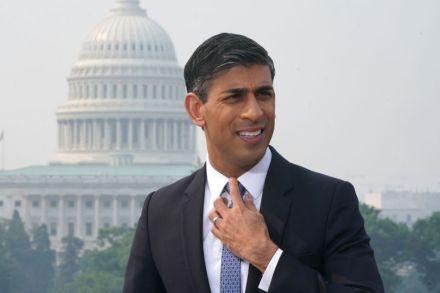
The UK will narrowly avoid a formal recession this year. That's the consensus that is emerging based on the current data. This morning’s Economic Outlook from the OECD – which forecasts 0.3 per cent growth in 2023 – reflects similar projections from the IMF’s latest update and the Office for Budget Responsibility, which have revised their figures upwards in recent months. But to what extent will this modest growth actually be felt by Brits? Here the picture is far less positive. Inflation – which remains stubbornly high, in Britain especially – continues to eat away at real wages. The OECD predicts that the UK will continue to suffer from some of the highest inflation rates among advanced economies, averaging 6.
39 min listen
On this week’s episode: Price caps are back in the news as the government is reportedly considering implementing one on basic food items. What happened to the Rishi Sunak who admired Margaret Thatcher and Nigel Lawson? In her cover article this week, our economics editor Kate Andrews argues that the prime minister and his party have lost their ideological bearings. She joins the podcast, together with Spectator columnist Matthew Parris, who remembers the last time price caps were implemented and writes about it in his column. We also take a look at the experience of being addicted to meth. What is it like, and is it possible to turn your life around after that? The translator Eva Gaida has managed it, and writes powerfully about her experience in this week’s issue.
8 min listen
Boris Johnson's team today suggested that they would be happy to hand over his WhatsApp messages from during the pandemic to help the Covid enquiry. Why has the civil service got itself in such a muddle over this, and why have the Tories failed to reform Whitehall? Max Jeffery speaks to James Heale and Kate Andrews. Produced by Max Jeffery.
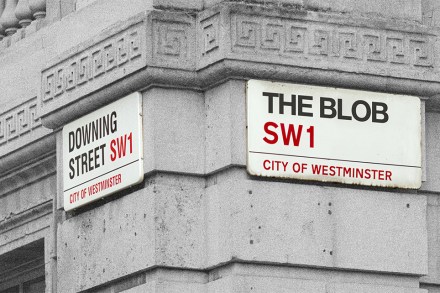
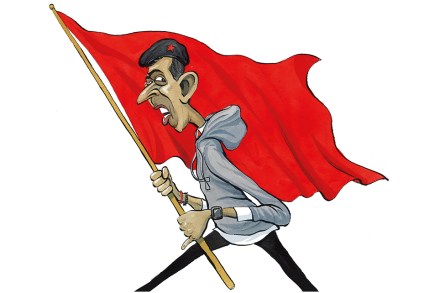
What kind of conservative is Rishi Sunak? This time last year, there was a clear answer: he was a fiscal hawk who was worried about how much the government had to borrow to fund the Covid crisis. As chancellor, he was always fighting with the prime minister over high spending. When Sunak tried to raise the national insurance rate, he did so partly to send his party an important message: the borrowing and spending has to stop. Now Sunak is in No. 10 and Boris Johnson isn’t around to demand more spending. There has been a Budget and a list of priorities – and Sunak’s agenda is starting to emerge. It includes a tax burden not just higher than any time in the 1970s, but any time in postwar history. A record proportion of the workforce are paying the higher rate of tax.
The government has been claiming since the start of the year that it's on a mission to ‘halve inflation’ – despite having virtually no control in this area. Still, this week Rishi Sunak ramped up the narrative when the latest set of data showed the headline rate falling from 10.1 per cent on the year in March to 8.7 per cent in April. It was false optimism. And it’s backfired. Markets quickly saw past the headline rate and looked at all the worrying news underlying it: mainly that core inflation actually rose, nearing 7 per cent on the year in April. Borrowing costs have spiked since then: 10-year gilt yields hit 4.37 per cent yesterday, now the highest in the G7. This hasn’t happened since the financial crash.

13 min listen
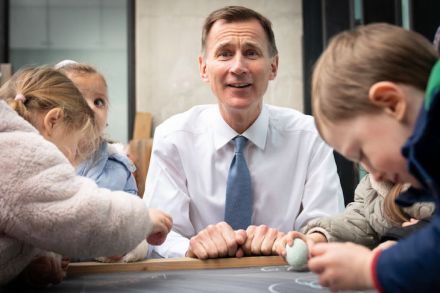
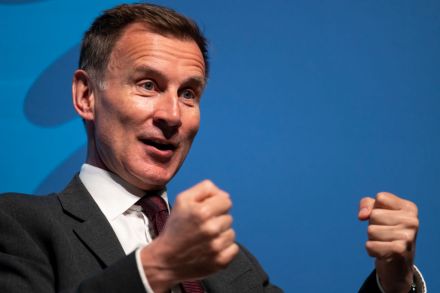
James Heale speaks to Fraser Nelson and Kate Andrews about the news that borrowing costs are back to being the highest since last Autumn. What could this mean for the Chancellor Jeremy Hunt?
It’s three years since the UK formally left the European Union and cut off free movement, and net migration has reached a record high: 606,000 in 2022. This total (measured by the number of new arrivals, minus people emigrating from the UK) is 118,000 higher than last year. This is certainly an increase from 2021, but nothing like the estimates that had been floated in recent weeks that suggested the net figure would be at least 700,000 – possibly even as high as one million. The estimates originally came from a Centre for Policy Studies report, which calculated (based on visa approval statistics) a series of net migration scenarios.

The government is delighted with today’s inflation update. Rishi Sunak released a clip this afternoon, talking about his government’s efforts to ‘halve inflation’ by the end of the year. ‘I know it’s still tough’ he says, but ‘the plan is working, and we are delivering.’ The problem is that it is not in his gift to deliver on his particular pledge. The economics in this video rival his chancellor’s coffee cup video from a few months back – in that they simply don’t add up. Politicians do not control inflation. They have no reliable mechanism for doing so. Windfall taxes do not bring down inflation, as he suggests in the video; and borrowing and spending at record levels definitely does not bring down inflation. Sunak knows all this.


12 min listen
Isabel Hardman speaks to Katy Balls and Kate Andrews about the ongoing case of Suella Braverman's speeding saga. And now Boris Johnson has returned to the spotlight over reports he broke more lockdown rules. Does the energy around these stories say something about the culture of Westminster? Also on the podcast, Kate Andrews takes a look at today's inflation figures. Produced by Natasha Feroze.
Since the start of the year, politicians and central bankers have been promising a collapse in the inflation rate. But monthly data kept rolling in, and the rate remained in double digits. This put even more pressure on the data this morning, published by the Office for National Statistics, with the Bank of England (BoE) making clear in its last report that April’s figures would turn the corner on price hikes. Unlike its previous predictions in this inflation saga, it seems the BoE has managed to get this one right. Prices rose 8.7 per cent on the year to April – still a staggeringly high figure, but down from 10.1 per cent in March. The main driver of the rate fall was gas and energy prices, as last year’s hefty uplift to the energy price cap fell out of the annual estimates.
We learned this morning just how much the government is struggling to keep its promise to bring down the national debt. But news from the International Monetary Fund (IMF) will be lifting spirits in No. 10. Perhaps it can make good on another pledge: to grow the economy. The IMF has once again revised its figures for estimated GDP growth, and it’s good news for Britain. Following on from a fairly dramatic lift last month in which the IMF halved its recession forecast for the UK, but still predicted a contraction, the Fund has once again upgraded its forecasts, now predicting 0.4 per cent growth this year. Moreover, the UK has been lifted from last place in the G7 growth race, now ranking above Germany, for which the IMF predicts virtually zero growth.

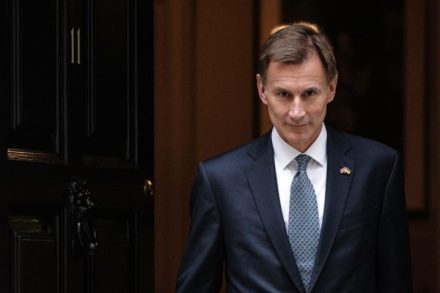
All eyes are on tomorrow’s inflation rate figures, which need to start falling fast for Rishi Sunak to make good on his pledge to ‘halve inflation’ by the end of the year. But this morning we got an update on the one pledge from No.10 that was never likely to be made good on: the promise to get national debt falling. This morning's figures show us the extent to which those numbers are going in the wrong direction. Public sector borrowing in the month of April rose to £25.6 billion, almost £12 billion more than April last year. This makes last month the second-highest borrowing April on record. Rather than the pandemic years becoming a one-off spending spree, we increasingly see in the data how they ushered in a new era of substantial borrowing for a variety of measures.