Juliet Nicolson

Juliet Nicolson is an author and contributing editor to Harper’s Bazaar magazine. The Book of RevelationsWomen and their Secrets from the 1950s to the Present Day  (Chatto & Windus) will be published on 2nd October 2025

The world in limbo

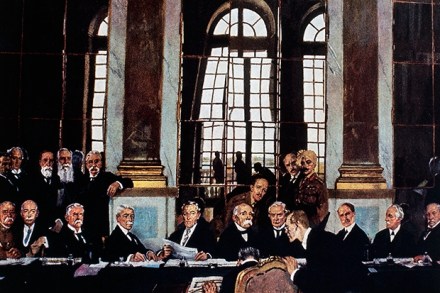
In 1919 the economist and sometime prophet John Maynard Keynes left the glittering ballroom of Versailles feeling profoundly despondent. The treaty that determined the political geography of a postwar world inspired in him a fearful sense of inevitability. The punitive conditions imposed on Germany would be too harsh for the country to tolerate for long. One junior delegate in Paris observed: ‘There is not a single person among the younger people here who is not unhappy and disappointed with the terms.’ This was a world not only united by the devastating results of the Spanish ’flu epidemic, responsible for the deaths of five times as many as had lost their lives in the war, but by political and religious fragmentation that was already endemic.
More sinned against than sinning

The 55-year-old ’flu-ridden John Charles Wallop, 3rd Earl of Portsmouth, his feet in a basin of warm water, shivered in the dock with fever but also with fear. Would the jury, assembled in 1823 in London’s jam-packed Freemason’s Hall at the end of an unpredecentally sensational two-week trial, find him eccentric, delusional, simple-minded or, instead, stark raving mad? Elizabeth Foyster, a historian and senior lecturer at Clare College, Cambridge, was alerted to this enthralling, almost unbelievable true story with the caveat that the vastness of the material in Lambeth Palace archives concerning a scarcely remembered trial of a hugely wealthy, relatively obscure aristocrat had deterred anyone else from attempting to make sense of it.

Great halls, last balls

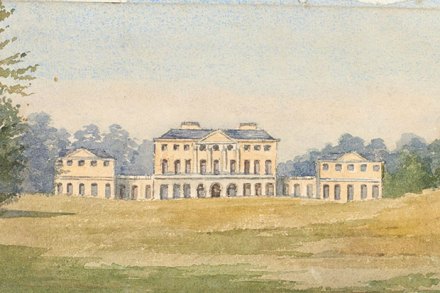
Contrary to popular myth, the exuberant flame of life in the English country house was not extinguished by tears at the end of the Great War. And in his deliciously jaunty and wonderfully knowledgeable book, Adrian Tinniswood, social historian and country house authority, also upturns the story that huge numbers of Britain’s loveliest houses disappeared in the 1920s and 1930s, either through lack of heirs, despair, neglect or the stranglehold of taxation. He describes how instead, with ‘new aesthetics and new social structures’, the clubby, elitist, joyful prewar way of life adapted and became even more vibrant after the Armistice. In part, the yearning for a sense of rootedness had become more urgent than ever.

A box of delights | 11 February 2016

How could you possibly justify a whole book about buttons? How could the mention of a humble wooden toggle, a diamond clasp, a ‘blue side buckle’ inspire such an unusual and irresistibly delightful account of more than a century’s worth of women’s lives? You might wonder. But as Lynn Knight sorts her way through her Victorian grandmother Annie’s old treasures, a rich hoard of buttons of infinite shapes, sizes and textures, all packed into an old sweet tin, the smell of the lemon-scented geranium in Annie’s house comes hurtling through the door of her mind and returns her with a technicolour clatter to childhood. This is a book to make you smile, a story luminous with nostalgia.

Sex, rebellion, ambition, prejudice: the story of 1950s women has it all

Although the young women of the 1950s hovered on the cusp of change, many did not know it. Valerie Gisborn was the exuberant 15-year-old daughter of ‘a sharp-tempered, anti-social’ mother riddled with ‘neurotic restrictiveness’. But Valerie had fallen in love. She had met Brian in 1949 at the local ballroom in Leicester, her sole permissible social excursion of the week. Prevented from continuing her education by parents who insisted she earn her living at the city’s knitwear factory, Valerie’s early ambition to start her own business was crushed by the demotivating monotony of her job. Romance offered an emotional if not a physical escape.