Julie Burchill

Julie Burchill

Julie Burchill is a writer living in Brighton. Her Substack is julieburchill.substack.com.

The insipid cult of saint Jacinda Ardern

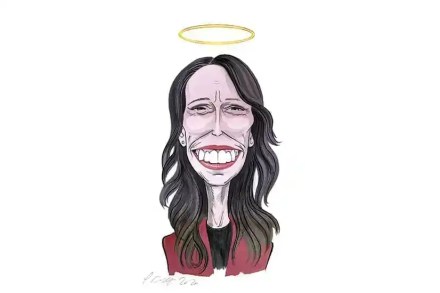
Watching Jacinda Ardern’s departure speech, I reflected that even though I invented the word cry-bully – ‘a hideous hybrid of victim and victor, weeper and walloper, duplicit Pushmi-Pullyus of the personal and the political’ – in this very magazine way back in 2015, it’s never had so many adherents as in the past couple of years, especially in the political arena. From Trump refusing to accept he’d lost an election to Matt Hancock ‘looking for a bit of forgiveness’ from his jungle camp-mates, the age of the over-emotional politician is upon us.

The ghastliness of Vivienne Westwood

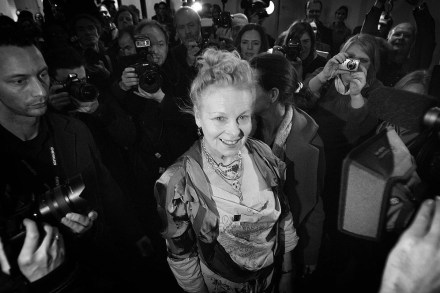
Seeing the swathe of superlatives wheeled out about Vivienne Westwood after her death last year at the age of 81, it felt for a moment like Elizabeth the Great had died all over again. Acolytes from Victoria Beckham to Sadiq Khan delivered their fawning tributes – my favourite was from Bella Hadid, who lamented the loss of ‘the most epic human being that has walked this earth.’ But the two women, Queen Elizabeth and Westwood, were as different as chalk and cheesecloth. The designer was a graceless, grasping woman, with an opinion – always wrong – about everything. No matter how much she complained and explained, she never convinced me that she was anything more than a hyped-up hustler.

Crying shame: the weaponisation of weeping

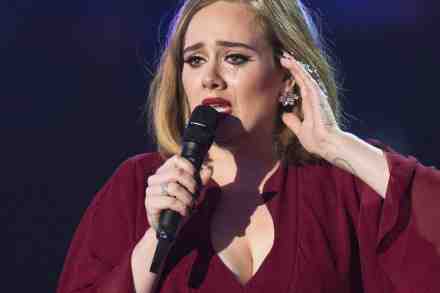
‘Tears are not enough,’ ABC once sang defiantly - but these days, they’re more than enough for handsomely rewarded celebrities to assure us that they suffer like the rest of us, so please don’t hate them. Watching the BBC Breakfast presenter Sally Nugent - a 51-year-old woman - boo-hooing recently after watching a clip of some cute guide dogs, I sincerely wished that Lord Reith might rise from his grave and bundle the heaving hack under a cold shower. I’m just so bored by celebrity tears. Or take Frankie Bridge, the ex-Saturdays singer, an attractive young woman with an adoring husband and adorable children, who like her footballer spouse Wayne has a net worth of around £9 million.

Prince Harry’s book is a gift to the world

And still it keeps on coming. We had barely absorbed the first wave of revelations – jewellery mashed, dog bowls smashed, a brother trashed – before the new tsunami of tattle related to Prince Harry’s imminent book Spare broke over our fevered faces. Dissing duchesses getting aerated over hormones, teenage deflowerings in desolate fields, cocaine ingested by noble noses, accusations of ginger bastardy, attempted derailing of putative wicked stepmothers and maternal approval from beyond the grave for the 16-toilets lifestyle ­– the burbling stream of confession never stops. Sometimes it feels as though Prince Harry is using the world’s media as his therapy couch – and sometimes it’s like having a drunk crying on your shoulder and telling you his life story in a bar.

The trouble with Prince Harry

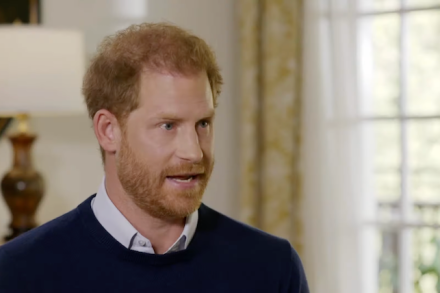
The promotional clip trailing Prince Harry’s upcoming interview – which has kicked off the publicity trail for his forthcoming memoir Spare – made for sobering viewing. This is a man who actually seemed smarter as a young squaddie than he now does as an adult father of two. Back then, dressing up as a Nazi could be countered by a nice chat with the Chief Rabbi; ignorance could be corrected. There was always the chance of moral and cerebral – I won’t say intellectual – progression. But now, with psycho-babble leaking from every orifice, there seems absolutely no way this apparently brain-washed Californian vessel will ever find its way back to anything resembling the path of common sense.

Why I’m giving up on diehard Remainers

What’s your New Year’s resolution? Eat less, move more? Or perhaps you’re a contrary cuss aiming to eat more and move less? Ever perverse, I plan a little exercise which will leave me both more streamlined yet more replete; by culling what I can only call ‘swivel-eyed Remainers’ from my friendship group, both online and IRL. ‘Swivel-eyed’ is thought to have originated in the early 1990s of a certain type of Conservative politician; Simon Hoggart wrote of those who had a ‘swivel-eyed belief in privatisation’. When John Redwood was first appointed to the Cabinet in the 1993 reshuffle, some clubbable Tory sneered ‘We want fewer swivel-eyed ideologues, not more’.

Joe Lycett and the trouble with wokescreening

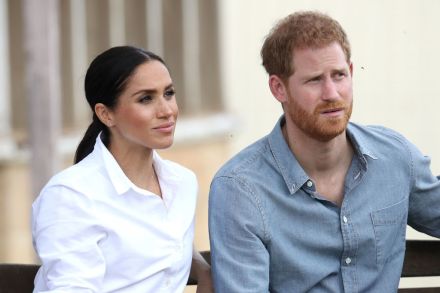
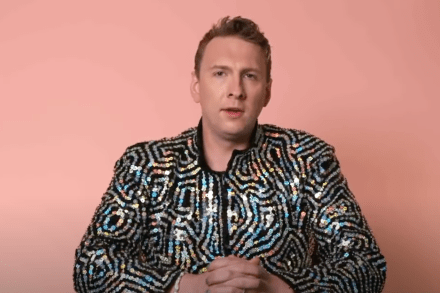
The word ‘wokescreen’ is (like its naughty older sibling, the carelessly carbon-producing smokescreen), an alibi which hides the truth about a nefarious action. But what marks it out from old-fashioned hypocrisy is that – rather than being a mere rogue – the wokescreener poses as a social justice hero, looking down from a great height at the great unwoked. From the Sussexes’ private planes to Justin Trudeau’s blackface antics, the wokescreen is a fine example of modern Magical Thinking – if you identify as good, you can then be bad to your sanctimonious little heart’s content.

Nothing will ever be good enough for Harry and Meghan

Imagine you’ve paid good money to see a French farce – and halfway through, it turns into a Greek tragedy. Do you ask for your money back, or think ‘Well, it’s not what I expected, but I’ll give it a go anyway’? I previously wrote of Meghan Markle’s Netflix outing ‘If she can provide "content" on this level – creating a character we love to hate on a level with an Alan Partridge or a David Brent – maybe we should just cave in and award her the applause she craves, because comedy gold such as this does not come knocking every day.’ Though ‘Volume One’ made many of us ooh and aah in scandalised disbelief, it did seem largely risible.

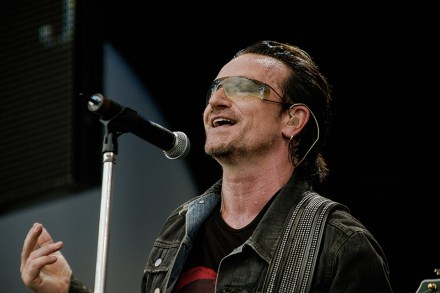
Whoever persuaded Bono he could sing?

There are a few pop stars whose work I can’t help liking in spite of myself – their song-writing, that is. I’d be happy never to see the faces or hear the voices of Mick Hucknall or Chris Martin again, but the moment ‘Stars’ or ‘Trouble’ starts, I’m mesmerised – only to wonder crossly the minute the song ends: ‘Why couldn’t they have given it to someone with a decent voice?’ Think about it: dancers have choreographers and actors have scriptwriters, so why should we assume songwriters can sing? Bono’s another.

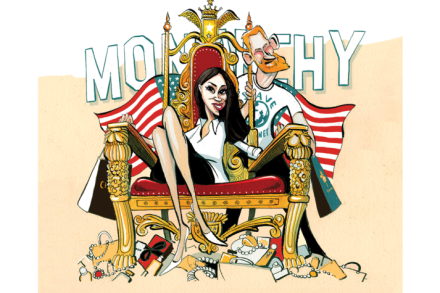
Harry and Meghan want to destroy the House of Windsor 

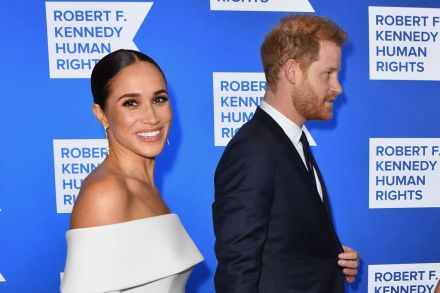
When I coined the phrase ‘The Grabdication’ in The Spectator two years ago, I had no concept of exactly how grasping the Duke and Duchess of Sussex would turn out to be. Having found Frogmore Cottage insufficiently close to California even after £2million of public money (since paid back) was spent on renovations, I still imagined that Meghan would eventually settle for a few tiaras and some voice-over work. I had no idea that what this grim pair were actually seeking was the destruction of the House of Windsor, ostensibly on the grounds of racism, but actually because this was the one chance two mediocre people would get to feel mighty.

How ‘iconic’ became anything but

Though I love words, I don't generally get on other people’s cases about them as I don't expect everyone to have my almost parasexual attachment to the English language. I’ve suffered silently through the flagrant misuse of ‘epic’ and ‘awesome‘ and numerous moronic reference to food as ‘orgasmic’ and ‘artisanal’ featuring 'curated table-scapes’. If you’re older than five and say ‘nom’ (in any multiple) then frankly, I believe that you should have your voting rights taken away – it’s called Universal Adult Franchise for a reason. However, I’m going to make an exception for ‘iconic’, the overuse of which has mildly irritated me for quite some time.

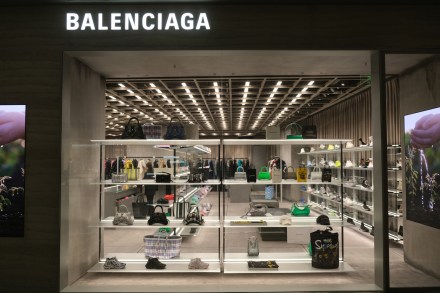
Balenciaga and fashion’s child sexualisation problem 

For a long time now, high fashion – with the alibi of being ‘art’ – has tried on rape, self-harm, heroin-chic and of course the simple, timeless classics of anorexia/bulimia as titillating ‘looks’. Anything to keep an enervated haute couture industry (for many years selling mainly in Russia, China and the Middle East, though post-pandemic even these are dropping off) in the headlines.   Ambiguous – to say the least – about the beauty of the female body, the mainly gay male world of high fashion has, after a brief period of pretending to embrace ‘diversity’ (anything above a size eight) returned to physiques in which any semblance of female sexual characteristics has been excised.

The empty Englishness of Love Actually

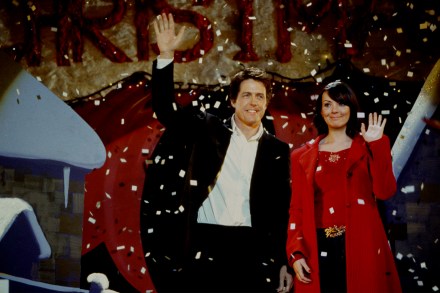
One of the pleasures of fiction, be it book or film, is that it can take us to actual places beyond our own national boundaries – and into other worlds which don’t exist. Think of fictional states from Narnia to (Graham) Greeneland – and Richard Curtis’ London, that parallel version of our capital seen in Four Weddings and a Funeral, Notting Hill and Love Actually, where no one has ever seen a machete and swearing is only ever done in a jolly way. When I asked on social media for suggestions as to what this world might be called, I was inundated with suggestions. Curtistan, Curtopia, Notting Shill, Notting Swill, Treacletown and Englandland were among the non-obscene ones; my husband then weighed in with Smarming, Tweeford and – my favourite – Smarming-on-Twee.

How Marks & Spencer spoiled Christmas

Working in a charity shop, where the Christmas cards go out in July, means I’m more aware than most how early the festive season begins these days. The postal service can be a bit erratic but surely it won’t take five months for a greeting card to reach its final destination? Our excuse is that the money we raise goes to a good cause. Regular shops don’t have the same justification. Marks & Spencer, in particular, is one of the worst offenders when it comes to Christmas. The retail equivalent of the BBC, M&S is sanctimonious and overpriced. It's a shop that thinks nothing of having Halloween merch celebrating ghouls jostling with the Christmas junk celebrating the Prince of Peace.

In praise of straightforward men

When the Queen’s granddaughter Zara Phillips married the rugby player Mike Tindall in 2011, the shallower among us wondered what she saw in him. We’re not wondering now. Watching the monstrous regiment of muppets and divas competing in the latest series of ITV's I’m a Celebrity… Get Me Out of Here! and seeing Tindall's equable nature – highlighted by the incompetent creative men who surround him, be they pop stars, actors or alleged comedians – makes it clear that the uncomplicated man is the smart woman’s choice. Tindall seems tremendously capable – an overlooked virtue in a romantic partner, and one that comes to the fore during the hard times.

In praise of Just Stop Oil

As a child in the 1960s, all I wanted to do was get to London: to be rich and famous, yes, but also to go on demos. As I watched the attractive young adults having seven bells knocked out of them by the boys in blue for protesting outside the American embassy against the Vietnam War, I yearned to join the struggle. But as I was eight years old, this seemed highly unlikely at any time in the immediate future. Instead I sought out and found images of the American civil rights marches: men in suits, nuns and priests, dignified black and white students. Then the suffragettes: delicate Edwardian women in bonnets and bustles being dragged away by the police to be force-fed.

It’s a lonely life for Wags

As ocean-going metaphors go, the news that a £1 billion cruise liner (usually charging £2,434.80 – love that 80! – for a nine-night jaunt, complete with a shopping mall, 14 jacuzzis, six swimming pools and the longest ‘dry-slide’ at sea) will host England’s Wags during the World Cup in Qatar could not have been more splashy.  This is a particularly bad time for football. The England players are off to Qatar, along with LGBT-friendly football personalities – led by ‘gay icon’ David Beckham – to shill for a country where migrant workers are treated like chattels, women are treated like children and homosexuals are treated like criminals.

Matt Hancock is perfect for ‘I’m A Celebrity…’

How can a man have such good and bad judgement? Matt Hancock’s wife is an absolute babe, but his career – and marriage – came to an abrupt end when he chose to snog his (admittedly gorgeous) aide during the strict social distancing of a pandemic lockdown. What a clown. Now Hancock is jungle-bound. By taking part in I’m A Celebrity…Get Me Out Of Here! he’s following in the footsteps of political titans like Edwina Currie and Lembit Opik. It’s been said politics is show business for ugly people, and though the reality TV choices of politicos can range from the sublime (Michael Portillo, sassy and classy on various train journeys) to the ridiculous (George Galloway wearing a pink leotard and pretending to be cat) there is always something grimly appropriate about it.

The myth of the jolly fat man

After last week’s revelation that James Corden was banned from a New York restaurant for being repeatedly horrible to staff, I’ve been considering the different way fat men and fat women are viewed. Fat men are invariably seen as jolly – who can imagine a thin Father Christmas? – despite the rollcall of porky evil, from Fatty Arbuckle, abuser of women, to Cyril Smith, abuser of boys. If they are well--connected drunks, fat men may also be called ‘bon viveurs’ whereas fat women are seen as ‘eating their feelings’ at best, being lazy and thick at worst.

Carrie, please don’t launch a lifestyle brand

When Carrie Symonds first emerged as the paramour of Prime Minister Johnson, I liked what I saw. I admired her bravery in waiving her anonymity to reveal that, as a teenager, she had been targeted by the serial rapist John Worboys to campaign against his release from prison. And I appreciated her love of our dumb friends; she was widely believed to have been behind her boyfriend’s promise to promote animal welfare in his first speech as prime minister, quite a turnaround for a man who had said that he ‘loved’ hunting in part because of the ‘semi-sexual relation with the horse’.