Julie Burchill

Julie Burchill

Julie Burchill is a writer living in Brighton. Her Substack is julieburchill.substack.com.

Why I’m with Boris Johnson on Ozempic

Seeing Boris Johnson’s byline in the Daily Mail, I felt a flare of the affection which made me break free from my blue-collar tribalism and vote Tory for the first time in 2019. I remember thinking that the experience was rather like losing one’s virginity; worrying about it for months, then secretly planning it, then taking the plunge and thinking the morning after – ‘Gosh, that was nothing to be scared of – I might even do it again!’ I’ve been quite the reprobate myself during my long, louche life, and I’ve certainly lied and adulterated, so of course I can’t condemn anything that I’ve done too, as that would make me a filthy hypocrite. What I can’t forgive in a politician is sanctimoniousness – and he had none.

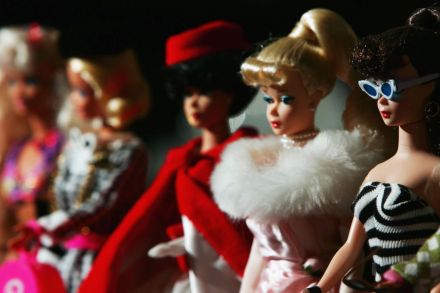
The dark side of Barbie dolls 

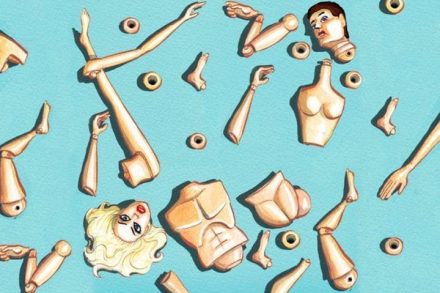
On hearing of the Duchess of Sussex’s alleged fondness for the Diabolo de Cartier Music Box (retailing for almost £3,000, in lacquered wood and gold-finish metal, freed bird motif turns when ‘La Vie En Rose’ plays), I reflected on the adult liking for childish things.  Though the box is ostensibly for Meghan’s infant daughter Lilibet Ltd – sorry, Lilibet Diana – a source told Australia’s New Idea magazine that ‘Meghan has fallen in love with Cartier’s absolutely divine music boxes.

The downfall of Prince Harry

With festival season just around the corner, it is fitting that Prince Harry’s Worldwide Privacy Tour is coming to a climax. The Duke played to a jam-packed High Court crowd last week. They were keen to hear the latest solipsistic stream-of-unconsciousness of our tormented troubadour. For two years now, Harry has – sometimes with his wife, sometimes flying solo – bleated, neighed and whinnied in interviews, books, Netflix documentaries and talk shows. He has chased media exposure in a way that made Kim Kardashian look like Greta Garbo. Now, here was the big gig, with the world's media outside the packed venue and helicopters hovering overhead. But would this be his Glastonbury Main Stage triumph – or his Altamont, the final demise of his credibility?

Dear tourists, you’re welcome in Brighton

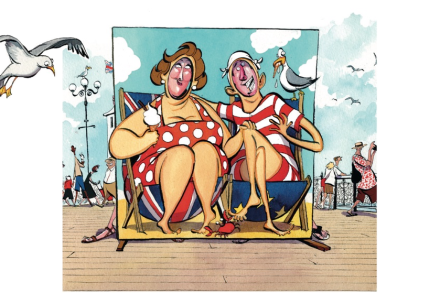
I love my adopted hometown of Brighton and Hove – I moved here in 1995 and I still feel like I’m on holiday. I love everything about living here. The obvious thing is the sea. Although I hear what our local Surfers Against Sewage say, nothing’s going to keep me out of the briny. The water quality at Hove Lawns Beach – literally at the end of my avenue – is excellent at the mo, whereas when I first lived here, it was quite normal to emerge from even a brief dip festooned in all sorts of unmentionable stuff, like an obscene Christmas tree. Here comes the summer – and the tourists. Personally, I love ‘em I even love the seagulls. I know in theory that they’re flying rats but their natural comedic bent never fails to crack me up.

In defence of the boozy office party

I’m not big on nostalgia – if the past was so great, how come it’s history? - but I allowed myself a smirk of reminiscence on reading recently that Ann Francke, chief executive of the Chartered Management Institute (‘a professional body focusing on management and leadership’) has put the damper on the age-old tradition of getting blotto at work parties. Francke told the BBC that while hanging out after-hours with workmates is ‘a great team-building opportunity’, managers have a responsibility to keep inappropriate behaviour in check. ‘That might mean adding additional activities alongside alcohol, limiting the amount of drinks available per person or ensuring that people who are drinking too much are prevented from acting inappropriately towards others,’ she said.

How many black or Asian Britons feel a strong sense of European identity?

Though wokeness is a vile thing, it has contributed to our culture in one fortunate way – by inspiring brilliant books which refute it. The woeful lack of anything passing for analysis (probably a colonial tool of oppression, like brunch) on the SJW side has thrown into gloriously sharp relief the difference in the intellectual firepower between those who believe in free speech and those who resemble Veruca Salt after joining the Stasi.

The case for culling friends

Since I’m so old – 64 this summer – Facebook has always been my preferred form of social media. But if I was a softer soul there’s a feature on it that might really tug at my heartstrings: 'See your memories.' Because many of mine – going back more than a decade – are now blank of any actual memory: 'Content not available.' I know what these were: photographs of me with ex-friends (they’d always take the selfies, as I don’t have a camera-phone) who I’ve fallen out with and who have since deleted the photographs. In 90 per cent of cases, I’d say that I was the one who caused the falling-out.  If I’m being honest, I don’t miss any of them.

The sad truth about Phillip Schofield

You hear a lot about Artificial Intelligence (AI) taking over professions in the near future – and I think television presenters should be particularly worried. Think about it. Robots wouldn’t expect salaries of hundreds of thousands of pounds. They wouldn’t jump queues. They wouldn’t have lurid headlines about paedophile brothers casting a pall over their shiny facade. And they wouldn’t show a cheery Doctor Jekyll-bot to the public and a nasty Mr Snide-bot to those they considered their inferiors. I’m thinking, of course, about Phillip Schofield. Amusingly, when you go to his Wikipedia page you find a line at the top saying: ‘This article is about the television presenter. For the medieval historian, see Phillipp Schofield’.

This coronation is making me a republican again

I was never a monarchist. One of my earliest memories is of being a bolshy little girl refusing to stand up for the national anthem played (as was the custom in places of public performance back in the twentieth century) after a showing of ‘Born Free’ at Bristol Gaumont in 1966. Still howling at the travails of Elsa the Lion, I resisted my mothers pleas to get to my feet. I’d like to think that even at the tender age of seven I was already a keen meritocrat and a loather of nepotism – but I think it more likely that I was already an attention-seeking diva. Imagine my surprise when a couple of years back I became quite the fan of the Royal Family. I could be found singing the praises of Duchess Kate and mourning the passing of Duke Phil.

Blairite ‘nepo babies’ are the worst of the lot

When the singer Lily Allen found herself flak-catching recently, she was quick to point out she was the OK kind of nepo-baby, because: ‘The nepo-babies y’all should be worrying about are the ones working for legal firms, the ones working for banks, and the ones working in politics, if we’re talking about real world consequences and robbing people of opportunity’. But Allen misses the point. People feel cross about the showbiz nepo babies – those who have made it thanks to their parents' fame – because being an actor, model or TV presenter seems far cushier than being a lawyer or a politician. In those jobs, you have to at least turn up at an office and get yelled at just like a regular person.

There’s nothing wrong with leaving a sick partner

Danielle Epstein’s story is a sad one; last year she was in the process of buying a house with her boyfriend when he was diagnosed with a brain tumour, underwent a serious operation and had to learn to walk again. He wasn’t the only one who walked; Miss Epstein did also, and not just down the road where she could keep an eye on him, but all the way to sunny Thailand. She said in her defence: 'I felt like the most awful person, leaving somebody because they have cancer, but it was damaging my mental health and it wasn't helping him… I couldn't sleep or eat, I was having panic attacks and was on so much medication to sort myself out I just couldn't function.

Self-obsession is killing music

Though I’m not the most avid fan of her oeuvre, I was cheered recently to see that Ellie Goulding wanted her new album to be less personal: ‘It was such a relief and really refreshing to not be sitting in the studio going through all the things that happened to me and affected me… it’s the least personal album, but I think it’s the best album because I got to just explore other things about myself. I just really, really enjoy writing; really enjoy being a singer.’ What a refreshing take on the creative process, which in modern times can often seem like a cross between a bulletin from the therapist’s couch and a ceaselessly-picked sore. Millennials can’t seem to get enough of spilling the tea, and that goes especially for their most successful singers.

The Guardian has wrecked itself 

It’s so strange now to think that I spent several happy years as a Guardian columnist, the only billet from which I’ve ever garnered a stand-alone anthology – The Guardian Columns 1998 - 2000:  There is no other commentator who can turn received wisdom on its head like Burchill… no other journalist who can combine such relentless insight, malice and warmth to deserving causes. She is one of the best columnists around – an antidote to the glut of confession columns that saturate the weekend papers.  Huzzah!  Admittedly we fell out when I asked for a raise and they offered me a sofa instead – is it ‘cos I is a chav? – but then, they offered my friend, also a woman of working-class origin, a new kitchen.

Rock’n’romance is dead

The alchemy wrought by a young man’s ability to gyrate and croon at the same time is notorious, turning shy mama’s boys from Presley to Rotten into love/hate machines. Something magical happens when someone – however unsightly – sings a song well, allowing him access to a quantity and quality of women undreamt of when he was just walking and talking like a normie. Two words: ‘Mick’ and ‘Hucknall’. The romantic image of the modern musician as tasty but troubled troubadour roving from town to town on his lonesome (except for his bandmates, backing singers, roadies, drug dealer and manager, of course) and taking sensual solace where he may is a powerful one, long propagated by he-sluts who would be intimate with a jack-in-the-box if it looked at them the right way.

In defence of musicals

You can always rely on theatreland to serve up drama off stage as well as on. Hopefully the spat between Lord Andrew Lloyd Webber and Sir David Hare over whether musicals are ‘killing’ theatre will run and run.  Writing in The Spectator last week, Hare moaned: ‘Musicals have become the leylandii of theatre, strangling everything in their path… are dramatists not writing enough good plays which can attract 800 people a night? Will well-known actors not appear in them? Or did producers mislay their balls during lockdown?

The police have used a ‘wokescreen’ to cover their racism and misogyny

Where to start, with a police force where decent behaviour seems to be the exception rather than the norm?  For a quarter of a century since the murder of Stephen Lawrence caused the Macpherson report to call the Metropolitan police ‘institutionally racist’ we’ve been comforting ourselves – in the manner of frightened children humming in the dark – with the Few Bad Apples theory. It’s just so silly to say that. There are bad apples in all professions, but a milkman doesn’t have the right to arrest people and strip-search them, last time I checked. As Doreen Lawrence said, ‘It is not, and has never been, a case of a few ‘bad apples’ within the Metropolitan police. It is rotten to the core.

Lessons for Meghan from Fergie

Before the Sussexes – before the Grabdication was a twinkle in Meghan’s crocodile eye – there was Sarah, Duchess of York; greedy, grasping, grubby Fergie. Some see Diana as when the stiff upper lip of heritage royalty became the trembling lower lip of the new breed. But the Princess of Wales was a teenage virgin with a headful of dreams lured into a marriage in which she was a breeding machine with a man who was still in love with his ex; this would have made any woman with spirit react. No, Diana was a hard worker with an attractive dash of spite – that revenge dress, that three-in-this-marriage quip – which stopped her from presenting herself as an all-round victim.

The ignorance of Gary Lineker

When I was a girl, footballers had a somewhat limited vocabulary. That wasn’t to say that they were seen as inferior to wordy types – on the contrary, like blind piano-tuners, they were seen as accessing a higher level of excellence in one specific realm which we Normals had no chance of achieving. Thus when they spoke of being over the moon/sick as a parrot, we accepted that their brains were in their feet and happily indulged them. Even when humble hometown heroes were succeeded by flashy feet-for-hire mercenaries from Best to Gascoigne, who were worshipped like deities, their fans wouldn’t have given tuppence for their opinions on any burning moral issues of the day, which was just as well as these idols were linked by a tendency to beat up women.

Woke culture is strangling comedy

Three weeks after that South Park episode and the memes just keep on coming. Despite years of highly articulate fulminating against the preposterous pair by essayists like myself, there’s a feeling that the satirical cartoon was the conclusive blow to the Sussexes' reputation – no well-turned phrase will ever better the glorious awfulness of ‘The Worldwide Privacy Tour’. One of the things that the woke hate most about our lot is the fact that we’re far more amusing. Their natural mode of address is to scold – and scolding and wit are polar opposites. I daresay some clown somewhere has stated that punchlines are probably imperialist.

Harry, Meghan and the rise and fall of the folie à deux

I was interested to read that the next Joker film has the subtitle ‘Folie à Deux’ – a lovely phrase not used enough these days. When shrinks talk about folie à deux (also known as Lasègue-Falret Syndrome, after the 19th-century French psychiatrists who discovered it) they mean a ‘shared delusional disorder’ in which symptoms of an irrational belief are transmitted from one individual to another – including folie en famille or folie à plusieurs ('madness of several’), sometimes leading to violence and even murder.