Julie Bindel

Julie Bindel

Julie Bindel is a feminist campaigner against sexual violence. She is the host of The Lesbian Project podcast, with Kathleen Stock.

Why Labour’s fate will be decided in the Strait of Hormuz

36 min listen

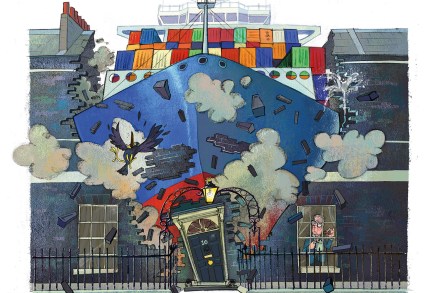
For this week’s Edition, Lara Prendergast is joined by The Spectator's John Power, feminist campaigner Julie Bindel and former adviser to Boris Johnson – and co-host of the In The Room podcast, Cleo Watson. They explore the idea that the Strait of Hormuz, not Makerfield, will determine the fate of the current Labour government. Starmer may be facing a challenge to his authority from mayoral shapeshifter Andy Burnham, but neither the PM or the wannabe MP will be rewarded if grocery and energy prices continue to soar. How much can be done to insulate Britain from future pain? And do they trust Labour to do so? Also this week: is Wes Streeting a better option than Burnham?

The global revolution sparked by a vegetarian schoolteacher in Helsinki

At the turn of the 20th century, no woman was in government anywhere in the world. Change began with Finland in 1907, which elected 19 women to its parliament. Hilda Kakikoski was one of those women. She was a conservative candidate – a nationalist who was also a lesbian and a vegetarian. Paula Bartley’s Trailblazers spans the century, following the story of female politicians as they emerged. From Finland we move to Russia, where the revolution provided opportunities for the likes of the socialist feminist Alexandra Kolontai, the first woman to join a government cabinet and become a global diplomat. Constance Markievicz was the first woman to be elected to the British parliament, during her imprisonment for her role in the Easter Rising, but did not take her seat.

Greece is the word this dinner party season

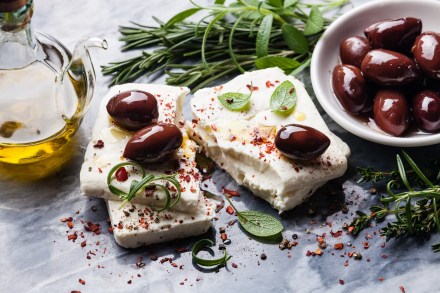
If I were offered the option of eating just one country’s cuisine forevermore, it would have to be Greek. Even on a rainy day in north London, just one bite of souvlaki is enough to conjure sun-drenched landscapes, fresh olive oil and vibrant Mediterranean flavours.  Clearly plenty of others agree. Greek restaurants seem to be popping up all over London – with at least five opening in the past two months. There’s more to come with the much-anticipated opening of Zylia in Covent Garden next month, from Greek chef Nick Molyviatis (formerly of Borough Market hotspots Oma and Agora) and Cypriot restaurateur Barry Karacostas. No wonder lifestyle platform SheerLuxe was cooing about ‘London’s love affair with Greek food’ earlier this month.

Barrie Drewitt-Barlow and the commodification of surrogacy

Barrie Drewitt-Barlow, 57, is the man responsible for normalising gay male couples having babies via surrogacy. He is very keen on designer babies and last year it was revealed that he had paid a Miami model £50,000 to be the egg donor for his husband, Scott Hutchinson, 32, ‘to stop our baby being ugly’. Scott used to be the boyfriend of his daughter Saffron, but the gay couple now also have children together. Between them, they have a number of children born via surrogacy. Both men have now been charged with human trafficking for sexual exploitation, rape, and sexual assault. They have strenuously denied the charges.  I debated Drewitt-Barlow on Woman’s Hour back in 2011; the subject of the debate was surrogacy. I am a staunch critic of what I refer to as 'Big Fertility'.

I hate gastropubs

The Eagle in Farringdon used to be next door to the old Guardian offices. I remember eating there back in the early 1990s, when it was offering something of a new approach to dining. A Portuguese-influenced menu was scrawled on a blackboard, and it was exciting and fresh. Placing your order was always a bit of a pain – you had to jostle your way to the front of the always crowded bar, then struggle to make your order heard over the noise endemic to pubs with no soft furnishings – and the many people intent on prioritising drinking over eating. But The Eagle became an institution and (although I'm not sure this is the case) it is reputed to have been the UK’s very first gastropub.

Ozempic has ruined Easter

It’s a funny thing, being a feminist surrounded by women on weight-loss drugs. As someone who recognises the health risks of being clinically obese, I’ve never been a fat liberationist – but pretty much all of us used to be against prescribed beauty standards. In practice this meant we would critique the harmful impacts of the ‘size zero’ or ‘heroin chic’ trends rather than obsess over having gained a few pounds over Christmas. Yet, with the rise of weight-loss jabs, skinniness has become a norm rather than a feminist discussion. And twee ideas about ‘being good’ or ‘cheating’ have been replaced by – well – feeling too nauseous to cheat at all.  Which is why Easter is a fascinating holiday in this era of weight-loss jabs.

The scrumptious surge of unusual food pairings

When we describe something – or someone – as an ‘acquired taste’, it is rarely a compliment. If we say it of Sharon, for example, it means that she is a bit of a pain in the neck. It's the same with food: olives, anchovies and oysters are some of the finest foodstuffs on God's earth but sometimes, in order to truly enjoy them, you have to first quiet your inner doubts by tuning out all the reasons why other people don’t like them.  Those of us who like to devote time to thinking about matching food and booze get called snobs – but we all do it all the time. You would probably choose to have a mug of tea rather than a cup of coffee with fish and chips – and fair play to you if you do.

Good riddance Rene Redzepi

This week, Rene Redzepi – often credited as having created the world’s greatest restaurant – stepped down amid explosive allegations of abuse. In my view, if the allegations of physical brutality are true, he should face criminal charges. Redzepi, founder and proprietor of Noma in Copenhagen, founded in 2003, wrote on Instagram about the recent revelations regarding his own past leadership: ‘I have worked to be a better leader and Noma has taken big steps to transform the culture over many years. I recognise these changes do not repair the past. An apology is not enough; I take responsibility for my own actions.’ Not so long ago, such behaviour would have been routine, expected and even glorified in a high-end kitchen.

Al fresco dining is overrated

The daffodils are out, and so, therefore, are the optimistic diners. A couple of rickety tables and wonky chairs are dragged out from their storage and plonked on a bit of uneven concrete on what passes as pavement in London. They are a strange breed, this first flush of outdoor diners who think a tiny ray of weak sunlight breaking through the two-degree cold heralds the start of summer. I’m not talking about the people braving the elements under a leaky conservatory roof, crowded around outdoor heaters and wrapped in blankets, who are best known as smokers or vapers. No, I mean the hardy, ‘freezing fresh air is better than indoor air’ lot we are about to see shivering through their fake smiles as they push aside a bowl of freezing cold soup that can’t quite pass as gazpacho.

Will Bradford survive Britain’s curry house crisis?

Bradford, West Yorkshire, is not known as the curry capital of Britain for nothing. The city is home to more than 200 Asian restaurants. In the main, these are Kashmiri and Pakistani – driven by the city’s Pakistani-Muslim population which is one of the most concentrated in the country – and much of the local economy relies on them for jobs and income. My memories of Bradford curry houses go back to the late 1990s when I worked at the university. Commuting from London and therefore living in student digs meant I would eat out more often than not. That meant curry almost every night I was in the city as it cost little more than a sandwich.  Bradford’s curry houses are known for their homestyle cooking, rather than fancy, westernised, Instagram-aesthetic grub.

In pursuit of the perfect fridge

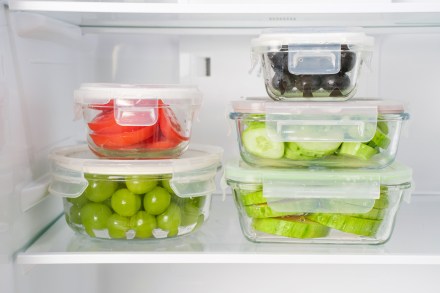
When I recently mentioned to a friend that I clean my fridge every week, she said I was a bit weird. I get what she means. Most fridges get cleaned less frequently or when something spills down from the shelf above. But I do like to keep on top of my sell-by dates. I live with someone less vigilant about such matters, who would not necessarily turn her nose up at something a day or so out of date. As a rule, we rub along very nicely, with me going through the fridge, chucking everything out, and her occasionally rummaging around, muttering: ‘Where is that leftover spring roll?’  When it comes to fridge etiquette, though, I am very precise – and very squeamish. Dirtiness is the cardinal sin, closely followed by ‘small bowling’.

A Brit’s guide to Mexican food

I’m in Mexico City and spoilt for choice as to where to go for a lunchtime taco. Taquerias are everywhere, each entrance best described as a hole in the wall: you step in from the street into a dark, cavernous stone vault and go past the bar, stocked with dozens of bottles of spirits and a fridge full of beer. I honestly feel like I’ve never had Mexican food before, except once in San Francisco. On that occasion, I went to a canteen close to the border with a friend, where we were the only two non-Mexican people eating. The salsas were bright as traffic lights and there was charred corn doused with chilli and lime salt, fresh white cheese and lime butter. The tortillas were the soft corn ones, unlike any I’ve seen in UK outlets, with hard, U-shaped shells made of wheat.

Dessert wine isn’t just for pudding

At the end of the 1970s, when I had my first taste of wine, the choice was limited. It was either cloyingly sweet German Liebfraumilch, or something from the Don Cortez or Hirondelle types, both of which were sour and brash. That, younger readers, was how bad things were, and why many of us during that time stuck to lager and lime. When Le Piat D’Or came on the market, it was, frankly, a relief. But things have changed, including my palate. Sweet or semi-sweet wines can be delicious, and bear no resemblance to the cheap German variety of my youth. Many moons ago, invited to my first posh dinner party, I was bowled over when served a lightly sweet Riesling with a fruit crumble. Riesling is a key component in Liebfraumilch, but not all Liebfraumilch is Riesling.

Why are hotel breakfasts so bad?

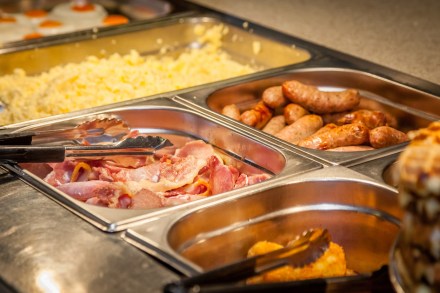
Where else would you see anyone wandering around with a plate heaped with such incongruous ingredients as bacon, olives, blueberry waffles and a side order of yoghurt and prunes? Nowhere but at a hotel breakfast, of course. More often than not, the food is inedible, and nothing works properly. The coffee machines always seem to be faulty, although even this is preferable to being served from a silver coffee jug filled with tepid, muddy brown, tasteless water that leaves you hankering after service-station machine coffee. Then there is the room: inevitably, it is dark and windowless, usually in a basement that smells vaguely of damp underneath the stench of cheap cooking oil. Beware the hotel that serves dinner and then drags out the leftovers for breakfast.

James Heale, Margaret Mitchell, Damien Thompson, Rebecca Reid & Julie Bindel

26 min listen

On this week's Spectator Out Loud: James Heale considers the climate conundrum at the heart of British politics; Rebecca Reid explains why she's given up polyamory; Damien Thompson recounts the classical music education from his school days; Margaret Mitchell asks what's happened to Britain's apples; and Julie Bindel marvels at the history of pizza.  Produced and presented by James Lewis.

The simple flatbread that conquered the world

Pizza is the Italian food that has conquered the world. From Brussels to LA, from Beijing to Buenos Aires, pizzerias are everywhere. But what are the origins of this food, and how did it become so popular? Reading Luca Cesari’sbook made me hungry not only for a thin crust margherita but also to digest the wealth of information about this simple dish. The margherita gets its name from Queen Margherita of Savoy, who, in 1889, on a visit to Naples, summoned Raffaele Esposito, the celebrated pizzaiolo (pizza-maker and hawker) to the palace to try his wares. She so liked the one with tomato, mozzarella and basil (made to represent the colours of the Italian flag) that it was dedicated to her.

The salad dressing wars

I was recently in a café that promoted its salads as being served with ‘low-fat dressing’. I couldn’t possibly imagine what that might be: no olive oil? That stuff you spray on the pan when on some god-awful calorie-controlled diet? It turned out to be bottled – bought in from a supermarket – and contained lots of yoghurt, vegetable oil and dried herbs. I ordered a ham sandwich. The very basis of any salad dressing is a good-quality, fruity, preferably first-press or at least virgin olive oil. All the other ingredients are up for grabs, and can even be the subject of fairly robust arguments – at least in my house. My partner Harriet was first taught how to dress a salad by her father, during a holiday in Italy.

Max Jeffery, Sam Leith, Michael Henderson, Madeline Grant & Julie Bindel

37 min listen

On this week’s Spectator Out Loud: Max Jeffery examines Britain’s new hard left alliance; Sam Leith wonders what Prince Andrew is playing; Michael Henderson reads his letter from Berlin; Madeline Grant analyses the demise of the American ‘wasp’ – or White, Anglo-Saxon Protestant; and, Julie Bindel ponders the disturbing allure of sex robots. Produced and presented by Patrick Gibbons.

The disturbing allure of sex robots

By the late 1980s, the war against pornography was lost. Feminists, as well as Christian moralists, mainly in the UK and US, had been raging against the industry since the early 1970s. In 1980, the American feminist author Robin Morgan coined the phrase: ‘Pornography is the theory, rape is the practice.’ In 1983, alongside the legal scholar and feminist author Catherine MacKinnon, Andrea Dworkin came up with the Dworkin-MacKinnon Anti-Pornography Civil Rights Ordinance, which would have granted those directly harmed by pornography a right to civil recourse by enabling victims to sue both the producers and the distributors of porn.

The gay rights movement threatens to implode

In the UK and elsewhere in the West, lesbian and gay rights have largely been won. Over the past two decades, rights to adoption, marriage, military service and workplace protection from discrimination have become law. Social inequality is another matter, and acceptance of same-sex relationships is now less widespread than it was ten years ago. According to Ronan McCrea, the author of The End of the Gay Rights Revolution, this can be explained – at least in part – by the political overreach of the LGBTQ+ movement. Is McCrea self-hating, riddled with internalised homophobia? Could it be that the movement has demanded too much, over and above acceptance and tolerance? As the title suggests, the book is a critique of the overreach and demands of some of the more radical campaigns.