
This may not be the conclusion Israel imagined when it launched its campaign in Gaza. Not all the hostage bodies are home. Hamas is bruised, but not broken. The region remains volatile. Yet even as combat continues, the United Nations Security Council, backed by an American administration long assumed to be ‘pro-Israel’, yesterday endorsed a resolution that places an armed international force in Gaza, sketches a vague pathway to Palestinian statehood, and outlines a governing arrangement in which neither Israel nor the Palestinian Authority is central.
For Israel this is a moment of profound uncertainty – a reminder that military operations, however successful, do not automatically dictate the shape of the political landscape that follows.
Prime Minister Benjamin Netanyahu’s restrained endorsement of the Trump-backed UN Security Council resolution was delivered online in English but not echoed in Hebrew. That reflects the strategic ambivalence surrounding it. The broader diplomatic framework, associated with Trump’s regional vision, promised much: the return of all the hostages, the eventual disarmament of Hamas, and the prospect of avoiding a full Israeli withdrawal from Gaza. It ties into larger regional realignment strategies, including proposed economic corridors from India to Europe and expanded normalisation with Arab states. For many in Israel’s defence and diplomatic corps, these are tangible goals. The UN resolution itself, however, is more narrowly framed, and does not explicitly include many of these broader elements.
No credible force has stepped forward to demilitarise Gaza. International will is thin
The resolution marks the first time the Security Council has mandated an armed international deployment into post-1967 territory as a buffer between Israelis and Palestinians. It envisions governance in Gaza without Israeli oversight and without the need for Israeli approval. These features represent a break from decades of precedent and a narrowing of the space in which Israel can exercise control over its own security perimeter.
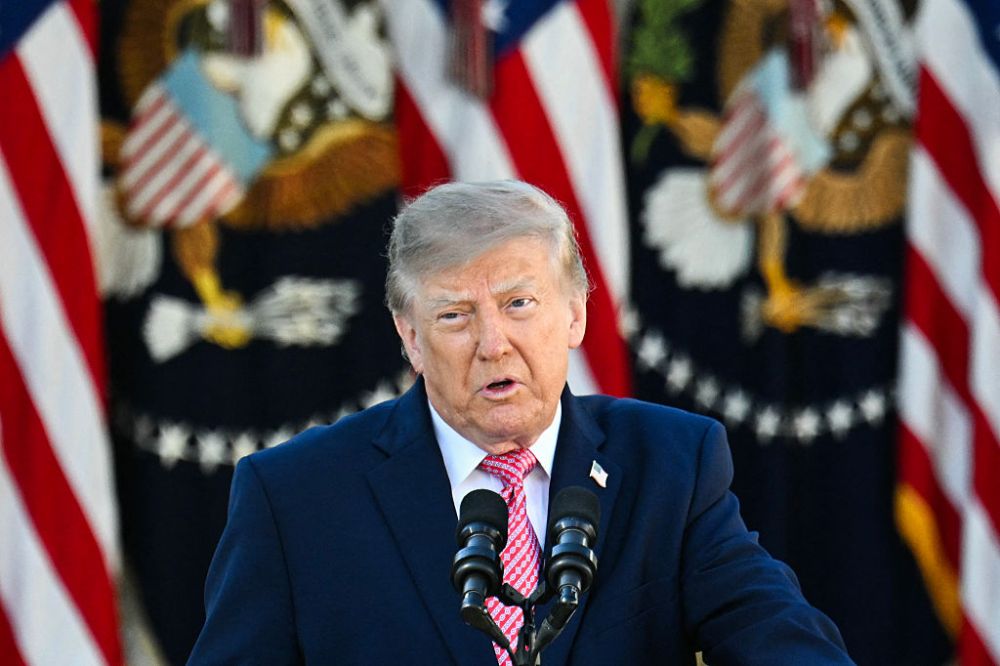
This evolution must be understood within the broader recalibration of American regional priorities. The recent announcement of the sale of F-35s to Saudi Arabia, made in parallel with the resolution, signals a willingness to override traditional Israeli red lines. So too does Washington’s revived language about Palestinian statehood. Just months ago, the US labelled a similar UN initiative ‘a gift to Hamas’. Now, it is offering its own version of that gift.
For parts of Israel’s political right, this represents a sharp reversal. Earlier hopes for formal annexation in Judea and Samaria, or for a strategic overhaul of the post-Oslo framework, are being overtaken by a return to familiar but no less perilous ideas: demilitarisation through foreign trusteeship, governance by international actors, and Palestinian statehood as the price of regional peace.
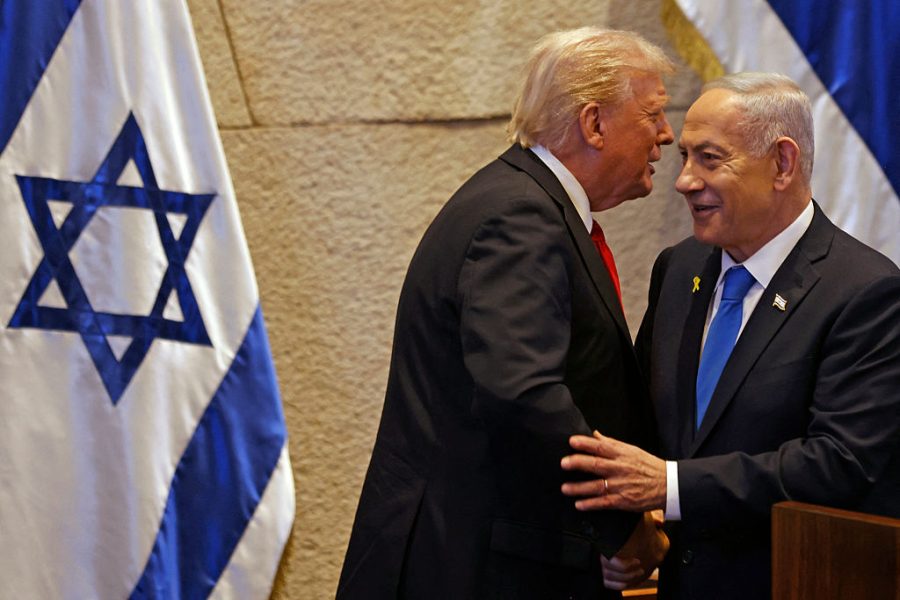
Trump’s recent speech in the Knesset, notable for its friendship and emotional resonance, now feels disconnected from the logic of the plan unfolding on the ground. It is no longer clear whose vision is being advanced, or whether Israel remains its principal author.
Washington is not so much abandoning Israel, as pursuing its own strategic agenda. The plan reflects a certain American logic: consolidate regional stability, secure economic pathways, manage the Gaza file, and reap diplomatic credit – all while projecting a vision of peace. Within that logic, Israel is not irrelevant, but neither is it inviolable.
This diplomatic moment also reflects the twin pressures facing Israel within the West. On one flank are progressive currents that view Jewish nationalism as an anachronism to be overcome. On the other are cold-eyed utilitarians who value Israel only to the extent that it serves larger Western designs. The former trade in moral certitudes; the latter in transactional calculus. Both are increasingly deaf to the particularities of Israel’s security environment.
And yet, even within this difficult terrain, the appearance of isolation may conceal a more complex reality. The same resolution Hamas has rejected, labelling it foreign imposition, is unlikely to be enforced in any meaningful way. No credible force has stepped forward to demilitarise Gaza. International will is thin. The distance between words and deeds is vast.
So too with Turkey. While concerns about Turkish designs in Gaza and Syria remain, Ankara today finds itself increasingly excluded from Eastern Mediterranean diplomacy. The US has shifted its alignment toward a triad of Greece, Cyprus, and Israel. Energy corridors that once depended on Turkish cooperation are now being designed to bypass it altogether. For all its ambitions, Turkey may yet prove to be less a rising power in this moment than a sidelined one.
The path ahead remains murky. Much of the current diplomacy may collapse under its own contradictions. But that is not inevitable. It is a question of timing, leverage, and strategic poise. Israel’s challenge is not to rail against every aspect of the plan, nor to embrace it blindly, but to discern where it can bend the arc in its favour, where to look for cracks, and where it must draw immovable lines.
This is no time for fantasy. Talk of peace must be judged by its capacity to confront Hamas, constrain Iran, and preserve Israel’s freedom to act. Any model that fails those tests will falter, however elegant its language or impressive its sponsors.
But nor is it a time for despair. The illusions will fade. The gap between resolution and reality will widen. Israel must position itself not just to survive that reckoning, but to emerge from it stronger, shrewder, and less dependent on others to articulate its future.





Comments