Jonathan Mirsky

David Cameron’s craven surrender to China follows a pattern

From our UK edition

‘This week I make a visit to China. I come with a clear ambition: to build a lasting friendship that can become a blueprint for future cooperation between our countries. We have a responsibility through our ongoing dialogue to work together on a range of wider international issues – from negotiations with Iran, to counter-terrorism and climate change.’  North Korea’s President Kim on the verge of his latest visit to Beijing? It must be. North Korea is China’s only ally in the normal sense of the word. With all other countries, Beijing’s relationship waxes and wanes depending on how ‘friendly’ Beijing deems them to be. But no, actually.


Bill Bryson’s ‘long extraordinary’ summer is too long

From our UK edition

Hands up Spectator readers who can remember the American celebrities Charles Lindbergh, Babe Ruth, Al Capone, Jack Dempsey, Zane Grey, Edgar Rice Burroughs and the  adulteress and husband-killer Ruth Snyder  who all, in 1927, lit up what Bill Bryson calls ‘one hell of a summer’. Born in America only five years later, I knew about most of these characters. Lindbergh, in particular, whose flight across the Atlantic from the east coast to Paris made him for some years the most famous man ‘on the planet’ (one of Bryson’s favourite phrases), attracted vast crowds; once, in a welcoming frenzy, they almost tore his plane apart — an easy feat considering that it was covered in fabric.

Is your dog enjoying more than physical exercise when you walk him?

From our UK edition

Skip this book if you dislike dogs, or even if you are indifferent to them, or echo an acquaintance of Brian Sewell’s who told him: ‘We expected better of you than such silly, sentimental anthropomorphism.’ If you are such a person, you will be horrified by Sewell’s habits — starting with the one of the title (sometimes he sleeps with four dogs together).

Against Their Will, by Allen M. Hornblum – review

From our UK edition

After the Morecambe Bay Hospital scandal a new era opens of compassion, -whistle-blowing, naming names and possible prosecutions. But what about 70-odd years of harming children in ‘care’ homes, and prisoners, with toxin injections, -radioactive blasts, electro-shocks to the brain and frontal lobotomies — all done in the interests of medical advance by leading American doctors and scientists, one of whom was -awarded a Nobel Prize? Furthermore, what if the CIA sponsored such work in the interest of defending the US against Soviet threats?

China’s War with Japan, by Rana Mitter – review

From our UK edition

The Sino-Japanese struggle that began in 1937, two years before the rest of the world plunged into war, is not as unknown as Rana Mitter, a professor of Chinese history and politics at Oxford, contends in this comprehensive new book. His copious notes, after all, display how well that conflict has been studied by many scholars. But in the sense that few Westerners under the age of 80 can string more than two sentences together about those terrible eight years, he is right. It is a big story, and for the most part Mitter tells it well. The scene — China — is vast. Two competing leaders, Chiang Kai-shek and Mao Zedong, dominate it.

The Dark Road, by Ma Jian – review

From our UK edition

If you are considering adopting — that is, buying — a Chinese baby girl, recycling a television or computer, or buying a Vuiton bag, think again. Ma Jian, author of the startling Beijing Coma, prepared for this evocative and sometimes horrifying novel by travelling through Chinese regions few tourists see. There he encountered some of the millions of women who had just given birth to babies declared illegal by the one-child family laws, which were taken away and sold by corrupt officials to rich foreigners eager to adopt. He saw, too, the effects on the poor migrants who disassemble our unwanted televisions and computers and poison themselves by handling the toxic parts.

Letter from an Unknown Woman and Other Stories, by Stefan Zweig – review

From our UK edition

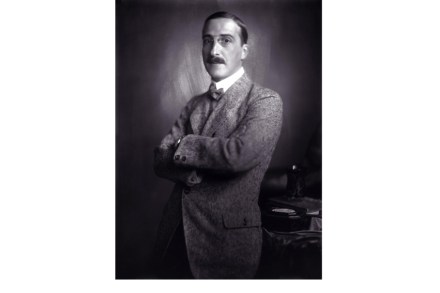
Do men or women of the world still exist? Well-educated, they are from families that value taste, manners and intellectual cultivation, and with enough money to allow their children to acquire these qualities; they attend concerts, look at paintings, travel and meet men and woman of distinction. They could, for example, while still young, watch Rodin perfecting his sculpture, write operas with Richard Strauss or help James Joyce find the perfect words for turning something he had written into other languages. Stefan Zweig was just such a man. He was born in 1881 to a wealthy Jewish family in Vienna, during the last Golden Age as he put it. He and his wife killed themselves in 1942 in despair at Hitler’s destruction of their civilisation.

Going under

From our UK edition

As someone slightly older than Al Alvarez, and also a regular swimmer — although not in the ice-edged Hampstead Heath pools into which he dived for over 60 years — I was initially disappointed by this book. For the first half it repeats too often the pleasures of extremity-numbing, cold, outdoor swimming when one is old. Alvarez’s outer and inner selves, in the first five or six years of this ten-year journal, rejoice with the ecstasy of swimming almost daily in water preferably just a few degrees above freezing, feeling the zing when he climbs out pink as a lobster and banters with the lifeguards. But then, slowly and horrifyingly, he charts the not-so-gradual collapse of his once super-fit body.

The plot thickens | 6 December 2012

From our UK edition

At last! At the age of 80, I have read my first digital book. According to Penguin, these brief ‘Specials’ are written to be read over a long commute or a short journey, in your lunch hour or between dinner and bedtime, a short escape into a fictional world or ... as a primer in a particular field, or to provide a new angle on an old subject. You can read on the move or in a spare moment for less than the price of a cup of coffee. So what do you get from this Special? John Garnaut, an Australian journalist who specialises in Chinese affairs, describes here, in steamy prose foreshadowed by the sub-title, an example of the self-cannibalism that has wracked most communist regimes, and certainly the Chinese Communist Party almost since its founding in 1921.

All in the telling

From our UK edition

I like Jewish jokes. I begin every conversation with the literary editor of The Spectator with one or two, do the same with the judge across the road, and tell my newest joke to the lifeguards at the local swimming pool. The key to a good one is gentle self-mockery. But I dislike reading jokes and listening to them from non-Jews, who invariably tell them badly. But if you like Jewish jokes written down, dozens and dozens of them, and you think Michael Winner a witty fellow, then this is the book for you. Better skip the introduction, though, because in it Winner reveals what he thinks is really funny. ‘Some of the funniest stories I have heard,’ he writes, were in Northern Ireland during the Troubles.

‘Ill luck was my faithful attendant’

From our UK edition

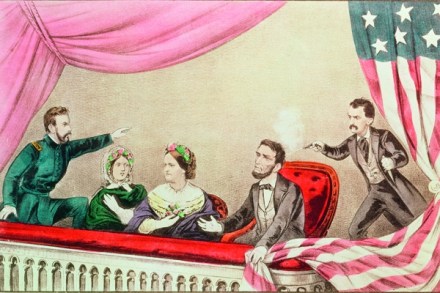
Here is the melancholy story of Mary Todd Lincoln, widow of President Abraham Lincoln, who was shot next to her on 12 April 1865 as they were watching a play. He died three days later. The book has a single theme with two strands: was Mrs. Lincoln insane before as well as after her husband’s murder? And in subsequent years was she treated with continuous and sympathetic care by her son, Robert, or was he a greedy monster who ensured that his mother was declared insane so that he could get his hands on her substantial estate? Jason Emerson, a journalist and specialist on the Lincoln family, has examined every available document, especially letters, including some he discovered in a trunk never previously opened.

Star-crossed lovers

From our UK edition

Having lived for 15 years in Japan, Lesley Downer has already written several highly informed books with Japanese themes. For her most famous, Geisha: The Secret History of a Vanishing World, she spent six months with those artful women who make every man they entertain with song, dance and chat feel adored, without — usually — going further than that. I found Downer’s novels readable but not especially memorable. Now she has written a really good novel, suffused with the atmosphere of Japan in the late 19th century — when westernising influences were begin to penetrate its traditional culture — and populated with believable characters, whose fates are not settled until the last few suspenseful pages.

Ye Shiwen is a phenomenal swimmer, not a cheat

From our UK edition

If Ian Thorpe, Lord Coe, and Lord Moynihan aren't bothered about China's phenomenal swimmer, Ye Shiwen, neither am I. I was in Hong Kong when the Chinese swimmers Adam's-apples bobbing and heavily muscled, won most of the golds from which they were soon parted for having eaten cart-loads of steroids. The same fate befell China's long-distance runners whose coach tried to explain their astounding success because of the odd things they ate. What attracted the attention of a few high Olympic officials was 16-year-old Ye's first record-breaking swim, in which she cut five seconds off her previous best and swam faster than the fastest American man.

‘Am I not God’s chosen?’

From our UK edition

Never write blurbs. That is my modest advice to Sir Harold Evans, who in his endorsement of Muckraker describes the life of W.T. Stead as ‘ennobling’. This is particularly odd because Stead (1849-1912) was the shameless precursor of the gutter journalism that Rupert Murdoch’s News of the World and Sun have inflicted on the UK — something that Sir Harold, once editor of Murdoch’s classier Times, knows all too well.

Back to the Dreyfus Affair

From our UK edition

Not bad, this life. Now 95, Bernard Lewis, is recognised everywhere as a leading historian of the Middle East.He is the author of 32 books, translated into 29 languages, able in 15 languages, consulted by popes, kings, presidents and sheiks, on good or argumentative terms with many Western and Middle Eastern scholars and politicians, husband more than once, father, grandfather, and — true love at 80! — partner of the joint author of this book. He speaks with authority, although he is often disputed and occasionally sued, on so many different matters that his frequent name- and award-dropping somehow don’t exasperate. A non-observant English Jew, Lewis has visited most of the countries of the Middle East, even those that from time to time forbade Jews from entry.

Chen Guangcheng: a blind, Chinese Houdini

From our UK edition

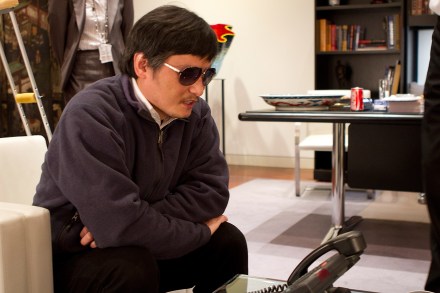
Even in a Beijing Spring of ceaseless surprises, the escape of the blind dissident lawyer Chen Guangcheng from rural house arrest into American protection was a sensation. The sensation soon turned into a catastrophe for him and humiliation for the United States. After his astounding escape 2 weeks ago from 18 months of house arrest and arrival at the US embassy in Beijing, Chen stated he had no intention of leaving China. Six days later he was assured by his American hosts, who now say he had cancer, that he must go to a Chinese hospital for treatment and be reunited with his and then would be free, perhaps to enter a Chinese university. There were touching scenes of Chen holding hands with Ambassador Gary Locke on his way to the hospital.

Pawns in the game

From our UK edition

The authors of this book have attempted a difficult thing: to ‘write about something that could never be known’. Here is a terrific and scary story about a group of American, British and European trekkers kidnapped by jihadists in Kashmir in July 1995 and slaughtered in December. Their wives were allowed to go free, and one of the men escaped. Another was decapitated. Four were reportedly, but only reportedly, shot dead. At the book’s core, the authors remark, ‘is an event that only one person survived’. The original purpose of the kidnap was to force the Indian government to free a number of prisoners, principally Masood Azhara, a key crony of Osama bin Laden.

Fall from grace

From our UK edition

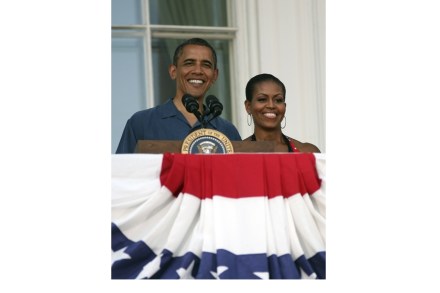
Barack Obama is not up to the job. That is Ron Suskind’s oft-repeated contention. The President, he states, compromised with, rather than curbed, failing American financial institutions, and has surrounded himself with warring staffers who are either no more competent than he is or, if expert, disregard his wishes. Following a picture caption that reads ‘Obama showed real weakness in managing his own White House,’ Suskind, a Pulitzer Prize winner, justifies his title: The confidence of the nation rests on trust.Confidence is the immaterial residue of material actions: justly enforced laws, sound investments, solidly built structures . . . . Gaining the trust without earning it is the age-old work of the confidence men.

Chaps v. Japs

From our UK edition

Does anyone do derring-do anymore? Here’s the real thing. On Christmas Day 1941, despite Churchill’s call to fight to the last man, Hong Kong fell to the Japanese, the first British possession to surrender since the American War of Independence. Within a few hours, Chiang Kai-shek’s main official in the colony, the one-legged Admiral Chan Chak, together with three of his staff, several senior British officials and a few others, fled the colony under heavy Japanese fire and managed to reach a little flotilla of motor torpedo boats manned by 50 British sailors.

Lifelong death wish

From our UK edition

In February 2009, in a review in these pages of Stefan Zweig’s unfinished novel, The Post Office Girl, I wrote: ‘Here surely is what Joseph Conrad meant when he wrote that above all he wanted his readers “to see.’’  In The Post Office Girl Zweig explores the details of everyday life in language that pierces both brain and heart.’ Especially the details of loneliness, I should have added. Intimations of suicide darken this novel, and in 1942, with the manuscript incomplete, Zweig, age 60, and his much younger second wife, Lotte, poisoned themselves in a small Brazilian town and died in bed with her embracing him. It is telling that she did the embracing.