Jonathan Mirsky

Mao’s girl and me

From our UK edition

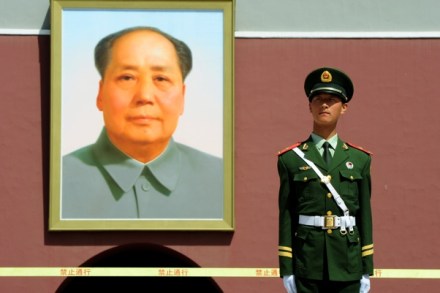
In 1997 in Hong Kong one of Mao Zedong’s numerous sexual partners — in this case an underage one — told me her life story. Mao the monster was already notorious: his lunatic policies had caused the world’s worst famine (1959–1961), in which 40 to 50 million Chinese starved to death; he inspired the Cultural Revolution (1966–1976), when a few million more died. And before he came to power in 1949, Mao often ordered the murder of those who ­challenged his ambitions within the Chinese Communist Party. But a paedophile? Yes indeed. Ms Chen, the young woman with whom Mao began sleeping in 1962, was 14. The Chairman was born in 1893.
Ignorance is bliss

From our UK edition

This novel frightened me several times. Here is how Chan Koonchung, brought up in Hong Kong but now living in Beijing, does it. He sets the story in a very near future, 2013, that closely resembles China today, but with two creepy additional elements: an entire month, during 2011, has vanished from most written records, and almost everyone feels happy all the time. In addition to not missing the vanished month, people no longer remember the Maoist persecutions, the 1959-1961 famine in which 45 million starved to death, and the Tiananmen killings. Chen, the novel’s central character, who has spent most of his life in Taiwan and Hong Kong, but now lives in Beijing, was a moderately successful writer before he moved to China — and now can’t write a word.

The great deception continues

From our UK edition

Out of Mao’s Shadow: The Struggle for the Soul of New China by Philip Pan In 1952 the 20-year-old Maoist fanatic, Lin Zhao, ordered that a Chinese landlord be immersed in a vat of icy water overnight. She said this filled her with ‘cruel happiness’. Later she wrote to a friend about how she had helped organise the execution of other landlords, some of the two million killed in those years. ‘Seeing them die this way, I felt proud and happy.’ Lin came from a family which in Maoist terms had a ‘bad class background’, the kind of ‘black’ family that could end up with bullets in the back of their necks, bullets for which their executioners would ask surviving family members to pay five pennies.

Pet obsession

From our UK edition

I declare two interests. I own a dog, Lily, and I admire the New York Review of Books. What could go wrong? Especially because, according to the enthusiastic introduction, back in 1999, by Elizabeth Marshall Thomas, My Dog Tulip won golden opinions from its first publication in 1956, notably from Julian Huxley and E. M. Forster. (I must say I saw Forster almost daily in 1954—1955 during his short walks at Kings College, Cambridge and he didn’t have a dog.) As Thomas wrote, here is the memoir of an unremarkable, badly behaved dog that adored her master, who loved her in return. A ‘man of letters’, as they used to say, and a bachelor, Ackerley was a veteran of the Great War, scornful of women, with a timid maiden cousin with whom he sometimes stayed.

Hothouse hell

From our UK edition

Amy Chua, Tiger Mother and John M. Duff Professor of Law at Yale, was born in the Chinese year of the tiger, and a tiger, she says, ‘the living symbol of strength and power, generally inspires fear and respect’. She describes her own personality: ‘Hot- tempered, viper-tongued, fast-forgiving’. Amy Chua, Tiger Mother and John M. Duff Professor of Law at Yale, was born in the Chinese year of the tiger, and a tiger, she says, ‘the living symbol of strength and power, generally inspires fear and respect’. She describes her own personality: ‘Hot- tempered, viper-tongued, fast-forgiving’. I missed the last quality in this disturbing book; she should have written ‘monomaniacal’.

Can it be described?

From our UK edition

Where was God in the Holocaust? This question confounds even learned rabbis, so let’s not linger there. Where was God in the Holocaust? This question confounds even learned rabbis, so let’s not linger there. Was there a Holocaust? Until I began preparing this notice I had never looked into the claims of Holocaust deniers. What I found was a volume of assertions that the Holocaust never happened that might make Hitler and David Irving blanch. Very difficult in a different way is how to write about one of the greatest crimes ever and still tell the truth. Can an author who witnessed terrible things write about them while adhering to truth or fact? Here’s a tough example.

Finding my voice

From our UK edition

I was cured of a lifelong stammer by a technique even Lionel Logue, George VI’s celebrated speech therapist, never tried. The cure lasted exactly three minutes, and has never been repeated. In the mid-1990s, when I was stationed in Hong Kong as the East Asia editor of the Times, the BBC commissioned me to write and broadcast three three-minute pieces to be called Secrets in China. A producer arrived with a cameraman. What I had written was now in front of me on an autocue. I told the producer that I, a stutterer, couldn’t read smoothly from a text; when reading out loud stutterers can’t employ those little tricks — pauses for thought, substituting easy words for hard ones, purring a bit — that the lifelong hesitator knows to a t-t-t.

Charmed out of their minds

From our UK edition

David Cameron probably didn’t need reminding while he was in China what fools intelligent people can be when they visit authoritarian regimes. David Cameron probably didn’t need reminding while he was in China what fools intelligent people can be when they visit authoritarian regimes. ‘Useful idiots’, as Lenin didn’t say, they make allowances for dishonesty, even horrors, which they never would at home, express guilt for the past of their own countries, use words like ‘progress’ for the place they are briefly visiting, and accept at face-value hospitality and words which normal consideration would tell them were well-rehearsed and manipulative.

The long walk

From our UK edition

In this long and fascinating novel, Ora, an early- middle-aged Israeli woman, walks for days through Galilee to escape the ‘Notifiers’, the officers she fears will come to her door to inform her of the death of Ofer, her soldier son, at the hands of Palestinians. In this long and fascinating novel, Ora, an early- middle-aged Israeli woman, walks for days through Galilee to escape the ‘Notifiers’, the officers she fears will come to her door to inform her of the death of Ofer, her soldier son, at the hands of Palestinians.

The body in the snow

From our UK edition

A word is missing from the subtitle of Jonathan Green’s shocking exposé: cowardice. A word is missing from the subtitle of Jonathan Green’s shocking exposé: cowardice. It shines out of his story of the murder of the 17-year-old Tibetan nun, Kelsang Namtso. It happened on 30 September 2006, at the base camp on Cho Oyu in Tibet, the sixth highest peak in the world. Forty teams of Westerners, who had paid up to $20,000 each for the trip, waited there for their turns to climb. To make the wait more comfortable, hundreds of yaks and porters had carried quantities of wine, sushi, TV films, pregnancy-testing kits, condoms and M&Ms to about 20,000 feet.

The ultimate price

From our UK edition

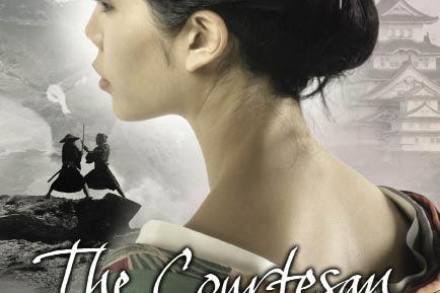
Lesley Downer is one of the most unusual authors writing in English. Years ago, determined to become an expert on the Japanese geisha, ultra-sophisticated entertainers and hostesses who are neither prostitutes nor courtesans, she became a Kyoto geisha herself and wrote Geisha: The Secret History of a Vanishing World. Now she has written her second novel (the first being The Last Concubine), the story of Hana, a young samurai wife in the late 1860s. She lives in Edo, soon to become Tokyo, the capital of Japan. The country is being ripped apart by civil war — vividly narrated here — and, no longer isolated, is adopting enough Western ways to escape the colonialism that afflicted most of the rest of Asia. As in Downer’s previous books I noticed her careful research.

Throw it in a stream

From our UK edition

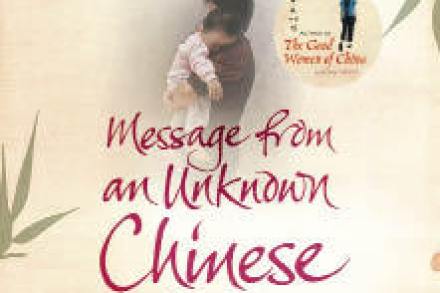
I know a British couple with a Chinese daughter, pretty and fluent in English. Of course the little girl was adopted. It is necessary to steel one’s self against three agonising thoughts: how did such children come to be here, why does one never meet an adopted Chinese boy, and what does one reply when the adopted Chinese child asks, ‘Why did my real mother let me go?’ There is already substantial information on this subject, including television documentaries, none of it mentioned by Xinran.

Fear hovers in China

From our UK edition

It’s lovely to be the child of a Chinese Revolutionary Martyr. It means your parent died especially heroically for the Communist cause. I had a friend who was such a son; his father, a high-ranking Chiang Kaishek army officer, came over to the Maoist cause and died fighting for it against his former comrades. The big thing for the son was that he had access to his dang-an, the official dossier containing the personal and political details of individual Chinese, which is closely guarded by the security apparatus. Few ever see their dang-an — which can make or break your career — but my friend could add favourable facts to his and excise damning ones.

Unamazing insights

From our UK edition

Four years ago, we learn from this book’s jack- et, Malcolm Glad- well ‘was named one of Time’s 100 Most Influential People’. Four years ago, we learn from this book’s jacket, Malcolm Gladwell ‘was named one of Time’s 100 Most Influential People’. As Gladwell himself might ask, ‘Is what Time says really significant? And what is significant?’ Gladwell is significant, all right. Not only is he a staff writer on the New Yorker but he wrote the bestsellers Blink and The Tipping Point that made him millions and — here is more significance — put him number one on the New York Times’ bestseller lists. What is Gladwell’s secret?

A poisonous legacy

From our UK edition

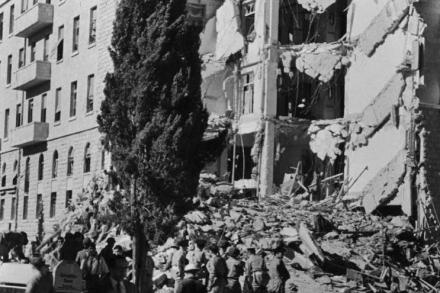
A Senseless, Squalid War: Voices from Palestine 1945-1948, by Norman Rose Major Farran’s Hat: Murder, Scandal and Britain’s War Against Jewish Terrorism, 1945-1948, by David Cesarani The second epigraph in Norman Rose’s eloquent, comprehensive and even-handed book, A Senseless, Squalid War, says it all, from Palestine in the late 19th century to Gaza right now. In 1891, the Zionist philosopher and poet Asher Zvi Ginsberg, wrote: From abroad we are accustomed to believing that the Arabs are all desert savages, like donkeys. But this is a big mistake. The Arabs, and especially those in the cities, understand our deeds and our desires in Eretz-Israel.

Heartbreak hotel

From our UK edition

Here surely is what Joseph Conrad meant when he wrote that above all he wanted his readers ‘to see.’ In The Post Office Girl Stefan Zweig explores the details of everyday life in language that pierces both brain and heart. Born in 1881 into a rich Austrian-Jewish family, Zweig was the embodiment of pre- and inter-war Viennese intellectual life. A biographer, essayist, memoirist, short-story writer and the author of one finished novel, Beware of Pity, he delivered the oration at Freud’s funeral. During the Thirties, Zweig wrote The Post Office Girl, originally Rausch der Verwandlung (The Intoxication of Transformation). The English title is better.

The misery of an intellectual

From our UK edition

Reborn: Susan Sontag, Early Diaries, 1947-1964, edited by David Rieff Swimming in a Sea of Death: A Son’s Memoir, by David Rieff Susan Sontag, who died in 2004, was one of the late- 20th century’s famous public intellectuals. A stupendously well-read novelist, essayist and critic, strikingly good looking with her white badger-lock, she was engagé, pronouncing on many subjects, from Chinese dissidents to the meaning of disease. She appeared unassailably self-confident, so it is sad, but a bit of a relief, to learn from this first volume of her journal, begun when she was 14, that Sontag was precocious but also deeply depressed. I can’t recall reading a more melancholy book.

No love lost

From our UK edition

It has been famously written, and often observed, that every unhappy family is unhappy in its own way. Never was this truer than in the case of the Wittgensteins, who were also, some of them, crazy. I take notes in books for review and in this one I wrote ‘nuts’ 23 times. Ludwig, the famous philosopher, was merely the craziest. Three of his brothers killed themselves, and he often considered suicide — insofar as anything he said can be taken seriously. Almost everything he wrote, about which there have been countless decryptions, defies normal understanding. Take the epigraph of Alexander Waugh’s family biography, drawn from Ludwig’s On Certainty: ‘There are an enormous number of general empirical propositions that count as certainty for us.

Glimpses of past happiness

From our UK edition

Jonathan Mirsky on Nancy Kohner's new book What could be more poignant than this? ‘You know nothing of what is happening here, and I can’t explain it to you. Just be glad that you’re as far away as you are. What is happiness? Happiness is what once was, once upon a time when we lived such a beautiful, peaceful time. It’s a good thing that no one can take away our memories.’ In August 1940, Valerie Kohner wrote those words to her family, Jewish Czechs, who had escaped from Czechoslovakia to Britain. Alone in Nazi-occupied Prague, she knew what was coming. Two years later, shaven-headed and naked, the 68-year-old woman was murdered in Treblinka, where 12,000-15,000 Jews were gassed and burned every day.

Cheap and deadly

From our UK edition

Think about your knickers. Your bra, shoes, socks, running shoes, anorak, television, towels, light bulbs, computer, and, sooner rather than later, your car or its parts. If they were made here they would be far more expensive. But they’re made in China, so that’s all right then. OK, workers here lose their jobs, but that’s globalisation for you, and anyway there is still plenty of work for people willing to do it. So that China price is really worth it, right? But what if the China price includes Chinese workers living in dark Satanic conditions and hundreds of thousands of Chinese lives lost every year?