Jonathan Jones

Public reject Dorries’ abortion proposal

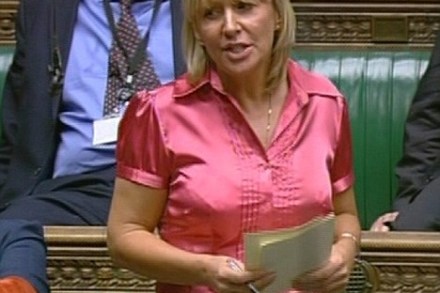
Tomorrow, MPs will debate whether to prevent abortion providers from counselling women seeking an abortion. The motion – put forward by Tory backbencher Nadine Dorries as an amendment to the Health and Social Care bill – is being opposed by the government, and pro-choice groups are backing a rival amendment, which reinforces the status quo. The amendement's author, Lib Dem MP Julian Huppert says: "The present system which allows women access to evidence-based guidance works, therefore I cannot see why we need to change it. I do not want to see us opening the door to anti choice organisations which could prevent women making their own decision on such a momentus issue.
Rick Perry soars in the polls, but for how long?

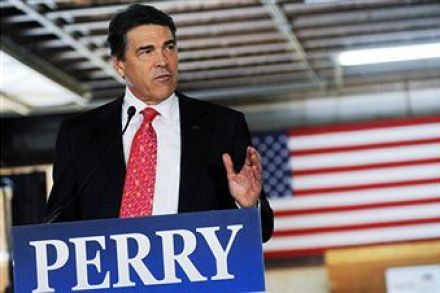
His presidential campaign is just a fortnight old, and already Rick Perry is soaring in the polls. The three major national surveys conducted since his announcement all give Perry double-digit leads over previous frontrunner Mitt Romney. He has also, importantly, taken the lead in Iowa and is now odds on to win both there and in South Carolina come February. This is certainly an encouraging position for a new candidate, but history suggests that Perry supporters should temper their optimism with a heavy dose of caution. Until the autumn of 2007, Rudy Giuliani led the Republican field by a similar margin to the one Perry has now. And Hillary Clinton's lead over Obama was even more commanding. Neither went on to win their party's nomination.

Cameron winning over the Libya doubters

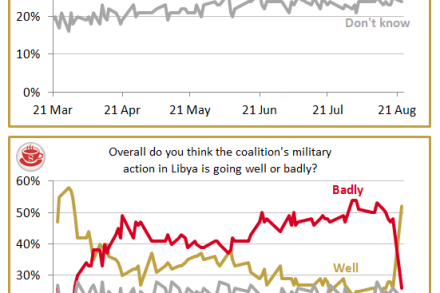
"They'll like us when we win," the West Wing's Toby Ziegler said of the Arab world. David Cameron might have said the same when public opinion was turning against the intervention in Libya. And, judging by today's YouGov poll, he'd have been right. Public support for military intervention has mirrored the public’s view of how well the action is going. In the first two weeks, when optimism prevailed, the public were largely in favour. However, as that optimism wore off and people increasingly doubted that the rebels could succeed, more and more began to oppose our involvement. Before the weekend, just 26 per cent thought the intervention was going well, and only 31 per cent were in favour of it.

A bleak outlook | 16 August 2011

As Fraser has already observed, annual CPI inflation rose to 4.4 per cent in July, from 4.2 per cent in June. This means that it has been 4 per cent or more throughout 2011 and expectations are for it to reach 5 per cent before the year is out. Even stripping out tax increases (such as the VAT rise in January), prices have risen by 2.8 per cent in the past year. But looking at the more detailed figures reveals even more dramatic price rises. The biggest driver of inflation is rising transport costs, which account for 1.25 of that 4.4 per cent figure. "Fuels and lubricants" are 15.1 per cent more expensive than they were a year ago, air travel 12.5 and rail travel 9.3.

The Republican battle steps up a gear

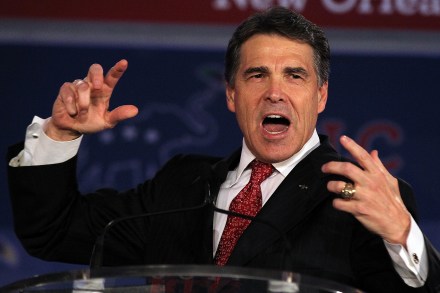
This is perhaps the biggest weekend yet in the race for the 2012 Republican presidential nomination. The candidates clashed on Thursday night in their third televised debate, and will contest the traditionally important Ames Straw Poll in Iowa today. In truth, as Alex says, neither the debate nor the straw poll will have that big an impact on the race. More significant is an event taking place more than a thousand miles from Ames, in Charleston, South Carolina. There, Texas Governor Rick Perry will announce his entry to the race. And judging by current polling and betting trends, he will start out as joint favourite. Until now, Mitt Romney has been the frontrunner, notionally at least.

The public wants firmer action

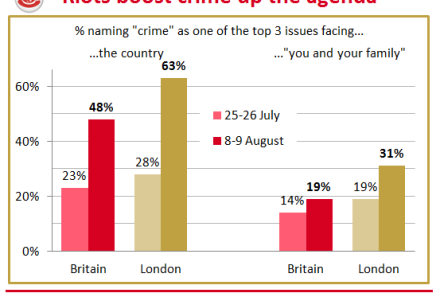
Judging by today's YouGov polls, the riots have pushed crime sharply up the national agenda: it now ranks second, behind only the economy. In all, almost half of Brits think crime is one of the top three issues facing the country, more than double the number who said so a fortnight ago. The effect has, unsurprisingly, been strongest in London, where around two-in-three now see crime as a major concern: As for the causes of the riots, the majority blame "criminal behaviour" and "gang culture". Contrary to what Harriet Harman may insinuate, just eight per cent blame the government's cuts, and this is largely the 16 per cent of Labour voters who put the blame at the Coalition's door.

Why Obama is still odds on for re-election — just

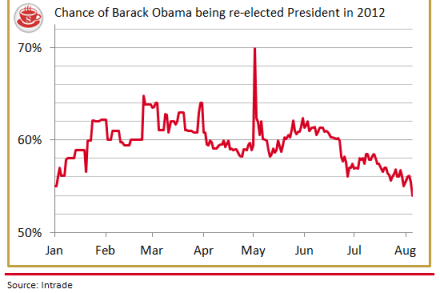
A credit downgrade, unemployment at 9.1 per cent, spluttering growth — the economic cards are certainly stacked against Obama for his re-election in 2012. But here's the thing: American punters still think that he's more likely to win next November than not. Perhaps that's because, contrary to Clinton's famous slogan, it's not actually all about the economy. According to Nate Silver's analysis of the last 25 presidential elections, a better rule of thumb is "it’s half the economy and half everything else, stupid". So if Obama's losing the first half, what about the "everything else"?

From the archives: “Capital punishment is absolutely indefensible”

Thanks to Guido and his co-conspirators, capital punishment is back on the political agenda. Here's what The Spectator, under the editorship of Ian Gilmour, wrote about the hanging of Ruth Ellis — the last woman to be hanged in the UK — some 14 years before the abolition of the death penalty in Britain: The execution of Ruth Ellis, The Spectator, 15 July 1955 It is no longer a matter for surprise that Englishmen deplore bull-fighting but delight in hanging. Hanging has become the national sport.

An open letter to Will Straw about deficit reduction…

…or why the US cuts are actually faster than, and just as deep as, ours. Dear Will, We hope you don't mind us writing a letter-form response to your latest post on Left Foot Forward, which argues that the "coalition government's cuts are deeper and faster than the Tea Party's". But, as we see it, there are several problems with your figures which are easier to explain in a conversational format. Here they are, as best as we can express them: i) The first obvious problem comes when you say that Obama set out $83 billion of deficit reduction for 2012 in his March Budget. Actually, he didn't.

From the archives: Seizing the Suez canal

It is 55 years, this week, since Egyptian forces under President Nasser siezed and nationalised the Suez Canal – and triggered the eventual Suez Crisis in the process. Here is The Spectator's leader from the time: Safeguarding Suez, 3 August 1956 Colonel Nasser's seizure of the Suez Canal provides a fitting climax to the disasters which have recently overtaken British policy in the Middle East. It is not the nationalisation itself that is serious - the concession would in any case have lapsed in 1968 - but, judging by the Colonel's speeches and the Egyptian press and radio it seems that the present Egyptian Government has decided to ride the storm of hatred and xenophobia which were always potentially present in the fanatical and under-nourished Egyptian masses.

Coffee House, distracting civil servants since 2007

A cracking, little story that we arrived at via the Daily Mail website: thanks to an FoI request put in by the Taxpayers' Alliance, the Department for Transport has revealed which websites its staff visited on work computers between January 1st and May 31st this year. The full list is here, and there are some eye-catching entries to say the least. Take the role-play site bearsfaction.org.uk, where you are advised to "conduct yourself as a Bear would" — that got 183 hits per day. Or the infamous sexymp.co.uk on 142 hits per day. Even the website of the website of Page 3 girl Claire Tully got 5 hits per day. And there's more more, much more. The Department's sad cohort of Arsenal fans visits a trio of Gooner sites to the tune of 412 hits a day.

One year to go, but the public aren’t convinced

Boris may think next year's London Olympics will be "the most exciting thing that's happened in the eastern part of the city since the Great Fire", but - according to a slew of new polls - he's got some way to go to persuade the rest of the country. Here's an opener from YouGov:   In the same poll, there's also widespread scepticism over what benefit the Olympics the bring to Britain:    The clearest perceived benefit is for London's sporting facilities, with 54 per cent agreeing that they will be much better "not just for the games themselves but for years afterwards". However, when it comes to London's public transport, only 32 per cent think it will see significant improvement, while 41 per cent disagree.

New favourite emerges to challenge Obama

There's a new favourite in the race for the Republican nomination to take on Barack Obama in 2012. Yesterday saw Mitt Romney hobbled from his number one spot - on betting website Intrade at least - by Texan Governor Rick Perry. Romney had been seen as the candidate most likely to secure his party's nomination next year ever since he finished second to John McCain in the 2008 primaries. However, support for Romney has never reached the levels expected of frontrunners, with many Republicans keen to vote for someone more conservative. Rick Perry may just be that man. Perry's position as (narrow) favourite is somewhat surprising when you consider that he's not officially running yet.

How do you measure cuddles?

There's been a lot of fuss about this morning's GDP numbers, but if David Cameron has his way we'll soon be fretting about an entirely different set of statistics. The Prime Minister has given the data-crunchers at the Office for National Statistics a new mission: measure the nation's well-being. The idea is to create new stats to accompany economic figures like the Gross Domestic Product as an additional gauge of how well things are going in the UK. It's an idea that makes a great deal of sense. After all, the shortcomings of GDP are well-known. As Bobby Kennedy put it back in 1968: "It measures neither our wit nor our courage, neither our wisdom nor our learning, neither our compassion nor our devotion to our country.

The (non-)effect of Hackgate

No Labour bounce, no drop in approval for Cameron or his government. That's the impact that two weeks of front pages dominated by the phone hacking scandal on the opinion polls:  Ed Miliband's numbers have improved, which will come as some relief to the Labour leader who suffered a terrible month of polls in June. But despite a 13 point jump in the last fortnight, his net approval rating has only recovered to where it was six weeks ago, and that was hardly a rosy position. Certainly, Ed's response to the scandal seems to have reflected well on him. 49 per cent of the public think he's handled the affair well, compared to 36 and 33 for Cameron and Clegg respectively. Perhaps most strikingly, even Tory supporters think he's done well, by 44 per cent to 35.

Britain’s euroscepticism hardens

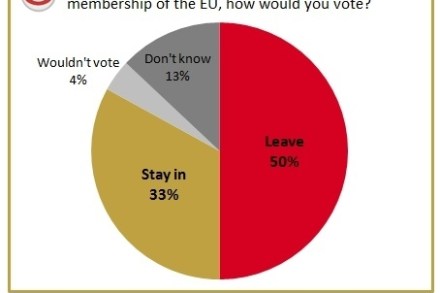
With the European financial crisis rumbling on, anti-EU sentiment in Britain is deepening. Two polls — one by YouGov for PoliticsHome and the other by Angus Reid — show that 50 per cent of the public would vote for Britain to leave the EU if there was a referendum.   Of course, this is nothing new. Brits have long been the most eurosceptic of Europeans, as Fraser noted a couple of months ago. In fact, we're the only country where more people think our membership of the EU is bad than think it's good: The hardening of eurosceptic sentiment does seem to be due to current events: 34 per cent say that the Greek crisis has made them more favourable towards us leaving.

A victory for common sense

For years, teachers have been increasingly reluctant to restrain unruly pupils — for fear of being slapped with a lawsuit. But now, it seems, the government is trying to ease those concerns. Its guidance today may not change any laws, but it does encourage schools to change their approach. Among the directions is that "schools should not have a 'no touch' policy": teachers can use reasonable force to restrain pupils, remove disruptive children from the classroom or prevent them from leaving the classroom when they shouldn't.

Poll round-up | 23 June 2011

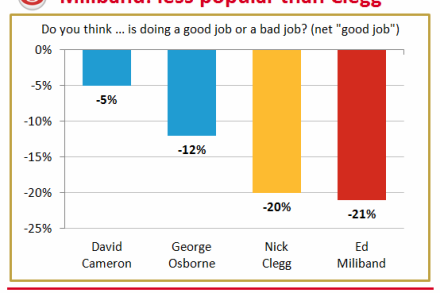
We haven't dwelt on the polls very much on Coffee House recently, although we have flagged up some nuggets on Twitter. Here are some of the measures of public opinion that provide an interesting backdrop to Westminster's machinations: Labour in trouble despite poll leads Two weeks ago I reported on a poll that showed the extent of Ed Miliband's unpopularity. There have since been a few more polls to compound his unease. ICM found that he had worse approval ratings even than Nick Clegg: YouGov find that 58 per cent of the public think he's doing a bad job, but perhaps more worrying for "Red Ed" is that he even has negative ratings among the very people who won him the leadership election: trade union members.

Public opinion on international aid isn’t where Cameron thinks it is

Andrew Mitchell was recently informed that the public is split 50:50 for and against increasing the international aid budget to £12 billion in 2013. A YouGov@Cambridge poll for Politics Home suggests that he should get some better advice. The poll shows that while the public is indeed split fairly evenly on the general principle of aid (41 per cent in favour, 38 per cent against), when it comes to the government's promise to increase the aid budget by a third, those against outnumber those for by more than 2 to 1. The policy is by no means a Cameroon brainchild. In 1970 the United Nations set the target for government aid at 0.7 per cent of GNI; in 2004 the Labour government pledged to meet it by 2013 and in 2006 David Cameron signed the Tories up to that pledge.

Republicans pull their punches against each other, but not Obama

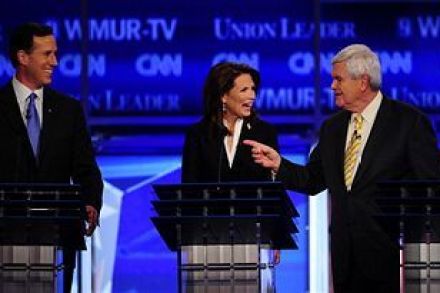
So it turns out the candidates vying for the Republican presidential nomination don’t like Barack Obama, his health care reforms, government bailouts, unions or abortion rights. Who knew? But it seems they do like tax cuts, states’ rights and... each other. The beleaguered Newt Gingrich didn’t even wait for the first question in last night’s debate to commence the Obama-bashing. “We need a new President to end the Obama depression”, he opened. And the others soon piled on. Mitt Romney said that “This President has failed” on jobs and the economy.