John Power

John Power

John Power is The Spectator’s assistant content editor.

Can Rupert Lowe stop Farage from becoming prime minister?

The crowded market place emerging on Britain’s right is bewildering. Nigel Farage and Reform UK appeared to have successfully colonised the space for positions more robust than those offered by the current Tory party. They have been ahead in the national opinion polls for months now. But the launch of Restore Britain, a new party founded by the former Reform MP Rupert Lowe, suggests that Farage himself now faces a threat on his exposed flank. No party to the right of Farage has posed a substantive electoral threat since the British National Party virtually disappeared in 2015. But that could be about to change. Restore claims to have 90,000 members. Lowe has a significant social media presence and the backing of Elon Musk.

‘Islamism is strangling society like a snake’: an interview with Boualem Sansal

I asked the novelist and dissident Boualem Sansal, recently released from Algerian prison, how he would like to be remembered. He did not hesitate. Not as the French Salman Rushdie – to whom he is often compared – but as the Algerian George Orwell. Orwell was not just a novelist but a prophet, who saw how a peaceful society could morph into a system of oppression. ‘Every day in Algeria,’ Sansal told me, ‘is like Nineteen Eighty-Four.’ Sansal was speaking to me after he had just given a speech in London, at the Policy Exchange think tank – his first public interventions in Britain since leaving prison in Algeria, where he had been jailed after a sham trial, where there were no witnesses or legal defence.

No, the internet is not bad for your child

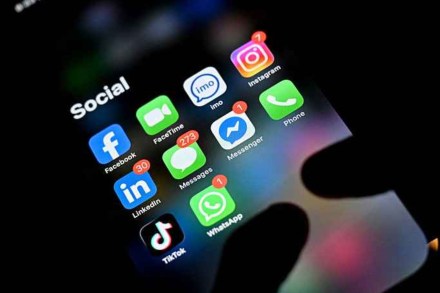
The forces arranged in favour of banning social media for under-16s are powerful and wide-ranging. The unlikely alliance includes the leader of the Tory party, more than 60 Labour MPs, Big Suze from Peep Show and the patron saint of all bad ideas – His Majesty King Charles III. It seems probable that when amendment 94A of the Children’s Wellbeing and Schools Bill is voted on, it will receive support from all these quarters, as well as from Sir Keir Starmer, who has, true to form, launched a consultation on the issue. A handful of mental health charities will tell him that he must really get on with banning social media for teenagers, which he will then promptly and politely do.

Foetal femicide has arrived in Britain

Last summer, the Labour MP Tonia Antoniazzi introduced a clause to the Crime and Policing Bill that will decriminalise all abortions. Enshrining this ‘right’ into law will mean that a mother could end the life of a baby a week, a day or even an hour before it is due to be born, without facing legal consequences. The bill will go to the House of Lords this month. If there had been proper debate over the proposal, rather than introducing it alongside 1,482 other amendments, parliamentarians might have spotted the flaw: the proposed legislation will enable sex-selective abortions. The NHS normally delays the point at which parents are entitled to know their child’s sex until the 20-week scan, shortly before abortion currently becomes illegal.

An apology to Hope Not Hate and Harry Shukman

In August, The Spectator began to investigate allegations that Harry Shukman, a 33-year-old freelance journalist, had used a fake British passport as part of a two-year undercover investigation into the far-right in Britain which was sponsored by Hope Not Hate. We published an article about this in our 6 September issue titled: ‘Dirty tricks: the sinister tactics of Hope Not Hate.’ As a result of correspondence from their lawyers, we now know the passport was not ‘fake’ at all: the true story is even more interesting.

John Power, Madeline Grant, Ysenda Maxtone-Graham, Calvin Po & Gus Carter

33 min listen

On this week’s Spectator Out Loud: John Power examines the rise in drug abuse and homelessness on British streets; Madeline Grant explains the allure of Hollywood radical Sydney Sweeney; Ysenda Maxtone Graham laments the rise of the on-the-day party flake; Calvin Po warns of a war on Britain’s historic architecture; and Gus Carter reads his Notes on the brasserie chain Browns.

Britain’s cities are descending into a San Francisco-style nightmare

One morning a few months ago I was walking past St James’s Park station when a dishevelled man with his fists clenched stepped into my path without warning. He stared at me furiously and blocked my path, body almost shaking. For a few tense seconds he stood there before I crossed the road to get away from him. ‘Most rough sleepers are harmless and vulnerable, but a small minority are violent’ When I told friends who work in central London about this incident, I was shocked at how typical my experience was. For people who commute into Westminster, it is becoming commonplace to be spat at, lunged at and screamed at to ‘fuck off’ by individuals who appear to be high on illegal drugs.

Why are psychiatrists scared of sectioning dangerous patients?

The police initially treated last weekend’s stabbings on a train near Huntingdon as a possible terror attack, before confirming it wasn’t. Since then, it has been widely reported that the suspect, Anthony Williams, told one of his victims that ‘the devil’s not going to win’ as she pleaded with him not to stab her. So instead of terrorism, the outlines of another familiar British tragedy have begun to take shape: a violent outburst by a man apparently in the grip of severe mental illness. Why would someone with severe mental illness be able to roam in public? It is partly because of underfunded public services. The number of mental health beds in the NHS decreased by a quarter between 2010 and last year.

Has there been a cover-up of London grooming gangs?

When the grooming gang crisis came under renewed scrutiny at the beginning of this year, the former Tory mayoral candidate Susan Hall asked Sadiq Khan eight times during mayor’s questions whether or not grooming gangs were operating in the capital. His response was odd, to say the least.  Instead of directly answering the question, Khan repeatedly asked Hall to ‘define what she means by that’, and accused her of being nervous about speaking clearly. After some back and forth, Khan stated that there were issues in London with young girls being groomed in county line drug gangs, for which there was already a plethora of programmes and ‘hubs’. A month later, on 25 February, the London Conservatives brought forward an amendment proposing a £4.

John Power, Nick Carter, Elisabeth Dampier, Maggie Fergusson & Mark Mason

26 min listen

On this week’s Spectator Out Loud: John Power argues the Oxford Union has a ‘lynch-mob mindset’; Elisabeth Dampier explains why she would never date a German; Nick Carter makes the case for licensing MDMA to treat veterans with PTSD; Maggie Fergusson reviews Island at the Edge of the World: The Forgotten History of Easter Island by Mike Pitts; and, Mark Mason provides his notes on guided walks. Mark will also be hosting a guided walk for the Spectator, for tickets go to spectator.com/events Produced and presented by Patrick Gibbons.

The Oxford Union’s lynch-mob mentality

The case of George Abaraonye, the incoming Oxford Union president who rejoiced in the assassination of Charlie Kirk, has provoked fierce debate about free speech at Oxford. Abaraonye considered the murder of the 31-year-old father of two, whom he had met at an Oxford Union debate, to be a cause for celebration. On a WhatsApp group he posted several messages cheering the assassination and on Instagram he crowed: ‘Charlie Kirk got shot loool.’ Now messages from student group chats linked to the Oxford Union reveal that those who objected to Abaraonye’s conduct have themselves been subjected to threats and intimidation designed to silence them.

It won’t be easy to fix failing NHS hospitals

The Department for Health has published new performance league tables today which show that four in five NHS hospital trusts are failing, either because they are running substantial deficits or they are not meeting their performance targets. The real reason that NHS trusts in cities like London perform better is the same reason that accountancy firms and legal practices perform better in London – they attract the highest quality staff These league tables are the first of their kind to be published and were brought in by Wes Streeting with the aim of improving performance. Trusts which do well will be rewarded with bonuses and more freedom to decide how to spend their resources, whilst leaders of trusts which consistently fail to improve will have their salaries frozen.

Labour’s new ‘dark arts’ strategy

Senior Labour figures have given up hope of beating Nigel Farage in 2029. There are two causes for this pessimism. One is the economy. Forecasts suggest living standards will continue to decline over the next four years. The other is illegal immigration, which Keir Starmer will continue to make noises against, but which his human-rights-lawyer instincts prevent him from tackling. Faced with such a grim future, some Labour advisers are speaking about leaving the government to avoid having their reputations tainted by what comes next. Others are more ruthless. They point to another tool: the practice called ‘opposition research’ but known better as the ‘dark arts’.

Online Safety Act: are Labour or the Tories worse on free speech?

27 min listen

Is the Online Safety Act protecting children – or threatening free speech? Michael Simmons hosts John Power, who writes the Spectator's cover piece this week on how the Act has inadvertently created online censorship. Implemented and defended by the current Labour government, it is actually the result of legislation passed by the Conservatives in 2023 – which Labour did not support at the time, arguing it didn’t go far enough. Michael and John joined by former Conservative MP Miriam Cates who defends the core aims and principles at the heart of the Act. They debate the principles of Big Tech, the risks of government overreach and whether freedom of expression is under threat. Produced by Megan McElroy and Patrick Gibbons.

Under ctrl, the Epping migrant protests & why is ‘romantasy’ so popular?

39 min listen

First: the new era of censorship A year ago, John Power notes, the UK was consumed by race riots precipitated by online rumours about the perpetrator of the Southport atrocity. This summer, there have been protests, but ‘something is different’. With the introduction of the Online Safety Act, ‘the government is exerting far greater control over what can and can’t be viewed online’. While the act ‘promises to protect minors from harmful material’, he argues that it is ‘the most sweeping attempt by any liberal democracy to bring the online world under the control of the state’.

Ctrl U: the Online Safety Act is shutting down the internet

This time last year, the UK was consumed by the worst race riots since 2001. It was precipitated by the spread of online rumours that the perpetrator of the Southport atrocity was a Muslim refugee. This summer, there have been smaller protests following reports of sexually motivated attacks allegedly perpetrated by migrants. But something is different. Legislation which was originally passed in 2023 came into force last Friday and the effects can already be felt. Social media posts showing rioters fighting with police have been suppressed; those referring to sexual attacks have been automatically flagged as pornographic.

Base instincts: unease on the garrisons housing Afghan refugees

Helping Afghan refugees escape Taliban retribution has not proved easy; ensuring their integration into their host countries more challenging still. In September 2021, a month after the United States completed its mass evacuation of refugees from Afghanistan, a serving female soldier was reportedly assaulted by a group of Afghan men at Fort Bliss in New Mexico. The incident caused a brief scandal but that was swiftly contained. Within six months, 76,000 Afghan evacuees had been processed and resettled into American communities. The UK has taken a different approach. As part of the Afghan resettlement programme, around 39,000 refugees have been brought here since the fall of Kabul.

Ipso owes Suella Braverman an apology

When Suella Braverman wrote in April 2023 that 'the perpetrators [of group-based child sexual exploitation] are groups of men, almost all British-Pakistani,' the then-Home Secretary was roundly condemned. ‘Hacked Off’, a lobby group which seeks to tighten regulation of the press, said her article in the Mail on Sunday was part of a ‘toxic libel’. Guardian columnist Owen Jones went on to describe her ‘claims’ as ‘designed to foment racist division and hate’. Lewis Goodall of LBC confronted her live on air, saying that she was chastised 'entirely rightly' for her 'false claim'. Last week, Suella Braverman wrote to Ipso to demand a retraction of that ruling. She is right to do so One entity went further than words.

The right rape gang inquiry

Another inquiry into child sexual abuse, another minister insisting that this time it will be different. Yvette Cooper promises arrests, reviews, a new statutory commission and the largest ever national operation against grooming gangs. But for the victims there is only one question that matters: what will this new inquiry do that the last one didn’t? The last one, of course, was IICSA: the Independent Inquiry into Child Sexual Abuse, led by Professor Alexis Jay. It took seven years, £180 million and 15 separate investigations to complete. And yet for survivors and campaigners, the abiding feeling at the end of it all was futility. IICSA had all the grandeur of a public reckoning but little of the justice. It was supposed to examine how institutions failed victims.

Sean Thomas, John Power, Susie Mesure, Olivia Potts and Rory Sutherland

22 min listen

On this week’s Spectator Out Loud: Sean Thomas reflects on the era of lads mags (1:07); John Power reveals those unfairly gaming the social housing system (6:15); Susie Moss reviews Ripeness by Sarah Moss (11:31); Olivia Potts explains the importance of sausage rolls (14:21); and, Rory Sutherland speaks in defence of the Trump playbook (18:09).  Produced and presented by Patrick Gibbons.