John O'Neill

Miliband’s jobs ‘blunder’: who’s right?

There's been a bit of a fuss over the claim in Lord Adonis's growth report—repeated in a draft of Ed Miliband's localism speech—that four-fifths of the private-sector jobs growth in the UK since 2010 has happened in London. The Prime Minister tweeted: Labour get their facts wrong on jobs - again. How can they ever be trusted with the economy? http://t.co/zTZJVadFhQ #AdonisReview — David Cameron (@David_Cameron) July 1, 2014 And NIESR's Jonathan Portes (who has form taking issue with how numbers on ‘new’ jobs numbers are used) said: @eduardmead @bbcnickrobinson That said, Labour stat certainly wrong. Conservatives much closer, but not on basis of published ONS figures.

Employment is booming. What does Rachel Reeves have to add?

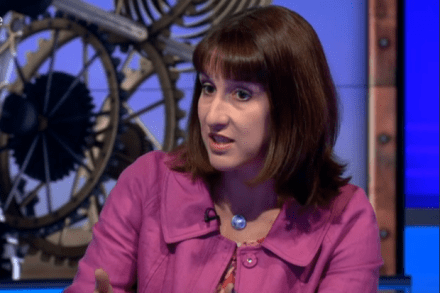
Here's a funny thing: Labour claims to be the ‘party of work', but the Tories have reasonable claim to be the workers’ party, given that they’ve overseen the creation of 1.5 million new jobs. Anyway, it was one of the slogans that shadow work and pensions secretary Rachel Reeves incanted on her Sunday Politics interview this morning, when she seemed to have a pretty torrid time of it. listen to ‘Rachel Reeves ’ on Audioboo She had to defend her party's leader against his cratering approval ratings and the embarrassment of a leaked election strategy document which shows that people don't trust him on immigration, the economy or welfare.

Labour’s VAT attack misses the mark – you don’t pay it on food

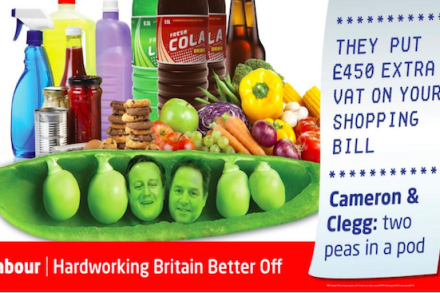
Labour has a long, hard slog to win arrest the public's loss of faith in its economic competence. The party's latest advert hasn't helped. It shows David Cameron and Nick Clegg as two peas-in-a-pod whose VAT hike has put £450 on your shopping bill. There’s one big problem with the advert: it makes its claim in front of a whole bunch of foods on which you don't pay VAT at 20 per cent. You pay it at zero per cent. Even on the chocolate-chip biscuits. There are some 24 products in the picture and 18 of them are exempt: Fresh fruit and vegetables (peas, sweetcorn, mushrooms, tomatoes, peppers, broccoli, red onions, beans, red cabbage, carrots, grapes, apples): all zero-rated.  Chocolate chip biscuits: zero-rated.

UK GDP rises by 0.8 per cent

The first estimate of the UK’s economic growth for the first quarter of this year is out – and despite missing analysts’ expectations of 1 per cent growth, it’s good news for the Coalition, with the size of the economy increasing by 0.8 per cent. Manufacturing output was up 1.3 per cent, and services output up 0.9 per cent – but growth in services (the dominant sector of the UK's economy) made up most of the increase. [datawrapper chart="http://static.spectator.co.uk/dnCTg/index.html"] But this is only a first estimate, and the figure is subject to revision. Since the crash, GDP figures have been revised by an average of 0.26 percentage points between their first and most recent estimates.

George Osborne gave us a saver’s budget. Should he have bothered?

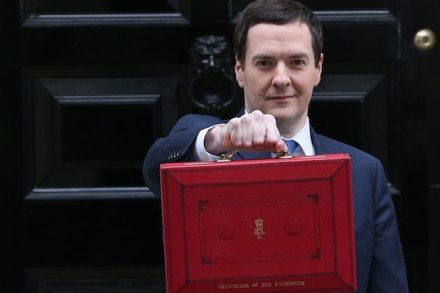
‘If you're a saver, this budget is for you’, George Osborne said on Wednesday as he unveiled measures to let people keep more of what they save – such as combining cash and stocks-and-shares ISAs and whacking the subscription limit up to £15,000 from the 1st of July this year. But will people put their money away in savings accounts? The OBR's latest forecasts show that the savings ratio – the percentage of households’ disposable income that they save – will fall by almost a fifth this year, and households will put away significant less than the OBR thought they would last March. [datawrapper chart="http://cf.datawrapper.de/JjUGo/1/"] Households aren't just not saving - they're spending what they've already saved.

The IFS’s briefing on the Budget: Four things we learned

1. Two million more top-rate taxpayers  The number of people paying tax at the 40p or 45p rates is to increase by two million under the coalition, going from 3.3 million in 2010-11 to 5.3 million in 2015-16. If the coalition had stuck with the tax policy they'd inherited, there would be 1.3 million fewer top-rate payers at the general election. 2. Permanent giveaways, temporary taxes At the Budget, George Osborne promised £4.9 billion of permanent giveaways, including another increase in the personal allowance to £10,500 from April 2015, an increase in ISA limits to £15,000, a reduction in the tax on savings income and reductions in alcohol duties. But there were only £0.

Why Osborne’s recovery might not be based on debt

Is George Osborne’s recovery a credit-driven illusion? Many of his critics says so, and ask – as this magazine did two weeks ago – why we still have emergency interest rates at a time when the economy seems to be booming. One thing we learned from the crash is that cheap debt and housing bubbles can end in disaster, and with his interventions in the mortgage markets, it looks like Osborne could be blowing a bubble now. But striking research suggesting otherwise was released today by Citi’s Michael Saunders, Coffee House’s favourite economist:- Citi’s research found that the economy's growth has happened while the private sector has been paying down its debt.

Poinsettias are just one victim of the energy crisis. Who’ll be next?

'For millions of families', the Telegraph reports today, poinsettia 'is as much a festive favourite as turkey and Christmas trees'. Which is odd given that they're tropical plants which like to be grown at a balmy 20 degrees. But we can expect fewer of them this year because the UK energy crisis means energy bills are up by almost a third for some growers this year. The plants aren't worth heating. We could see a million fewer of them grown here this Christmas than five years ago, so suppliers are having to bring in lower-quality stock from the continent to meet demand. Will Ed Miliband pledge a price freeze on poinsettias? And show that socialism can save Christmas? Stranger things have happened.

Npower boss warns that price freeze could mean lights out

Ed Miliband's energy freeze pledge won him 'political speech of the year' but has had the unintended (yet inevitable) consequence of throwing the energy market into a spasm. The head of Npower, Paul Massara, has said that the political uncertainty means we may not have enough power to cover demand. He has told BBC Hardtalk:- 'The amount of spare capacity to meet the peak requirement has dropped from somewhere around 15 per cent to five... and unless the UK can create a politically stable environment to attract new capital, that capital will not come in... The more government creates uncertainty with things like price freezes or other changes, it means there's less certainty and less likely for capital investment.

Grangemouth – six things you need to know

1. Why have I heard of Grangemouth before? Its oil refinery is of huge strategic importance, providing 80pc of Scotland's fuel and large chunks of England's too. That's why a 2008 strike at the site hit the news: it led to panic-buying of petrol in Scotland. The plant's owners had, then, put forward proposals to phase in a contributory pension scheme for new workers, leading to the workers walking out for two days. Pension liabilities is the big problem (below). 2. What's closing? At the Grangemouth site there's an oil refinery - one of seven in the UK - that processes oil from fields in the North Sea. There's also a petrochemicals site which produces other chemicals, mostly used as precursors in manufactuing, and that's what's under threat.

Public borrowing and a target George Osborne might actually meet

Some of George Osborne's targets - like balancing the books - are always five years away; he never has to meet them to claim success, as long as he plans to achieve them. But having a falling cash-terms deficit he can be measured on. In March, the OBR forecast that borrowing for 2013-14 would come in just half a billion pounds under last year's total. It now looks like Osborne will easily meet his target. Public borrowing for September this year was £1 billion lower than for the same month in 2012. For the government's financial year so far, Osborne has borrowed £6 billion less than at the same point last year (but that's still almost £57 billion). Borrowing figures have been helped by the strengthening economy. That's boosted tax receipts.

The green taxes that add £112 to your energy bill

At PMQs yesterday David Cameron said Ed Miliband was suffering 'complete amnesia' over his time as energy secretary. Ed might have forgotten some of his climate change policies that put money on your energy bills - but it doesn't matter - they might not be around for long. As James Forsyth said at the weekend, George Osborne wants to get rid of some of them in his autumn statement. The Department of Energy and Climate Change says there are seven green taxes that put £112 on the average energy bill in 2013, making up just under a tenth of the total. What are they, and which of them is cost-of-living warrior Ed Miliband responsible for? 1. Home improvements for the fuel poor - adds £47 to the average bill. Miliband policy?

PMQs audioblog | 9 October 2013

Here's the main exchange between David Cameron and Ed Miliband at PMQs today:- listen to ‘PMQs: Cameron v Miliband on energy prices’ on Audioboo After wishing the Prime Minister a happy birthday, Ed made the debate all about his energy price cap policy. By PMQs standards it was a reasonably informed one, but neither Cameron nor Miliband are on a strong footing when it comes to energy price rises: they've both been in governments where prices have soared and little has been done about it. There was a droll exchange between Richard Ottaway and the Prime Minister over scrap metal. Ottaway asked the Prime Minister to welcome the new Scrap Metal Dealers Act ('It'll make the trains run on time').

Will David Cameron be sticking his finger up at Ed Balls after the latest service sector figures?

Yesterday David Cameron told the Tory conference that he had a new gesture for Ed Balls - a finger pointing upwards to indicate a stream of positive figures on the economy. You can almost imagine him doing it today at his desk in Downing Street after reading the latest figures on the service sector. Markit/CIPS' Purchasing Managers Index of activity recorded a level of 60.3, a slight decrease from August's seven-year high of 60.5, but enough to give the UK's best quarter for the services sector since 1997. Any number above 50 indicates growth. The level of growth, according to research from Citi's Michael Saunders, could be consistent with an annualised GDP growth rate of between 4 and 6 per cent.

The week, in audio

Britain's no3 political party held their annual conference this week. But before that, the Liberal Democrats met in Glasgow. The week started with Nick Clegg evading questions about Vince Cable's expected absence from a vote on the economy at the Lib Dem conference. 'I don't tell people when they have to turn up to a meeting' said the authoritative leader on the Today programme.

PMQs audioblog

Ed Miliband opened with unemployment, then followed up on living standards, attacking Cameron and Osborne for their 'hubris and total complacency'. listen to ‘Cameron invites 'constructive suggestions' from Ed Miliband at PMQs’ on Audioboo Gloria de Piero found herself on the order paper this morning, and wondered - what would twitter ask the PM? https://twitter.com/GloriaDePieroMP/statuses/377706342687191040 But it was David Cameron who crowd-sourced his answer: listen to ‘Is Gloria happy with Ed?’ on Audioboo https://twitter.

Decline in net migration stalls

Good news today for the OBR (who want a constant flow of more than 140,000 immigrants a year to support Britain's debt burden and ageing population) and bad news for David Cameron (who thinks immigrants are a drain on Britain's welfare state). Statistics show that in the year ending December 2012, net migration to the UK was 176,000, up from 153,000 in the year ending September 2012.The latest figure is equivalent to 482 more people a day entering the country than leaving it. Net migration is the figure that Cameron wants to be down 'in the tens of thousands' by the end of the parliament. It's been heading down since June 2011.

Unemployment figures: All good news?

Unemployment is down, there are fewer people claiming jobseeker's allowance, and more people are in work than ever before. So, the top line on today's employment figures: They're good news. The real picture is more nuanced. Unemployment is down by 4,000 on the previous quarter, a figure that is dwarfed by the margin of error. We might reasonably expect the real number of unemployed to be anywhere within 85,000 above or below the 2.51 million quoted. There have been nine straight months with fewer people claiming jobseeker's allowance, but the unemployment rate is still 7.8% - just where it was in August 2012, and a meagre 0.1 percentage points lower than the 7.9% it stood at when the coalition was formed. And 69,000 extra jobs (taking the total number of people in work to 29.

Economy continues greying as unemployment falls

As ever there's good and bad news in today's jobs numbers. Unemployment fell by 57,000, but the number of people in employment only rose by 16,000. The figures also show that the greying of the British economy continues. In May there were 8,000 fewer 16-64 year olds in work, and 25,000 more 65-pluses in work. Since the peak of employment in 2008 there are more than 300,000 more pensioners working. There's one more thing that may turn out to be a big positive: Britons put in over 950 million hours in the last three months, that’s 0.4 per cent more than the previous quarter. According to the NIESR, GDP grew by 0.6% over the same period. That means that the productivity of labour - which has slumped during the recession - may be increasing again.