Jeremy Clarke

Jeremy Clarke

A lament for the foreign correspondent’s house – and his hospitality

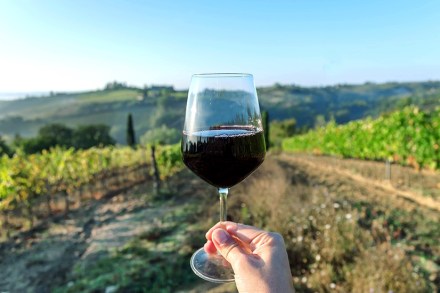
Provence-Alpes-Côte D’Azur Until January the foreign correspondent lived in a late-18th-century house with a vineyard, olive grove and vegetable garden close to the village centre. You’d go through a gate, then another gate, and find yourself suddenly in the countryside and being yapped at by Mary, the most spoilt and spherical spaniel in Christendom, and then the foreign correspondent himself would appear in front of his lovely old house with arms open to welcome you. Usually the first thing he would say was that he was thinking about having a drink and why didn’t he go and fetch a bottle and glasses.
How to survive a heatwave

Provence-Alpes-Côte D’Azur A burning ball appears over the brow of the hill at seven o’clock every morning and then you have roughly two hours to perform outdoor stuff such as shopping. After that you are roasted alive even sitting under a parasol with a hat on or swimming in a pool, and you flee indoors, closing the shutters, doors and windows behind you. The lizards hide; the birds go quiet. Yesterday I watched Reg, the friendly black carpenter bee who lives in a bamboo pole on the terrace, die from sheer exhaustion. For weeks he’s been terribly busy with the flowers and making love on the wing with a succession of delightful lady carpenter bees and suddenly he hit the buffers.

Jam and Opium on the Somme

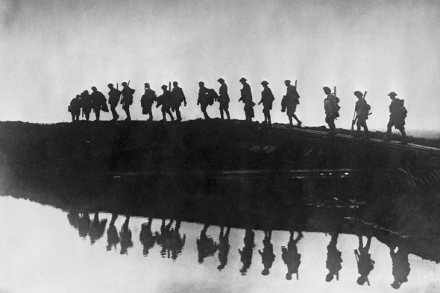
Phone calls aside, the only human contact I had on my ten-day Somme battlefield tour was with the lady who ran the bed and breakfast establishment. My bed was on the upper storey of a disused light railway station in a clearing in a beech wood. Madame lived with her husband in a modern bungalow 100 yards down the line, but came along each morning to cook my bacon and eggs. The greater part of her clientele consists of British Great War buffs. But Covid-19 had kept them away and I had the breakfast table, the old station and indeed the Somme battlefield entirely to myself. The dining room was once the waiting room.

The beauty of military cemeteries

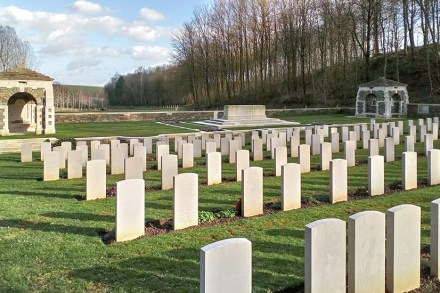
They are starting to cut the corn. But apart from combine harvesters and tractors, the roads up here on the Somme ridges are empty, the villages more or less deserted. It’s been just me and my bike, the wind, the skylarks, the familiar English sky, the chalk ground, the strange flints, the green and famous woods, and the thousands of British dead lying under Portland headstones in these beautifully kept military cemeteries, the grander ones designed by Sir Herbert Baker. They dot the hillsides all around like defensive outposts of a lost civilisation of warrior gardeners. Airport bookshops a few years ago were selling a paperback called Is it Just Me or is Everything Shit?

My Great War obsession

Bernafay Wood B&B, Somme, France I came up on the TGV yesterday from the Midi to northern France and it went like the clappers. I fell asleep zipping through stony, sun-baked vineyards and olive groves and woke an hour later in dairy country obscured by rain. What I had hoped for was an empty carriage or at least a socially distanced one, but this particular Sunday train was packed to the rafters. A woman behind me sneezed at my head from one end of France to the other. A bloke across the aisle was soaked in sweat, his head lolling this way and that on the bends and he looked as though he might have to be carried off the train. I went north to walk the Somme battlefield for nine days and think about my old Mum, who passed away last September.

Nuns, a maquisard and the Devil’s Own Rum: a Provençale pilgrimage

Avid Spectator reader Mr Brown had endured the very strictest of lockdowns for family health reasons in Tunbridge Wells. Since March he had interacted only with delivery drivers, his wife and their two children. He was therefore quite unsocialised when he stopped with us for a night on his journey from Kent to the Pongo Delta in Guinea, where for the next 12 months he will be organising the security for a mining company trucking bauxite 200 miles through bandit country. I found him standing outside a village bar looking at his watch because I was an hour late. He heaved a shopping bag for life filled with booze and groceries into the boot of my car, urging that it must go into a fridge as soon as possible.

What angry young French men want

Chatting on the café terrace with my new friends Didier and Emile made me aware that certain political ideas, which before the Covid-19 pandemic I had comfortably assumed belonged on the wilder shores of political discourse, are now mainstream among the under thirties. I felt a little envy, perhaps, for Didier’s undoubting conviction that questions of equality, gender, race and white supremacy were the ultimate verities for humankind. But a single word often betrays a great design, and his supplementary advocation of voluntary euthanasia for the chronically sick and elderly indicated all too clearly in which direction his ideal post-Covid society would be headed.

Is left the new right?

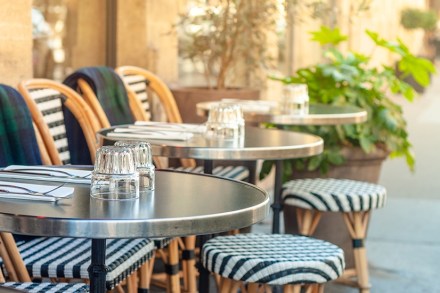
I took a table on the terrace of the reopened bar and ordered une pression from the waitress. ‘Back to normal, thank goodness,’ I ventured to the chap sitting alone at the next table. He was staring at the centimetre of lager remaining in the bottom of his glass. The cheapness of his clothes and the loneliness enveloping him like a caul was contradicted by his youthful glamour. ‘Normal?’ he said. ‘Normal doesn’t work. You can shove your old man’s normal up your backside.’ My sociable, celebrant spirit recoiled from the aggression. ‘I only meant that it was good to see the bars and shops open again,’ I said lamely.

My hairdresser cured my depression

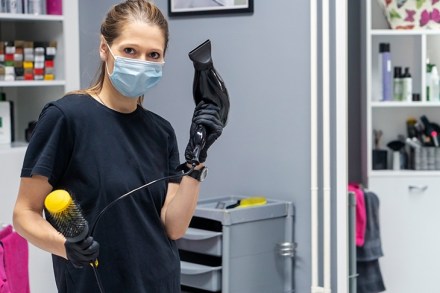
I walked to the salon in fiery sunshine. Gorgeous, zaftig Elody was wearing a short satin dressing gown of silver and gold. She was alone. ‘Ça va?’ she said, helping me into the gown. ‘Black dog,’ I said. ‘What is black dog?’ she said. ‘Cafard,’ I said. ‘A black ox trod on my foot.’ I sat in the chair, removed my glasses and stared in the mirror. The straps of my black face mask made my ears stick out. And strewth, the hair. ‘Two owls and a hen, four larks and a wren,’ I said. Elody speaks no English and my French is rudimentary. ‘What?’ she said. I had a stab at translating the limerick into French. She stared at me via the mirror with rapt, sceptical attention.

An 11-year-old’s birthday party was hijacked by Brexit

Saturday night we ate outside next to the floodlit rock face. Four adult guests came puffing up the path and one child, George, celebrating his 11th birthday. A string of low-wattage coloured bulbs hung above our heads. Chicken curry. Dahl. Pink wine. Yellow champagne. Little brass oil lamps on the table. John Mayall & the Bluesbreakers — trite lyrics, sublime guitar — for the birthday playlist. A cream-filled birthday cake in the fridge awaited the right moment. Dominic Cummings was all the rage that day and every one of our adult guests was an ardent Remainer.

We have a communist bar and a fascist bar. If only I could remember which is which

When I first came to this village, I was told that one of the bars was a ‘communist’ bar and the other ‘fascist’. The information was appended with vague mutterings about the Nazi occupation being a live rail in the collective village memory even after 60 years and that it was probably best not to enquire too persistently or deeply into the subject. French bars are great for getting very drunk very quickly while standing up on a tiled floor, but are not comfortable or cosy like a British pub. Therefore I haven’t yet made a habit of patronising either of the village bars except occasionally during the busy summer holidays to meet friends who are staying in the area.

Rules for a deconfinement dinner party

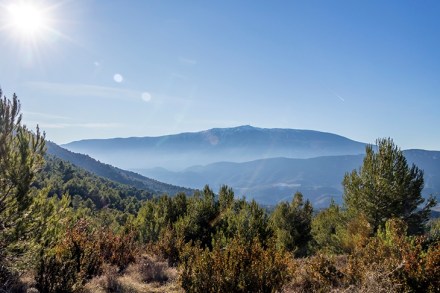
The most visible local landmark is a solitary two-headed Jurassic mountain called Le Bessillon, six miles long and 800 metres tall at the highest peak. These are unimpressive vital statistics for a mountain perhaps, but the Bessillon exerts a tremendous, almost uncanny presence on us all. The foreign correspondent and his wife have bought an 800-tree olive farm on a nearby hillside. From their outside dining table this great primeval slab and its forested sides can be seen in profile, like a finely drawn illustration in a Victorian encyclopedia. Between the dining table and the mountain is nothing but oak forest and pylons, and beyond it more oak forest until a distant village on a plateau. (The elegance of French electricity pylons and barbed wire makes me laugh.

My first post-lockdown party

France is divided into a red zone and a green zone. We’re green. Green for go. From this morning we no longer need a signed and dated permit to leave the house; we can socialise with up to ten other people at a time; and we can travel up to 60 miles in any direction. In theory we could fill a minibus and go on a beano down to the coast tomorrow. And in spite of the government ordering bars and restaurants to remain closed, the village beer bar unexpectedly opened for business last Saturday, and the lights were on in the poshest village restaurant where people inside could be seen tucking in. Perhaps, in truth, the delicate decision about when to open the bars and restaurants has been quietly devolved to the local mayors’ offices.

In praise of French doctors

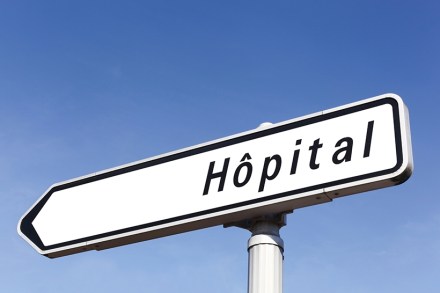
From my hospital bed in Hyères I could look out of the window and see the old town and Edith Wharton’s old house, the Castel Sainte-Claire, away on the hillside. Christophe, a male nurse, came in to welcome me and take my temperature, pulse and blood pressure. He was masked and gloved against possible infection from the old Covid Dix-Neuf and he spoke English. As he slipped on the finger thermometer and inflatable sleeve, he reminisced about his rugby-playing days. Thirty-five years ago, he said, he had competed against an English team who played rugby with a violence that was incredible.

How the French view their weekly clap for carers

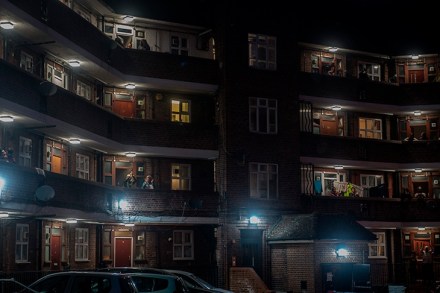
Once a week we break French emergency law and have a friend round for drinks on the terrace. The terrace overlooks the village rooftops as if it were a box at the theatre. Two weeks ago we were pleasantly lit up, when, at one minute to eight, the villagers below came out on to their terraces or stood at their windows and front doors to make a noise in support of the ‘essential’ workers: nurses, doctors, carers, postmen, shopkeepers, council workers, and so on. Some banged saucepans together or beat them with wooden spoons. Some blew horns of one kind or another, including what sounded to me like one of those long prayer horns blown by Tibetan monks from monastery rooftops.

Vodka, kaolin and morphine: my welcome drinks at The Spectator offices

In 2001, aged 44, I was hired to write a weekly column for this august paper, and for the first time in my life there was a London door on which I could knock or ring, at any time of the day or evening, and be welcomed in. And what a door! To walk along the Regency terrace sun trap of Doughty Street in Bloomsbury on a summer evening, then breeze through the open door of number 56, and to know that the people to be found inside were the funniest, cleverest, most unsnobbish collection of individuals, and that booze was the second language, was a dream come true. I would trot up the steps beneath the stripy awning, enter the magic portal and turn left into a seedily ornate reception room. There I could take a running jump into secretary Ann Sindall’s ample bosom.

Would my success in growing cannabis plants translate to nasturtiums?

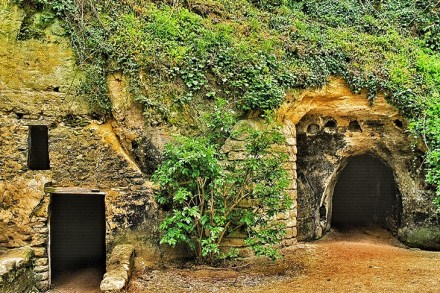
In a cave once used as a stable and now abandoned, I found a wooden crate containing a dozen tiny clay flowerpots. They were of a simple design and looked old. I found two packets of seeds in a bric-à-brac drawer — sunflowers and nasturtiums — and I sowed them in the pots, which I arranged in a row on a shelf on the terrace. It was my first attempt at growing anything since 1979, when I raised six cannabis plants in my father’s greenhouse with such spectacular success that I had to permanently leave the roof panes open to accommodate them. Rarely have sunflower and nasturtium seeds commanded such loving and indefatigable attention from the sower.

I was relishing the lockdown a week ago, but now I need urgent hospital treatment

In France the rule for going for a walk stipulates an hour in duration or a kilometre in distance. We are fortunate here in having a 40-minute circular walk that starts at the front door, most of it on a footpath, though beginning with a steep climb that makes me pant like a greyhound after a course. Then the path levels and runs pleasantly through olive groves and vineyards. One is never out of sight of houses and at three points along the route house dogs — in order: a pair of Weimaraners, a Jack Russell and a pedigree sheepdog — enjoy intimidating passers-by by throwing themselves in a frenzy of barking at the wire boundary fences containing them. Otherwise the route is bucolic and quiet enough to quieten the mind and exhaust the frail old mongrel.

Had the entire village population been wiped out since last week?

With my signed and dated laissez-passer in my pocket, I trotted down to the village to see if I could buy anything to eat, drink or smoke. A sensation of being out and about in the world was also high on the agenda. Cycling and jogging earns you a fine, of which a quarter of a million have been doled out in a fortnight. But we are permitted to walk the dog for one kilometre, or 546 yards there and 546 yards back. We cheat a bit, Catriona and I, by taking the dog separately, meaning she gets two walks a day. She’s elderly and frail, the poor bewildered thing, and completely knackered. And if we tick the box on the laissez-passer we can also go out to the nearest grocery shop and tobacconist. Nevertheless confinement is beginning to chafe a bit.

I am socially isolating in a cave in France

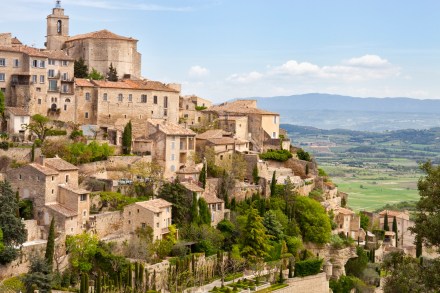
This Provençal village clusters around the base of a cliff 300 feet high and a kilometre wide surmounted by two crumbling look-out towers. The cliff is riddled with dry caves, used since time immemorial by troglodytes and fugitives. In the early 19th century a section of the rock face was walled and the caves used as a convalescent hospital for Napoleon’s wounded soldiers. An earth tremor largely destroyed the village’s medieval quartier in 1905. The stoutly built military hospice survived, as well as a few other ancient cave dwellings higher up the cliff. Catriona and I live in one of these. House and garden sit on a high ledge accessible via a steep and rocky footpath.