Jeremy Clarke

Jeremy Clarke

The divine comedy of Friedrich Nietzsche

I’ve come back to the empty house for the second time in the six weeks since my mother died. The last time I came back, I felt her lingering presence: benign, modest, humorous. But this time she’s absent. Alison, who came once a week to clean, told me that my mother’s last words to her were: ‘Don’t forget to clean the skirting boards behind the beds.’ My mother liked her house to be clean. She kept on top of it, wielding the vacuum cleaner when she’d reached the stage where she couldn’t stand unaided. It’s a lovely old house on a rainswept promontory overlooking the bay.
The truth behind those Airbnb snaps

Catriona and I had agreed that a terrace for smoking, eating, drinking and painting was a necessity rather than a luxury, blow the expense. One of the photographs of an Airbnb just above my price range showed an elegant round table with two romantic champagne flutes and an uninterrupted terrace view of a ridiculous sunset over the Ligurian sea and the coast of Italy. The faintly aphrodisiac image was a mug punter’s eyeful and I greedily tapped the button committing me to three nights at Sandrine’s Airbnb apartment, perched in the heart of Menton old town. Free parking was to be had next to the cemetery of the Old Château, resting ground of tubercular Russian nobility and upper-middle-class English.

What had the chambermaid made of my penis vacuum pump?

Fumbling outside my door in dripping swimming trunks for my room key, I was hailed cheerily by the maid from a doorway further along the corridor. I hadn’t met her, but her greeting was not without a touch of familiarity, if not intimacy, I thought. The latter, I guessed, must be predicated on the fact of her coming into my junior suite when I was out and restoring it to a holiday-brochure photograph, then arranging my tawdry collection of toiletries into little islands on the marble counter. What she made of my penis vacuum pump, I couldn’t guess. I rather think that while she could only speculate as to its function, she probably imagined it to be the latest Western bourgeois ‘must-have’ gadget.

Will mindfulness turn me into a Remainer?

Mindfulness at our all-inclusive Turkish beach resort began at 11 o’clock. Our mindfulness teacher was a tiny, smiley, flexible-looking woman who was not much bigger than the wheeled amplifier she dragged in behind her on to the beachside ‘wellbeing’ platform. With her musical voice she led us in a few brief arm stretches and neck rolls, then asked us to lie flat on our backs and think about what we were thinking about. Our intention this morning, she said, was to bring our minds back from elsewhere in time and space to the here and now and try and keep it there. This is what mindfulness is, basically, she said. Eight of us had turned up: four men, four women, all middle-aged. We were all hungover, I think.

Why Sodom and south Devon are a million miles apart

We gathered around in the sunshine and watched the coffin being lowered into the freshly dug trench. Stratifications visible on the interior sides of the excavation showed that she was being laid to rest in shallet (compacted broken slate) and I felt sorry for whoever it was who had volunteered to dig it by hand. The 180-year-old graveyard was perhaps seven eighths full; her allotted plot was in a pleasant, even beautiful spot, far away from the cold shadow of the church, with a small, wind-bent hawthorn tree close by and panoramic view of the blue bay. I think some of those present will remember this dazzling September and our joyful singing at her funeral service and our blinking, whey-faced silence as the coffin was lowered into the ground for years to come.

Semi-recluse (me) seeks dilapidated cottage on Dartmoor to rent

So now I must find somewhere else to put my books and live sometimes. Dartmoor, I thought: one of the wildest places left in England yet just 20 minutes to Exeter St David’s station, if my car starts, and another 20 to Torbay hospital along the new bypass for appointments and treatments. What I have in mind is a miner’s cottage with bracken growing against the granite walls and an indefatigable little stream passing close by for use when the pipes freeze. There would be no wifi, no phone signal, no BBC radio or television. Final demands would be left in a postbox at the end of the unmade track half a mile away. The cottage would be a bit dilapidated but the roof would be mostly sound and the chimney would draw.

The woman laid out in the coffin in front of us wasn’t Mum

The receptionist with brown lipstick showed my son and me into a faultless waiting room, whose centrepiece was a big colour photograph of out-of-focus lavender florets. A couplet written underneath said: I’m the colourful leaves when autumn comes around And the pure white snow that blankets the ground. Had we made an appointment, she asked. We understood that it wasn’t necessary, we said, and that we could view the body ‘at any time within normal business hours’. She wrestled with her thoughts for a moment, then said she would have to get a man to come over from Torquay to help lift her out of the fridge. ‘Can we help?’ I said. ‘No. No,’ she said. ‘Health and safety, you understand.’ We understood, we said.

The mysterious ways of the French

These new tablets that will save or at least prolong my life have unpredictable side effects which only now, a month after starting to take them, are making themselves felt. Breasts, round and wobbling that I can cup in my palms and jiggle up and down; breasts, moreover, with painfully sensitive nipples. Fatigue: it is almost impossible to be both immobile and awake. By early evening, trapped upright in a chair drawn up to a crowded restaurant table, I’m longing for sleep or even death. And wind, which is perhaps the least expected and most disastrous side effect. Quelling the Boxer Rebellion is the only thing keeping me awake.

Catriona’s accident has made of us minor celebrities in the village

Three weeks ago Catriona was going to the village shop when a building site security fence fell on her. Wire spikes ranged along the top gouged three chunks out of her right forearm, two of which were too capacious to sew up. She was taken to hospital by the village firemen in their fastest van, siren wailing, lights flashing. The fence had toppled over once before that day, but the mayor, with whom the legal responsibility ultimately lay (the building site was a public work) put the blame on Catriona for walking too close to the fence, or perhaps existing. Within this small Provençal village society the incident and the already unpopular mayor’s hot denial of responsibility became a cause célèbre.

How Captain Mainwaring lightened my mother’s dying days

On Saturday evening I showered, shaved and, prompted by a strange impulse, put on my going-out clothes. Then I cycled round to the nursing home. The door of room 33 was ajar and she was fast asleep, mouth open, brow furrowed, as if she were trying to make sense of it all. The electric motor-powered mattress was raised and she was sitting up rather than lying, her head lolling towards the darkening window. On the bed table was a box of man-size tissues, a TV remote, a little pink sponge on a stick for sucking liquid out of, and a baby’s plastic drinking beaker in which her tea had gone cold. Poor Mum! Her tide has receded as far out as it does on the Thames estuary at Southend and her skeleton is showing.

Low life | 15 August 2019

A 20-minute drive through quiet country lanes then suddenly a madcap roundabout and teeming new ring road and finally the hospital car park where I leave the car unlocked and the windows down because nobody in their right mind would want to pinch a car as shabby as this. Up the grassy bank, in through the sliding doors, turn right past the café, left and left again, up two flights of stairs to level one, then a wide sunny corridor with paintings by schoolchildren and mission statements, then left and straight on without deviating as far as the front row of the pews in the hospital chapel, where I stop and kneel. As usual I have the cool silence to myself.

Low life | 8 August 2019

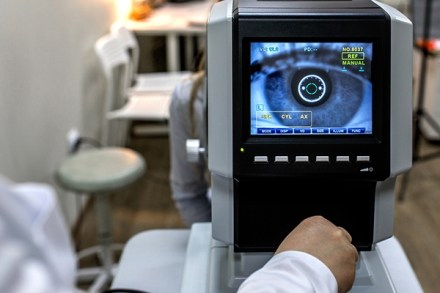
My luck had to run out one of these fine days. Everybody’s does sooner or later. I’ve had a fantastic run — I’ve been lucky all of my life — and shall continue to count myself fortunate. But being suddenly out of luck makes one feel unmasked, which does take a bit of getting used to. Such were the morbid thoughts running through my head as I sat in the eye clinic waiting room, already packed by 8.30, waiting to see Mr Doyle. It was my third visit in two weeks. They’d photographed the interiors of my eyeballs hundreds of times. They’d blown little puffs of air at them. They’d told me to watch the red light until it turns green, then look to the left. But I had yet to see this Mr Doyle.

Low life | 1 August 2019

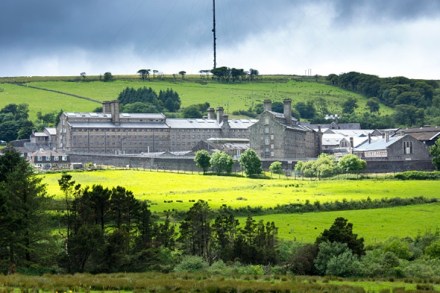
My grandson Oscar (nine) shares a bedroom with his cousin Lucas (eight) and sits next to him at school. Before this year, for one tragic reason and another, Lucas hadn’t been to school for two years. So Oscar has been mentoring him in mathematics and spelling and before they go to sleep reads to him. (At the moment they’re reading Stig of the Dump.) Last week, on the final day of the school year, Lucas was given the Star Pupil of the Year award. Oscar cried. To reward them for their combined efforts I handed out cash and took them last week to Dartmoor Prison museum, situated within the grimly massive granite walls of the old prison dairy, for a treat. The bloke taking the money was a prison officer and a Scot.

Low life | 25 July 2019

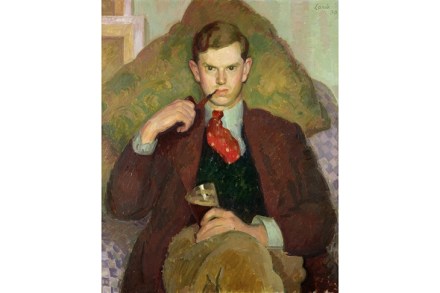
‘So what are your plans?’ said our gentle, civilised Airbnb host over a tray of tea and cake to welcome us into their perfect home. I outlined the highlights of our prospective three-day literary tour. ‘The Augustus John exhibition at the Salisbury museum; the Henry Lamb at Poole; Hardy’s cottage. And if we have time the Barley Mow on the Wimborne Road where Evelyn Waugh wrote Decline and Fall.’ ‘My word, you are a cultured couple,’ he said, half-humorously. ‘Oh, we’re so cultured it’s ridiculous,’ I said. The Augustus John exhibition was wonderful. (So was Salisbury’s museum.

Low life | 18 July 2019

The train standing at platform 1A had no air-conditioning and the heat was stupefying. Latecomers pressing into the carriage reacted to it as to a slap in the face. Those with nothing better to hand fanned themselves with their tickets. The lady seated opposite me mistook my theatrical languor for conviviality. ‘I’ve been in Florence for a week and I’ve never been so hot in my life,’ she said. ‘But I’ve had such a wonderful time in school here learning Italian. Such a beautiful language. You sort of roll it around in your mouth as if you are tasting something delicious, like olive oil or something. And I made such good progress! I’m sure that if I’d done another week I would be fluent almost.

Low life | 11 July 2019

The hotel manager had arranged for me to borrow an Alfa Romeo Spider Duetto two-seater convertible (1982) for the afternoon. And now, after lunch, here it was, as promised, parked on the forecourt. ‘You’re familiar with left-hand drive cars I take it, Mr Clarke?’ she said, a touch apprehensively I thought. ‘I’ve had a Spider,’ I said. ‘Similar to this, but a later, fuel-injected model.’ A true statement — although I was as confounded by it as she was. She handed me the key and a map with a suggested scenic route marked in Biro. I climbed in, fired the thing up, and with a cheery wave, 10,000 exploratory revs and a pip on the horn I set off through the village.

Low life | 4 July 2019

As they say: it all happened so quickly that it wasn’t until afterwards. One minute I was bawling at my sister, the next NHS workers arrived from all directions and removed my mother from her house to a nursing home. It was like the dramatic conclusion to an undercover ‘sting’ operation. They came streaming in through the front door laughing and joking. To avoid doing anything silly or controversial, I removed myself from the scene. While my mother was being carried out of her front door, a diplomatic mission was dispatched to offer me a confection of emollient explanations. This consisted of a community nurse and an occupational therapist. They were not women to argue from first principles. Legality was all that mattered.

Low life | 27 June 2019

The weather forecast was rain, torrential, all day, so I took my anorak. In the hospital car park it was spitting, nothing much, so I left it in the car. My appointment was scheduled for 1.30. Before my name was called, I had time to browse the waiting-room bookshelf (paperbacks 50p, hardbacks £1). There, in the red livery of the Wordsworth Military Library, was Rorke’s Drift: A Victorian Epic by Michael Glover. I bore it back to my high-backed chair and started to read. When a nurse came in and called my name, I had to come all the way back from South Africa in 1879 to answer it. This appointment was to receive the results of a scan. I was shown to an examination room and a minute later in she sailed, my lovely oncologist.

Low life | 20 June 2019

I walked in out of the rain, dripping, and sat down beside the fire on the primitive high-backed settle. ‘Is this OK?’ I said to the guardian. ‘Yes, you’re allowed to sit on the furniture, none of which is original,’ she said. She was a small woman in her fifties, radiating an attractive combination of reverence and humility. The log fire smoking quietly in the fireplace was a wonderful, essential touch, I thought. The slow tick of a grandfather clock and the rain squalling against the windows emphasised the silence of the cottage parlour. The cob walls, painted the colour of diluted pig’s blood, were a yard thick. There was also a dresser, an oil lamp, some plain old wooden chairs and a small round table. On the table was a violin.

Low life | 13 June 2019

As usual I go downstairs at five o’clock in the morning and into the dining room, which now serves as my mother’s bedroom. She generally sleeps fitfully until about four, punctuated by visits to the lavatory, the door of which is beside her bed, on the side she sleeps on. These visits are undertaken with the deliberation and the creeping slowness of a two-toed sloth. One wonders how she manages it. After she wakes she lies there, praying for everybody, I expect, until this zombie appears at five. I help her on with her dressing gown and day socks and assist her on the ten-yard expedition from the bed to the recliner chair in the adjoining sitting room. Finally I draw back the curtains on the surreal, pink-tinged clouds of another June dawn. But this morning the bed is empty.