James Walton

James Walton is The Spectator’s TV critic

Looks lovely if nothing else: Craig and Bruno’s Great British Road Trips reviewed

To its huge credit, ITV has managed to find perhaps the last two television celebrities who’ve never before been filmed travelling around Britain while exchanging light banter and using the word ‘iconic’ a lot. In Craig and Bruno’s Great British Road Trips, the Strictly judges are driving a Union flag-bedecked Mini through such telegenic staples of heart-warming TV dramas as the Lake District, the Yorkshire Dales and the Scottish Highlands. For the opening episode, the choice fell on the Cornish coast, which certainly helped the programme achieve its primary aim of looking lovely. But this, as it transpired, was just as well — because for a fair amount of the time, not much else happened.

Thoughtful and impeccable: Ken Burns’s Hemingway reviewed

Ken Burns made his name in 1990 with The Civil War, the justly celebrated 11-and-a-half-hour documentary series that gave America’s proudly niche PBS channel the biggest ratings in its history. Since then, he’s tackled several other big American subjects like jazz, Prohibition and Vietnam; and all without ever changing his style. In contrast to, say, Adam Curtis (another ambitious film-maker whose methods have remained unchanged for 30 years), Burns’s documentaries take an almost defiantly considered approach, forgoing anything resembling self-regarding flashiness in favour of such old-school techniques as knowledgeable talking heads, careful chronology and straightforwardly appropriate visuals.

Return to LA Confidential: Widespread Panic, by James Ellroy, reviewed

Even by James Ellroy’s standards, the narrator of his latest novel is not a man much given to the quiet life. Freddy Otash breaks legs for Frank Sinatra. He gets Dean Martin’s pregnant Latina maid deported. He sticks the hand of someone blackmailing Liberace into a deep-fat fryer. He sleeps with the 21-year-old Elizabeth Taylor while she’s only on her second marriage. And all that’s in the first 20 pages, while Otash is still an LA cop. Once he goes freelance as a private eye, things turn rather more lurid. Widespread Panic is a rare stand-alone novel among Ellroy’s assorted trilogies and quartets. But, as you can maybe tell already, that doesn’t necessarily make it a radical departure.

One of the best Covid dramas so far: BBC2’s Together reviewed

Let me start with a spot of admin: if you’re wondering what The Speccie makes of GB News, it’ll be reviewed next week once the channel’s had a fair chance to establish itself. In the meantime BBC2’s Together took an impeccably up-to-date subject and gave it surprisingly old-fashioned treatment — by returning us to the far-off days when TV drama had its roots in theatre rather than cinema. Not only was it a 90-minute two-hander, but the characters spoke to both each other and the audience on a single set. Sharon Horgan and James McAvoy played an unnamed couple (always a bit annoying for a reviewer but I won’t let that affect my steely objectivity) who entered the first Covid lockdown convinced of the fact that they hated each other.

Camp am-dram, plus stuff about the patriarchy: Channel 5’s Anne Boleyn reviewed

Fifty-one years ago, in the BBC’s much-acclaimed The Six Wives of Henry VIII, Anne Boleyn was portrayed as a brave and innocent woman brought low by the men around her, notably Henry VIII and Thomas Cromwell. Even then, of course, this was by no means an unconventional view. Only the previous year, the film Anne of the Thousand Days — nominated for ten Oscars — had taken a similar line, as indeed had Foxe’s Book of Martyrs (1563), which objected to all ‘sinister judgments and opinions… against the virtuous queen’.

Haunted by the past: Last Days in Cleaver Square, by Patrick McGrath, reviewed

At the risk of encroaching on Spectator Competition territory, what is the least surprising thing for any given narrator in a particular author’s work to say? (For one of Irvine Welsh’s, a single word of four letters might be enough.) In the case of Patrick McGrath, I’d suggest, the answer comes on page 55 of his new novel: ‘I confess I feel that my sanity is under threat.’ McGrath famously grew up in the grounds of Broadmoor, where his father was the medical superintendent, and his consequent lifelong interest in psychiatry is reflected in pretty much all of his fiction.

Quietly radiates a wholly justified confidence: BBC 1’s The Pact reviewed

There was certainly no lack of variety among new TV dramas this week, with a standard British thriller up against more glamorous American competition in the shape of some extravagant Victorian sci-fi and an adaption by an Oscar-winning director of a Pulitzer-winning novel. (All three, mind you, did naturally feature a one-dimensional white bloke as the embodiment of sexist and/or racist villainy.) The surprising thing at this stage is that it’s the plucky British show that looks most promising. The Pact began, like many a thriller before it, with a frightened woman running through some dark woods. So far we still don’t know why — unless it was just force of TV habit.

A TV doc that is truly brave: BBC1’s Ian Wright – Home Truths reviewed

Ian Wright: Home Truths began with the ex-footballer saying that the home he grew up in was ‘not a happy one’. As truths go, though, this soon turned out to belong firmly in the category of ‘understated’. Not surprisingly, Wright’s favourite boyhood programme was Match of the Day — which is why his stepfather would make him stand with his face against the wall while it was on. (‘Just because he could,’ Wright explained.) He also beat Wright’s mother: often, Wright recalled, while she repeatedly cried the word ‘Sorry!

A very watchable doc cashing in on Line of Duty: BBC2’s Bent Coppers reviewed

If you’re after an exciting, twisty programme about police corruption that doesn’t also feel a bit like sitting an exam in Line of Duty studies, then Bent Coppers: Crossing the Line of Duty could well hit the spot. As both the timing and subtitle not so much suggest as bellow, this three-part documentary series is an obvious attempt to cash in on its fictional counterpart. Happily, though, it’s a successful one. In Wednesday’s second episode the focus was on 1970s Soho, where the most reliable way to make a fortune was by opening what the narrator Philip Glenister called, in suitably 1970s argot, ‘dirty bookshops’. Of course, there were certain overheads involved, like rent and huge bribes to the police.

It’s impossible not to feel snooty watching ITV’s Agatha and Poirot

Agatha and Poirot was one of those programmes that had the annoying effect of making you feel distinctly snooty. ITV’s decision to dedicate 85 minutes of primetime Easter Monday television to a books-related documentary was never likely to result in a steely Leavisite engagement with literature. Nor, of course, should it. Even so, it was hard to avoid a dowager-like shudder when, for example, one contributor declared that Agatha Christie ‘will never be surpassed as the world’s greatest novelist’ — especially when the contributor was that well-known literary critic Lesley Joseph.

Is Jed Mercurio bored with Line of Duty?

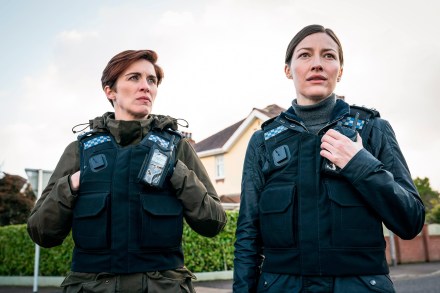
When a drama begins with news of a ‘Chis handler’ receiving ‘intel graded A1 on the matrix’ that causes a ‘conflab with the SFC’, it can mean only one thing: you’re watching a new series of Line of Duty. And just to confirm it, shortly afterwards a bunch of armed police carried out a raid that didn’t go to plan — possibly because it was being led by a bent copper. As ever, too, there’s a big name playing the potential wrong ’un, with Kelly Macdonald (Trainspotting, No Country for Old Men) guest-starring as DCI Jo Davidson, leader of the Murder Investigation Team.

Undemandingly enjoyable (just don’t read the episode’s title): McDonald & Dodds review

Well, this a bit awkward. A fortnight ago, in my last TV column, I confidently asserted that, despite the involvement of Jed Mercurio, Bloodlands (BBC1) was nothing like the programme it was being compared to in all the advance publicity. Two episodes, several twists and at least one bent copper later, my ringing conclusion ‘Just don’t expect Line of Duty’ feels somewhere between premature and spectacularly wrong. Luckily, this is not a mistake anybody could make about Bloodlands’ Sunday night crime rival, McDonald & Dodds, which has been building up a solid following on ITV. The central idea it depends on is, like that of many a cop show before it, two mismatched detectives.

Bloodlands is well worth watching – just don’t expect Line of Duty

To begin on a cheerful note, it’s certainly been a good week for fans of slow-burn British crime dramas with one-word titles in which an anguished middle-aged cop investigates murders from the 1990s while also battling police bureaucracy. Bloodlands has been described in several newspapers as the latest exhilaratingly twisty thriller from Jed Mercurio, creator of Line of Duty. But, as Adam Curtis would say, this is an illusion. For one thing, while it was made by Mercurio’s new production company, it’s written by newcomer Chris Brandon. For another, so far at least, there’s little in the way of either exhilaration or twistiness.

The death of binge-watching

On the face of it, Wikipedia’s list of the key events of 1 February, 2013 seems impressively comprehensive, ranging from Hillary Clinton’s resignation as Secretary of State to a hurling player denying he’d won €10.6 million in the Irish lottery. What’s missing, though, is something that’s surely had a bigger impact on our daily — and nightly — lives than any of Wikipedia’s choices. On that day Netflix released its first original series, House of Cards, the same way it had released its earlier bought-in repeats: by making all the episodes available at once. Now that we know how successful both the show and the format proved, it’s easy to forget how risky this was, especially for a $100 million production.

Incoherent and conspiracy-fuelled: Adam Curtis’s Can’t Get You Out of My Head reviewed

‘History,’ wrote Edward Gibbon, ‘is, indeed, little more than the register of the crimes, follies, and misfortunes of mankind.’ In this respect, though, history has nothing on the work of Adam Curtis, whose latest documentary Can’t Get You Out of My Head has now arrived on BBC iPlayer — all six episodes and eight and a half hours of it. Anybody who’s seen Curtis’s previous series (including The Century of the Self, The Power of Nightmares and The Trap) will know what to expect. Once again, he mixes terrific news footage, short clips of more or less anything, mood-inducing songs and a lordly commentary to remind us just how hopeless — in both senses — human beings are.

John DeLorean: man of mystery – and full-blown psychopath

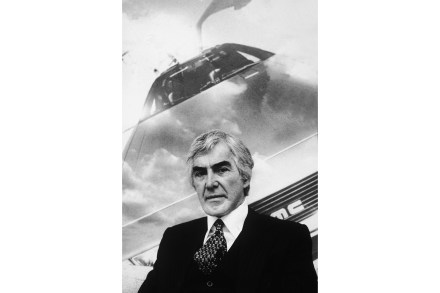
DeLorean: Back from the Future was one of those documentaries — for me at least — that takes a story you thought you sort of knew and makes you realise a) that you didn’t really, and b) what a great story it is. The programme began, as it was pretty much duty-bound to, with a clip of Michael J. Fox and the time-travelling DeLorean car from the movie that inspired Wednesday’s means-less-the-more-you-think-about-it subtitle. A series of captions then introduced us to John DeLorean himself: a man who ‘had everything’ (cue shots of a much younger ex-model wife and some Rolexes) until he ‘risked it all’ in the mid-1970s, when he left a high-ranking post at General Motors to found his own sports-car company. Now all he needed was the money.

Watch Mark Kermode find 1950s political attitudes in 1950s films

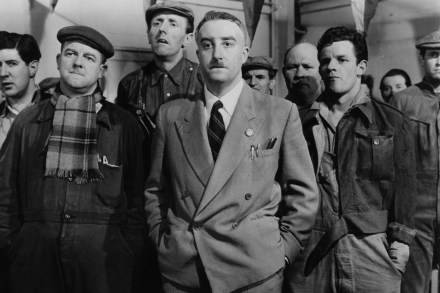
The new series of Mark Kermode’s Secrets of Cinema began with an episode on British comedy films. As ever, Kermode was terrific at demonstrating how persistent certain characters and ideas in his chosen genre have proved to be. He traced the theme of ‘the little man’ from George Formby and Norman Wisdom to Paddington Bear, paying due attention to its origins in Britain’s most successful early film export, Charlie Chaplin. Moving on to the subset of little men who think they’re bigger than they are, his judiciously chosen clips revealed how much Captain Mainwaring owes to Captain Waggett in 1949’s Whisky Galore!

A romcom with very little com: BBC1’s Black Narcissus reviewed

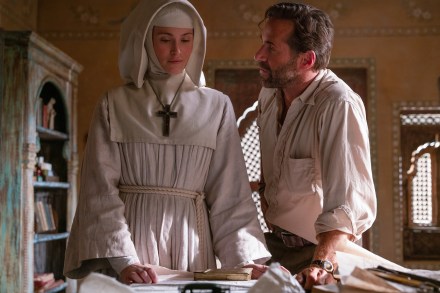
In Black Narcissus, based on the novel by Rumer Godden, five nuns set off for a remote Himalayan palace in 1934 to set up a convent school. The palace, donated by an Anglophile general, used to be a harem and was still adorned with erotic paintings. It was also where the general’s sister, Srimati, had committed suicide and where, just a few months previously, a male religious order had tried to establish a school too, before retiring defeated for mysteriously undisclosed reasons. The nuns’ main helper in practical matters, a British expat called Mr Dean (Alessandro Nivola), possessed an overwhelming maleness that expressed itself through such attributes as a chiselled jaw, an Indiana Jones hat and a handy way with a spanner. So what could possibly go wrong?

Watch Andrew Marr stare at places where stuff happened: New Elizabethans reviewed

Congratulations, everyone! It turns out we’re much better than those bigoted old Brits of the 1950s. After all, they were ‘class-obsessed, overwhelmingly white and Christian, and deeply conservative about the role of women’ — whereas we ‘accept difference and diversity in a way that would have been almost unthinkable in 1953’. This was the reassuring message in the first episode of New Elizabethans by Andrew Marr, where Marr surveyed Britain’s changing social attitudes since the Queen came to the throne, and liked what he saw. These days, needless to say, the ‘great man theory’ of history has rather fallen out of fashion — so instead Marr brought us a sort of ‘great activist’ version.

Like much jazz, it might have benefited from being less solemn: BBC4’s Ronnie’s reviewed

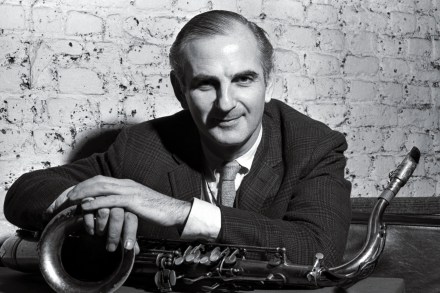
Ronnie’s: Ronnie Scott and His World-Famous Jazz Club was like the TV equivalent of an authorised biography: impressively thorough, often illuminating, certainly long — and perhaps a bit too reverent for its own good. The programme began with some of today’s jazz musicians testifying to just how great the club is. From there, we cut to the story of Scott himself, with his Jewish East End background and his early love of the saxophone. By 16, he was accomplished enough to cross the frontier from East End to West, and played in various swing bands. But then he and his fellow 1940s hipsters discovered bebop, a reaction against commercialised swing that preferred its audiences to listen earnestly rather than merely dance.