James Walton

James Walton is The Spectator’s TV critic

It’s impossible not to feel snooty watching ITV’s Agatha and Poirot

From our UK edition

Agatha and Poirot was one of those programmes that had the annoying effect of making you feel distinctly snooty. ITV’s decision to dedicate 85 minutes of primetime Easter Monday television to a books-related documentary was never likely to result in a steely Leavisite engagement with literature. Nor, of course, should it. Even so, it was hard to avoid a dowager-like shudder when, for example, one contributor declared that Agatha Christie ‘will never be surpassed as the world’s greatest novelist’ — especially when the contributor was that well-known literary critic Lesley Joseph.

Is Jed Mercurio bored with Line of Duty?

From our UK edition

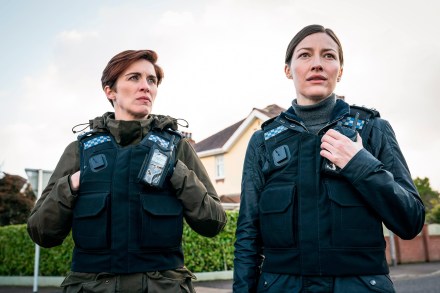
When a drama begins with news of a ‘Chis handler’ receiving ‘intel graded A1 on the matrix’ that causes a ‘conflab with the SFC’, it can mean only one thing: you’re watching a new series of Line of Duty. And just to confirm it, shortly afterwards a bunch of armed police carried out a raid that didn’t go to plan — possibly because it was being led by a bent copper. As ever, too, there’s a big name playing the potential wrong ’un, with Kelly Macdonald (Trainspotting, No Country for Old Men) guest-starring as DCI Jo Davidson, leader of the Murder Investigation Team.

Undemandingly enjoyable (just don’t read the episode’s title): McDonald & Dodds review

From our UK edition

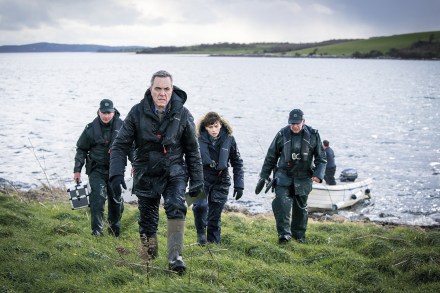
Well, this a bit awkward. A fortnight ago, in my last TV column, I confidently asserted that, despite the involvement of Jed Mercurio, Bloodlands (BBC1) was nothing like the programme it was being compared to in all the advance publicity. Two episodes, several twists and at least one bent copper later, my ringing conclusion ‘Just don’t expect Line of Duty’ feels somewhere between premature and spectacularly wrong. Luckily, this is not a mistake anybody could make about Bloodlands’ Sunday night crime rival, McDonald & Dodds, which has been building up a solid following on ITV. The central idea it depends on is, like that of many a cop show before it, two mismatched detectives.

Bloodlands is well worth watching – just don’t expect Line of Duty

From our UK edition

To begin on a cheerful note, it’s certainly been a good week for fans of slow-burn British crime dramas with one-word titles in which an anguished middle-aged cop investigates murders from the 1990s while also battling police bureaucracy. Bloodlands has been described in several newspapers as the latest exhilaratingly twisty thriller from Jed Mercurio, creator of Line of Duty. But, as Adam Curtis would say, this is an illusion. For one thing, while it was made by Mercurio’s new production company, it’s written by newcomer Chris Brandon. For another, so far at least, there’s little in the way of either exhilaration or twistiness.

The death of binge-watching

From our UK edition

On the face of it, Wikipedia’s list of the key events of 1 February, 2013 seems impressively comprehensive, ranging from Hillary Clinton’s resignation as Secretary of State to a hurling player denying he’d won €10.6 million in the Irish lottery. What’s missing, though, is something that’s surely had a bigger impact on our daily — and nightly — lives than any of Wikipedia’s choices. On that day Netflix released its first original series, House of Cards, the same way it had released its earlier bought-in repeats: by making all the episodes available at once. Now that we know how successful both the show and the format proved, it’s easy to forget how risky this was, especially for a $100 million production.

Incoherent and conspiracy-fuelled: Adam Curtis’s Can’t Get You Out of My Head reviewed

From our UK edition

‘History,’ wrote Edward Gibbon, ‘is, indeed, little more than the register of the crimes, follies, and misfortunes of mankind.’ In this respect, though, history has nothing on the work of Adam Curtis, whose latest documentary Can’t Get You Out of My Head has now arrived on BBC iPlayer — all six episodes and eight and a half hours of it. Anybody who’s seen Curtis’s previous series (including The Century of the Self, The Power of Nightmares and The Trap) will know what to expect. Once again, he mixes terrific news footage, short clips of more or less anything, mood-inducing songs and a lordly commentary to remind us just how hopeless — in both senses — human beings are.

John DeLorean: man of mystery – and full-blown psychopath

From our UK edition

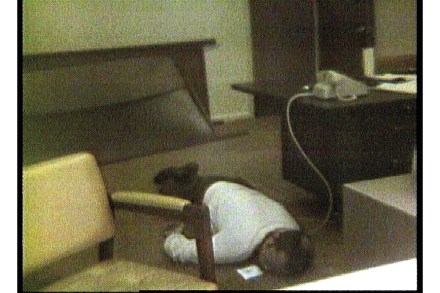
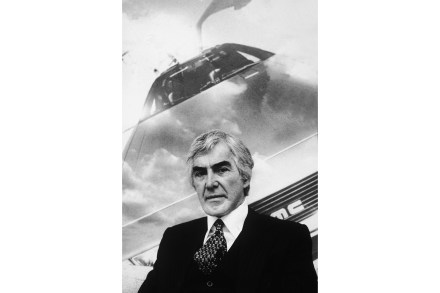
DeLorean: Back from the Future was one of those documentaries — for me at least — that takes a story you thought you sort of knew and makes you realise a) that you didn’t really, and b) what a great story it is. The programme began, as it was pretty much duty-bound to, with a clip of Michael J. Fox and the time-travelling DeLorean car from the movie that inspired Wednesday’s means-less-the-more-you-think-about-it subtitle. A series of captions then introduced us to John DeLorean himself: a man who ‘had everything’ (cue shots of a much younger ex-model wife and some Rolexes) until he ‘risked it all’ in the mid-1970s, when he left a high-ranking post at General Motors to found his own sports-car company. Now all he needed was the money.

Watch Mark Kermode find 1950s political attitudes in 1950s films

From our UK edition

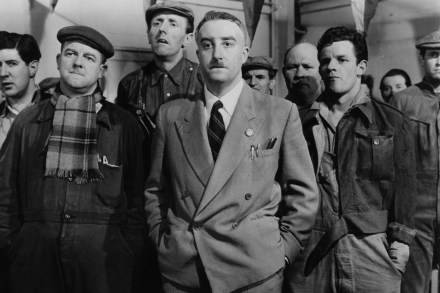
The new series of Mark Kermode’s Secrets of Cinema began with an episode on British comedy films. As ever, Kermode was terrific at demonstrating how persistent certain characters and ideas in his chosen genre have proved to be. He traced the theme of ‘the little man’ from George Formby and Norman Wisdom to Paddington Bear, paying due attention to its origins in Britain’s most successful early film export, Charlie Chaplin. Moving on to the subset of little men who think they’re bigger than they are, his judiciously chosen clips revealed how much Captain Mainwaring owes to Captain Waggett in 1949’s Whisky Galore!

A romcom with very little com: BBC1’s Black Narcissus reviewed

From our UK edition

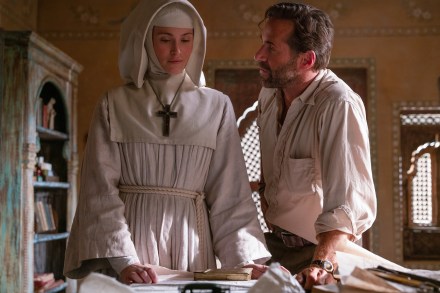
In Black Narcissus, based on the novel by Rumer Godden, five nuns set off for a remote Himalayan palace in 1934 to set up a convent school. The palace, donated by an Anglophile general, used to be a harem and was still adorned with erotic paintings. It was also where the general’s sister, Srimati, had committed suicide and where, just a few months previously, a male religious order had tried to establish a school too, before retiring defeated for mysteriously undisclosed reasons. The nuns’ main helper in practical matters, a British expat called Mr Dean (Alessandro Nivola), possessed an overwhelming maleness that expressed itself through such attributes as a chiselled jaw, an Indiana Jones hat and a handy way with a spanner. So what could possibly go wrong?

Watch Andrew Marr stare at places where stuff happened: New Elizabethans reviewed

From our UK edition

Congratulations, everyone! It turns out we’re much better than those bigoted old Brits of the 1950s. After all, they were ‘class-obsessed, overwhelmingly white and Christian, and deeply conservative about the role of women’ — whereas we ‘accept difference and diversity in a way that would have been almost unthinkable in 1953’. This was the reassuring message in the first episode of New Elizabethans by Andrew Marr, where Marr surveyed Britain’s changing social attitudes since the Queen came to the throne, and liked what he saw. These days, needless to say, the ‘great man theory’ of history has rather fallen out of fashion — so instead Marr brought us a sort of ‘great activist’ version.

Like much jazz, it might have benefited from being less solemn: BBC4’s Ronnie’s reviewed

From our UK edition

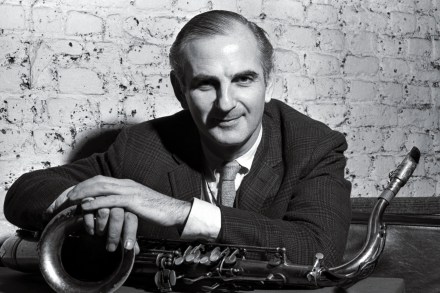
Ronnie’s: Ronnie Scott and His World-Famous Jazz Club was like the TV equivalent of an authorised biography: impressively thorough, often illuminating, certainly long — and perhaps a bit too reverent for its own good. The programme began with some of today’s jazz musicians testifying to just how great the club is. From there, we cut to the story of Scott himself, with his Jewish East End background and his early love of the saxophone. By 16, he was accomplished enough to cross the frontier from East End to West, and played in various swing bands. But then he and his fellow 1940s hipsters discovered bebop, a reaction against commercialised swing that preferred its audiences to listen earnestly rather than merely dance.

Is The Undoing actually great?

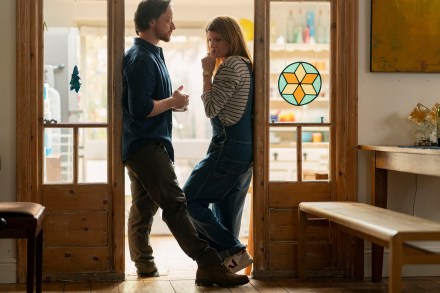
There must be some people somewhere who vaguely know their own spouses — but if so, they don’t tend to appear in domestic-based thrillers. Last Sunday when HBO’s The Undoing began, Jonathan and Grace Fraser (Hugh Grant and Nicole Kidman) seemed to have the happiest of middle-aged marriages. They still laughed at each other’s jokes. They still kept each other fully informed about the kind of day they’d had at work: he as a kindly child oncologist, she as an unfailingly wise therapist. Not only did they still have sex, but when they did, it wasn’t always in bed.True, they weren’t wholly without their problems. Their loving son Henry, for example, sometimes didn’t clean up after making smoothies.

undoing

Is The Undoing properly great or just a run-of-mill thriller with a brilliant casting director?

From our UK edition

There must be some people somewhere who vaguely know their own spouses — but if so, they don’t tend to appear in domestic-based thrillers. Last week when Sky Atlantic’s The Undoing began, Jonathan and Grace Fraser (Hugh Grant and Nicole Kidman) seemed to have the happiest of middle-aged marriages. They still laughed at each other’s jokes. They still kept each other fully informed about the kind of day they’d had at work: he as a kindly child oncologist, she as an unfailingly wise therapist. Not only did they still have sex, but when they did, it wasn’t always in bed. True, they weren’t wholly without their problems. Their loving son Henry, for example, sometimes didn’t clean up after making smoothies.

Enough plotlines to power several seasons of The West Wing: BBC1’s Roadkill reviewed

From our UK edition

Like many a political thriller before it, BBC1’s Roadkill began with a politician emerging into the daylight to face a bank of clicking cameras and bellowing journalists. In this case, the politician was Peter Laurence (Hugh Laurie), the Tory minister for transport, who’d just won a libel case against a newspaper that had accused him of using his cabinet position for personal profit. Exactly what he’s supposed to have done, we don’t yet know — although it does seem pretty clear that whatever it was, he did it. Certainly his own lawyer thinks so, as does the journalist who wrote the story but had to retract it in court when she couldn’t fully stand it up.

Funny, tender and properly horrible: Channel 4’s Adult Material reviewed

From our UK edition

A woman is eating a pie in her car as it gets an automatic wash. Careful to keep the pie out of shot, she then films herself on her phone pretending to have an orgasm, posts the clip online and drives to work. Once there, she’s constantly distracted by thoughts of domestic chores (‘Whites tonight, colours in the morning, hang them out before the school run’) — which mightn’t be so unusual, except that her work consists of having sex. But if the early scenes in Channel 4’s new porn-industry drama Adult Material suggested a cheeky, essentially light-hearted twist on female life-juggling, this soon proved deceptive.

How on earth did Harold Pinter and Danny Dyer become such good friends?

From our UK edition

Collectors of TV titles that sound as if they were thought of by Alan Partridge will presumably have spotted Danny Dyer on Harold Pinter. As Dyer himself understatedly put it: ‘This might seem an unlikely pairing: the likely lad and the Nobel Prize winner.’ Yet, what made the programme such an intriguing if undeniably peculiar watch is that the pairing in question wasn’t dreamed up by a desperate (or drunk) commissioning editor. In 2000, aged 22, Dyer auditioned for Pinter’s Celebration at the Almeida Theatre in Islington. ‘I knew the money would be rubbish,’ he told us, ‘so I didn’t care much.’ Nor, unlike his rivals, did he really know who Pinter was.

What on earth has happened to Simon Schama: The Romantics and Us reviewed

From our UK edition

‘You may think our modern world was born yesterday,’ said Simon Schama at the beginning of The Romantics and Us. If you do, though, I can only imagine that you’ve never seen any history documentaries on television — where, as a rule, the modern world is born in whatever period the documentary happens to be about, from Ancient Rome to the 1980s. After all, how can the past possibly be interesting if we can’t see ourselves reflected in it? As the title indicates, Schama’s choice, this time, of an era important enough to lead to us was the romantic movement.

A convincing and hair-raising depiction of showbiz at its most luridly weird: I Hate Suzie reviewed

From our UK edition

Fifteen minutes into the first episode of I Hate Suzie, main character Suzie Pickles was doing a photoshoot in her country cottage for Esquire magazine. ‘We don’t know what we’re looking for right now,’ the photographer told her. ‘We’re just going to cycle through some feelings and see where we are.’ What he didn’t know, but we did, was quite how many feelings Suzie (Billie Piper) had already had to cycle through by then. The programme began with her thrilled to hear that she’d bagged a Disney film role and cracking open the champagne.

My dazzling chum: Mayflies, by Andrew O’Hagan, reviewed

From our UK edition

Presumably because a small part of it takes place in Salford, the epigraph to Andrew O’Hagan’s latest novel consists of four lines from Ewan MacColl’s ‘Dirty Old Town’. More fitting, though, might have been six words from the Undertones’ ‘Teenage Kicks’: ‘Teenage dreams, so hard to beat.’ The first half of the book follows a group of lads from Ayrshire as they excitedly prepare for, excitedly travel to and excitedly attend a post-punk music festival in Manchester in 1986. The narrator is the bookish 18-year-old Jimmy Collins, whose life bears a close resemblance to O’Hagan’s at the same age and time.

Takes us deep into an unknown world: Channel 4’s Inside Missguided reviewed

From our UK edition

If it’s a test of a good documentary series that it takes us deep into an unknown, even unimaginable world, then Inside Missguided: Made in Manchester passes with flying colours — especially for the more middle-aged viewer. Missguided, it turns out, is a fast-fashion company, which means that it spots what celebrities are wearing online and then designs, makes and sells much cheaper versions within days — all while indignantly denying the outrageous charge that ‘we just rip off other people’s designs’. The target market apparently consists of young women obsessed with Instagram and Love Island. And so, on the whole, does the staff, who have names like Treasure, Zee and Karolina, and are keen for us to understand how excited they are at all times.