James Walton

James Walton is The Spectator’s TV critic

Wonderfully naturalistic and intriguingly odd: BBC2’s The Gallows Pole reviewed

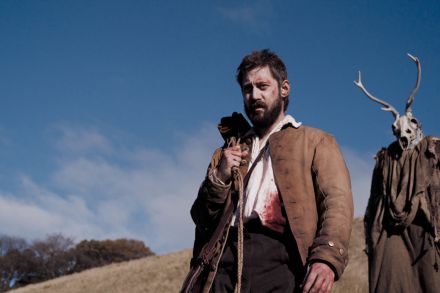
In advance, The Gallows Pole: This Valley Will Rise was touted as a radical departure for director Shane Meadows. After all, he made his name with the film This Is England and its three rightly acclaimed TV sequels, about a group of working-class folks struggling to survive against the heartless backdrop of that reliable old enemy: Thatcher’s Britain. Now, he’s giving us a costume drama set in 18th-century Yorkshire. In fact, though, it didn’t take long to realise that Meadows’s departure mightn’t be as radical as advertised – because the programme could easily have been entitled This Was England.

Netflix’s Queen Cleopatra girlbosses against historical fact

From our US edition

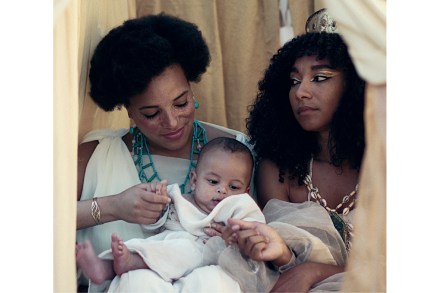
The most controversial aspect of Netflix’s new drama-documentary Queen Cleopatra — not least in Egypt — was the casting of a black actress, Adele James, in the title role. After all, one of the few things that seems certain about Cleopatra’s early life is that she was a Macedonian Greek. Luckily, though, the show had a powerful counterargument to this awkward and Eurocentric fact. As the African-American professor Shelley P. Haley put it with a QED-style flourish, back when she was girl, her beloved (if uneducated) grandmother once said to her: "I don’t care what they tell you in school, Cleopatra was black.

queen cleopatra netflix

Watching Queen Cleopatra felt like witnessing the death of scholarship

The most controversial aspect of Netflix’s new drama-documentary Queen Cleopatra – not least in Egypt – was the casting of a black actress, Adele James, in the title role. After all, one of the few things that seems certain about Cleopatra’s early life is that she was a Macedonian Greek. Luckily, though, the show had a powerful counterargument to this awkward and Eurocentric fact. As the African-American professor Shelley P. Haley put it with a QED-style flourish, back when she was girl, her beloved (if uneducated) grandmother once said to her: ‘I don’t care what they tell you in school, Cleopatra was black.

Despite the lack of sex, stick with it: Paramount Plus’s Fatal Attraction reviewed

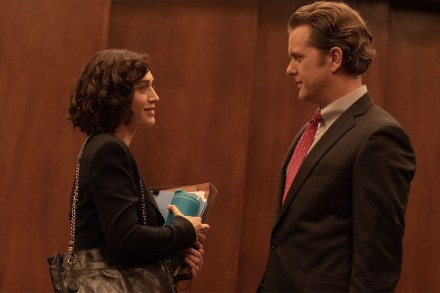
With the current taste for remakes of erotic-thriller movies of the 1980s and ’90s, these are certainly good times for TV intimacy co-ordinators. Just two weeks ago, we had Netflix’s Obsession. Now Paramount+ has come to the slightly weird party, turning the daddy of them all, Fatal Attraction, into an eight-part series. In the original film, you may remember, high-flying married lawyer Dan Gallagher had an ill-advised weekend fling with Alex Forrest, who didn’t take him ending it terribly well. Instead she posed such an unhinged single-female threat to the nuclear family (and its pet rabbit) that cinema audiences famously cheered when Dan’s wife Beth did the decent thing and shot the mad cow dead.

Boring is as good as this erotic drama gets: Netflix’s Obsession reviewed

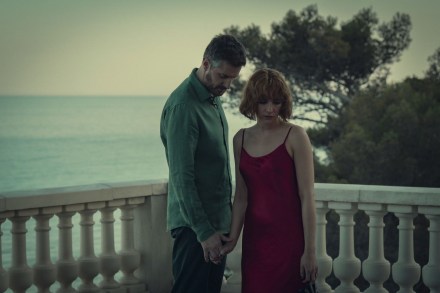
It is, of course, traditional for film and TV reviewers to demonstrate their steely high-mindedness by claiming that anything describing itself as ‘erotic’ is in fact deeply boring. Unfortunately, faced with Netflix’s four-part Obsession, the b-word is hard to avoid – the twist in this case being that boring was as good as the series got. The rest of the time it alternated between the inept, the infuriating and the utterly mystifying – and not just because you could never fathom what on earth the characters thought they were up do. How, for instance, did so much money and talent get wasted on a show that the people involved with must surely have realised was terrible?

Felt like the product of a night in the pub: BBC1’s Great Expectations reviewed

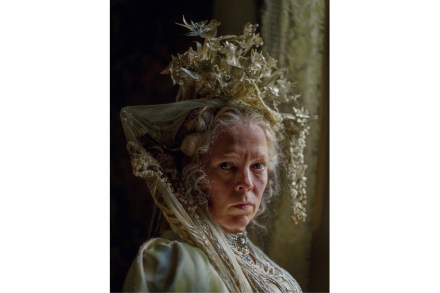
By now a genuinely radical way to turn a Victorian novel into a TV drama would be to take that novel and turn it into a TV drama. But while we wait for someone to do it, Great Expectations stays true to the current ideals of junking large parts of the source material and infecting what remains with the neuroses of our own age – thereby demonstrating once again the strange modern neediness to believe in our superiority to all those benighted bigots who came before us. (Please tell us we’re the best people who ever lived! Please!) Or rather, it takes those ideals to new heights that are either infuriating or hilarious depending on your mood. https://www.youtube.com/watch?

Makes a change to see such reassuringly competent policemen: ITV1’s Grace reviewed

Sunday-night dramas on the two main terrestrial channels definitely aren’t what they used to be. Not so long ago, you could bid farewell to the weekend with a reliable cocktail of lovely scenery, eccentric but good-natured rustics and plots carefully designed to warm the cockles. Now we have The Gold on BBC1 providing a meticulous analysis of recent economic history – while on ITV1 the new series of Grace began with an episode that hinged on one simple question asked early on: ‘What kind of sick mind dresses up in a full latex bodysuit and assaults his victims with a dildo?’ The programme is based on the bestselling novels by Peter James, whose avowed fondness for Brighton coppers extends to being a patron of the Sussex Police Charitable Trust.

Watch some liars claim that youth and beauty don’t go together

Back in 1990, Grandpa from The Simpsons wrote a letter of protest to TV-makers. ‘I am disgusted with the way old people are depicted on television,’ he told them. ‘We are not all vibrant, fun-loving sex maniacs. Many of us are bitter, resentful individuals who remember the good old days.’ Thirty-three years on, it’s a protest that continues to fall on deaf ears, as we saw once again in the first part of Kathy Burke: Growing Up (Wednesday). The starting point was Kathy’s own 58th birthday, which had clearly come as rather a shock to her – and, given her take-no-nonsense (polite version) spikiness, you might have thought that the programme would dispense with the customary platitudes and wishful thinking in favour of something funnier and more candid.

Riveting and titillating: BBC2’s Parole reviewed

There’s a distinct and rather cunning whiff of cakeism about the new documentary series Parole. On the one hand, it can convincingly pass itself off as a sombre BBC2 exploration of the British justice system. On the other, it offers us an undeniably enjoyable, reality TV-style opportunity to compare our opinions with those of the experts. Who doesn’t welcome the chance to indulge in some serious – or even titillating – armchair psychology? Monday’s opening episode began with some solid statistical captions stating that 16,000 UK prisoners are considered for parole every year, that 4,000 are granted it and that each decision is made by a small panel drawn from the 346 members of the Parole Board.

Bravely shows that depressed people can be quite annoying: The Son reviewed

For my money – and lots of other people’s – Florian Zeller’s 2020 film The Father was pretty much a masterpiece. Oscar-winningly adapted from his own play by Zeller and Christopher Hampton, it plunged us into the fractured world of Anthony, an old man with dementia (as Oscar-winningly played by Anthony Hopkins). With different actors playing the same characters and perfectly coherent scenes that kept contradicting each other, we shared Anthony’s struggle to work out who was who and what was what. The result provided a rare combination of tricksy intelligence and emotional punch. Now, with The Son, adapted with Hampton from another of his plays, Zeller brings us another domestic catastrophe.

Sky’s Funny Woman is no laughing matter

Nick Hornby’s 2014 novel Funny Girl was both a heartfelt defence and a convincing example of what popular entertainment can achieve. Telling the story of Barbara Parker, a fictional 1960s TV star, it took a stern line on highbrows who prize the punishing over the pleasurable, while delivering a lot of pleasure itself. My only reservation was that Hornby was a little too obviously smitten with his heroine: a ‘quick-witted, unpretentious, high-spirited, funny, curvy, clever, beautiful blonde’, whose attitudes occasionally seemed to owe a suspicious amount to contemporary feminism.

Has Salman Rushdie become his own pastiche?

If there were ever a Spectator competition for the best pastiche of the opening words of a Salman Rushdie novel, a pretty good entry might be: ‘On the last day of her life, when she was two hundred and forty-seven years old, the blind poet, miracle worker and prophetess Pampa Kampana completed her immense narrative poem about Bisnaga.’ By coincidence, these are also the opening words of Victory City, a book Rushdie finished not long before last summer’s stabbing.

A ‘look at these funny people’ doc that could have been presented by any TV hack: Grayson Perry’s Full English reviewed

For around a decade now, Grayson Perry has been making reliably thoughtful and entertaining documentary series about such things as class, contemporary masculinity and modern secular rituals. (All a lot more fun than they sound, I promise.) Equipped with an infectious Sid James laugh and an impressive commitment to affability, he’s demonstrated a willingness to listen to opposing views, even to the extent of allowing his mind to be changed. He’s then turned his findings into both a convincing thesis and an art exhibition of some kind. So what’s gone wrong in Grayson Perry’s Full English? The main problem, I think, was inadvertently laid bare right at the start of Thursday’s opening episode.

Guiltily compelling: Spector, on Sky Documentaries, reviewed

On 3 February 2003, the emergency services in Los Angeles received a call. ‘I’m Phil Spector’s driver,’ a voice told them. ‘I think my boss killed somebody.’ This was the inevitable yet still extraordinary starting point for Spector – a new four-part documentary on a man who, in the face of fierce competition, might well be the strangest figure in pop history. By that stage, he perhaps deserved the description of him in one news report as ‘a ghost, a phantom, a half-forgotten rock genius’. Except that – whether by coincidence or something more sinister – he’d recently granted his first interview for decades to the British journalist Mick Brown. ‘I have devils inside me,’ said Spector during their conversation.

Irresistible: Sky Max’s Christmas Carole reviewed

What’s wrong with sentimentality? The answer, I’d suggest, could either be: a) its almost bullying insistence on us having emotions disproportionate to anything a particular story has earned; or b) nothing at all. And if you want to see how both of these are possible, two of this year’s big Christmas TV offerings provide handy illustrations. Firmly in category a) is The Boy, the Mole, the Fox and the Horse, an animated film by Charlie Mackesy, based on his own mega-selling book and with some impressively big-name actors doing the voices. Its methods are established immediately when a boy lost in a snowy wood happens across a cute talking mole (Tom Hollander). ‘What do you want to be when you grow up?’ the mole enquires. ‘Kind,’ says the boy.

A dismaying exercise in nostalgia: Simon Schama’s History of Now reviewed

For those who consider themselves traditional liberals (full disclosure: such as me) Sunday’s first episode of Simon Schama’s History of Now may have felt like a somewhat dismaying exercise in nostalgia. As Schama ran through a familiar anthology of 20th-century liberalism’s greatest hits, we were taken back to a happier, more recognisable world of clearly demarcated goodies and baddies where democracy would inevitably mean the triumph of our own beliefs and there was little that couldn’t be fixed by art ‘speaking truth to power’. The programme’s starting point, as you might imagine, was the Spanish Civil War, described by Schama as a ‘great battle between democracy and autocracy’ – rather than, say, two autocracies.

Riveting: C4’s Who Stole the World Cup reviewed

Have you ever seen film of the England 1966 football team holding the World Cup at the Royal Garden Hotel, Kensington, on the evening of their victory? The answer, I can guarantee, is no. Unbeknownst to everybody except a few policemen and FA officials, what they were holding was only a replica, made a few months previously after the real Jules Rimet trophy was stolenin London. But this was just one of the many eye-popping disclosures in Monday’s 1966: Who Stole the World Cup? Of course, it’s not uncommon for a documentary to claim the tale it’s telling is scarcely believable. Much rarer is for that claim, as here, to be true.

Strange bedfellows: Charles Dickens and the popstar Prince

One test of how famous a writer has become, I’d suggest, is what jeux d’esprit they’re allowed to publish. By this criterion, Nick Hornby still has some distance to go before he matches Haruki Murakami, who in 2020 gave us Murakami T – a fully illustrated guide to his own T-shirts. Even so, Dickens and Prince is as strange as it sounds: an extended essay yoking together a 19th-century British novelist and a recently deceased African-American popstar. At the start, Hornby says he won’t be looking for ‘uncanny similarities’ between the two – which might make you wonder why they’re in the same book. Or at least it would if he didn’t spend the rest of the time looking for them anyway.

Refreshingly macho: BBC1’s SAS Rogue Heroes reviewed

Sunday’s SAS Rogue Heroes – about the founding of perhaps Britain’s most famous regiment – began with a revealing variation on the usual caption in fact-based dramas about how everything in them really happened, except the things that didn’t. ‘The events depicted which seem most unbelievable,’ it read, ‘are mostly true.’ https://www.youtube.com/watch?v=gTWqFccBsgg And from there the same sense of somewhat incredulous, head-shaking admiration for its subjects remained. The unexpected result was a 2022 BBC drama that took an unashamedly gung-ho approach to macho heroism – and that, give or take a spot of swearing and heavy-metal music, didn’t feel very different in tone from those classic British second world war films of the 1950s.

Touchingly free of cynicism: C4’s Somewhere Boy reviewed

At the start of Somewhere Boy, an 18-year-old boy is rescued from an isolated house by his aunt Sue following his father’s suicide – and what she, the police and social services regard as a lifetime of abuse. Since he was small, Danny’s father, Sam, had forbidden him from going outside, telling him the world was full of monsters who’d kill him if he did. He’d therefore grown up listening to old songs and watching old films – all the while believing that his beloved dad was keeping him safe. Yet once Danny was installed in Sue’s house, sharing a bedroom with his cousin Aaron, it soon became clear that this was by no means a simple tale of parental cruelty.