James Walton

James Walton is The Spectator’s TV critic

Riveting and titillating: BBC2’s Parole reviewed

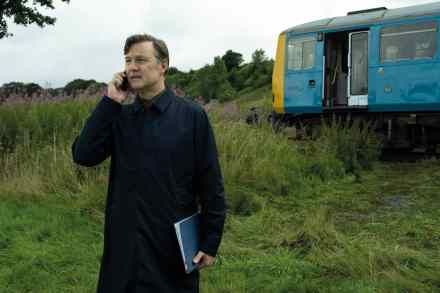
There’s a distinct and rather cunning whiff of cakeism about the new documentary series Parole. On the one hand, it can convincingly pass itself off as a sombre BBC2 exploration of the British justice system. On the other, it offers us an undeniably enjoyable, reality TV-style opportunity to compare our opinions with those of the experts. Who doesn’t welcome the chance to indulge in some serious – or even titillating – armchair psychology? Monday’s opening episode began with some solid statistical captions stating that 16,000 UK prisoners are considered for parole every year, that 4,000 are granted it and that each decision is made by a small panel drawn from the 346 members of the Parole Board.

Bravely shows that depressed people can be quite annoying: The Son reviewed

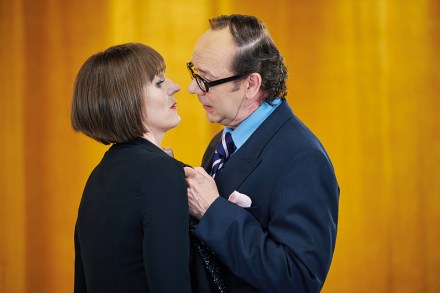
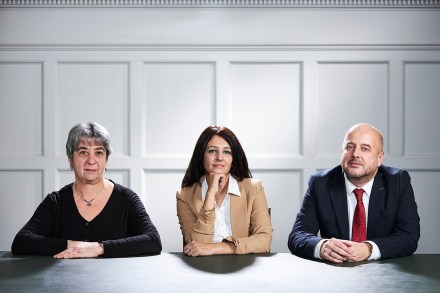
For my money – and lots of other people’s – Florian Zeller’s 2020 film The Father was pretty much a masterpiece. Oscar-winningly adapted from his own play by Zeller and Christopher Hampton, it plunged us into the fractured world of Anthony, an old man with dementia (as Oscar-winningly played by Anthony Hopkins). With different actors playing the same characters and perfectly coherent scenes that kept contradicting each other, we shared Anthony’s struggle to work out who was who and what was what. The result provided a rare combination of tricksy intelligence and emotional punch. Now, with The Son, adapted with Hampton from another of his plays, Zeller brings us another domestic catastrophe.

Sky’s Funny Woman is no laughing matter

Nick Hornby’s 2014 novel Funny Girl was both a heartfelt defence and a convincing example of what popular entertainment can achieve. Telling the story of Barbara Parker, a fictional 1960s TV star, it took a stern line on highbrows who prize the punishing over the pleasurable, while delivering a lot of pleasure itself. My only reservation was that Hornby was a little too obviously smitten with his heroine: a ‘quick-witted, unpretentious, high-spirited, funny, curvy, clever, beautiful blonde’, whose attitudes occasionally seemed to owe a suspicious amount to contemporary feminism.

Has Salman Rushdie become his own pastiche?

If there were ever a Spectator competition for the best pastiche of the opening words of a Salman Rushdie novel, a pretty good entry might be: ‘On the last day of her life, when she was two hundred and forty-seven years old, the blind poet, miracle worker and prophetess Pampa Kampana completed her immense narrative poem about Bisnaga.’ By coincidence, these are also the opening words of Victory City, a book Rushdie finished not long before last summer’s stabbing.

A ‘look at these funny people’ doc that could have been presented by any TV hack: Grayson Perry’s Full English reviewed

For around a decade now, Grayson Perry has been making reliably thoughtful and entertaining documentary series about such things as class, contemporary masculinity and modern secular rituals. (All a lot more fun than they sound, I promise.) Equipped with an infectious Sid James laugh and an impressive commitment to affability, he’s demonstrated a willingness to listen to opposing views, even to the extent of allowing his mind to be changed. He’s then turned his findings into both a convincing thesis and an art exhibition of some kind. So what’s gone wrong in Grayson Perry’s Full English? The main problem, I think, was inadvertently laid bare right at the start of Thursday’s opening episode.

Guiltily compelling: Spector, on Sky Documentaries, reviewed

On 3 February 2003, the emergency services in Los Angeles received a call. ‘I’m Phil Spector’s driver,’ a voice told them. ‘I think my boss killed somebody.’ This was the inevitable yet still extraordinary starting point for Spector – a new four-part documentary on a man who, in the face of fierce competition, might well be the strangest figure in pop history. By that stage, he perhaps deserved the description of him in one news report as ‘a ghost, a phantom, a half-forgotten rock genius’. Except that – whether by coincidence or something more sinister – he’d recently granted his first interview for decades to the British journalist Mick Brown. ‘I have devils inside me,’ said Spector during their conversation.

Irresistible: Sky Max’s Christmas Carole reviewed

What’s wrong with sentimentality? The answer, I’d suggest, could either be: a) its almost bullying insistence on us having emotions disproportionate to anything a particular story has earned; or b) nothing at all. And if you want to see how both of these are possible, two of this year’s big Christmas TV offerings provide handy illustrations. Firmly in category a) is The Boy, the Mole, the Fox and the Horse, an animated film by Charlie Mackesy, based on his own mega-selling book and with some impressively big-name actors doing the voices. Its methods are established immediately when a boy lost in a snowy wood happens across a cute talking mole (Tom Hollander). ‘What do you want to be when you grow up?’ the mole enquires. ‘Kind,’ says the boy.

A dismaying exercise in nostalgia: Simon Schama’s History of Now reviewed

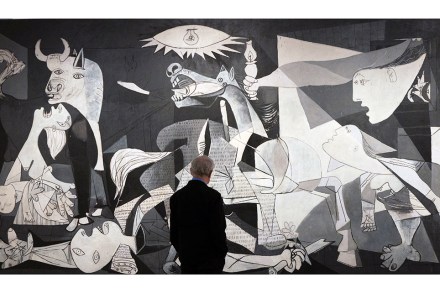
For those who consider themselves traditional liberals (full disclosure: such as me) Sunday’s first episode of Simon Schama’s History of Now may have felt like a somewhat dismaying exercise in nostalgia. As Schama ran through a familiar anthology of 20th-century liberalism’s greatest hits, we were taken back to a happier, more recognisable world of clearly demarcated goodies and baddies where democracy would inevitably mean the triumph of our own beliefs and there was little that couldn’t be fixed by art ‘speaking truth to power’. The programme’s starting point, as you might imagine, was the Spanish Civil War, described by Schama as a ‘great battle between democracy and autocracy’ – rather than, say, two autocracies.

Riveting: C4’s Who Stole the World Cup reviewed

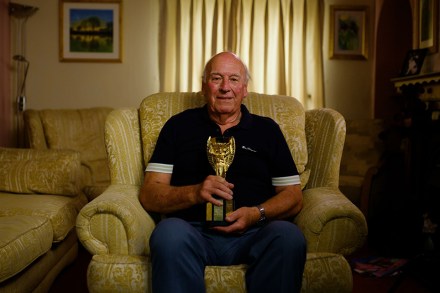
Have you ever seen film of the England 1966 football team holding the World Cup at the Royal Garden Hotel, Kensington, on the evening of their victory? The answer, I can guarantee, is no. Unbeknownst to everybody except a few policemen and FA officials, what they were holding was only a replica, made a few months previously after the real Jules Rimet trophy was stolenin London. But this was just one of the many eye-popping disclosures in Monday’s 1966: Who Stole the World Cup? Of course, it’s not uncommon for a documentary to claim the tale it’s telling is scarcely believable. Much rarer is for that claim, as here, to be true.

Strange bedfellows: Charles Dickens and the popstar Prince

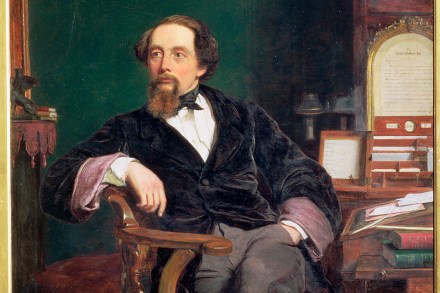
One test of how famous a writer has become, I’d suggest, is what jeux d’esprit they’re allowed to publish. By this criterion, Nick Hornby still has some distance to go before he matches Haruki Murakami, who in 2020 gave us Murakami T – a fully illustrated guide to his own T-shirts. Even so, Dickens and Prince is as strange as it sounds: an extended essay yoking together a 19th-century British novelist and a recently deceased African-American popstar. At the start, Hornby says he won’t be looking for ‘uncanny similarities’ between the two – which might make you wonder why they’re in the same book. Or at least it would if he didn’t spend the rest of the time looking for them anyway.

Refreshingly macho: BBC1’s SAS Rogue Heroes reviewed

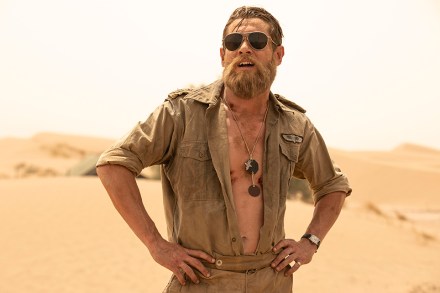
Sunday’s SAS Rogue Heroes – about the founding of perhaps Britain’s most famous regiment – began with a revealing variation on the usual caption in fact-based dramas about how everything in them really happened, except the things that didn’t. ‘The events depicted which seem most unbelievable,’ it read, ‘are mostly true.’ https://www.youtube.com/watch?v=gTWqFccBsgg And from there the same sense of somewhat incredulous, head-shaking admiration for its subjects remained. The unexpected result was a 2022 BBC drama that took an unashamedly gung-ho approach to macho heroism – and that, give or take a spot of swearing and heavy-metal music, didn’t feel very different in tone from those classic British second world war films of the 1950s.

Touchingly free of cynicism: C4’s Somewhere Boy reviewed

At the start of Somewhere Boy, an 18-year-old boy is rescued from an isolated house by his aunt Sue following his father’s suicide – and what she, the police and social services regard as a lifetime of abuse. Since he was small, Danny’s father, Sam, had forbidden him from going outside, telling him the world was full of monsters who’d kill him if he did. He’d therefore grown up listening to old songs and watching old films – all the while believing that his beloved dad was keeping him safe. Yet once Danny was installed in Sue’s house, sharing a bedroom with his cousin Aaron, it soon became clear that this was by no means a simple tale of parental cruelty.

Fairly desperate: BBC1’s Unbreakable reviewed

On first impression, you might have thought that Unbreakable was just a fairly desperate reality show cobbled together from I’m a Celebrity, Mr and Mrs, Taskmaster and It’s a Knockout. After all, the format is that people of varying degrees of fame – from Simon Weston to, er, the bloke who presents MTV’s Celebs on the Farm – arrive with their partners at what presenter Rob Beckett calls ‘a big posh gaff in the country’. Once there, they’re made to perform a series of game-like tasks as Rob looks on and guffaws. Naturally, the series does make a few cunning tweaks to its obvious forebears. Unlike in Taskmaster, for example, some of the tasks are extremely boring.

Well-meaning thriller with moments of implausibility: BBC1’s Crossfire reviewed

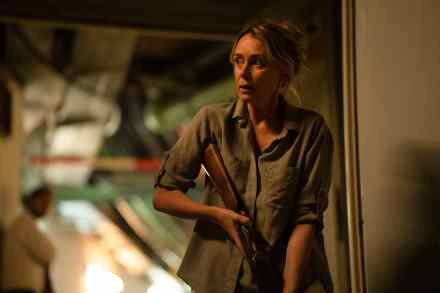
Crossfire was a three-part drama in more ways than one. Running every night from Tuesday to Thursday, it brought together a Die Hard-style thriller, an exploration of the complexities of family life (with particular reference to middle-aged womanhood) and a meditation on the nature of time. Odder still, it worked pretty well on the whole – though it was not without moments of frank implausibility. https://www.youtube.com/watch?v=4-oS6WIJFdw Keeley Hawes played Jo, whose decision to book a holiday in the Canary Islands for her family and two others seemed a good idea at the time. Granted, her marriage wasn’t in top shape, what with her habit of falling for any man who paid her more attention than her husband did (making it not her fault really).

Amazon’s Lord of the Rings series is brimming with ponderous aphorisms

From our US edition

Amazon’s much-heralded Tolkien prequel The Lord of the Rings: The Rings of Power began by answering a question that has puzzled humankind — and possibly elves — these many millennia. Why is it that a ship floats and a stone doesn’t? The reason apparently is because "a stone sees only downward," whereas a ship has "her gaze fixed upon the light that guides her." And this, I’m afraid, set the tone for much of the dialogue that followed in the two episodes released so far — as, to their credit, the characters managed to exchange an endless series of ponderous aphorisms without giggling.

lord of the rings

Will you be able to get through the ponderous aphorisms without giggling? The Lord of the Rings: The Rings of Power reviewed

Amazon’s much-heralded Tolkien prequel The Lord of the Rings: The Rings of Power began by answering a question that has puzzled humankind – and possibly elves – these many millennia. Why is it that a ship floats and a stone doesn’t? The reason apparently is because ‘a stone sees only downward’, whereas a ship has ‘her gaze fixed upon the light that guides her’. And this, I’m afraid, set the tone for much of the dialogue that followed in the two episodes released so far – as, to their credit, the characters managed to exchange an endless series of ponderous aphorisms without giggling.

The fiasco of Operation Yewtree: C4’s The Accused – National Treasures on Trial reviewed

At 4.38 a.m., one morning in October 2013, the radio presenter Paul Gambaccini was understandably asleep when the doorbell rang. He was then arrested for sexually assaulting a minor on what proved to be the word of a drug addict with a history of making false accusations. The trouble for Gambaccini, though, was that this wasn’t proved for another 11 months. In the meantime, the allegations were all over the news, he was dropped by the BBC, lost around £100,000 in earnings and started having panic attacks. And Gambaccini, of course, wasn’t alone in being arrested and publicly named like this – not merely without being charged, but before any investigation had taken place.

Who are these pathologically liberal rozzers? Channel 4’s Night Coppers reviewed

Grizzled police officers of the old school should probably avoid Channel 4’s Night Coppers for reasons of blood pressure. Like most documentary series with close access to the police, this one paints them in a light so favourable as to be almost comically sycophantic. The trouble for those grizzled types is that – the times being as they are – what’s now considered favourable is to make the rozzers who patrol Brighton after dark all seem like that pathologically liberal Dutch cop played by Paul Whitehouse in the late 1990s. https://twitter.com/C4Press/status/1546908729370632192?

A very classy thriller indeed: C4’s The Undeclared War reviewed

The Undeclared War has many of the traditional signifiers of a classy thriller: the assiduous letter-by-letter captioning of every location; the weirdly precise time-checks (‘Sunday 09.47’); above all, the frankly baffling opening scene. In it, a young woman walked around a deserted fairground, broke into a beach hut that turned into a gym and spotted a door in the ceiling which led into a stately home. https://www.youtube.com/watch?v=jIqRL3xIypY Gradually, the fact that the first episode interspersed this with the same woman typing computer code made it clear what was going on: writer/director Peter Kosminsky was making a plucky attempt to solve his main challenge here.

A masterclass in evenhandedness: James Graham’s Sherwood reviewed

James Graham has made his considerable name writing political-based dramas of a highly unusual type: non-polemical ones. And this certainly applies to his television work as well as his stage plays. Coalition (about the 2010 Conservative-Lib Dem alliance) and Brexit: The Uncivil War (which gave Dominic Cummings the signal honour of being played by Benedict Cumberbatch) both went so far as to suggest that most politicians try to do the right thing. Even when he abandoned politics to supply the lockdown hit Quiz, Graham’s unfashionable commitment to centrism remained. Rather than taking sides on the ‘coughing major’ scandal, he extended sympathy and understanding to all involved.