James Walton

James Walton is The Spectator’s TV critic

Dramatic, urgent and intriguing: BBC1’s This Town reviewed

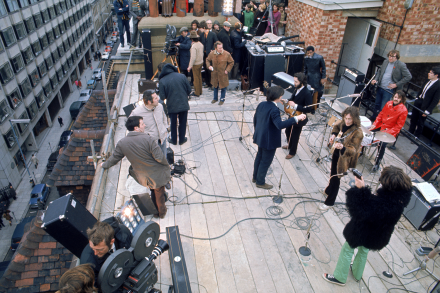
After conquering the world with Peaky Blinders (and before that by co-creating Who Wants to Be a Millionaire?), Steven Knight was last seen on British television giving us his frankly deranged adaptation of Great Expectations. Happily, he’s now returned to form with a show that, while not a retread exactly, is definitely Peaky-adjacent. In This Town we’re back in a Birmingham – this time in the 1980s – that’s rundown, riven, violent and soul-stifling, yet that Knight presents with unmistakable love. Nor, once again, is there any escaping the overwhelming power of the family as a blessing and a curse.

Was Carrie Fisher really ‘a genius’?

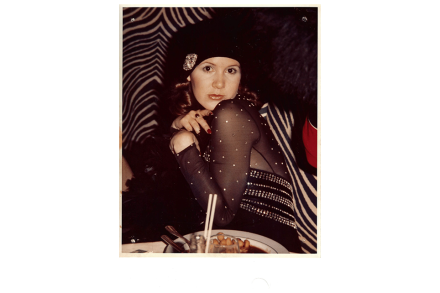
‘People throw the word “genius” around a lot,’ said a talking head on BBC2 this week, ‘but she was a genius, truly.’ If it wasn’t for the heading on this column, I suspect it might have taken you a while to guess the unquestionable genius being referred to here. But then again, for Carrie Fisher: A Life in Ten Pictures, considered analysis and fear of hyperbole would only have got in the way. Not that this prevented the programme from being inadvertently revealing. Granted, if you wanted to know the full story of Fisher’s life – including the fact that she married Paul Simon – you’d have been better off with Wikipedia.

Workmanlike romp: Sky Atlantic’s Mary & George reviewed

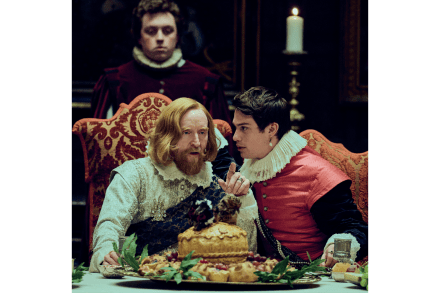
If there’s such a thing as a workmanlike romp, then Mary & George might be one. This drama about political and sexual shenanigans during the reign of James I certainly has all the scheming, racy dialogue and nudity that any romp-lover could wish for. At the same time, there’s the slightly awkward sense that it’s harbouring a guilty secret: it wants to be taken seriously as history and thinks it has some important things to say about class, gender and sexuality in 17th-century England and beyond. As a result, the naughty stuff – while definitely naughty – occasionally feels rather dutiful, and the playfulness somehow rather solemn.

A neat fantasy that asks why Britons don’t revolt: BBC1’s The Way reviewed 

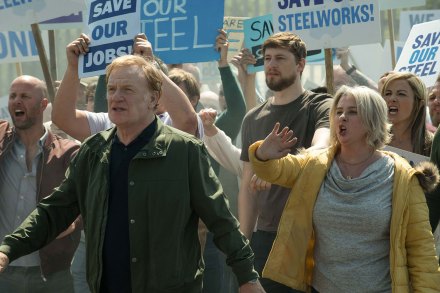
‘The British don’t revolt, they grumble,’ said someone in the first episode of The Way. But what if we ever reversed this policy? That was the question posed by a drama that’s clearly a passion project for its director, Michael Sheen – and therefore set in Wales. More specifically, The Way takes place in Port Talbot, the south Welsh town in which Sheen grew up and to which he moved back a few years ago, unexpectedly preferring it to LA. Or at least it takes place in a version of Port Talbot – because, perhaps necessarily for a show about a British revolution, there are hefty elements of the dream-like amid the realism.

How does Larry David get away with it? Curb Your Enthusiasm reviewed

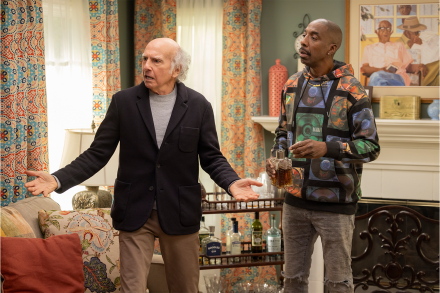
As Curb Your Enthusiasm begins its 12th and apparently final series, one key question remains: how does Larry David get away with it? While many entertainers are sent into exile for ancient tweets far less tasteless than the average episode of Curb, the show sails on – providing extended comic riffs on incest victims, Holocaust survivors and even fat women, while enjoying pretty much universal acclaim. I don’t know how Larry David gets away with it – but I’m still very grateful that he does Perhaps it helps that the jokes are funny – and that many of them are on David. You could also argue that his heartlessness about say, the bereavements of people he doesn’t know (and some that he does) is only an unusually honest version of our own.

Highly effective slice of old-school storytelling: ITV’s Born from the Same Stranger reviewed

With its tales of close relatives reuniting after years of separation, ITV’s Long Lost Family has been reliably jerking tears since 2011. Now, from the same production company, comes Born from the Same Stranger: another thumping slice of highly effective old-school human-interest storytelling, this time served with a side order of ethical dilemmas. In the 1990s when, as the programme put it, ‘sperm donation was in its heyday’, donors did their thing in return for 50 quid and a promise of anonymity. On solid practical grounds, this seemed like a good idea at the time – and perhaps still does. But it reckoned without the deep human need to know where we’re genetically from – especially now that we appear to have decided this makes us who we are.

Why has the BBC pulled its punches in this doc about the Indian super-rich?

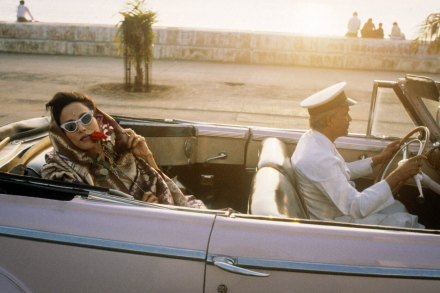
The big finish to Streets of Gold: Mumbai, an excited look at the city’s ‘wealthiest one-percenters’, was an extravagant party hosted by ‘two of India’s most coveted fashion designers’. As the programme made clear, all the guests were rich and/or famous, and all were dressed to prove it. ‘If you’re basic, you’re not invited,’ said one – which, given that the idea of the party was ‘to celebrate diversity in all its forms’ some documentaries might have considered a remark worthy of further investigation. But not Streets of Gold. As the previous hour had demonstrated, its chief characteristic – never a good one for a documentary – was a marked lack of curiosity.

The road to the final snow-gazing scene is tortuous: Sky Max’s The Heist Before Christmas reviewed

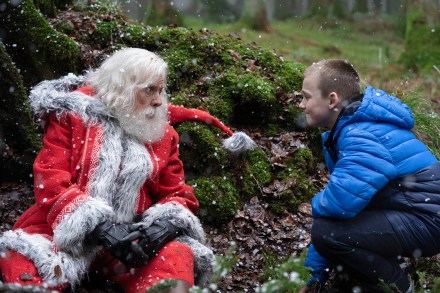
When it comes to one-off family dramas for Christmas, two things are pretty much guaranteed. They’ll begin with credits announcing a starry cast, and they’ll end with a redeemed character gazing at some falling snow as the music swells. The only tricky bit, then, is what should happen in-between. Should the redemption take place against a backdrop of vaguely gritty realism? Should plausibility be a consideration, or can the writers just rely on the magic of Christmas to get them out of any plot-related trouble? If Santa’s involved – as he so often is – should the show believe in Father Christmas? In the case of The Heist Before Christmas – set in Northern Ireland – the respective answers are ‘up to a point’, ‘I’ll get back to you on that one’ and ‘er…’.

Embarrassingly addictive: Channel 4’s The Couple Next Door reviewed

For years now, lots of TV thrillers have begun with a terrified woman running through some woods. But not The Couple Next Door. Instead, the first episode opened with the sight of an isolated cabin and the sound of a gunshot – and only then did a terrified woman run through some woods. Why the woman was terrified we haven’t yet learned, but we do know who she is – because in the next scene, her pre-terrified self and her partner were moving into their new house in a quiet, well-heeled Leeds cul-de-sac where every adult not mowing a lawn was washing a car. ‘Hello, suburbia,’ said her partner, perhaps unnecessarily.

Whodunnit that disappears down a rabbit-hole: ITV1’s The Playboy Bunny Murder reviewed

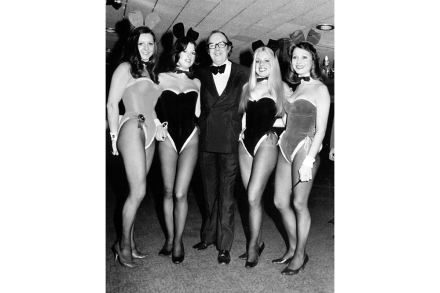
Perhaps unfairly, Marcel Theroux does rather bring to mind Dannii Minogue. Not only does he look very similar to his more famous sibling, but when not writing (pretty good) novels, he’s in the same line of work: like Louis, he makes TV documentaries that feature much brow-furrowing. His latest was a neat fit for ITV1’s continuing obsession with true crime. As it transpired, The Playboy Bunny Murder was an over-simple title for an extremely tangled tale. Nonetheless, the programme did start with the killing of bunny girl Eve Stratford who, in March 1975, had her throat cut at her Leyton home. In those pre-DNA testing days, the police did what they could – which is to say they arrested and soon released Eve’s musician boyfriend, and then hoped for something to turn up.

Riveting and heart-wrenching: BBC1’s Time reviewed

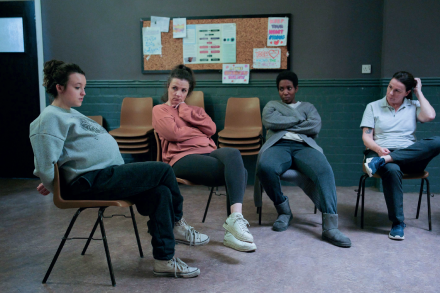
‘Only with women’ is a phrase used by more cynical TV types for a show that takes something that’s been done before with men, but by changing the gender of the characters can pose as ground-breaking. It sprang to mind this week when both of BBC1’s big new dramas unblushingly took the only-with-women approach; the problem for the cynics being that the programmes themselves are rather good. Or, in the case of Time, overwhelmingly so. Jimmy McGovern’s original 2021 series – a heart-wrenchingly effective portrait of life in a male prison – deservedly won a Bafta. Now he’s back to give us a heart-wrenchingly effective portrait of life in a female one.

Only goodwill will get you through this reboot: Paramount+’s Frasier reviewed

Remember the groans of dismay, possibly including your own, which greeted John Cleese’s announcement in February that he was reviving Fawlty Towers? Happily, there appears to be much more goodwill behind the return of Frasier – the bad news being that, judging from the first three episodes, it might well need it. Kelsey Grammer’s entrance – 39 years after Frasier Crane showed up in Cheers – received a huge audience ovation. All references, however straightforward, to his earlier incarnations got a guaranteed laugh. Nonetheless, for those of us desperately hoping the new series won’t be a letdown, the result so far has required an increasingly effortful keeping of the faith.

Shocking: Channel 4’s Partygate reviewed

If there were special awards for Most Subtlety in a Television Drama, Tuesday’s Partygate would be unlikely to win one. You could also argue that, in contrast to most of its characters, it didn’t really bring much to the party. And yet, in a rare challenge to the law of diminishing returns, the more it pounded away with its sledgehammer, the more effective it became. Despite the programme’s commitment to a thoroughly researched veracity that extended to the use of on-screen footnotes, the framework for the pounding was supplied by two fictional characters. Grace Greenwood (Georgie Henley) was a shining-eyed true Johnson believer from Darlington, who couldn’t believe her luck at ending up with the cool kids in No. 10.

A Picasso doc that – amazingly – focuses on how great he was

Earlier this year, the Guardian took a break from arguing that ‘cancel culture’ is a right-wing myth to ask the question, ‘Should we cancel Picasso?’ He is, after all, ‘the ultimate example of problematic white guys clogging up the artistic canon’. Given the programme’s title – and the BBC’s increasing loss of nerve – you could be forgiven for thinking Picasso: The Beauty and the Beast was bound to get bogged down in the same tedious and apparently non-mythical 2020s obsessions. Instead, Thursday’s first episode of three proved gratifyingly deft at dealing with them.

Subtle, psychologically twisty drama: BBC3’s Bad Behaviour reviewed

Bad Behaviour is a decidedly solemn new Australian drama series with plenty to be solemn about. It was billed in Radio Times as ‘slow-burning’ – which feels a little tactless, given that the opening scene featured a girl in a boarding-school dormitory setting herself on fire (and burning quite quickly). We then cut to the same girl, Alice, ten years later looking surprisingly well as she gave a cello performance in a venue where the catering staff included a fellow ex-pupil called Jo, who greeted her warmly. Perhaps understandably, though, Alice was reluctant to reminisce about the old days at Silver Creek.

Much of the mysteriousness is inadvertent: ITV’s The Reunion reviewed

The Reunion opened in 1997 with some young people being carefree: a fact they obligingly signalled by zipping around the South of France helmetless on motorcycles while laughing a lot. Love appeared to be in the air as well – given that they consisted of two couples: the men in charge of driving (different times), the girls holding them tightly around the waist. But then matters took a darker turn as a voice-over intoned that ‘memory is a false friend’ and we sometimes ‘create our own truth’. And with that, we cut to present-day London where, despite its taste for banalities, the voice-over turned out to belong to a respected author called Thomas Degalais – duly seen signing books for a queue of grateful fans.

Too in thrall to today’s dogmas: ITV1’s A Spy Among Friends reviewed

In 2014, Ben Macintyre presented a BBC2 documentary based on his book A Spy Among Friends: Kim Philby and the Great Betrayal. The programme managed to shed new light on a familiar but still irresistible story by concentrating on Philby’s relationship with his old chum – and fellow Cambridge man – Nicholas Elliott. Elliott was sent in 1963 by the Secret Intelligence Service (SIS) to question Philby in Beirut where Philby had become the Observer’s foreign correspondent after a long and successful career betraying his countrymen to the Soviets. Elliott did elicit some sort of confession, but a few days later, Philby absconded to Moscow.

Time to take your meds, Kanye

No one does agonising quite like Mobeen Azhar. In several BBC documentaries now, he’s set his face to pensive, gone off on an earnest quest to investigate a touchy subject and reached his conclusions only after the most extravagant of brow-furrowing. There is, however, a perhaps unexpected twist: the resulting programmes are rather good, creating the impression – or even reflecting the reality – of a man determined to get to the often dark heart of the matter. For a while, it did look as if the programme’s main appeal might be as a comedy of liberal discomfiture In the past, Azhar has applied his methods to such issues as the long-standing effect of the Satanic Verses controversy and why British Muslims joined Isis.

One of the best (if not the jolliest) TV dramas of 2023: BBC1’s Best Interests reviewed

In the opening minutes of Best Interests (Monday and Tuesday), an estranged middle-aged couple made their separate ways to court, pausing outside it to look at each other with a mixture of furious reproach and overwhelming regret. From there we cut to a scene that perhaps overdid the evocation of Happier Times as the same pair laughed endlessly together on a train, before nipping off to the toilet for a spot of giggly conjugal naughtiness. Once they got home and picked up their two daughters from a neighbour, they soon showed what terrific and loving parents they were too – not least to 11-year-old Marnie, whose muscular dystrophy meant she needed especial care.

Wonderfully naturalistic and intriguingly odd: BBC2’s The Gallows Pole reviewed

In advance, The Gallows Pole: This Valley Will Rise was touted as a radical departure for director Shane Meadows. After all, he made his name with the film This Is England and its three rightly acclaimed TV sequels, about a group of working-class folks struggling to survive against the heartless backdrop of that reliable old enemy: Thatcher’s Britain. Now, he’s giving us a costume drama set in 18th-century Yorkshire. In fact, though, it didn’t take long to realise that Meadows’s departure mightn’t be as radical as advertised – because the programme could easily have been entitled This Was England.