James Tidmarsh

James Tidmarsh

James Tidmarsh is an international lawyer based in Paris. His law firm specialises in complex international commercial litigation and arbitration.

Marine Le Pen is in a race against the clock

From our UK edition

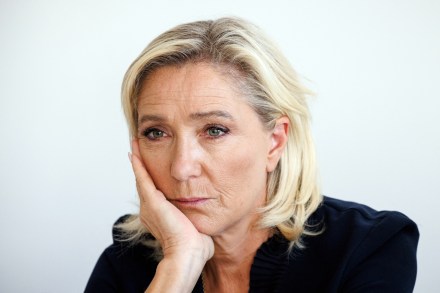
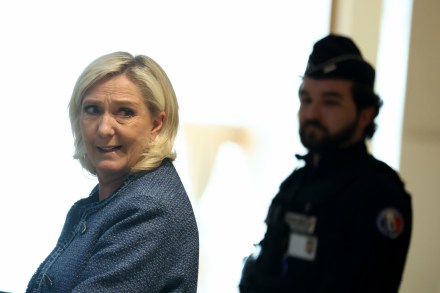
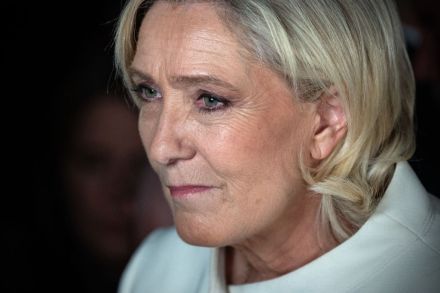
Marine Le Pen is fighting back, launching an all-out counterattack against a Paris court’s decision to suspend her from politics. ‘We won’t let the French people’s election be stolen,’ she declared at an RN meeting the morning after her conviction, calling the ruling a ‘nuclear bomb’ dropped because ‘we’re about to win’ the presidency. Time, though, is her real enemy. The presidential election’s first round is set for April 2027, with candidates due to declare by early January. Le Pen has just 21 months to overturn her conviction, but French criminal appeals typically take 18 to 24 months – too long unless the court fast-tracks it or it’s scheduled with political urgency.

The hypocrisy behind Le Pen’s disqualification

From our UK edition

‘Every single political group, every single national delegation, has violated the same rule that Ms. Le Pen did – the employment of staff to work on non-EP related affairs.’ That was the reaction of Connor Allen, a former Parliamentary Assistant in the European Parliament, following Marine Le Pen’s disqualification from the French presidential race. Allen is no fringe partisan. He’s worked for multiple MEPs across the aisle and was recently named in Politico’s ‘Power 40 – Brussels Class of 2023.’ His comment lifts the lid on something Brussels insiders have always known: that the rule Le Pen has been convicted under isn’t just bureaucratic – it’s universally ignored.  Let’s be clear: this isn’t a corruption scandal in the traditional sense.

This ruling against Marine Le Pen is grotesque

From our UK edition

Marine Le Pen has been knocked out of the presidential race and disqualified from standing for public office after she was convicted of misappropriating public funds. She has been given a suspended prison sentence, will have to wear an ankle bracelet for two years, is barred from standing for office for five years, and has been fined €100,000. Her path to the Élysée has, for now, been blocked by the courts rather than the electorate. Some will see this as a triumph of justice over populism, the rule of law asserting itself against an increasingly threatening far-right. But look more closely at the legal reasoning behind the decision, and the picture is far more ambiguous.

Why does Britain think it can censor Gab?

A dramatic escalation has happened in the information war between the US and Europe. Ofcom, the British media regulator that fancies itself as a global censor, has made a move. Ofcom sent a formal demand to Gab – an American social media platform with no legal presence in Britain – threatening it with ruinous fines unless it complied with the UK’s Online Safety Act. Gab’s reply to Ofcom was not polite. It was cold, clinical and lethal. Through its lawyers, Gab told Ofcom – with legal precision and unmistakable clarity – to get lost. This isn’t some polite regulatory disagreement.

gab

No one should celebrate if Le Pen is banned from politics

From our UK edition

Marine Le Pen, the frontrunner for the 2027 French presidency, could be sent to prison and banned from office as early as next week. Prosecutors allege that Le Pen and more than 20 National Rally (RN) members misused 2.5 million euros (£2 million) in EU parliamentary funds between 2004 and 2016 by redirecting them to pay party staff rather than accredited parliamentary assistants in Brussels. There is no allegation that Le Pen embezzled the funds or used them for personal gain: this was a matter of internal staffing allocation, not misappropriation for personal benefit.

France’s churches are burning – and no one seems to care

From our UK edition

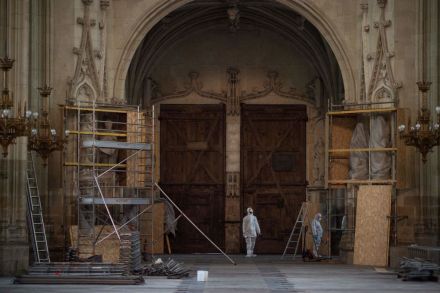
France’s churches are under attack, yet the media and political establishment are pretending not to notice. Last year, we saw blazes at historic churches in Rouen, Saint-Omer and Poitiers – each one another grim statistic in an escalating crisis. For years, we’ve seen Christian places of worship targeted in acts of arson and vandalism. Yet, until now, official confirmation of the scale of the problem has been curiously absent. That has changed. The French territorial intelligence service has reported a 30 per cent increase in criminal church fires in 2024. That’s not a handful of isolated incidents – it’s a surge. And a deeply troubling one at that. In 2023, there were 38 recorded cases of criminal arson against churches in France.

Keir Starmer’s flimsy excuse for the Chagos deal

From our UK edition

The government has defended its controversial decision to relinquish control of the Chagos Islands to Mauritius with an excuse so far-fetched it could be mistaken for a plot from a spy novel gone wrong. According to reports in the Telegraph, Starmer’s administration claims that the deal is necessary to secure the viability of the military base on Diego Garcia, citing potential disruptions in telecommunications due to ‘legal uncertainty’ over the islands’ sovereignty. The Telegraph claimed that one of the Prime Minister’s closest friends, Philippe Sands KC, who has represented Mauritius in the dispute, was the original source of these ‘national security’ claims.

Diplomacy alone won’t stop Rwanda stoking war in Congo

From our UK edition

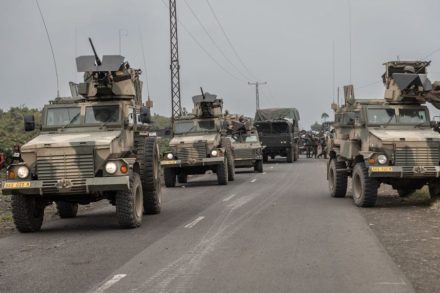
Goma, a city of 1.5 million in Eastern Congo, has fallen to the M23 rebels, openly backed by Rwanda. Foreign governments are calling for the rebels to withdraw, and the UN Security Council has been holding crisis talks, but this is not the time to stop at diplomatic gestures: maximum pressure must be applied on Kigali immediately to shut this conflict down. Anything less risks repeating the horrors of the Second Congo War. Between 1998 and 2003, over five million people died, countless families were shattered and entire communities were erased in the world's deadliest conflict since the second world war. The Democratic Republic of Congo, a nation the size of Western Europe, became a battleground for nine countries, displacing millions and leaving a scar that has yet to heal.

Why the French left are in uproar about the census

From our UK edition

France’s 2025 census has ignited a predictable but exhausting row. The controversy centres on a seemingly innocuous question: ‘Where were your parents born?’ Cue outrage from the French left, who have called for a boycott of the question, declaring it racist and a dangerous gateway to discrimination.  The fact is that many on the left in France don’t want any data on immigration The government has for the first time included the question in this year’s national census. Left wing NGOs and unions say that ‘recording this information is a step toward potential inequality of treatment by the state’ and that ‘no public policy justifies the collection of our parents’ immigrant origins in individual census forms – this question presents many dangers.

Why the French state fears Elon Musk

From our UK edition

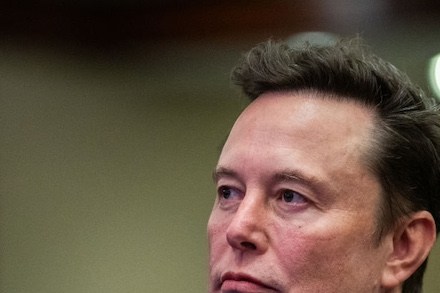
The French government on Wednesday declared war on X and on Elon Musk, directly threatening to ban the platform. Speaking on France Inter, Jean-Noël Barrot, France’s Foreign Minister, accused Musk of allowing X to become a platform for interference undermining European ‘public discourse’. Barrot demanded that the European Commission act with ‘the utmost firmness’. He has repeatedly complained to Brussels and said that if the EU fails to act, potentially by banning X outright, France may demand the power to protect itself. ‘The debate on public platforms,’ he declared, ‘cannot be outsourced to unregulated social networks controlled by billionaires.’ Make no mistake – this isn’t about interference or democracy. It’s about control.

The EU wants to cripple French farmers

From our UK edition

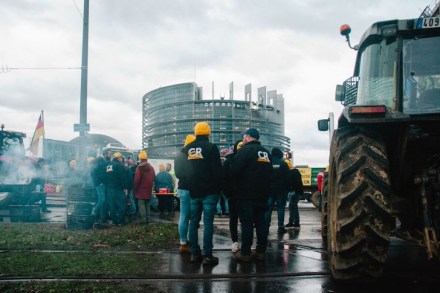
Another year, another protest. French farmers are at it again. France’s Coordination Rurale trade union is calling for another round of massive protests starting this week. Unions say that French farmers ‘won’t die in silence’. Cue tractors clogging motorways, hay bales set ablaze in front of government offices, and manure dumped on city streets. This time, the protests are a direct challenge to France’s new government, barely weeks into its term. But let’s be honest: this isn’t really about François Bayrou, the freshly appointed Prime Minister, nor President Emmanuel Macron.

The crisis gripping France’s Le Monde newspaper

From our UK edition

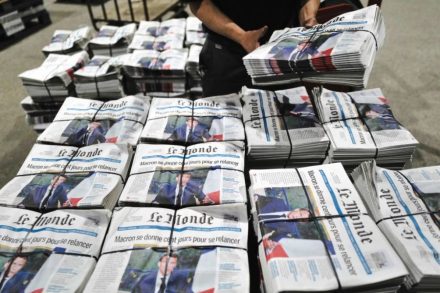
Once one of France's most respected publications, Le Monde is in crisis. Its newsroom is gripped by a climate of fear, where only left-wing and woke views are tolerated, and dissenters whisper their frustrations in the shadows. Once a beacon of intellectual rigour and fearless reporting, an investigation by its rival Le Figaro paints a damning picture of a newspaper strangled by ideological conformity and toxic cancel culture. 'People are afraid; it’s an omerta,' admits one anonymous journalist. The glory days of Le Monde are gone, replaced by a paper which appears to be more concerned with parroting the ideological consensus than holding power to account.

Identity politics has corrupted France’s elite schools

From our UK edition

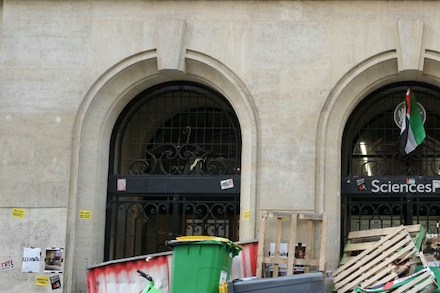
Earlier this year, Sciences Po’s feminist association, Décollectif Féministe, organised a ‘non-mixed’ meeting, which explicitly excluded men and white attendees. Intended as a ‘safe space’ for women of colour, the event sparked an immediate backlash. An MP from Marine Le Pen’s National Rally called it ‘racist and discriminatory.’ Ultimately, the meeting was cancelled before it took place, but it highlights the deep rot that has set in at France’s elite universities.

The West’s green agenda is abandoning Africa to China

From our UK edition

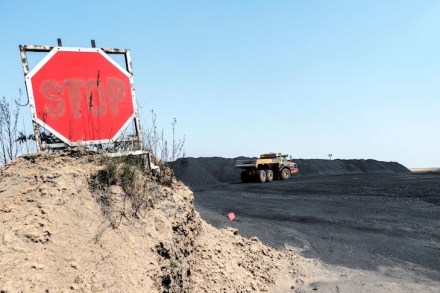
In the remote Ludewa district of southern Tanzania, villagers scratch out a meagre living in harsh conditions. The roads are barely passable, clean water is hard to come by, and families live in rudimentary homes made from mud bricks. Preventable diseases like malaria, cholera, and dysentery plague the region, and health infrastructure is almost non-existent. Electricity, for most of Ludewa’s residents, is a distant dream. Yet beneath this harsh land lies enough coal to power all of Tanzania for over a century and to lift it out of poverty altogether. While China is ready to develop Mchuchuma, the West has left the field, wary of the environmental fallout The region’s coal reserve at Mchuchuma has been estimated to contain as much as 428 million tons.

Hell is driving in Paris

From our UK edition

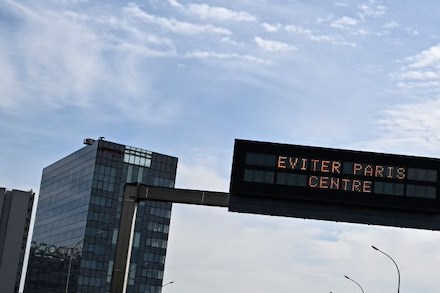
The latest move in Anne Hidalgo’s war on cars has left Paris motorists teetering on the edge of despair. Last week, the city’s left-wing mayor reduced the speed limit on the Périphérique, Paris’s critical eight-lane motorway, to a crawl-inducing 30 mph. For the thousands of suburban commuters who rely on it, it’s made the daily grind unbearable, cementing Hidalgo’s disdain for anyone daring to drive in the capital. And just to make life even harder, she’s banned diesel sales near the ring road. London motorists better hope Sadiq Khan doesn’t steal any of Hidalgo’s latest ideas for his own crusade against cars.

The lesson Keir Starmer could learn from Francois Fillon

From our UK edition

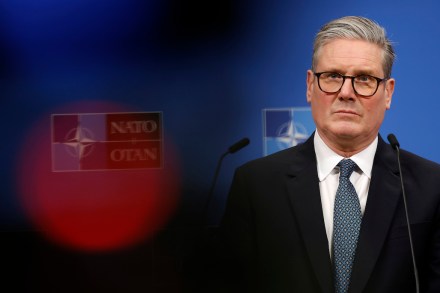
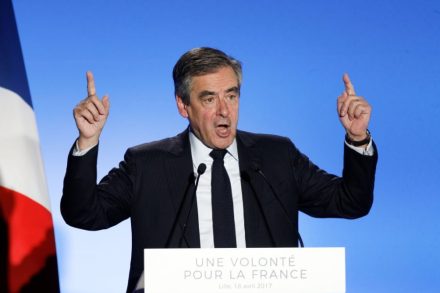
Sir Keir Starmer, the man often dubbed 'Mr. Rules' for his reputation as a stickler for ethical conduct, now finds himself facing an ethics probe over undeclared gifts. The accusations concern luxury suits gifted to Starmer and dresses for his wife, Victoria, reportedly paid for by Lord Alli, a Labour peer and supporter. Starmer's team failed to declare the gifts given to Lady Starmer, a mistake apparently made after receiving incorrect advice from Downing Street. The suits themselves were declared in line with parliamentary rules, but the same was not true for the dresses. Now, questions are swirling as the Prime Minister scrambles to explain the late declaration. This recalls a rather similar episode in France.

Will France’s school uniform experiment foster égalité?

From our UK edition

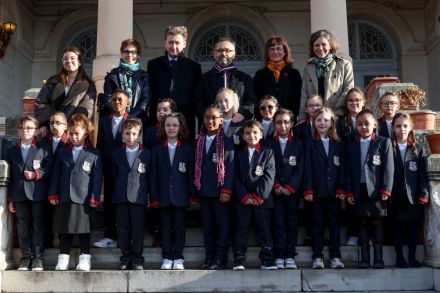
As the new school year begins in France, pupils across the country are putting on school uniforms for the first time in decades. In a pilot program spearheaded by the government, approximately one hundred schools across the country are testing whether uniforms can reduce bullying, improve classroom tranquillity, and foster equality. While some see uniforms as common sense, others – particularly on the political left –dismiss them as a superficial fix to deep-rooted social issues. The schools participating in the experiment are primarily located in right-leaning towns, where support for the initiative has been strongest, while more left-leaning areas are resisting uniforms. Brigitte Macron, herself a former schoolteacher, is said to be strongly in favour of uniforms.

Britain could learn from Switzerland’s tough stance on migration

From our UK edition

The UK is currently struggling with balancing migrant rights and public safety. Record numbers of foreign national offenders are currently still living in the country, unable to be deported. While the case of Lawangeen Abdulrahimzai – an Afghan asylum seeker who had previously murdered two migrants before entering the country, and who went on to murder a 21-year-old in the UK – has thrown into sharp relief the Home Office’s failings in removing dangerous individuals from the country.

The strange case of Pavel Durov and Emmanuel Macron

From our UK edition

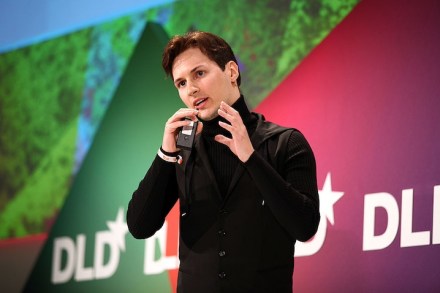
The arrest of Pavel Durov, the founder of the messaging app Telegram, has not only raised questions about the charges against him, but also about the peculiar relationship between the tech entrepreneur and the French government. In 2018, President Emmanuel Macron extended an olive branch, inviting Durov to lunch and offering him French citizenship in the hope of bringing Telegram under greater French regulatory oversight. Fast forward to today, and Durov finds himself under arrest, facing serious charges. This series of events – from lunch invitations and citizenship to sudden detainment – suggests both cooperation and coercion have characterised France’s approach to Telegram. Macron’s actions since Durov's arrest suggest he is feeling defensive, perhaps with good reason.