James Snell

James Snell is a senior advisor for special initiatives at the New Lines Institute for Strategy and Policy. His upcoming book, Defeat, about the failure of the war in Afghanistan and the future of terrorism, will be published by Gibson Square next year.

Iranians have turned against the mullahs’ empire building

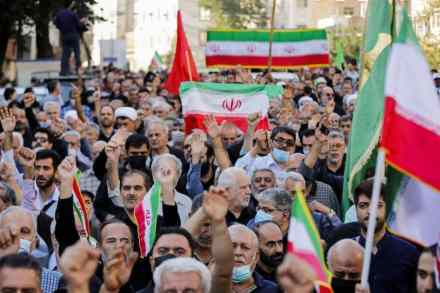
Iran's protestors are showing immense courage. That is a given. But the reasons why are worth spelling out. Not only do they have the bravery to demonstrate against a theocratic dictatorship which has veiled women against their will for over forty years; they also protest in the full knowledge that the regime has already killed many thousands of activists in Iran and across the Middle East. The protestors face a leviathan. They are up against the very heart of an expansionist empire. From the very beginning, the leaders of Iran’s Islamic Revolution, which took power in 1979, conceived of their mission as a world-wide one. It was their job to spread the faith – a particularly aggressive version of Shia Islam – across the region.
Russian terror bombing arrives in Ukraine

It depends on when you are reading this but it’s possible that as you do, Russian missiles are still falling on Kyiv. The Ukrainian capital, and cities across the country, have been subject to a devastating missile barrage last night and this morning. The attacks on Kyiv are intended to create nothing but terror. Missiles fell in succession on civilian areas: children’s playgrounds, ordinary business areas, office buildings. They arrived at the height of the morning rush hour, hoping to kill as many commuters and families as possible, and the drumbeat has continued after that. Residential and business areas of the Ukrainian capital that had broadly been spared missile and drone attack are now targets.

Isis is wreaking havoc in Afghanistan

The bomb tore through an examination hall in Kabul on Friday, where students – mostly minority Hazara, mostly young women – were sitting a practice test in preparation for university. Thirty-five were killed, dozens more injured. An unspeakable human tragedy. We don’t formally know who did it, but we can guess. Under the Taliban’s leadership, Afghanistan is a haven for terrorists. And the terrorists compete. The Taliban is, in my judgement, indistinguishable from al-Qaeda.

Iran’s ‘kamikaze’ drones take to the skies above Ukraine

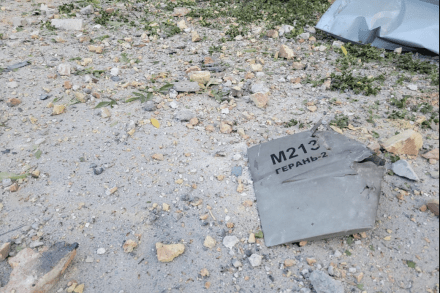
Ukraine is awash with foreign-made weapons, something that is true of both sides. While Ukraine uses American-made rocket systems, French, German and British artillery pieces, and anti-tank weaponry from across the globe, Russia is resorting to foreign suppliers of its own. This means artillery shells from North Korea and, increasingly, drones from Iran. Russia relying on these countries has produced a lot of mockery, some of it justified. Why would a country which claims to be winning its war, with an economy unaffected by sanctions, request resupply from North Korea – a nation whose entire economy is the size of an American city? But on drones, at least, the Russian strategy does not appear so ridiculous.

Has war broken out again between Armenia and Azerbaijan?

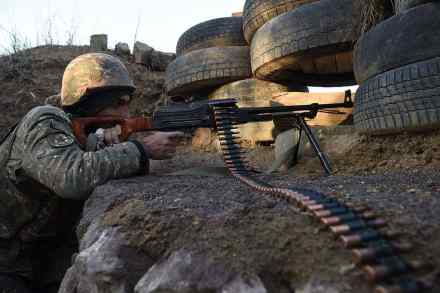
Overnight, it seems as if a new war might have broken out in Europe. Armenian authorities claim that at least 49 soldiers have been killed in fighting with Azerbaijan close to their disputed border. A new conflict would be a tragedy and a waste. But it would also signal something else: the collapse of Russia’s global empire as it is defeated in Ukraine, and the shaking of the kaleidoscope this will inevitably cause. Armenia and Azerbaijan dispute the ownership of the Nagorno-Karabakh region. In 2020, they fought a war over it. Unexpectedly, the Armenians were handily defeated. Azerbaijan was heavily supported by Turkey, and Armenia by Russia. The same Turkish drones which are fan favourites in Ukrainian hands wrecked hundreds of Armenian vehicles and positions.

North Korea’s nuclear sabre-rattling isn’t frightening

North Korea would like you to know that it has nuclear weapons. It has put rather a lot of effort in recent weeks into making you aware. And if you haven’t thought much about North Korea’s nuclear programme in the last few days, it means its propaganda effort has failed. Here is what North Korea’s leaders want you to know. On September 9, North Korean media announced that the country has officially declared itself a nuclear weapons state. In a speech to the rubber-stamp Supreme People’s Assembly, Kim Jong-Un declared that this made his country’s nuclear programme ‘irreversible’, and declared that they would never give up their weapons even in the face of a hundred years of sanctions.

Is Britain really ‘on the brink?’

From our US edition

There’s a macabre joke in Britain these days that my friends and family also play. We compete to see who has had to wait the longest for medical treatment. It starts relatively innocuously. People talk of the ordinary things: like having to wait days to get an appointment with a doctor. They call up in the morning at 8 a.m., only to be told that all of the slots are gone. Best of luck tomorrow. Then someone will say that they’re waiting for minor surgery. Perhaps a small corrective procedure. It was put off first for the pandemic, and now is lost amid a sea of backlogged work. They wonder if someone has lost their details in the slush. Normally I win, although not always. My old general practitioner retired before the pandemic, and his practice was transferred over to another doctor.

Henry Kissinger’s likely last book is on leadership

From our US edition

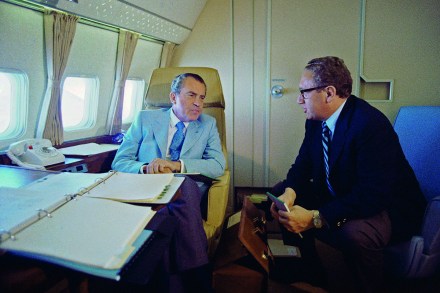
Leadership, Henry Kissinger writes in his latest book, is a medium by which a society moves from the past of its memory to the future of imagination. It is “indispensable.” As Kissinger says, “Decisions must be made, trust earned, promises kept, a way forward proposed.” Without leadership, ordinary people are, he argues, incapable of “reach[ing] from where they are to where they have never been and, sometimes, can scarcely imagine going.” But leadership is also, in Andrew Roberts’s phrase, “a ‘protean’ thing with little fixed definition.” Leadership is ultimately what leaders do; it goes in whatever direction they choose.

kissinger

Shinzo Abe was Japan’s indispensable conservative

From our US edition

Shinzo Abe, who was assassinated today while electioneering, was his country's indispensable man. Prime minister of Japan for much of this century, from 2006 to 2007 and 2012 to 2020, Abe's stature on the world stage eclipsed that of other post-war Japanese leaders, just as his time in office surpassed them all. For a taste of the shock of his murder, look back to the surprise and incredulity which met his resignation from office in the pandemic's worst days. Plagued by a debilitating health condition which had earlier caused him to leave office in 2007, Abe concluded he did not have the stamina left to rule.

Boris Johnson and the return of ‘Pestminster’

From our US edition

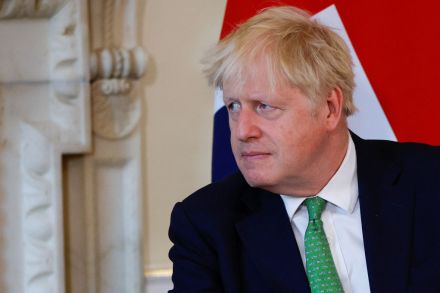
You might be wondering why Britain's government has rolled from crisis to crisis since the pandemic began, culminating today in the resignations of two leading ministers, and with the threat of more hanging overhead. Some would blame the character of 2020 and the pestilential years since; others the nature of Boris Johnson, the prime minister: his "colorful" personal life (a hard-working euphemism); his lack of focus; his indifference to the truth. I would look a little broader. Britain's political life is the product of the people who fill its parliament. And very many of them are deeply substandard people. The straw that apparently broke the camel's back this week was the government's former deputy chief whip, a man called Chris Pincher.

Boris Johnson saved by his hollow party

From our US edition

Boris Johnson has survived the attempt by some in Britain's Conservative party to remove him as prime minister. The margin not quite close. But by being so publicly called into question, both the prime minister and his party have been weakened. Dogged by real and performative public disapproval, Johnson will have difficulty remaining in power for the rest of the parliamentary term, and more performing to do in the next election to remain in office after it. In the fabled axioms of British politics, two things are meant to be clear. One is that the Conservative party is the natural party of government. The country is slightly right-of-center, the logic goes, and it is a rare Labour challenge which can defeat this innate advantage.

Germany’s stinginess is betraying Ukraine

Bafflement is not quite the right word. Instead, Ukrainian officials and their allies now see Germany through a confused form of anger. Things started out well. Within days of Russia's invasion of Ukraine in late February, and in response to international condemnation, Germany did the following, against type: It halted the Nord Stream 2 pipeline, placing it more thoroughly in the palm of Russian fossil fuel suppliers; it committed — for the first time since reunification — to spend more than 2 per cent of its giant GDP on self-defence, per year, in perpetuity; and it announced a €100 billion investment to rearm, beginning that instant.

Hong Kong is now a police state

From our US edition

No one now denies that Hong Kong is a fiefdom of Beijing. Its democratic leaders have been packed off to prison on spurious grounds or have left the territory, and its street protests have long been beaten to pieces with batons. The 2020 national security law has made mockery of Hong Kong's last shreds of freedom of expression, rendering all criticism of the Chinese Communist Party akin to terrorism; and its uncensored homegrown newspapers are now closed by the state — their proprietors inexorably marched off to jail. Any pretense of adherence to the treaties signed by Britain and China around the time of the handover in 1997 — treaties that guaranteed Hong Kong autonomy — has long fallen away. Hong Kong is a subject province of the People's Republic now, and nothing more.

Where will the war in Ukraine go next?

From our US edition

Almost every night in Russia, it seems, a government building bursts into an unexplained fire. Fuel depots, office buildings, infrastructure hubs — and once a bridge. No doubt people have their theories. Insinuation abounds. "Karma is a cruel thing," one Ukrainian official has said on Telegram. But in the main, both the Russian government and Ukraine maintain an eloquent silence. The metaphor is apt. The fires are an unexpected consequence of Russia’s war in Ukraine, an eventuality, no doubt, that no one in the Kremlin inner circle anticipated, or planned for. And yet they burn merrily nonetheless.

How Syria became another narco-state

From our US edition

There is a drug war brewing in the Middle East, and Syria is at its center. The country has been destroyed by its eleven-year civil war, and in the ruins of what was once a prosperous country, an entirely different economy now takes shape. It’s an economy of poverty and privation, where food and energy prices are perpetually high, and supplies of basic commodities are uncertain. The regime of Bashar al-Assad, now unlikely to be overthrown, has become the Middle East’s biggest moocher — a rent-seeking entity that begs for “reconstruction” funds from nearby monarchies to keep its own corrupt machinery in operation. Wartime brings its own economic calculations.

The end of the last Arab Spring success story

From our US edition

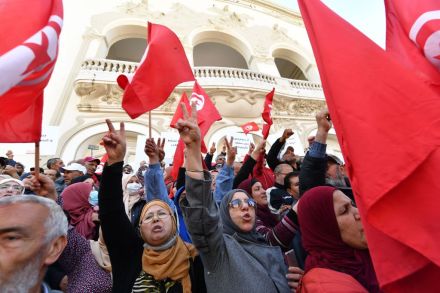
Visibly, and with very little pretense, Tunisia is sliding into tyranny. In the last two years, its president, Kais Saied, has frozen and dissolved the country’s parliament and threatened its former members with prosecution. He has dismissed an errant prime minister. He has ruled by decree. He has quashed the high judicial body attempting to scrutinize his changes to the constitution and replaced it with a new organization filled with hand-picked appointees. Accusing his opponents of planning their own coup attempt, Saied has faced down months of protests over each of these individual changes with uncommon steeliness. Saied’s hold over the instruments of government and his comradery with the brass of the army appears near total.

Down with the ‘Third World War’ doomsayers

From our US edition

Some people are always telling you that the world is soon to end. In the old days many of them would wear sandwich boards describing near-term doom, and not wash. Now, their cousins in the environmental movement glue themselves to oil refineries and don’t shave. In each case, they drip with urgency. The oceans will boil, the land will burn. Your children will fry. Or, alternatively, the Lord will return and take only the righteous to their reward. Be afraid and confess, before it is too late. Public life has these people, too, for this tendency is quite universal. Financial doom-mongering is a profitable little side-line for some economists. The great crash they predict is always upcoming.

world war three

Putin’s imperialism in Africa

From our US edition

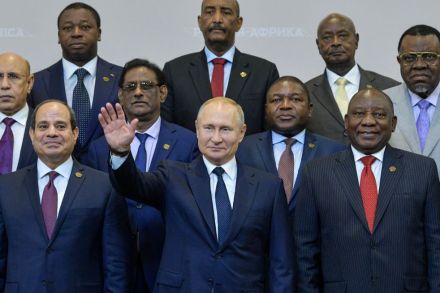
Last week, at roughly the time that photographs and stories began to filter out of liberated Bucha in Ukraine, the NGO Human Rights Watch published a report of similar massacres which took place contemporaneously in rural Mali. What linked the two was the identity of the perpetrators. In Ukraine and across Africa, these atrocities are committed by Russians. In combination with the Malian military junta, foreign soldiers "summarily executed an estimated 300 civilian men," in the town of Moura in late March. These soldiers did not speak French.

The Kremlin’s clown prince

From our US edition

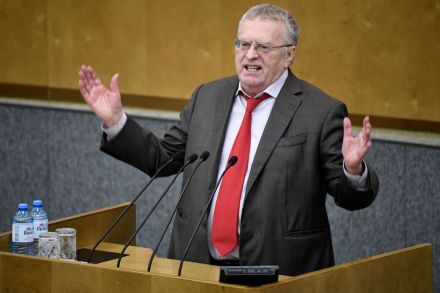
The beginning of the year has not gone as well as it could have for Vladimir Zhirinovsky. Mostly because he is now dead, but also because Zhirinovsky, a Russian politician of the “managed” (pro-Kremlin) opposition, predicted and vigorously supported Russia’s invasion of Ukraine. If Zhirinovsky were able to follow the campaign from his hospital bed, it could not have met his expectations. The imperial Russia of his imagination ought to have come into glorious existence, but its armed forces instead suffered reversal and humiliation. Zhirinovsky was the long-time leader of the Russian Liberal Democratic Party — a grouping that, as many wags have separately concluded, was under his leadership neither liberal nor democratic nor, in some lights, a party.

Hungary’s Orbán remains a thorn in everyone’s side

From our US edition

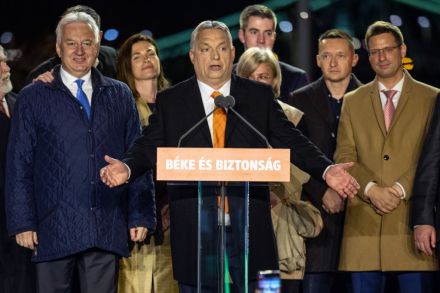
Viktor Orbán has just won another election. The Hungarian prime minister has secured a hefty majority in his country’s legislative elections, and in his victory speech, Orbán revealed once again that he is a thorn: in the side of Europe most obviously but, if need be, in the side of all. I’ll leave for others the discussion of Hungarian democracy — whether Orbán has so manipulated national life that his continued electoral successes are unimpressive, even fraudulent. But Orbán, in his own mind, thought an “overwhelming force” ranged against him. “We never had so many opponents,” Orbán said.