James Snell

James Snell is a senior advisor for special initiatives at the New Lines Institute for Strategy and Policy. His upcoming book, Defeat, about the failure of the war in Afghanistan and the future of terrorism, will be published by Gibson Square next year.

Germany – and Nato – should be ashamed of its grudging support for Ukraine

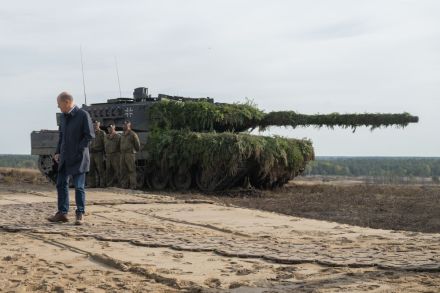
At long, long last, it might seem that things are coming to a head. After a year of phony excuses, ridiculous claims and constant back-peddling, some of Nato’s bigger nations are planning to give Ukraine some fairly modern main battle tanks. Not very many. And not exactly soon. But I suppose it's the thought that counts.  Events are moving chaotically, and fast. But as things stand, the United States is mulling the delivery of 30-50 Abrams tanks – America's primary workhorse. Germany has implied that it will, at some point in the future, supply a handful of Leopard tanks. As has Poland – no doubt a larger number. Norway will give up to eight of its Leopard variant to Ukraine.
Ukraine is paying a heavy price for Nato’s dithering

It is winter in Ukraine. The ground is frozen and hard. Groups of soldiers on both sides struggle in the cold. The Ukrainians insist they have one advantage over the Russians: their soldiers, unlike mobilised Russian troops, have some effective winter clothing.   Traditionally, armies stop moving in winter. They hunker down. It’s less true in Ukraine, where winter does not mean paralysis for civilian or army life. But in much of the country, the frontline does appear frozen – figuratively and literally. But winter ends quickly, especially in wartime.  Western intelligence agencies believe that a new Russian offensive is in the offing. They say a new attack will begin in either early spring or, possibly, at the tail end of the winter.

Gina Lollobrigida and the changing face of fame

Gina Lollobrigida, who died this week at the age of 95, was known in the 1950s and thereafter for the kind of beauty which drove Italian men to self-destruction; and for performances in films which seemed to define a scrappy, energetic, self-possessed Italian womanhood.   During her career, ‘La Lollo’ sculpted, took photographs, did a little journalism and maintained a chaotic personal and political life, in which both her husbands and her male executive assistants always seemed to be in their late twenties. But she ought to also be famous for something else: being the subject of one of the most exciting and vital early experiments in television, a great short film by Orson Welles.

Germany has no excuse for not sending tanks to Ukraine

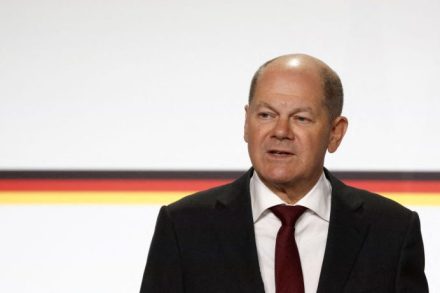
When a man is in a hole, he is best advised to stop digging. When a German chancellor is in a hole, by contrast, he seems to think it his duty to chide others for failing to dig their own. So it is with Olaf Scholz, Germany’s increasingly ridiculous chancellor.   Scholz lost a defence minister and appointed an unknown quantity as her replacement mere days ago. That new defence minister, Boris Pistorius, will soon meet up to 50 Nato and allied defence ministers in Ramstein on Friday to coordinate supporting Ukraine. It's a tough thing to do within your first week on the job. Especially when the chancellor and his officials seem intent on making your job harder.  A brief step back.

Is Germany’s defence minister up to the job?

After yesterday's abrupt and humiliating departure of Germany's defence minister, Christine Lambrecht, beleaguered chancellor Olaf Scholz has today appointed her replacement. If you were expecting a stellar appointment, prepare to be disappointed. If, however, you have followed Scholz’s pilgrim’s progress on the war in Ukraine closely, then you can enjoy the sensation of your low expectations being met.  The new hire in question is Boris Pistorius, a stalwart of Scholz’s Social Democratic party (SPD). He has never held military rank. He has never held national office. He is a former mayor of Osnabrück, and was, until his elevation to the federal cabinet, the minister of the interior and sport for the state of Lower Saxony.

Germany’s missteps in Ukraine have left Scholz fighting for his political life

Difficult though it may be to believe, there is chaos at the top of the German government over its mishandling of the war in Ukraine. Germany’s defence minister, Christine Lambrecht of the Social Democratic party, has quit her post after the most extraordinary series of unforced errors.  The war has brought all of this to a head. It has exposed Europe’s lax security and complacency. But German defence has been in a league of its own for many years. Over the course of the war, there has been no end to the amount of troubling information that has emerged.

Is this the real reason Russia is trying to seize Bakhmut from Ukraine?

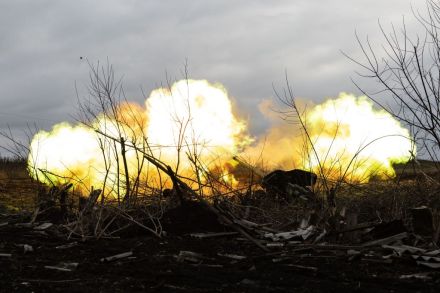
Bakhmut is not of immense strategic importance. It's a backwater, empty of almost all civilian life, and largely in ruins. But the city is where Ukraine’s war of self-defence has been at its most intense for months.  The defenders are suffering, under a hail of artillery fire and under constant threat of attack. But the Russians are losing more. Almost daily, it seems, Putin's forces advance without cover across a moonscape torn with shell-holes. They are cut down in their tens every time. The front line has barely moved in weeks. Russian bodies, uncollected in the cold, litter the surrounding fields.   To Ukrainians and their allies, these suicidal attacks are no longer simply foolish. They are almost disconcerting.

America’s flip flopping has exacerbated Venezuela’s tragedy

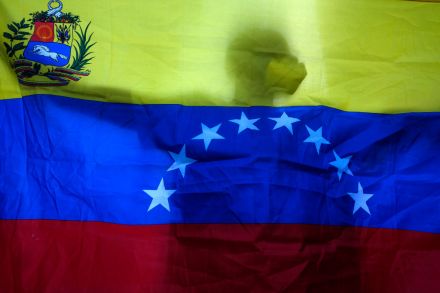
Amid New Year celebrations, and a tide of high-profile obituaries, you might have missed something small and far away, but nonetheless significant. The opposition in Venezuela has dissolved its government-in-pretence. By 72 votes to 29, the country's national assembly voted its parallel government out of existence.   Juan Guaidó can no longer say that he is Venezuela’s legitimate president-in-waiting. Venezuela has, for many years, been a basket case. A country with immense natural resources and an energetic population, it has long languished in poverty.

Russia can stop the Ukrainian drone strikes. It can end the war

Almost as soon as the war in Ukraine began, strange things started to happen in Russia. Buildings connected to the country’s military and its war effort caught fire, saboteurs were suspected – and occasionally caught, according to state TV – and recently, air bases quite far away from Ukraine have started to blow up.  All of this gives the lie to the official Russian claim, from the early days of the war, that this was a special military operation – small in scope, limited in objective – fought between the Russian military and a few fanatics and drug addicts far away. The conflict was in fact a war, as we know – and it is between the armed forces of the Russian Federation, its proxy Wagner Group mercenaries and Iranian allies, and the entire nation of Ukraine.

Japan’s rearmament could be a force for good

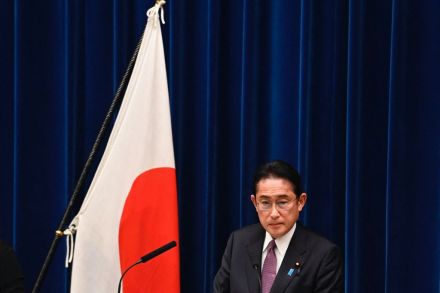
Shinzo Abe, Japan’s murdered former prime minister, would this week be especially proud of his country. At long last, and after years of protests and strife during Abe's time in power, Japan has announced a reversal of its uncompromising post-war pacifism. Japan, its current prime minister Fumio Kishida has said, will now begin to rearm.  What was in question was not armaments, per se, but rather the ability of Japan’s armed forces, the self-defence forces as they are called, to fight abroad. Japan’s post-war constitution declared the country formally pacifist, and renounced both the ability to wage war and the means to do so.

Can the EU recover from the Qatar corruption scandal?

Four people associated with the European parliament have been arrested in what seems to be the beginning of a major corruption scandal. The political career of Eva Kaili, a Greek politician and one of the vice presidents of the European parliament, has already been derailed. She has been suspended from office by the parliament's president, Roberta Metsola – and thrown out from her previous parties and affiliations.  Kaili has been arrested and, according to the BBC, has had her assets frozen. It is unclear as yet whether she has been charged with anything; some media outlets say she has, others that she soon will be.

Iran steps up the war against its people

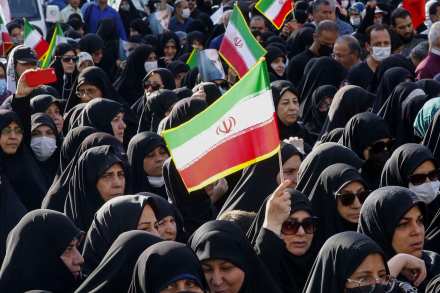
Iran has announced the first execution of the current crop of protestors. Mohsen Shekari, who was just 23, was hanged earlier today after having been found guilty by a revolutionary tribunal of moharebeh, a crime which means ‘enmity against God’.  Other protestors have been charged and convicted of crimes like fasad-fel-arz (‘corruption on Earth’) and baghy, which means ‘armed rebellion’. Both of those carry the death penalty, so it seems likely that more executions will soon follow. Shekari’s killing is intended to frighten those who face these charges and to dissuade demonstrators from taking to the streets at all. But will it work, as the tide of anti-government feeling continues to swell in Iran?

Why Germany’s far-right coup was doomed from the start

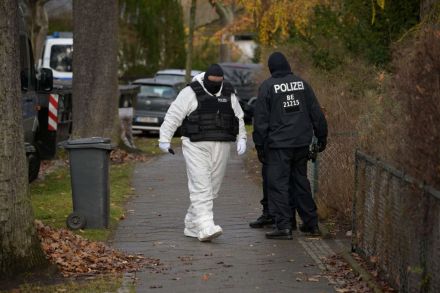
Twenty-five people have been arrested by German authorities on suspicion of plotting to overthrow the government. A failed coup attempt – and a series of raids involving 3,000 officers – seems like the sort of story that might happen in a far-flung part of the world, not the largest economy in Europe. But early reporting indicates there was something fairly typical about this coup attempt: it involved a group of delusional far-rightists and ex-military officers. The false idea that if these men simply waltzed into parliament and placed politicians under arrest, the state would fold and they would get to run the place, seems to have been a factor in their attempt. A similar attitude was held by those who plotted to stage a coup in Portugal in 1975, and Spain in 1981.

China’s protests and the dark lesson of Hong Kong

It is easy to imagine that a dam might be bursting in China. There have been spontaneous street protests across the country against the country’s zero Covid policy, unconfirmed videos in Shanghai show crowds calling for president Xi Jinping to resign, and political content is slipping though China’s draconian social media censorship.  Earlier in the pandemic, Chinese residents in Covid-stricken cities were trapped in their apartment buildings while, in one memorable dystopian moment, a horde of drones deployed by the local communist party told them to ‘control your soul’s desire for freedom’. Now, after a fire in a residential block in Urumqi killed ten people, it seems as though people have suddenly had enough.

Should Iran be allowed at the World Cup?

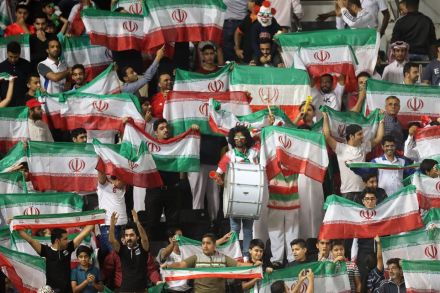
As England’s football team prepare to face Iran in the first match of their World Cup campaign, the backdrop is already miserable. Football’s most prestigious tournament is taking place in the wrong season in a deplorable state where workers have died in the construction of stadiums. To make matters worse, the Three Lions’ first opponents are in the midst of a brutal crackdown back home on those who have dared speak out in opposition. Hundreds have died; thousands more have been locked up.  Russia, of course, was booted out of the tournament months ago following its invasion of Ukraine. As Iran’s leaders intensify their repression on the streets of Tehran, should England’s first opponents face a similar punishment?

Iran’s protests are coming to a head

Iran’s protest movement appears to be coming to a head. It’s been going on for two months, since the country’s ‘morality police’ beat Mahsa Amini, a young woman visiting Tehran, into a coma from which she never recovered earlier this year. The reason these thugs gave for dragging her into their van was that she was wearing her mandatory hijab incorrectly. Ever since, Iranians of all ages, across the country, have been on the streets, protesting for ‘women, life, freedom’.  Now the violence of that initial act is radiating outwards.

Assad and Putin stoop to a new low in Syria

Focus on Syria has dwindled since the pandemic and Russia’s invasion of Ukraine. But over a decade after the country's bloody civil war first started, the conflict rumbles on. Armed groups continue to jockey for position. The death toll, caused by Russia’s air force, Iran’s militias, and Bashar al-Assad's forces, continues to rise.  To keep the enclave in the country’s north on its toes, perhaps, the Syrian regime likes to lob artillery into villages and call in Russian aerial attacks. This happens often. Civilians frequently die when the missiles and bombs land in marketplaces.  This week saw an intensification of this low-level war on non-combatants.

Why King Bibi’s return is bad news for Israel

Israel’s longest serving leader, Benjamin Netanyahu, is back. His return confirms once again an iron clad rule of Israeli politics: never write Bibi off. A few years ago, his opponents briefly thought they had vanquished him for good.   Netanyahu lost an election in 2021 and two great American supporters, the late media tycoon Sheldon Adelson and former president Donald Trump, were gone. Netanyahu was under investigation for corruption in a wide-ranging criminal probe which he sought unsuccessfully to undermine. It seemed as if Bibi could soon exchange the prime minister’s residence for jail, and the TV make-up and dark suits he always wears for prison uniform.  But that is not what happened.

Russia’s ‘hunger plan’ is back

Until this week, the prospect of global famine had disappeared from the headlines, but earlier in Russia’s war against Ukraine, a sinister possibility had begun to take shape. Ukraine is a breadbasket. Its produce feeds the world. And Russia, knowing this, hatched a plan. Its soldiers could wreck Ukrainian farmland and kill its farmers. Russians would steal and sell all the Ukrainian grain it could. And the Black Sea – a vital artery through which most of Ukraine’s food exports travelled – would be blockaded by the Russian navy. Food shipments would not be let through. The world would starve, Ukraine’s economy would suffer, and – in Vladimir Putin’s mind – he would be the victor.

Did Putin use Iranian martyr drones on Kyiv?

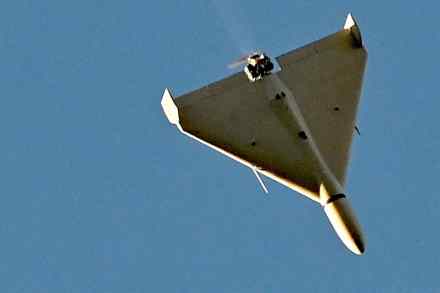
As Iranian munitions have hurtled through the air at the front line in the Donbas, and as Iranian suicide drones have smashed into Ukrainian cities, Tehran has denied everything – unconvincingly. The most recent was Iran’s foreign minister, Hossein Amirabdollahian, who said on Saturday: ‘The Islamic Republic of Iran has not and will not provide any weapon to be used in the war in Ukraine’. With the piety beloved of hypocrites everywhere, he went on: ‘We believe that the arming of each side of the crisis will prolong the war’. This is part of a pattern.