James Kirkup

James Kirkup

James Kirkup is a partner at Apella Advisors and a senior fellow at the Social Market Foundation.

My Covid-19 vaccine jab means I love NHS managers

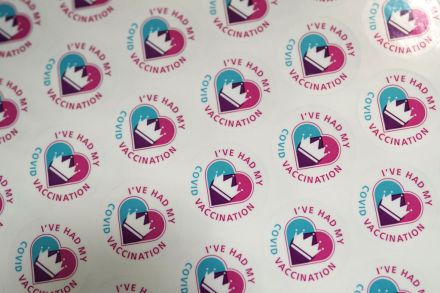
I am 45. That means I’m old enough to have been writing about politics at a time when political attacks on ‘NHS managers’ were a routine part of political debate and media coverage, standing alongside ‘yobs’ and ‘asylum-seekers’ as the nation’s villains. It’s also old enough to get me a Covid-19 vaccine, injected into my arm on Saturday morning at a GP surgery in south London by a student doctor from a nearby teaching hospital. Watching the performance of the vaccine centre, doling out hundreds of vaccines each hour, I was reminded of all those promises from all those politicians about getting rid of fat cat NHS managers.

Life as a Lobby journalist

30 min listen

The Lobby refers to the group of political journalists with access to the Palace of Westminster. On this episode, three former Lobby hacks - Fraser Nelson, James Kirkup (of the Social Mobility Foundation) and Francis Elliott (retiring political editor of the Times) - discuss their rehabilitation from the job, the old days of boozing lunches and the impact of social media on the job today, and much more.

The case of Sarah Everard should make us all stop and think

At the time of writing, we don’t know what happened to Sarah Everard. However this story ends, it should be an important national moment of reflection, because the way it has made a lot of people feel deserves serious attention. When I say 'people', I largely mean 'women'. And that reflection should come from men. Men need to learn some lessons about the way this case makes women feel. Perhaps there is something jarring about me, a man, writing a column about women’s feelings and thoughts. Should I even be trying to describe and report the experience of a group to which I do not belong? There’s a lot of identity-based thinking and argument that would say 'No' to that question.

Revealed: the secret trans-rights lobbying operation in parliament

This is a story about politics and influence and openness. It’s also about the drive for trans rights and some of the people involved in that push, but in a way, that’s secondary. Because the issues involved here and the questions raised are bigger even than sex, gender and the rest. This is, in the end, about how rules and laws and policies are made, and who gets a say on that. A lot of this story is about something called an All Party Parliamentary Group. APPGs are, as the name says, groups of MPs and peers who work together to investigate, report and campaign on a particular issue. They are not parliamentary bodies in the sense of being part of the legislature; unlike select committees, they have no constitutional status or legal powers.

Why I joined the trans debate

It was easy to miss because even at the best of times the House of Lords doesn’t grab public attention. But this week, something remarkable happened in parliament. In narrow legislative terms, peers have forced the government to accept amendments to the Ministerial and Other Maternity Allowances Bill. The Bill will make it possible for a minister who is pregnant — such as Suella Braverman, the Attorney General — to take leave from work without resigning ministerial office. That should be uncontroversial, but the language of the Bill left something to be desired. The Bill passed the Commons earlier this month using phrases such as ‘the person is pregnant’ and ‘the person has given birth to a child’.

Why is a trade union spreading doubt over the vaccine roll out?

We hear a lot these days about the need for responsible discourse around the pandemic. People who put into the public domain arguments and claims that are not fully supported by evidence and which can have harmful consequences are being called to account for their actions. Anyone with a public profile should always be willing to answer for their words. And in the midst of a public health emergency, it’s only reasonable that anyone with a voice in the public square should take care to avoid unduly eroding public trust in Covid mitigation measures by spreading baseless claims and sowing unjustified doubt. This is especially true of the Covid vaccination programme.

Tavistock gender clinic whistleblowers have been vindicated

The Care Quality Commission has released its reports on the gender identity services offered by the Tavistock and Portman NHS Foundation Trust. They make for grim reading. The CQC describes an NHS facility that — until last month — put vulnerable children on a pathway to the use of untested medicines and life-changing interventions, sometimes without keeping proper records proving consent for treatment or demonstrating the reasons for that treatment. An NHS service where staff were afraid to raise concerns about procedure and practice for fear of 'retribution' from their employers. An NHS service that failed to ask fundamental questions about the growing number of vulnerable children being presented for treatment.

Just give them cash: a solution to the free school meal box row

The pandemic has not been kind on either libertarians or people in poverty. The libertarian argument that the state should generally leave people alone to make their own choices has not often succeeded as government, largely backed by the electorate, has chosen to respond to a collective risk with collective action, even if some of that action is compelled. For people on low incomes, Covid-19 has meant more economic hardship and an increased chance of death. It has also meant that their children are more likely to go hungry. At the Social Market Foundation, we reckon 16 per cent of children – nearly two million – went short of food last year.

Vocational students are being treated with contempt – again

England’s third national lockdown is an avalanche of news, affecting just about every bit of our lives. It’s a lot for anyone to grasp, but that’s still not an excuse for the fact that, once again, young people studying for technical qualifications such as BTECs have been ignored and let down. According to the Association of Colleges, around 135,000 students are due to take assessments or sit exams in colleges this week: some exams are due today. And while the Prime Minister in his televised address last night talked about school and the need to cancel summer exams such as GCSEs and A-levels, the Government currently considers that BTEC tests should still go ahead this week. Not that the kids taking those tests would have learned that from the PM.

The BBC should be ashamed of its reporting on trans teenagers

This is an article about some difficult, complex subjects: suicide, mental health, support for transgender children. It’s also about something very simple: a horrible failure of journalism by the BBC. I’ll come to the BBC in due course, but given that this is about the potential for self-harm among young people, I think it’s important to take some time to offer some context and background facts. The first thing to do is to note the longstanding advice to the media from the Samaritans on how to report responsibly on the issue of suicide, in order to avoid the risk of adversely influencing the behaviour of vulnerable people. 'Steer clear of presenting suicidal behaviour as an understandable response to a crisis or adversity.

The madness of the Covid Christmas amnesty

London will enter Tier 3 Covid restrictions on Wednesday, because people are mixing too freely and thus spreading a deadly virus. Next week, those restrictions will vanish for five days, allowing people to mix more freely, thus spreading a deadly virus. The paragraph above captures just how frankly stupid the Christmas Covid amnesty policy is. Much of 2020 has been a real-life experiment in epidemiology, proving – not that it’s necessary – that when you relax restrictions put in place to slow the spread of a disease, that disease spreads more quickly.

Why Net Zero has to help towns like Blyth

It is reported today that a company called Britishvolt will build a huge ‘gigaplant’ making electric car batteries in Blyth in Northumberland. There are huge numbers attached to this: £2.6 billion of investment, 3,000 people directly employed and another 5,000 jobs promised in the supply chain for the factory. I really hope that this stuff happens, even in part. That’s partly because I’d love to see more proof that the transition to a lower-carbon economy really can translate into tangible economic benefit.

Both sides are to blame for killing soft Brexit

Peter Mandelson's remainer credentials are impeccable. He is a former European Commissioner who helped run Britain Stronger In and then the People’s Vote (PV) campaign. He is as committed and eloquent a champion of EU membership as you’ll find. Which makes his Brexit intervention in the Guardian so important: All the new benefits from every global trade deal we could ever aspire to will not begin to equal the size of our present European trade. This is the price we will pay for the triumph of hardline Tory Brexiters over those with a stronger sense of national interest in their party.

Why the Treasury always wins

One of the abiding flaws of British political discourse is that it overlooks the importance of organisation and institutions. The political village where I’ve spent my career talks too much about politics and personality; a bit – but not enough – about policy; and almost not at all about organisations. This creates blind-spots and surprises. Many people at Westminster were surprised by the election of Jeremy Corbyn and his resilience as leader in the face of internal challenge. That’s because they overlooked the vital importance of the Labour Party membership – which Corbyn successfully changed – and the party’s internal structures.

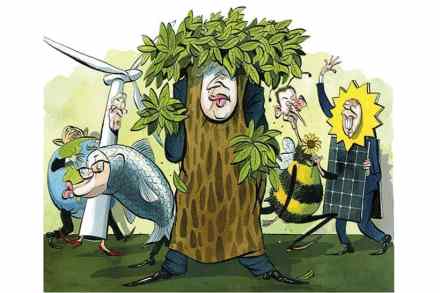
Boris’s eco-optimism will get the better of him

Vote blue for green jobs in the red wall. That’s the message we’re supposed to take from Boris Johnson’s ten point plan for reaching zero carbon emissions. The launch follows some shallow Westminster chatter about how this stuff relates to the departure of Dominic Cummings, chatter which somehow overlooks the fact that said departure has made precisely no difference to what’s being announced. Do the Tories new voters in red wall seats care about eliminating carbon emissions? My think tank, the Social Market Foundation, has been investigating this question.

Dominic Cummings doesn’t matter. Boris Johnson does

Yesterday I wrote here that the shenanigans of special advisers weren’t very important and shouldn’t get so much attention. And then Dominic Cummings resigned, and the world shifted on its axis, so what sort of idiot am I, eh? It’s important that when journalists get things wrong, they say so. But this isn’t a mea culpa. I stand by my point about the importance of political advisers being overstated and over-reported. Dominic Cummings doesn’t really matter. Boris Johnson does. There is talk in many papers and places this morning about the impact of Cummings’s departure from No. 10. Will it lead to a change in approach, a shift in policy focus from the centre?

Why this Downing Street debacle doesn’t matter

Do you know who Lee Cain is? If your answer is yes, you are unusual, an aberrant departure from the norm. If you know who he is and care a jot about him and his career, you’re a freak. Wall-to-wall coverage of Cain’s departure from Downing Street reminds me why I’m so glad I stopped being a Lobby reporter, and demonstrates everything that’s wrong with our political-media culture. It’s part of the national sickness that means so many people ignore or disdain politics as something distant and irrelevant to their lives. And actually, as far as this story is concerned, they’re right, because goings-on in No. 10 really are irrelevant.

Florida’s minimum wage fight has a key lesson for the Tories

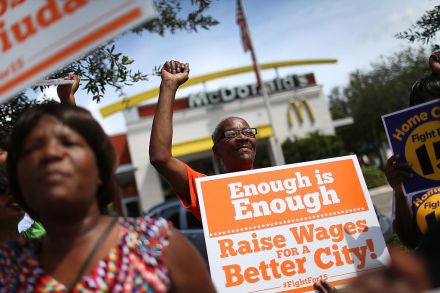
Ever since I covered the end of the Bush-Gore presidential election in 2000, I have been wary of drawing lessons from US elections about UK politics: America is much less like Britain than too many British journalists tend to assume. But there’s one bit of the US voting last week that intrigues me in the context of British politics and policy, and which might just be a signpost to one of the big issues here in the next couple of years: the politics of the minimum wage. Florida last week voted for Trump: he got 51 per cent. It also voted, 60:40, for a proposal to increase the state’s minimum wage to $15 (£11.35) an hour.

The country’s biggest teaching union would deny kids their education

Britain’s first lockdown hammered our kids. Being away from school for months widened the educational gap between rich and poor and harmed the prospects and wellbeing of children from low-income homes. Knowing that, what do you call people who want to close schools again? Here’s the punchline, although it’s not funny: teachers. Or more accurately, teachers’ unions. You might have missed this on a grim Saturday afternoon, but even before Boris Johnson had confirmed Lockdown 2, the National Education Union was calling for schools to be included. That would mean another month (at least) away from school for millions of kids, followed by reduced schooling.

The trans debate could cost this Cambridge porter his job

This is a story about a man called Kevin Price, who was until last week a councillor and who is, for now at least, employed as a porter at a Cambridge college. The story illustrates two points. First, political conflict over trans rights and women’s rights is far from over, especially in the Labour Party. Second, people who say the wrong thing in this debate can put their livelihood at risk. Mr Price last week resigned from Cambridge City Council. He had sat as a Labour councillor since 2010 and was once the council’s deputy leader. He resigned rather than follow the Labour Group whip and vote for a motion that declared, among other things that: 'Trans women are women. Trans men are men. Non-binary individuals are non-binary.