James Kirkup

James Kirkup

James Kirkup is a partner at Apella Advisors and a senior fellow at the Social Market Foundation.

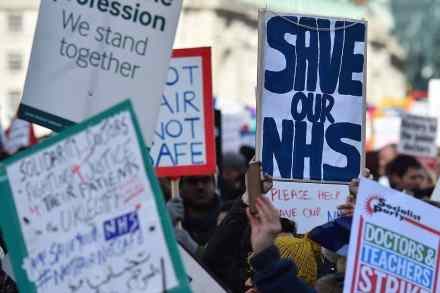
Pity the doctors fighting for their £1 million pensions

As inflation rips into living standards, everyone is feeling the pinch and many are looking for help. Some people are asking for more from the state. That really means help from their fellow taxpayers, because sooner or later, that’s where public money comes from. We all have our own views about which groups merit that help: working-age parents in the lowest income bracket are at the top of my list. Readers will doubtless have their own thoughts on which marginalised and disadvantaged people are most deserving. Amid the tumultuous national conversation about the cost of living, there’s always a danger that some unfortunate souls might be overlooked.

The night that David Cameron sealed Britain’s Brexit fate

Friday 29 June 2012 isn’t a famous date in British history, but it deserves at least a footnote. Because I reckon it’s the day the Brexit referendum became inevitable – largely thanks to David Cameron’s inability to stop talking. What follows is my argument, based on personal involvement, that Cameron set the referendum process in motion at least partly by accident. It’s a bit long and possibly even self-indulgent, but I hope it might also be useful to people writing the second draft of history. A decade ago today, Cameron was prime minister and attending an EU summit in Brussels. Unlike some summits of the period, this one had ended in reasonable time, allowing leaders to do their post-match press-conferences and fly home late on Friday night.

Are we heading towards a British Donald Trump?

The Tiverton and Wakefield by-elections are, of course, shatteringly bad for the Conservatives and Boris Johnson. They should finally destroy any illusions Conservatives hold about the PM’s electoral appeal. As I and several others have often pointed out, Boris is not a Heineken politician and hasn’t been one since the middle of the last decade. Analysis of by-election results is often bad. In the minutes and hours after the result, commentators scramble to explain what local results mean for national politics, in a crowded field where political actors are doing their best to skew the narrative in their own interests. That being so, I’m not going to try to tell you what Tiverton and Wakefield mean for Johnson’s future or the next general election.

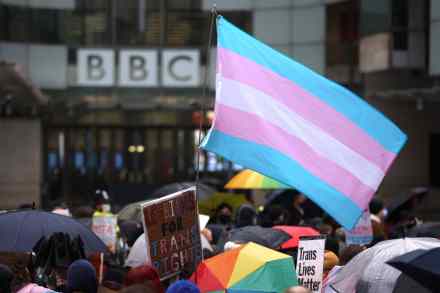
The BBC gets new orders: back trans rights, ignore women

‘For the record, I knocked two out. One woman’s skull was fractured, the other not. And just so you know, I enjoyed it. See, I love smacking up Terfs in the cage.’ Can someone who says such things be considered a respectable commentator on women’s rights and interests? I suspect that most people who glory in battering women would struggle to get a hearing in national conversation on such topics, much less a slot on Radio Four. Yet this week the author of that quote, Fallon Fox, was invited on to the Today programme to talk about women’s sport and trans women’s right to participate in it.

The scandal of Britain’s health inequalities

Take a train from London King’s Cross to Newcastle and your journey will span 245 miles and several years of a child’s life. According to the most recent estimates from the Office for National Statistics (ONS), a baby boy born in the north-east of England in 2020 is likely to enjoy just 59.1 years of good health before starting to slide into infirmity, then death, at 77. A boy born in the south-east at the same time has a healthy life expectancy of 65.5 years and a total life expectancy of almost 81. It’s a grim fact of national life that people in poorer places live shorter, sicker lives than those in richer ones. This should be a scandal, the sort of thing that grips political attention and demands remedy.

Why Starmer shouldn’t relaunch

Yesterday’s Times carried a report that will only add to Sir Keir Starmer’s troubles. It quoted several members of the shadow ministerial team suggesting that Starmer is dull and unimpressive.That will only sharpen the perception, held by quite a few Westminster people, that the Labour leader isn’t doing as well as he should be, given the government’s weaknesses and failings. ‘Keir Starmer is not dragging his party down but he's not transforming its fortunes either’. That was the conclusion of a New Statesman analysis a few weeks ago, and probably a fair one. The problem for Starmer is the fact that Labour needs that transformation. One of the most overlooked facts of political life is just how badly Labour did in 2019.

It’s not right-wing to be worried about trans-rights policies

I’ve been writing about sex and gender for a few years now, largely because it’s a subject that needs to be better understood. Far too much about this issue is shrouded in misinformation and dishonesty, not least because some of the people and groups interested in the issue have made considerable efforts to keep this stuff out of the public gaze. Slowly, the veil is being lifted and questions of sex and gender more freely discussed. It’s not yet getting the media coverage it deserves, but the employment tribunal case of Allison Bailey is helping.

The Sue Gray media circus is political journalism at its worst

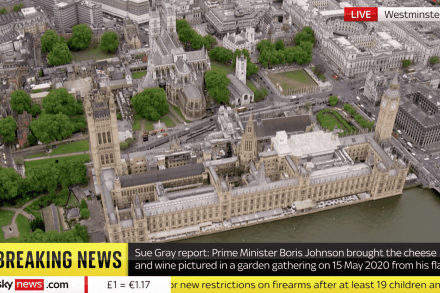
It’s a helicopter day at Westminster. I’m writing this at my desk, which is about 200 metres from the House of Lords. My office is full of the racket made by a chopper flitting about over the Palace of Westminster and Whitehall, providing aerial camera shots of politicians – mainly the PM – moving around the place. The reason today is the Sue Gray report, but helicopter days are relatively common at Westminster. The drone of the rotors is the easiest way to tell that this is a Big News day, when journalists spend more than the usual amount of time talking about extraordinary events and major developments. As with so many things, there’s a mundane reason helicopter days seem to come around so often.

Meet the Tories quietly hoping to lose the next election

Would it be good for the Conservatives to lose power at the next election? Should smart young Tories with an eye on the future want to lose? Those are questions I’ve heard discussed in Conservative circles recently. And those questions arise from a Tory reading of politics that goes something like this: Boris is leading conservatism into a dead end. Lacking principles and consistency of ideas, he has left the Conservatives without any long-term strategy or even purpose. He’s squandered an 80-seat majority and will achieve no significant domestic policy change in this parliament. Woeful at governing, his Tories are now good only for wedge-issue PR campaigns and attacking Labour.

Wandsworth shows politics is now all about education

Wandsworth, London I’m writing this in Labour-controlled Wandsworth, my leafy bit of south London. More precisely, I’m writing it sitting outside the sort of coffee shop where the drinks come in jam jars and everyone has a beard. I’d also bet that every one of the 30-odd people here – staff and customers – has at least one university degree. In the 20 or so years I’ve lived in London, Wandsworth has gone from being a slightly drab place to the sort of area where bright young (and middle-aged) things with high incomes come to live and play. The two (bearded) twenty-something men on the table next to me are a case in point.

Britain is accepting of trans people – but sceptical of the ideology

Two things all journalists and all politicians should always remember. Britain is not Twitter. Britain is not America. The nasty division of social media is not reflective of the wider public. And the issues that are sometimes debated online are often on the agenda because of American, rather than British, concerns. There is good evidence that Britain is a more cohesive and less divided society than many accounts suggest. Adding to that evidence is a nice report out this week from Global Future, a think-tank interested in social issues. Based on a big YouGov poll, it finds that people are – surprise, surprise – more sophisticated and complicated than they appear online.

Mark Harper is an honourable politician

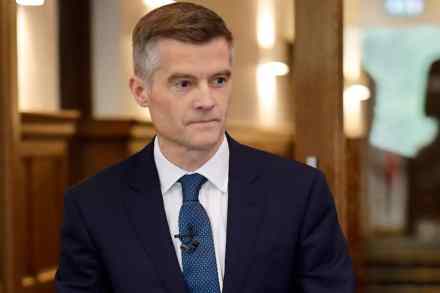
This is a short story about Mark Harper MP, who is making headlines. These days Harper is probably best known as a backbench critic of Covid restrictions, but he once had a promising career as a minister, including a spell in David Cameron’s cabinet between 2015 to 2016. But that career hit a bump in early 2014 when he quit his post as immigration minister. I was running the Telegraph’s political team at the time. Many ministerial resignations are unmemorable, but Harper’s sticks in the memory. He quit because he learned that a cleaner he paid to look after his London flat did not have legal permission to live and work in the UK.

Starmer won’t talk about sex and gender. That’s a problem

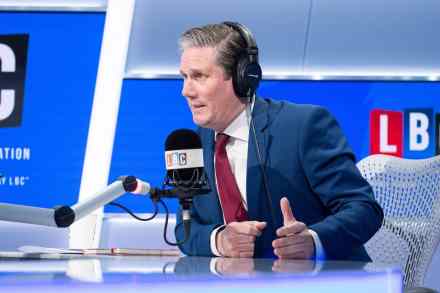
Sir Keir Starmer doesn’t want to talk about penises. He’s going to have to do it anyway, and he’s not going to be alone. The Labour leader was interviewed by LBC’s Nick Ferrari on Monday, becoming the latest journalist to test Starmer on questions of sex and gender. Ferrari asked, can a woman have a penis? Starmer’s verbatim response, offered with a pained expression and sorrowful intonation: Nick, I’m not… I don’t think we can conduct this debate with… you know… I just... I don’t think, erm, discussing this issue in this issue helps anyone in the long run. What I want to see is a reform of the law as it is, but I am also an advocate of safe spaces for women.

A lesson for those calling Nazanin Zaghari-Ratcliffe ‘ungrateful’

In the latest installment from the idiot age of Twitter, #ungratefulcow has been trending. The reason? Nazanin Zaghari-Ratcliffe had expressed, mildly and politely, some unhappiness that it had taken Her Britannic Majesty’s Government six years to free her from Iranian captivity. Cue a handful of shallow trolls slagging her off, and a lot of other people slagging them off. I say ‘mildy and politely’ because to my mind, the salient characteristic of Zaghari-Ratcliffe’s comments was its restraint. Most people, I submit, would be furious beyond words to miss most of their only child’s first years of life.

Care about the trans debate? Ask yourself this question

J.K. Rowling is talking about sex and gender again, which means a lot of people are getting angry. It’s striking how the prospect of a woman eloquently stating her opinions and refusing to stop stating them – even when she has been told to shut up – seems to make some people unhappy. Because Rowling admirably refused to do as she’s told and be quiet, this is becoming a familiar story. 'Famous author wades into trans row' is good copy. And it gets angry clicks on social media. None of this changes the minds of people already immersed in this stuff, of course. Those people remain a minority.

The problem with the UK’s transgender clinic

This is not a good time to be a girl. Research from Steer Education last month showed that far too many girls are sad and anxious and concealing their troubles from others. In 2019, the Lancet published research showing girls’ rates of self-harm had tripled since 2000. Other studies show girls are much more likely to be depressed or anxious than boys. This might surprise. Aren’t today’s girls growing up in an age of equality, inheritors of girl power? They’re more likely than boys to go to university. They have better economic prospects than any generation of females that went before them. Empowered female role models are more visible than ever before, in culture, sport, media, science, business, even politics.

The march of the middle-class apprentices

Tony Blair used to joke that he could announce the start of a war during a speech on skills policy and no one would notice. Like all the best jokes, it contained more than a grain of truth. Britain — or rather educated Britain — has never been interested in the parts of our education and training system that don’t involve doing A-levels and going to university. Blair did a great deal to entrench the social and cultural dominance of university with his aspiration that half of all school leavers should go into higher education. That was, on aggregate, the right policy for the country and its economy: the expansion of a great higher education sector has done much good for the UK.

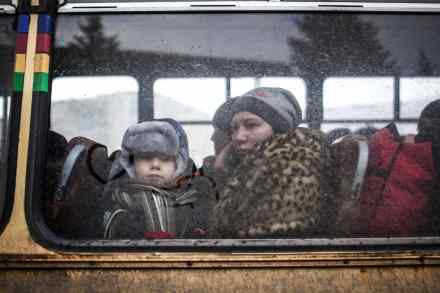
Will Britain welcome Ukrainian refugees?

Immigration used to be the most-discussed issue in British politics. It gets less attention these days, for reasons too varied to go into here. But even though some voters have been focused on other things, there have been significant changes. Some have been good. Others bad. And the bad ones are about to collide with the Ukrainian crisis. The positive bits of the immigration story have mainly been around regulated, economically-driven migration. Britain’s post-EU migration regime is, well, not as bad as it could have been. It’s not as easy as it was for EU nationals to come here to work, but it’s a bit easier for non-EU nationals to enter. The overall effect has been less a tightening of entry rules than a rebalancing.

State schools and the rise of posh apprenticeships

Recently, a friend forwarded me a letter he’d received from his children’s school, an independent secondary in London, to mark National Apprenticeships Week. The letter set out to parents everything the school was doing to provide children with information, options and contacts to explore apprenticeships, either in combination with or as an alternative to a university degree. The school isn’t household-name famous, but it’s still prestigious, exclusive and, yes, expensive: a year’s fees cost something close to the national average full-time salary.

A speech which showed parliament at its best

It’s been an angry, tense few days around parliament. The Sue Gray report saw Boris Johnson accused of lying, and starting another fight about Keir Starmer and Jimmy Savile that led to more allegations of dishonesty and bad faith. Anyone glancing at news from the Commons might get confirmation that MPs are a worthless sack of rats who spend all their time scratching and biting at each other. Which is why it’s important to draw attention to the other side of the Commons, which tends to get less attention: the human, collegiate side that was on display when MPs said goodbye to Jack Dromey who was the member for Birmingham Erdington until his death last month.