James Kirkup

James Kirkup

James Kirkup is a partner at Apella Advisors and a senior fellow at the Social Market Foundation.

The Tories should learn from Wandsworth – not celebrate it

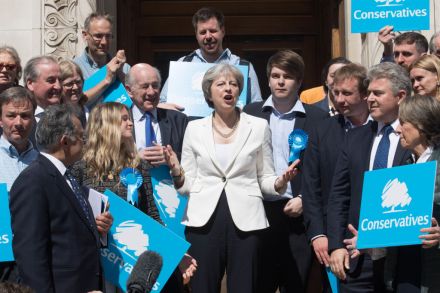
I live in Wandsworth. It’s nice. That’s not a political comment, just an observation on the borough. OK, it’s not edgy or cool or even wildly imaginative, but neither am I. It is also the sort of place the Tories should win at a canter. There’s a reason it’s called a flagship council, after all. It’s still Conservative today and Tories are celebrating that: Theresa May has been in the borough lauding “success” and noting that Labour threw a lot of resources at Wandsworth and appeared to believe that it really might turn the borough red. Of course, a win’s a win and nothing else really matters, but I can’t help thinking May might have found a better place to celebrate the absence of Tory disaster in the local election stalemate.

Why are some MPs trying to shut down the transgender debate?

Even if you don’t know who Stephen Doughty MP is, if you’re vaguely familiar with the history of New Labour, you’ll know his story: Oxford, a job for a senior Labour politician and a brief spell working in charities. Then selection for a safe seat in his early 30s, thanks to a combination of talent and friends in the right places. Now 38 and having resigned from Jeremy Corbyn’s front bench over, well, Jeremy Corbyn, Doughty sits on the Home Affairs Committee, which, among other things, is inquiring into hate crime, and its causes. To that end, the committee last week took evidence from a bunch of newspaper editors about the way their papers covered groups including British Muslims and transgender people.

If Mumsnet can stand up for free speech, why can’t MPs?

OK, I admit I’m a bit of a Mumsnet groupie, but this needs to be said: Justine Roberts is great. Roberts is the founder of Mumsnet who has this week come out fighting for free speech and sensible political discussion, both of which are at risk in the debate about gender laws. Why Mumsnet? Because a website previously best known for chat about childcare, biscuits and something called a penis beaker has developed an important role in an important political debate.

Jacob Rees-Mogg, radical feminist?

OK the headline isn’t serious, but it got your attention. It also highlights a serious point about the politics of transgender rights which might have been missed over the Easter weekend. The Mail on Sunday this week carried an interview with Jacob Rees-Mogg. The paper didn’t make much of it, but it contained quite an important line: He is uneasy about some aspects of the transgender rights debate. ‘If you have people who have no intention of changing sex but think it would be fun to go into the women’s changing room, we cannot ignore that.’ In other words, JRM is worried about self-identification, which the Government is – nominally – committed to exploring in a consultation.

Fear and loathing grips the gender debate

Since I started writing about issues of sex and gender here a few weeks ago, I have made all sorts of new acquaintances; a lot of people are interested in this topic, it seems. Many of the people I’ve been in touch with are women who worry about the direction of politics, policy and even popular culture when it comes to gender and sex. And many of them are frightened. Frightened of what happens if the law is changed to let people born male become legally female simply on the strength of their own declaration. Frightened that the word “woman” will become meaningless and allow the legal rights and protections currently granted to women to be eroded and erased. Frightened to meet to discuss these concerns. Frightened even to speak about them.

May is finally embracing Osborne’s agenda

Here are the two words that matter most in today’s Spring Statement: “balanced approach”. Those words appear five times in the official text of Phillip Hammond’s speech, and I suspect we’ll hear them again through the course of this year and beyond. Here they are in context: “We will continue to deliver a balanced approach. Balancing debt reduction against the need for investment in Britain’s future. Support to hard-working families through lower taxes. And our commitment to our public services.

The violent misogyny of the gender debate

Journalists and politicians talk a lot about freedom of speech, and rightly so, because the ability to express thoughts and opinions without fear or restraint is the foundation of democracy. We must be free to question, free to doubt, or we are not free at all. But for journalists and politicians, 'freedom of speech' can feel a bit of an abstract concept, a debating point not a matter of personal safety. We talk about curbs on free speech as things that make it harder for us to do what we do – write and talk. We rarely think about them in terms of physical fear. So a couple of weeks ago, when I wrote here about the way fear is chilling the debate about Britain’s laws on sex and gender, I really meant the fear of reputational damage.

Does Seumas Milne hold Brexit’s fate in his hands?

Could Britain remain in the Customs Union after Brexit? That is the question of the moment, the issue that currently troubles a lot of people in politics and government. It raises another question: who will decide whether we do indeed remain in the Customs Union? Here’s an interesting answer being given, in whispers, around Westminster and Whitehall: Seumas Milne. The theory goes like this: the Tories are split on the CU, so Labour’s position on it will be decisive. If Jeremy Corbyn brings Labour in behind the pro-CU Tories (and the SNP) then there is a comfortable majority for staying in, no matter what either Theresa May, or the DUP might have to say about it. Hence there is a huge interest in Labour’s position, in Brussels and Whitehall and elsewhere.

Jeremy Corbyn has a new enemy: Mumsnet

I have learned a lot since writing about gender laws here last week. I’ve learned that if you ever want to flood your Twitter timeline with people arguing about something, writing an article about gender laws is a good way to do it. I’ve learned that some people do indeed get very angry about this stuff, though not always the people you’d expect. The prickliest communication I had wasn’t from a Trans-Rights Activist or a Radical Feminist. It was from a parliamentarian. And overall, I’ve had nothing like the venom I’ve seen directed at other hacks who’ve written about this in similar ways; for some reason or another, people are less horrible to me about this than they are to Janice Turner and Helen Lewis.

Jeremy Corbyn has a new enemy: Mumsnet | 12 February 2018

I have learned a lot since writing about gender laws here last week. I’ve learned that if you ever want to flood your Twitter timeline with people arguing about something, writing an article about gender laws is a good way to do it. I’ve learned that some people do indeed get very angry about this stuff, though not always the people you’d expect. The prickliest communication I had wasn’t from a Trans-Rights Activist or a Radical Feminist. It was from a parliamentarian. And overall, I’ve had nothing like the venom I’ve seen directed at other hacks who’ve written about this in similar ways; for some reason or another, people are less horrible to me about this than they are to Janice Turner and Helen Lewis.

Can we have an honest debate about gender?

This article is about gender and the law. When I asked several friends, politicians and journalists, about writing it, they all said the same: don’t. It will go badly for you. And that is why I’m writing this. In fact, that’s what I’m writing about: fear. The fear that persuades some people they can’t say what they think about something, or even ask questions about it. Fear that prevents proper discussion of public policy and the public interest. Fear that chills debate. I’ve been a journalist for 20 years. I belong to no party and I have no allegiances or affiliations. I don’t have an agenda or an axe to grind.

Theresa May is safe, at least for now

This comes perilously close to making a prediction about politics, so I’ll probably regret it. Never mind. Here goes. There’s some talk at Westminster about a leadership challenge to Theresa May. Harry Cole of the Sun, who knows his stuff, reports that Graham Brady of the 1922 Committee, could be close to the critical total of 48 letters from MPs. Joe Murphy of the Evening Standard, a Lobby reporter with few, if any, peers, says he’s heard of two more letters going in this weekend. Joe also reports a Tory plotter saying that May’s local elections are the 'maximum danger point' for Mrs May. And on that basis, I make the following observation: Mrs May is safe, for now.

In defence of Cathy Newman

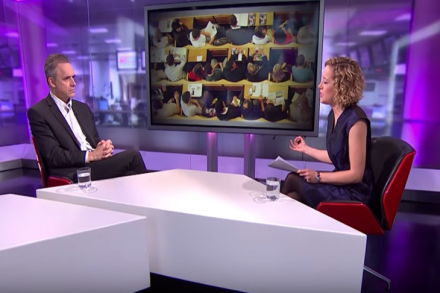
A woman and a man had a conversation. Other people watched and listened. The woman asked the man some questions. The man answered them. Some people liked his answers. Some people didn’t. Some people liked the woman’s questions. Some people didn’t. So some of them called her a bitch and a whore and talked about her dying and said they knew where she lived. And some other stuff too that wasn’t quite as nice as that.  Then the people the woman worked for got a bit worried, so they asked some other people to make sure the woman was safe, because, well, do I really have to explain why people take threats of violence against women seriously?

In praise of Michael Gove and his reusable cup

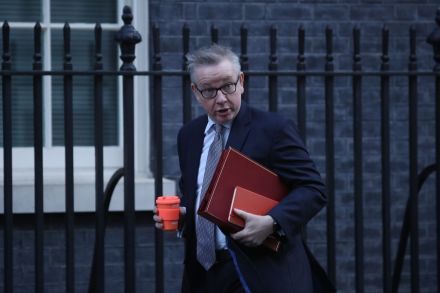
I’m drinking coffee as a write this. That’s not unusual. I drink a lot of coffee, much of it bought from the Pret a Manger that is almost dangerously close to my office in Westminster. (I judge my days by how many meals I eat from that Pret: often two and sometimes three. My life is awesome.) What is unusual is that the coffee isn’t in a paper cup. It’s in a mug, an ordinary ceramic mug, which I put in my pocket and took to Pret. I handed it over to be filled up and instead of paying the 99p Pret normally asks for a filter coffee (tip for fans of what a dear colleague used to call 'ghetto latte': ask for hot milk) I was charged 49p. Then I walked back to my office with my mug. Why am I bothering you with the mundane details of think-tank life?

Remainers must stop sneering at Brexit stamps and blue passports

First blue passports. Now Brexit stamps. For some, these belong in the same file as the Royal Yacht Britannia and Big Ben’s bongs. See also: filament lightbulbs and fruit and veg sold in pounds and ounces. For some (repeat: some) Remain-voting politicians and observers, this stuff is ridiculous, old-fashioned nonsense, an attempt to drag Britain back to some imagined 1950s idyll and proof to their suspicions that Leavers are old, weird and stupid. Just in case you need an illustration of this, dip into online 'debate' about the Sun’s Brexit stamps campaign. Now, I should declare an interest: I voted Remain and still can’t see any of the possible outcomes of Brexit that is better than those that faced us if we’d stayed.

Damian Green’s departure won’t end, or even harm, Theresa May

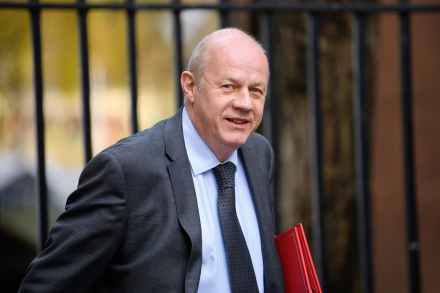
Third Cabinet departure in as many months. Loss of close friend and ally. Scandal at the top of government. Cue questions about Theresa’s future. Has she been 'rocked' by the 'sensational' exit of Damian Green? Is this, at last, the beginning of the end for her? I’m sure some enthusiastic members of my old trade will do their best to write this up as a mortal threat to Mrs May. They may talk about a shift in the balance of power in Cabinet. Or maybe a PM ever more isolated and friendless. Actually, the boring truth is that Damian Green’s departure won’t end Theresa May. It probably won’t even harm her. Start with the personal stuff. Yes, they’ve known each other for ages. But close? Not so much.

Angry Leavers must accept that ‘hard’ Brexit died on election night

Some Brexiteers are angry. This is not news. This has been true since about 20 minutes after the referendum result was declared. There are some Leavers who have been looking, since 24 June last year, for a new grievance, fresh evidence they are being betrayed and denied, generally by some shadowy group they describe as 'the establishment' or 'the elite'. (Please note that I say 'some' Leavers, not all. More people in politics and journalism should distinguish between members of a group and the whole group). Some of that anger is understandable. For years and decades, anyone who espoused leaving the EU was ignored and marginalised and called a crackpot. I’d be angry too if someone told me my views were illegitimate or mad.

Here’s how Theresa May can show she is still serious about social mobility

As someone who cares about – and has experienced – social mobility, I’m sad to see Alan Milburn, Gillian Shephard and their colleagues leave the Social Mobility Commission (SMC), and I hope Theresa May is serious about finding the best possible 'new blood' for the commission. I have a few suggestions for who should try to fill Alan’s shoes (Sir Terry Leahy would be a good start), though obviously ministers will have to work hard to assure any new commissioners that the 'bandwidth' needed to make Britain more socially mobile will actually be available in a Brexit-fixated Whitehall machine.

Come back David Cameron

We don’t hear much from David Cameron these days. He’s generally too busy. He fills his time in many ways: writing a book; making bundles of cash; playing tennis; not taking the blame for Brexit. But he’s given an interview to the Financial Times about Alzheimer’s disease and the search for a cure. It’s worth a read, and not just because it’s an important subject. It’s also a reminder of what was lost when Cameron fled Parliament last summer (I know - it seems much longer). To my mind, it is both shameful and a shame that Cameron has left the Commons, and did it in such a manner.

Lurking in the Budget is a problem much bigger and badder than Brexit

My Budget reaction is mostly: Meh. By that, I mean this won’t really change the weather, though it might just gee up some despondent Tories, who are cheered by the Stamp Duty cut regardless of what the OBR and others have to say about it (in short, it’ll push up prices and only really help people who were already close to buying; it does nothing for the people for whom home-ownership really is a distant dream.) Perhaps the best encapsulation of this was offered to me recently by a ministerial friend who is not, let us say, ordinarily upbeat about the May Government and its prospects.  This afternoon, this governmental gloomster was rather chipper, assuring me: 'This is good stuff. Real people will like it, whatever miserable geeks like you say.