James Kirkup

James Kirkup

James Kirkup is a partner at Apella Advisors and a senior fellow at the Social Market Foundation.

Who will challenge the Sunak succession?

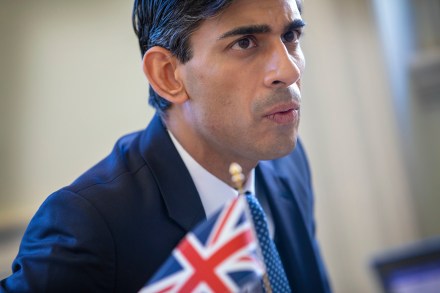
At times such as these, politicians like to say that 'this is not the time for politics'. Which is not true, of course, because politics never stops, and especially not the politics of personal advancement. Just as sharks must always swim forwards to stay alive, politicians must always be thinking about the next thing, the next job, and the next leader. Here is a question that arises from the current state of politics, the government’s handling of the pandemic, and the general condition of the nation: who will face Rishi Sunak in the next Conservative leadership contest? I have no idea when that contest will come and I make absolutely no guess here. Boris Johnson could vacate the leadership and No. 10 this year or he could rule for a decade.

These kids just got screwed by lockdown – and no one bothered to tell them

Here are some numbers that too many people who work in and around politics don’t know. In any given year, around 700,000 young people turn 18 and leave school. A little under half of them go on to higher education (HE). The other half, around 360,000, do something else. Roughly half of these non-HE school leavers would normally get a job. Another 60,000 or so would become apprentices. And quite a lot – more than 100,000 – would go down in the stats as ‘not sustained’ or ‘activity not captured’ meaning that whatever they did, it didn’t last, or that they have dropped out of the view of educational statisticians. In other words, life has not gone well for them.

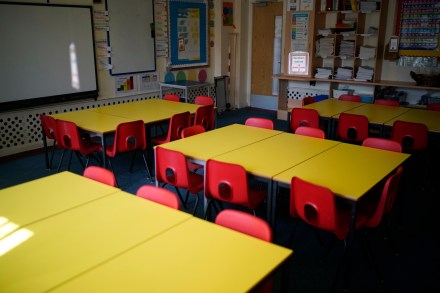
Keeping schools closed until September would hammer poor kids

Schools should stay closed until September, according to a big teaching union: In view of the continued and pressing public health challenges and the considerable task that will be required to ensure that every school is ready to admit increased numbers of children and adults into safe learning and working environments, the NASUWT urges ministers to act to end speculation on the reopening of schools beyond the current restrictions prior to September 2020. That’s the latest from Patrick Roach, head of the NASUWT. This is a hardening of the line from teaching unions, and one that I think has the potential to cause significant tensions with the government.

The Commons speech that deserves to be heard

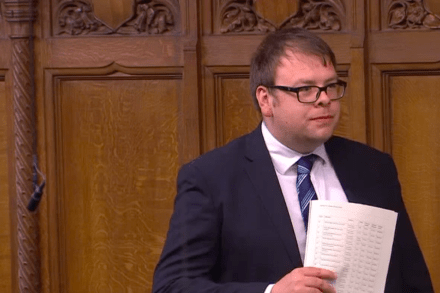
Every now and then, the House of Commons sees one of those speeches, a moment when an MP, generally a backbencher, speaks with power and clarity and honesty. Speeches that deserve to be heard far beyond parliament, partly because of what they say and partly because of how it’s said. Speeches that give politics a good name. Often these speeches are from relatively new MPs, people who have not yet established their name or reputation beyond the narrow confines of Westminster. A few years ago, Johnny Mercer, then a new member, made one of those speeches when he spoke about his combat experience in Afghanistan. More recently, Rosie Duffield last year brought the Commons to a standstill speaking about her experience of domestic abuse.

In defence of political journalists

It is open season on the Lobby. Social media is full of condemnation for political correspondents over the questions they ask at the daily coronavirus briefing. Polling, private and public, shows that UK trust in media reporting has suffered badly in this crisis. Ministers and officials privately rage about the quality of reporting on much of the coronavirus story. Downing Street has decided to surf that wave of irritation by asking members of the public to submit questions too. That’s a smart move, but one that will come at further cost to the standing of the Lobby in particular. I held a Lobby pass between 2001 and 2017, though I stopped being a regular reporter based in the Palace of Westminster in 2014. The Lobby drove me mad, possibly, for a few months, literally.

Boris is right to talk about the coronavirus as a mugger

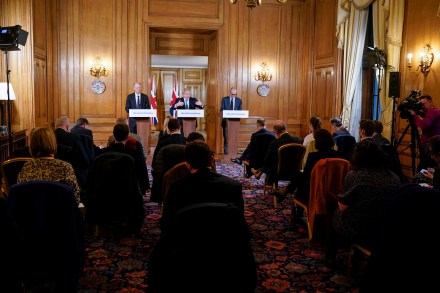
Is the SARS-CoV-2 virus comparable to a man who accosts you in the street and tries to steal your phone and wallet? Boris Johnson used the image of virus-as-mugger in his Downing Street statement today: If this virus were a physical assailant, an unexpected and invisible mugger, which I can tell you from personal experience it is, then this is the moment when we have begun together to wrestle it to the floor.And so it follows that this is the moment of opportunity. This is the moment when we can press home our advantage.It is also the moment of maximum risk because I know there will be many people looking now at our apparent success and beginning to wonder whether now is the time to go easy on those social distancing measures.

Why Liz Truss’s trans promise matters

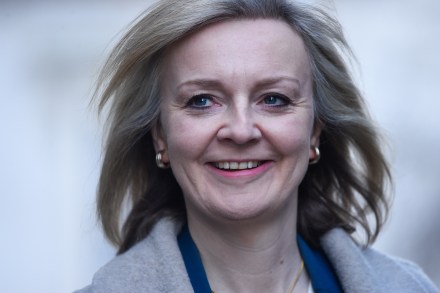
It seems odd to be writing about the transgender debate amid the coronavirus crisis, but in some ways, it’s important that normal life, where possible, goes on amid that crisis. That is one good reason for parliament returning to business this week. That business includes Commons select committee hearings on things other than coronavirus. Today, Liz Truss was at the Women and Equalities Select Committee in her role as minister for equalities, overseeing the Government Equalities Office. That brief includes the trans issue and the – postponed, possibly forever – reform of the Gender Recognition Act. Truss’s opening remarks to the committee were interesting and worthy of attention because she chose to enter the most contentious aspect of this debate: children.

The unspoken truth about home school: poorer children will suffer

This week, school starts again, but not in anything like the normal way. Were it not for Covid-19, millions of children would wake tomorrow to the familiar routine: a hurried breakfast, perhaps a panicked search for missing shoes or a stray jumper, then a dash to avoid being late. Instead, what awaits young minds that would otherwise be trying to learn? In this strange new world, where each family and household gamely tries to find its own way from the start of the day to the end, there are probably only two certainties around education. First, the BBC, which tomorrow unveils the biggest slate of educational programmes in its history. Second, the jokes, the social media jokes from parents juggling work and the improvement of the next generation.

Shame on those who mock Matt Hancock’s ‘care’ badge

Matt Hancock’s badge for carers is a perfectly good idea. The mockery of it is in many cases shallow, ill-informed, revealing and hypocritical. You don’t need me to describe the badge or the mockery. Anyone with an internet connection and a glancing familiarity with what passes for 'news' these days is aware that the Health – and Social Care – Secretary announced that the Government is now backing a scheme that encourages social care staff to wear a green badge saying CARE. Part of the aim is to give care workers the same sort of recognition, esteem and access to services – reserved shopping hours, for instance – as NHS workers. This is reasonable, necessary and overdue.

There is nothing ‘tough’ about beating coronavirus

'Boris is a very tough, very resilient person. … I’m sure he’ll come through this.' That was David Cameron on the Prime Minister. 'I'm confident that he'll pull through because if theres one thing I know, he's a fighter.' That was Dominic Raab. I’m quoting those two simply because they’re the most prominent examples, but there are lots of other people who have spoken of Boris Johnson in similar terms in the last day or so. Those words are well-meant. Both men sincerely wish Johnson the very best, and are speaking as a sign of support and in Cameron’s case, real personal affection. Likewise all the others who have talked about Johnson as 'tough', 'strong', a 'fighter', the sort of person whose personal character will help him 'beat' coronavirus.

Matt Hancock and Rishi Sunak show why we need professional politicians

Coronavirus commentary often takes a familiar form, which can easily be parodied thus: 'Why the Coronavirus crisis justifies the thing I was arguing for before the crisis.' I mention this because this article could, I suppose, be written off in that way. It is a column of praise for technocratic, wonkish politician-managers written by someone who runs a centrist think-tank. I would say this, wouldn’t I? Well, perhaps, but I will say it anyway: the coronavirus crisis is reminding us that we should, once again, value politicians whose primary skill is understanding, gripping and managing complicated stuff and whose inclination is to put that management ahead of appealing to the emotions of voters. By way of evidence, I offer you Matt Hancock and Rishi Sunak.

Labour’s bizarre decision to bar the founder of Counting Dead Women

It’s almost reassuring to learn that even amid the coronavirus horror, some things don’t change. Even though the country is at a standstill, the Labour party’s civil war over sex and transgender issues goes on. Earlier this week, the Labour party – you remember, the party of fairness and kindness and compassion and equality – decided that it has no place for a woman who has worked tirelessly to protect women from abuse and to remind the world about murdered women who are so often ignored. Let’s start with murdered women. There are quite a lot of them: 241 women were killed in England and Wales last year. Most of them are killed by men – men they know.

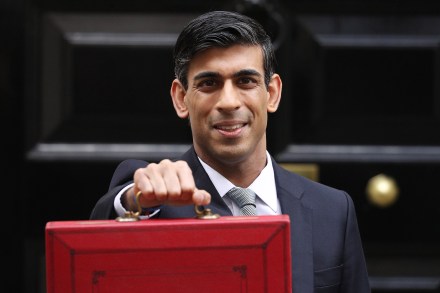
The Sunak supremacy

In some ways, it’s easy and even important to keep Rishi Sunak’s performance in announcing his coronavirus job retention scheme in perspective. It should, after all, be pretty easy to be popular in politics when you are offering to spend literally limitless amounts of money protecting people from economic hardship. A cynic would also say that it’s relatively easy to look grave and statesmanlike when you’re standing next to a prime minister who can still look more inclined to play Prince Hal than Henry V. But even taking those things into account, I still consider Sunak’s performance one of the most impressive I’ve seen from a British politician in more than 20 years in and around Westminster.

The worst thing about having coronavirus

Be honest: when you first heard about self isolation, did you think, just for a second: 'that sounds good'? Many of us made the same mordant jokes about how we’d watch TV, catch up on reading books, generally enjoy some quiet and peace away from the constant noise of normal life. I certainly made those jokes, usually about reading. I always wish I could read more, but the constant churn of working, writing, life, everything just seems to absorb my mental bandwidth to the point where there are some days when I manage three pages before falling asleep. I’ve been stuck in the foothills of Dan Jackson’s wonderful The Northumbrians since it arrived as a birthday present in February. So I was one of those people who made those jokes.

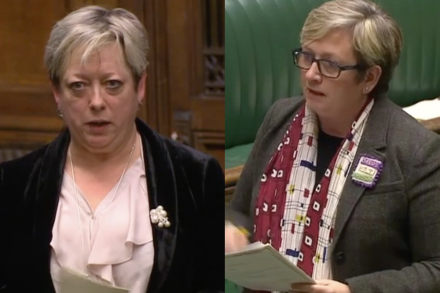
In praise of the MPs who spoke out in the trans debate

There is an old Westminster joke that says if you want to keep something secret, say it on the floor of the House of Commons. Day-to-day parliamentary business doesn’t often get the attention of national media outlets and thus the wider country. This is understandable but also a pity because we often end up missing our elected representatives doing the things we expect of them: debating important things, discussing subjects that concern voters, even sometimes showing thoughtful leadership. I’ve spent most of my career around MPs. Maybe I’ve been captured, but I often think they deserve a bit more respect than they get. Most work very hard (and much harder than when I started my first job in the Commons in 1994) and take their jobs very seriously.

Could coronavirus change British politics?

Even if the Covid-19 coronavirus does not become a mass killer on the scale of, say, the Spanish Flu in 1918, the mere possibility of such severity still carries huge weight. Just the potential for a disastrous pandemic demands a response whose seriousness and nature will have political and social implications. Even in this first week of the full UK response, some of those implications are clearly visible. And some of the inferences and lessons that can be drawn from this week are, to my mind, quite positive - small points of light in a dark and threatening sky, if you like. 1.

Boris Johnson’s submarine strategy is perfectly sensible

There is chatter in the Westminster village about Boris Johnson’s low-profile. Why isn’t he visiting flooded towns? Why isn’t he fronting efforts to reassure a country worried about pandemic coronavirus? Here, I think it is worth quoting at length a speech given before becoming prime minister: ‘If we win the election we will get our heads down and get on with implementing the big changes I’ve spoken about today. You will not see endless relaunches, initiatives, summits – politics and government as some demented branch of the entertainment industry. You will see a government that understands that there are times it needs to shut up, leave people alone and get on with the job it was elected to do.

Jake Berry is the real hero of the reshuffle

OK there are bigger stories in the reshuffle, but the tale of Jake Berry is an important one. He quit to spend more time with his family – and really meant that. Berry was minister for the northern powerhouse. He is also one of Boris Johnson’s oldest allies in the Commons. These days (almost) everyone is the PM’s friend, but not long ago there were only two: Berry and Ben Wallace. So when Berry says he was asked to stay in government, believe him. And why is he not a minister today? Because he was offered a job that would have taken him abroad a lot when his children are very young; thanks to the arrival of a new baby this month, he and his wife now have three children under three. So faced with a choice of career and kids, he chose the kids.

The minister who politely refused to play the trans language game

This is an article about the power of language in the transgender debate, about how the trans agenda has been advanced by the skilful capture of language, and about a government minister who has rejected that capture in favour of facts. It’s a bit complicated, so bear with me while I try to explain a slightly technical legal thing. It’s also based on a debate that happened in Parliament last week, but which I’ve only just had time to read in full. Sorry. Anyway, this is about what happens when a person who is married changes their gender in law. Let’s say that person - Alex - was born male, grew to manhood and married a woman, Sue. Let’s say that in his 50s, Alex took steps to change his legal gender to be recognised as a woman.

In defence of Laura Pidcock

Oh, Laura Pidcock. The former Labour MP for North West Durham, former shadow cabinet member, and former leadership hope of the Corbynite left may be gone from parliament but she has not left the political stage. Pidcock, it seems to fair to say, is on the left of politics. A proud socialist who said she could never be friends with a Tory, she was seen by some as the future of the left. Even in defeat, she has been feted: the Canary recently ran a column saying she 'captures the spirit left-wingers need to have' after the election loss. I rehearse Pidcock’s left-wing credentials here because they’re important to understand what follows. Pidcock has been writing about the election defeat and its lessons for the left in Tribune magazine.