James Jeffrey

James Jeffrey is an editor for the Catholic Herald, a writer and a Camino guide.

Spare a thought for the Russian squaddie

From our UK edition

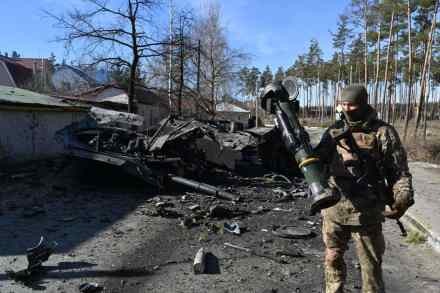
Britain's greatest war poet Siegfried Sassoon was well aware of the idiocy of those who cheered the deaths of soldiers. 'O German mother dreaming by the fire/ While you are knitting socks to send your son/ His face is trodden deeper in the mud,' he wrote in his World War I poem Glory of Women. His verse dealt with the hypocrisy and callousness of civilians who failed to recognise the cruel reality of war. We appear to have barely learnt a thing in relation to the war in Ukraine, as we celebrate all too readily the deaths of those on the 'wrong side'. On Twitter now – and throughout the media – there is a thirst for videos of Russian tanks and armoured fighting vehicles (AFVs) being blown up.

Greece’s beauty masks untold poverty

From our UK edition

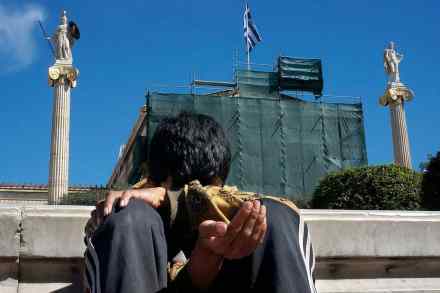
I’ve long been drawn to sketchiness. In the Ethiopian capital Addis Ababa, I always preferred the dodgy and slightly dangerous old-town Piazza area to the trendy and sanitised Bole area next to the international airport. But even by my sketchy-embracing standards, it was hard not to find the grim state of Athens deflating. After all, this is the cradle of Western civilization. Now it appears to be the graffiti capital of the Western world. The luridly coloured scrawls are everywhere; Greek grannies air carpets over balconies marred by multi-coloured tags and swirls.

Blowing my mind in the Electric Forest

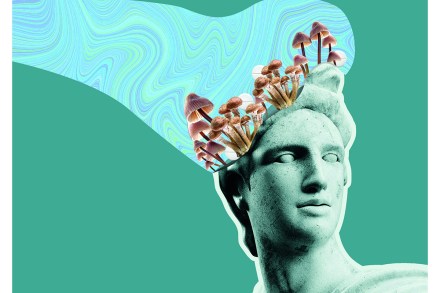
Rothbury, Michigan exists in a similarly strange duality to the small towns of Woodstock in New York and Glastonbury in Somerset on the other side of the Atlantic. It is a village of little consequence once you separate it from the famous music festival associated with it. But when the electronic dance music (EDM) extravaganza Electric Forest happens, Rothbury — 432 inhabitants, according to the 2010 Census — gets its annual day in the sun. The hatchet-faced Michigan state troopers, standing to mark the turnoff from the main road through the village toward the festival didn’t return our eager waves from the car. But the smoldering opprobrium of The Man was soon forgotten amid the fields and woodlands of the Double JJ Resort that braves hosting the festival.

electric

The Canary Islands are a Mecca for Europe’s lockdown escapees

From our UK edition

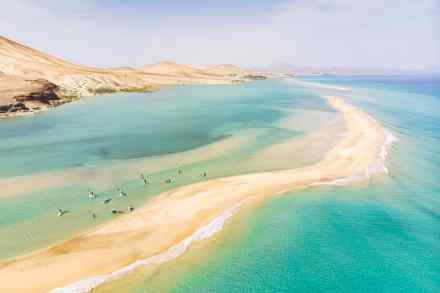
Those looking for ancient culture will find it in abundance on Fuerteventura – a canary island known more for its beaches than its heritage. I’d ended up in a hostel run by an Italian couple deep in the island's outback. Looming over the hostel was the holy mountain of Tindaya, on whose summit indigenous islanders once left their dead. It also has the most important set of podomorph engravings in the world — 300 pairs of foot-shaped engravings, the left and right soles with attendant digits flush together, carved into the rock. These simple and rather touching imprints struck a particular chord with me after my extended Camino across the Iberian Peninsula following the steps of previous pilgrims.

Staten my preference

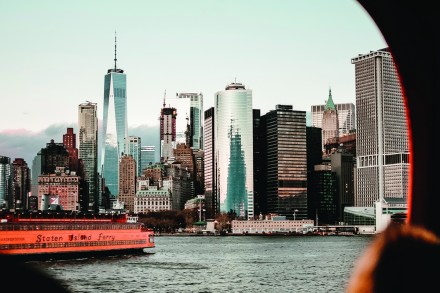
The Margarita, the divey bar facing an equally divey pizza joint in the Staten Island Ferry Terminal, is a special place. For one, it’s where a middle-aged African-American lesbian bought me a drink — the only instance I can recall from decades of drinking that a woman has offered to buy me a drink before I got her one. Given her preference for fuller Latino ladies over lanky white men — which she emphasized through photos on her phone — my new acquaintance clearly didn’t have an agenda behind that drink for me. We just got talking and she did that New Yorker thing of embracing companionship and the moment.

staten

Why I’ve embraced Lanzarote’s sci-fi vibe

From our UK edition

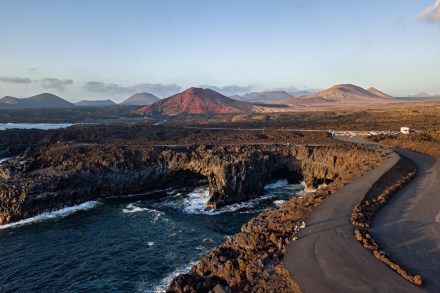
I never realised Lanzarote was such a weird place. During an extended Camino de Santiago pilgrimage to escape UK lockdowns, various pilgrims I met urged me to visit the splendours of the Canary Islands as a natural sequel to the splendours of the Iberian Peninsula we traversed. But Lanzarote was rarely mentioned. As soon as you land at the north easternmost of the eight main Canary Islands you quickly appreciate there's much more to it than cheap bars, piña coladas and the often-derided Brits Abroad vibe. Looming over the airport—whose runway must be a contender for one of the world’s greatest, though more of that later—is a landscape of volcanic mountains that looks like a cross between the surface of the Moon and Mars.

Will Ethiopia’s capital fall?

From our UK edition

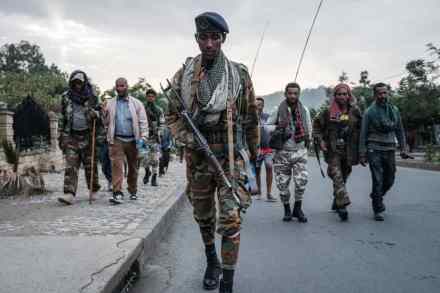
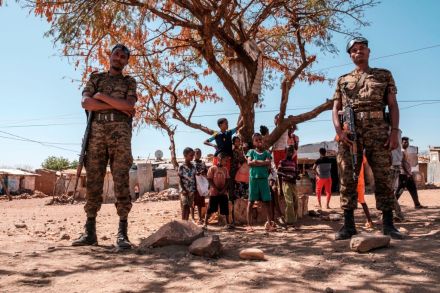
There have been stunning developments recently in Ethiopia’s grinding conflict between the national government and Tigrayan rebels in the north. Last November, the news was all about the government’s invasion of the Tigray region by federal forces. When the government claimed victory after capturing the regional capital Mekelle, Tigray was firmly on the ropes and the leadership of the Tigray People’s Liberation Front (TPLF) were being arrested or fleeing into the mountains. By June this year, Tigrayan forces regained control of the region. In doing so the rebels displayed their tenacious streak. But few envisaged what’s happening now. Ethiopia’s cabinet has now declared a national state of emergency.

Tough times for tenacious Tigray

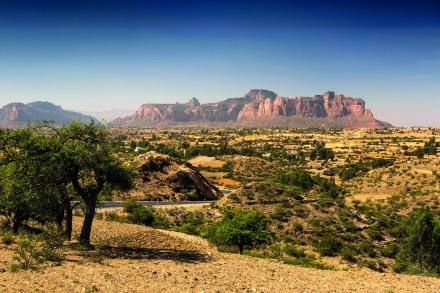
Tigray, Ethiopia’s most northerly region, makes its presence felt all the way down in Addis Ababa, about 430 miles to the south. Even before the current fighting, the prettiest beggars in the rambunctious and strangely endearing Ethiopian capital tended to be the Tigrayan single mothers. They made that daunting journey to escape a rural existence that struck me, during my trips around Tigray, as not dissimilar to European life during the Middle Ages. When I lived in Ethiopia, I reported from all over Tigray on humanitarian projects, tensions with Eritrea and the influx of Eritrean refugees, even on a brave British expat who was trying to establish a milk farm.

tigray

The 9/11 anniversary marks a painful moment for squaddies

From our UK edition

The sweet salvation of the summer recess over, we returned to Sandhurst for our final term of officer training. It was 11 September, 2001 – a day that started with a hike in the sunshine and which came to define my time in the British Army. The events of 9/11 would lead to my own deployment in Afghanistan and Iraq, and the loss of dear friends and comrades. Of course, on that September morning none of us knew how events 3,000 miles away – and the political decisions taken in the aftermath of those terrible attacks – would have such a momentous impact on our lives. After the buses dropped us off, the hike started jollily.

Down Santiago way

Hiking toward the Spanish border on my second day after setting off from Bayonne, I set down my backpack on a grassy patch beside a beach. It was bloody hot — August in the southwest of France — and the sight of beachgoers taking a shower had a cooling appeal. I stripped to my underwear and enjoyed the bracing shower burst. Then I looked down. Water was cascading over what looked like leprosy, breaking out over the right side of my chest. Feeling self-conscious, I got dressed and plodded on. Twenty-five miles later, at the sparkling city of San Sebastián, the pain proved too much. I lifted my shirt to two Portuguese pharmacists — and they pointed me toward the nearest hospital. I had herpes zoster, commonly known as shingles.

Camino

Does the British government care about veterans’ suicides?

From our UK edition

Ex-veterans minister Johnny Mercer appears to have launched a one-man frontal assault on the UK government. Rarely a day goes by when he isn’t voraciously criticising their shoddy treatment of veterans. Speaking as a veteran and ex-British Army officer like Mercer, I can’t say I blame him. One tour of Afghanistan was enough to break me. Mercer did three. Mercer’s most recent broadside came after the news that the eleventh person from 2 Rifles, an infantry regiment that served in Iraq and Afghanistan, had killed himself. ‘That veterans who served in the bloodiest conflict this country has seen for 50 years are still taking their lives in 2021 because they cannot find help is a shocking stain on our nation,’ Mercer said after Andy Francis’ death.

Portugal’s secret sanctuaries: why it pays to roam far

From our UK edition

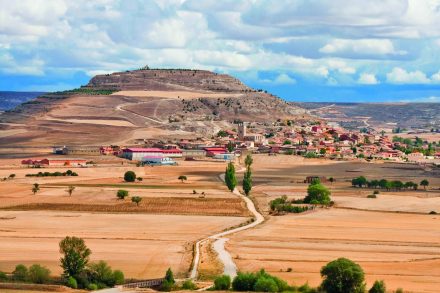
My trek along the entire length of Portugal began on a small boat with Captain Juan standing beside the outboard. Accompanied by five other rucksack-laden pilgrims who I met during an extended Camino de Santiago pilgrimage to escape UK lockdowns, we were crossing the Minho River that serves as the border between Spain and Portugal’s northern edge. It was all rather dramatic and felt a bit like a Special Forces’ insertion, additional frisson coming from uncertainty over whether the border was actually open. It didn’t seem the issue was much on the mind of Captain Juan either way. The following 560-plus kilometres of hiking due south brought ancient towers, castles, cathedrals and defunct windmills straight out of Miguel de Cervantes’ Don Quixote.

The Ethiopian question

Tigray is the Donald Trump of Ethiopian politics. If you don’t criticize Ethiopia’s most northern region or its main party, the Tigray People’s Liberation Front (TPLF), a lot of people get mighty riled mighty quick — especially among the Ethiopian diaspora in the US. From the end of 2015 until Prime Minister Abiy Ahmed emerged in 2018 to break the TPLF’s decades-long grip, Ethiopia was rocked by protests and ethnic clashes that displaced millions and left hundreds if not thousands dead. I spent four years trying to report objectively on these upheavals. The abuse I got on social media was impressively creative in its use of metaphors and similes. Extend that Tigray-Trump parallel: just when Trump was losing his Teflon coat, so the TPLF seemed to be losing theirs.

ethiopia

My taste of lockdown freedom on the Camino pilgrimage

From our UK edition

A few of the hip young things sitting along the Lisbon quayside turned their heads my way as my walking sticks scraped along the pavement. I didn’t slow down, though, because I was self-conscious about how I looked. Hiking 2,000km along an extended Camino pilgrimage from the French-Spanish border through northern Spain then down through Portugal will do that to you. My beard had gone feral, my greying hair was out of control. The gaze of my eyes was increasingly unhinged; one friend cautioned similarities to King Lear. Nevertheless, I tried to hold my head high. Little do you know (I silently said to the quayside beauty pageant), but this apparent vagrant used to be an officer in one of Her Majesty’s finest cavalry regiments.

Pita Shack flashback

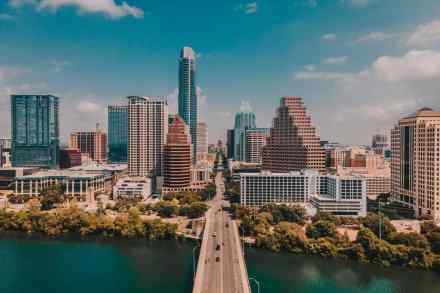
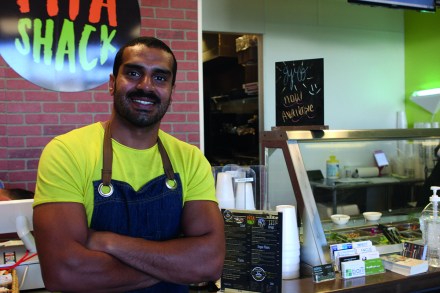
Friday afternoon in the Pita Shack diner in the northern suburbs of Austin, Texas and I was surrounded by Iraqis. There was even a picture of a sweet-looking Marsh Arab girl in her papyrus boat hanging on the wall. It was all unexpected but strangely familiar, stirring memories of Delta-30’s turret-scanning the junction of Red 11 in downtown Al Amarah back in 2004. During the first Gulf War in 1991, the Maysan province around Al Amarah was the site of local uprisings against Saddam Hussein. In retaliation he drained the region’s marshes to deprive the local Marsh Arabs of the waters on which their livelihoods and 6,000-year-old culture depended.

pita shack

The Kondo effect in politics

The decluttering crusade of home-organizing guru Marie Kondo has taken on a life of its own. Kondo’s effort to shame us into tidying up our drawers, closets and desk spaces began as a harmless inanity. But it’s now intruding nefariously into every realm of existence. First, we were told that folding our underwear would spark joy in our lives. Now, we face a proliferation of magazine articles advising us to declutter ourselves of ‘unnecessary’ or ‘toxic’ friends. Clearly, not all friendships are healthy. But these assessments appear driven by market forces: they focus on what you can gain from a friend in terms of efficiencies and profit. Where does it stop?

kondo

Texas or Hell

The first time I saw Texas, I was more than ready for it. I crossed the state line in the middle of a month-long, coast-to-coast road trip after a hellish tour in Afghanistan. ‘You can go to Hell, but I am going to Texas,’ said Davy Crockett. I think he had a point. Texas is better, though it’s nearly as hot come summertime. My wingman and I did our best to honor Hunter S. Thompson’s advice to embrace ‘madness in any direction, at any hour’. Well, of a sort. We were both still subject to the army’s random drug tests, plus it was hard to entirely forget the chivalrous officer code drilled into us at Sandhurst, the West Point of Britain.

texas

Addicted to Addis

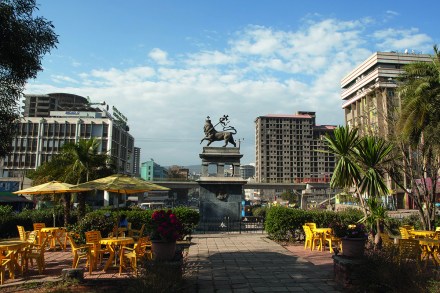
This article is in The Spectator’s March 2020 US edition. Subscribe here. In the Entoto hills high above Addis Ababa, the lights of incoming Ethiopian Airlines planes are evenly spaced in the night sky. Behind me in an abandoned restaurant, the DJ cranks it up and the dance floor goes nuts. EDM (Electronic Dance Music), a style popularized at American festivals and raves, has landed in Ethiopia. I’ve been a dance music devotee since college. But when I first visited Ethiopia in 2000, I lost my heart to a different scene: mesinko-playing troubadours who mask political satire in witty innuendo, the hypnotic melodies of Ethio-jazz bands and the traditional shoulder-shaking of iskista dancers.

addis ababa ethiopia

Six poems for Veterans Day

James Jeffrey served in the British Army for nine years, from his commissioning as a second lieutenant shortly after 9/11 to leaving as a captain in 2010. He served in Iraq in 2004 as a tank commander with the Queen’s Royal Lancers, providing armored support to the 1st Battalion, The Princess of Wales’s Royal Regiment, followed by another tour in 2006. He deployed to Afghanistan in 2009 with the headquarters of the Welsh Guards Battle Group on Operation Herrick 10, during which the regiment’s commanding officer, Lt. Col. Rupert Thorneloe, was killed by a Taliban IED and became the first commanding officer killed in action since the 1982 Falklands War. Jeffrey now works as a writer and a journalist. Read his Veterans Day essay on al-Amarah here.

veterans
iraq amarah veterans

Gunning it into al-Amarah

James Jeffrey served in the British Army for nine years, from his commissioning as a second lieutenant shortly after 9/11 to leaving as a captain in 2010. He served in Iraq in 2004 as a tank commander with the Queen’s Royal Lancers, providing armored support to the 1st Battalion, The Princess of Wales’s Royal Regiment, followed by another tour in 2006. He deployed to Afghanistan in 2009 with the headquarters of the Welsh Guards Battle Group on Operation Herrick 10, during which the regiment’s commanding officer, Lt. Col. Rupert Thorneloe, was killed by a Taliban IED and became the first commanding officer killed in action since the 1982 Falklands War. Jeffrey now works as a writer and a journalist. Read his Veterans Day poems here.