James Jeffrey

James Jeffrey is an editor for the Catholic Herald, a writer and a Camino guide.

What to pack for a walking holiday

From our UK edition

I know it’s a tad warmer than usual in southern Europe but let’s not lose our heads. That holiday in stunning Andalusia is still worth it. Admittedly, some mitigating measures are probably worth taking. With the passion of model railway enthusiasts, we’d discuss what contents should go in the optimal med kit Since I started taking groups on Caminos, I’ve become – or had to become – a bit of a med kit aficionado. There is always someone with a little niggle or sprain that needs addressing. I’ve also found it’s a great way of meeting people and reconnecting with medieval chivalry: fair maiden, I see your eyes are watering and your nose is red; might I have the honour of providing you with a Tesco hayfever tablet? (Never saw her again; true chivalry there.

The curious rhythm of life in Spain’s Santiago de Compostela

From our UK edition

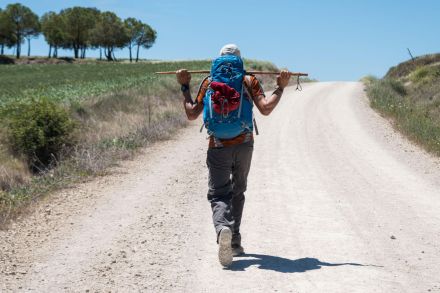
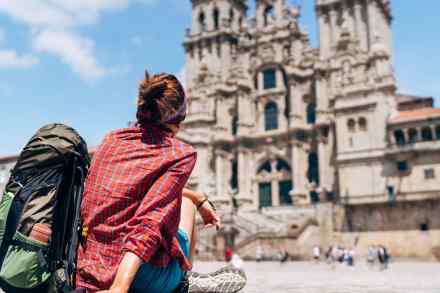
Surely no other city can claim to have so many backpacks and walking sticks on its narrow cobbled streets. In Spain’s Santiago de Compostela it always looks like there is a giant hiking convention going on. These aren’t your average ramblers, though. They are pilgrims, as the city marks the end of the famous Camino de Santiago pilgrimage. The Camino, or the Way of St James, is most associated with the 500-mile route from the base of the French Pyrenees westward though Pamplona, Burgos and Leon.

A dispatch from the olive oil capital of the world

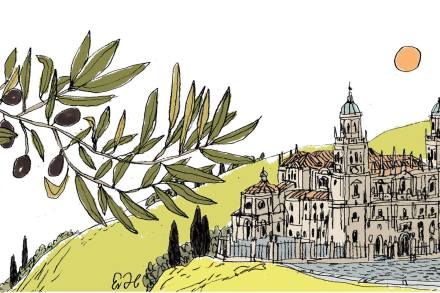
It was an extraordinary sight. For three days, and about seventy kilometers of hiking, there were just endless olive trees covering the fields, hills and mountains stretching to the horizon of the small Spanish province of Jaén. Tucked away in the southern region of Andalusia, this is the country’s powerhouse of olive-oil production. Many people assume Italy or Greece are the largest producers of olive oil. That’s a result of good branding and name recognition, a Jaén-based olive grower told me. After he pulled up alongside me in his dusty car, we walked through the endless olive groves as I was given a tutorial on olive oil production. Spain is the world’s top producer of olive oil.

olive oil

Are gamers becoming a national security risk?

From our UK edition

Once again gamers appear to be behind a dramatic leak of classified military intelligence. Documents originally emanating from the Pentagon appear to have been shared on the video game chat platform Discord by a 21-year-old air national guardsman – in an effort to win an esoteric argument involving the highly popular video game Minecraft Maps and the war in Ukraine. He has now been arrested as the prime suspect.   Many are describing this as the most serious breach of US security in a decade since the 2013 Wikileaks scandal. The leaked documents suggest that special forces personnel from western countries could be active in Ukraine — with the largest contingent coming from the UK.

I miss the Cold War

From our UK edition

Berliner Luft is a popular peppermint-flavoured shot downed in the city’s bars. It also means Berlin Air and is a colloquialism for the city’s spirit of unfettered freedom and rebellious abandon. Given what this city went through, reduced to rubble by the furious Russians at the end of world war two, and then rent in two for more than 40 years during the Cold War, it’s not surprising that after the Berlin Wall came down in 1989, the populace needed to let off steam.

The other side of flamenco

From our UK edition

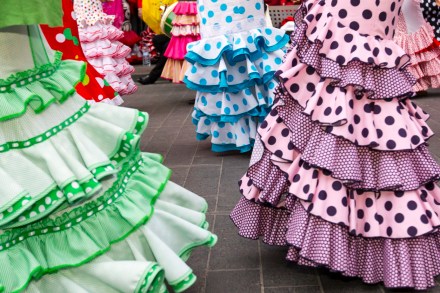
When you hear the word flamenco you probably think of a lady dancing in a polka-dot dress, stomping her feet, accompanied by guitars and singing. And in the fair capital of Andalucía, Seville, you would have no problem finding such a sight. All across the old town, around the cathedral and in the lee of its 12-century minaret turned cathedral bell-tower, glamorous flamenco dancers are busy at it, stirring up passion on the cobbled streets and in the city-centre tourist shows. There’s no denying such flamenco demonstrations will raise your pulse and the tourists, not surprisingly, love them.

There’s a sherry for everyone

On cold nights, a zesty margarita just isn’t going to cut it. You need a bolder tipple: a glass of sherry, the fortified wine favored by retired generals, members of the Diogenes Club and Ordinariate priests swotting up on Thomas Aquinas for the next Sunday sermon. It’s an appropriate drink with which to reflect on the complexity of life itself. You can go from the crispest blanco sherry, through a series of progressively richer flavors, to the most moreish dulce rum-colored sherry. When I passed through Jerez de la Frontera in southern Spain’s Andalucía region, every bar was jammed with great quantities and varieties of sherry. I had stumbled — literally, as I was hiking a hundred miles of the Camino from the coastal city of Cádiz to Seville — upon the Mecca of sherry.

The unique style of Seville

From our UK edition

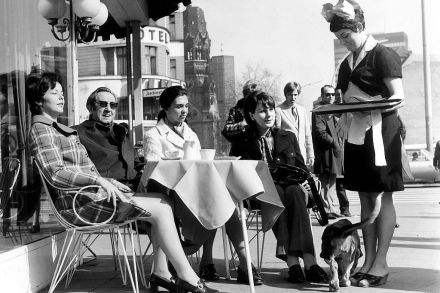
If you want to feel scruffy, head to Seville, the outrageously attractive capital city of southern Spain’s Andalucia region. It’s not just the abundant exquisite architecture – the city has one of the largest historic ‘old towns’ in Europe, with every bar, café and restaurant looking tiptop – but also the sartorial elegance that abounds among the local population, made even more striking by it coexisting in apparent easygoing harmony with the often plain awful turnout of us tourists and visitors. If Santiago de Compostela in north-western Spain is the city of rucksacks and walking sticks, then Seville – currently Google’s most searched-for flight-only destination – is the city of smart shirts.

Ukraine is lucky to have Britain’s Challenger 2 tanks

From our UK edition

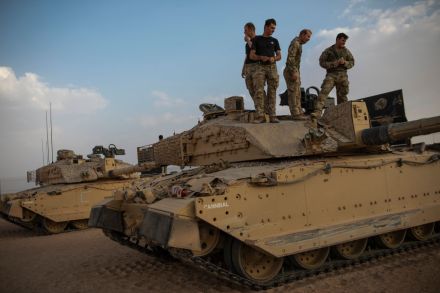
I see you stand like greyhounds in the slips, straining upon the start. So wrote William Shakespeare in Henry V. He could well have been writing about the British Army’s main battle tank, the mighty 62-tonne behemoth that is Challenger 2, which is now being sent to Ukraine.  The Challenger 2 is a weighty sort of greyhound. But ‘Chally’, as it was affectionately known by those of us crewing it, could really move. It had close to that ideal balance all tank designers are aiming for, providing protection, manoeuvrability and firepower (each of which deteriorates when you improve one of the others).

In defence of Harry’s Taliban comments

From our UK edition

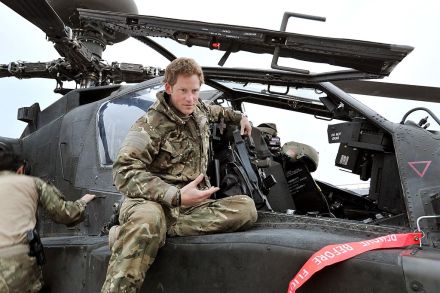
Let’s just simmer down about Prince Harry, at least when it comes to his comments about the Taliban. In his memoir Spare, released this week, the Prince writes that he killed 25 people in Afghanistan and thought of ‘Taliban fighters not as people but as chess pieces.’  This wasn’t the best choice of words. He shouldn’t have given a precise tally of the enemy dead – it goes against the unwritten and fragile code of the battlefield. And it fell short of ‘showing decency and respect for the lives you have taken,’ as former army officer and MP Adam Holloway has noted.

You’re never too old to stay in a youth hostel

From our UK edition

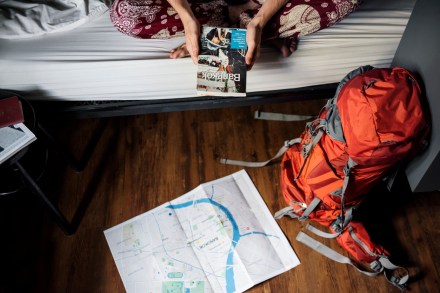
No disrespect to the hotel industry: staying in a hotel room, especially when there is someone nice with you, can be exciting and sexy. Staying in a hotel room on your own, though, can be exceedingly sad, boring and unsexy. Unfortunately, I’ve experienced more of the latter type of hotel stopover (a squalid hotel room in Addis Ababa as the occupants on the other side of the thin walls went at it like gangbusters being a particular abject experience that lingers in the mind). It makes paying a wad of cash for a lonely night even more galling.

The joys of combat food

From our UK edition

Combat food seems to prove particularly divisive. It is the Marmite of culinary preparation:you either love it or loathe it. I’m firmly in the former camp. Combat food isn’t specifically military, though there is a link. It refers to simple, no-nonsense, hearty fare, whose ingredients – typically from tins – can easily be thrown into a pot and quickly mixed, cooked, then poured into a large bowl (combat food doesn’t tend to work with delicate plates). As I said, apparently divisive stuff. I once made the mistake of getting in touch with a then recent ex-girlfriend, thinking there was a chance of patching things up.

Poppy day is about more than remembrance

From our UK edition

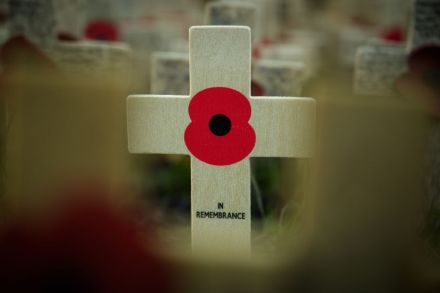
Every Remembrance Day, the anti-poppy naysayers pop up to criticise those who commemorate our war dead. As a former soldier, you might think you can guess my view on these people. But, in fact, I do have some sympathy with those who are uncomfortable about the way we mark 11 November. Some years ago, shortly after leaving the army, I happened to be on Whitehall as the remembrance ceremonies were in full swing. I tried to watch but couldn’t: memories of the death and destruction I encountered in Iraq and Afghanistan flashed back. The smart uniforms and neat drills of those gathered at the Cenotaph struck me as a disingenuous commemoration that belied the bloodshed, waste and messy reality of what I had seen on the frontline.

Spain’s caminos come calling

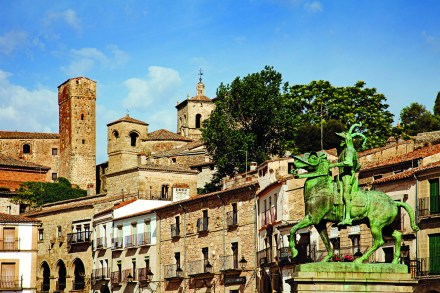
I haven’t come close to dying of thirst in Texas, where I live. In Spain’s little-known Extremadura, however, I found the odds increasing. Wandering through wide-open scrubland in hundred-degree temperatures, my only company was lots of Spanish bulls, unfazed by the blistering heat as I sweated my heart out. The population of Extremadura has been sparse since the Muslim occupation, but there are plenty of cattle. As I headed north from Seville on the Via de la Plata, the latest leg of my extended Camino de Santiago pilgrimage crisscrossing the Iberian Peninsula, Extremadura struck me as remarkably like Texas ranching country.

spain

The pagan pleasures of Spain’s Finisterre

From our UK edition

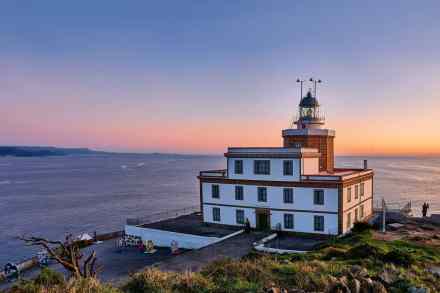
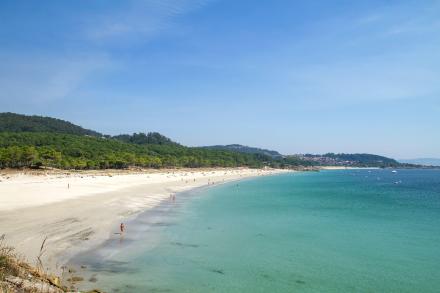
It was starting to feel rather spooky on the pathway to Finisterre. Only two days before I’d been in the celebratory environs of Santiago de Compostela with its endless arrivals of jubilant pilgrims. Now dark clouds were scudding across the Galician hills in the distance and the only sound I could hear was the wind blowing – in an accusatory manner, it seemed – through the trees beside me. While Santiago de Compostela marks the official end of the famous Camino de Santiago pilgrimage, with the purported remains of St James the apostle in the basement of its cathedral, a minority of hardy souls continue for another 86 kilometres to the Galician coast.

The secret holiday spots beloved by the Spanish

From our UK edition

Ask a Spaniard where they vacation, and you may get a touch of the Matador effect in response. The chest lifts, the head is tilted up with the bottom lip pushed out accompanied by the reply: 'España! My country.' For like the Greeks, when you have so many domestic splendours to choose from, why would you go anywhere else? It’s estimated that about two out of three vacationing Spaniards remain in country for the holidays. But where do the Spanish go? It’s a bit of a mystery—perhaps intentionally so. With swarms of Brits inundating their land, you can’t blame the Spanish for wanting to safeguard a few vacation refuges. Recently I’ve been encountering Spaniards on the move for their holidays.

The lost art of drinking wine with Coca-Cola

From our UK edition

Mixing red wine with Coca-Cola would have the great Roger Scruton turning in his grave. He wrote the wonderful book I Drink Therefore I am: A Philosopher’s Guide to Wine about the purity and life-enhancing joy of drinking wine properly. 'It enacts for us the primal unity of soul and body—the heart-warming liquid stirs us to meditation, seeming to bring with it messages that are addressed to the soul,' argued Scruton. Indeed, as I learned on my Camino through the vineyards of Spain and Portugal, imbibing for 11 months endless variations of remarkably affordable quality wines across the Iberian Peninsular, we are truly blessed to have wine. It was, after all, the centre piece of Jesus's first miracle at the marriage ceremony in Cana.

The tragic loss of Somaliland’s epic Waaheen market

From our UK edition

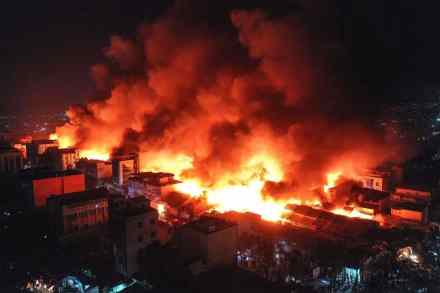
On the eve of Ramadan at the start of this month, the epic Waaheen market at the centre of Hargeisa, the capital of Somaliland, caught fire. The flames engulfed the entire market and took 12 hours to put out. There were no fatalities—it was Friday, the holy day of prayer for Muslims, and the market was closed—but the market no longer exists. Around 5,000 small businesses were impacted, with damages estimated at $2 billion so far. For a country that legally speaking doesn’t exist in the eyes of the rest of the world—despite Somaliland existing independently of Somali for over 25 years—it’s a big financial hit for this former British protectorate that scrapes by on a tiny GDP.

How freewheeling Austin drew in Covid-weary Californians

From our UK edition

One of Austin’s monikers is the City of the Violet Crown. It comes from the beguiling atmospheric shenanigans known as the Belt of Venus that casts a bar of pinkish, purplish haze above the horizon at sunrise and sunset when the city’s Mexican free-tailed bats — about 750,000 of them — are either returning to or leaving from hanging out under South Congress bridge over the Colorado River flowing through the city. 'Austin, like Texas generally, has a big, eccentric personality,' says William Apt, an attorney who attended the University of Texas at Austin in the mid-seventies before coming back to Austin from New York in the early 1980s. Austin was just a sleepy college town when Apt first arrived.

Souvlaki with graffiti

I’m drawn to sketchiness but even by my sketchy-drawn standards, the state of Athens is deflating. The cradle of Western civilization now appears to be the graffiti capital of the Western world. The luridly colored scrawls are everywhere; Greek grannies air their carpets over balconies marred by multicolored tags and swirls. The Parthenon temple still looks mighty grand atop the ancient Acropolis citadel, but down in the modern city a lot of people look hard-up and downtrodden: lined faces, permanent frowns, hastened aging, disheveled clothes. Wandering through central Athens, I passed two shuttered shops set back from the street. About twenty homeless people lounged in the alcove, amicably passing round substances to smoke and ingest.

Athens