James Heale

James Heale

James Heale is The Spectator’s deputy political editor.

Will Sunak’s charm offensive with Macron yield results?

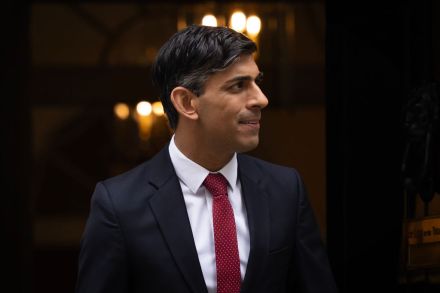
Rishi Sunak and Emmanuel Macron held a press conference together at the Élysée Palace today to mark their new deal on stopping the Channel crossings. It is part of the first Franco-British summit for five years and a chance for Sunak to demonstrate his commitment to breaking with the factitious post-Brexit era in UK-France relations. ‘The jury’s still out’ said Liz Truss when asked seven months on whether Emmanuel Macron was a ‘friend or foe.’ ‘Merci, mon ami’ was how Sunak preferred to conclude his charm offensive today. The message was clear: charm is back – and offensive is out. Sunak referred to the ‘shared challenge’ of stopping these boats; Macron said the nations, bound by history and geography, were determined to ‘make progress in lockstep’.

Is time running out for Simon Case?

12 min listen

It's been reported that more damaging messages sent by Cabinet Secretary Simon Case during the pandemic will surface in the Daily Telegraph's Lockdown Files, leading to speculation over whether he will still be in position by the time of the King's coronation. Cindy Yu talks to Katy Balls and James Heale about whether the Cabinet Secretary will soon have to step down. Produced by Cindy Yu.

How much longer can Simon Case cling on?

When Simon Case was named as cabinet secretary in September 2020 he became, at the age of 41, the youngest appointee in more than 100 years. He will probably earn another distinction soon: the youngest ex-cabinet secretary in history. In Westminster, some say his departure is a question of when not if. Should he go this year, to allow a successor time to bed in, or wait until after the next election? Case arrived at No. 10 in the middle of a pandemic, having never run a government department but boasting a PhD on Whitehall machinery written under the supervision of Peter Hennessy, Britain’s foremost living political historian and exponent of the ‘good chap’ theory of government.

Will Sunak’s small boats plan make any difference?

11 min listen

Suella Braverman unveiled the Illegal Migration Bill today in the Commons. The Home Secretary said that Britain had been 'taken for a ride', as she revealed the government's plan to detain asylum seekers for up to 28 days 'without bail or judicial review until they can be removed'. Will this contravene the European Convention on Human Rights? And even if it does, will it make a difference to small boats crossings?  James Heale speaks to Katy Balls and Fraser Nelson.

Four things we learnt from the Boris Partygate probe

Today the privileges committee has published its initial report into whether Boris Johnson lied to the House of Commons about Partygate. This inquiry does not look at whether gatherings in lockdown happened or not – we know they did. Rather, it is going to investigate whether Johnson was aware such gatherings were taking place and, if he did, whether he 'knowingly' lied to the House of Commons when he told MPs that 'the rules were followed at all times'. It also focuses on why the then prime minister did not correct the record at the earliest opportunity when it became clear that the Covid rules had not been followed at all times. Below is a summary of the top lines from the 24-page report and Johnson's bullish response, ahead of his evidence session later this month.

What we learned from the lockdown files

12 min listen

The Daily Telegraph has splashed on over 100,000 WhatsApp messages to and from Matt Hancock during his time as Health Secretary. Altogether they show the internal workings of the government and how key lockdown decisions were made during that time. On the podcast, James Heale talks to Katy Balls and Fraser Nelson, who has been working with the Telegraph on putting these files into the public eye. Produced by Cindy Yu.

Rishi Sunak is not out of the woods yet

The reaction to Rishi Sunak’s Protocol changes has so far been at the upper end of expectations in No. 10. It gets a thumbs up from the Fleet Street papers – including the still-influential Daily Mail which has tended to splash positive stories about Boris Johnson. It has received warm words from a raft of pro-Brexit grandees like Michael Howard, David Davis and Liam Fox. And crucially it has not attracted the ire which accompanied previous deals like the Chequers Agreement of 2018. Indeed, at the time of writing, no Conservative MP has publicly said that they will vote against it. As those in No. 10 are all too aware, pitfalls still lie ahead in both Belfast and Westminster So far, so good. But, as those in No.

Has Rishi Sunak pulled this off?

15 min listen

James Heale speaks to Isabel Hardman and Katy Balls about some of the key points in the Windsor Framework. Having reached an agreement with the EU, can Rishi Sunak do the same with both the Tories and the DUP?

How does the ‘Stormont Brake’ affect the Protocol?

After months of negotiating, Rishi Sunak has today unveiled his changes to the Northern Ireland Protocol. They focus on three key areas – trade, regulatory divergence and the role of the European Court of Justice (ECJ). At a press conference today, Sunak outlined these under the so-called ‘Windsor Framework’ agreed with the European Commission. The first area of dispute has been trade – and it is here that Rishi Sunak has secured his most consumer-friendly ‘wins’. There has effectively been a customs border between Great Britain and Northern Ireland since 2020. Presently all goods are treated as though they are going into the European Union, despite Northern Ireland not being a member.

Could Kate Forbes still win?

10 min listen

A poll of the SNP membership puts Kate Forbes as the frontrunner. Despite becoming embroiled in a row over her religious views, Forbes enjoys the support of 28 per cent of members, compared to Humza Yousaf's 20 per cent. Could she win the contest?  Cindy Yu speaks to Katy Balls and James Heale.

Will Starmer be trusted on his ‘five missions’?

The most interesting moment from Keir Starmer’s big set speech today came during the questions. The Labour leader had just set out his ‘five missions’ to fix the NHS, economy, crime, energy and education systems – the issues on which Labour hopes to fight the next election. But journalist after journalist preferred to ask Starmer instead about the last election he fought – the leadership contest to succeed Jeremy Corbyn. How, they asked, can voters trust the Labour leader’s promises, when he’s broken so many that he made to his own member? Starmer’s answers were clear: the goal is a Labour government, anything else is an irrelevance. The old Fortress Twickenham slogan could have been tattooed on his forehead: ‘Winning – that is why we are here.

Rishi risks another asylum outcry

With the likelihood of a deal on the Northern Ireland Protocol fading this week, a new issue has emerged to enrage the Tory right: fresh plans to cut tackle the asylum backlog. Asylum seekers will no longer be subjected to face-to-face interviews, with more than 12,000 migrants from five countries having their claims assessed on paper instead. These five countries – Afghanistan, Syria, Libya, Eritrea and Yemen – have the highest asylum success rate. Asylum seekers will have 20 days to fill in and return the fast-track official forms. Officials expect 95 per cent of applicants to be given leave to remain for at least five years, although those who fail to complete the ten-page form ‘without reasonable explanation’ could have their claims withdrawn.

Will there be resignations over Northern Ireland?

10 min listen

Rishi Sunak continues to try to get his MPs onside when it comes to the government's deal with the EU on the Northern Ireland Protocol. Some Eurosceptics have warned that the Prime Minister could see resignations from his government if this is handled badly, with some touting Home Secretary Suella Braverman's name. What's the latest? James Heale talks to Fraser Nelson and Isabel Hardman. Produced by Oscar Edmondson and Cindy Yu.

Corporation tax could be one of Hunt’s biggest Budget headaches

Public sector pay. Re-negotiating the energy price guarantee. Another fuel duty freeze. Jeremy Hunt’s first Budget on 15 March is certainly fraught with difficult challenges. Few Tories in Westminster are expecting much magic from the Chancellor, despite the surprise January budget surplus. And one reason for this is that Hunt is still pressing on with his corporation tax hike, which is due to go up from 19 per cent to 25 per cent for the UK's largest companies in April. This tax rise is already facing a possible rebellion from a range of backbench factions whose membership totals to around 150 MPs.

Damian Green’s rejection is a sign of things to come

Much has been written about Damian Green’s failure on Saturday to be selected for the new Weald of Kent seat. It was swiftly hailed as the ‘grassroots revenge’ of pro-Boris forces within the party. Theresa May’s onetime deputy was described as a ‘prominent anti-Boris activist’ responsible for forcing him ‘out of Downing Street’ last July. The newly-formed Conservative Democratic Organisation (CDO) was quick to trumpet the result. Its chairman David Campbell-Bannerman said that ‘Those who turned on Boris Johnson are being punished – this deselection is hard evidence of this being real.’ Party chair Greg Hands tweeted his ‘full support’ of Green, declaring that ‘we stand behind our MPs.

Kate Forbes announces bid for SNP leader

After much speculation, Kate Forbes has today become the third candidate to officially enter the race to replace Nicola Sturgeon. The Finance Secretary is currently on maternity leave until the beginning of April but has just released a slick video, setting out her stall to be First Minister. There's no mention of any specific policy but there's plenty of familiar buzzwords for the party faithful: talk of 'self-definition', 'unleashing' Scotland's potential and comparisons to wealthy Scandinavian countries. As for her own credentials, Forbes cites her record running the finance ministry and says she is 'bold, brave and energised, fresh-faced and ready for new challenges'.

Angus Robertson rules himself out of race to replace Sturgeon

This morning Angus Robertson has announced he will not be standing in the SNP leadership contest. He was the bookies’ favourite to replace Nicola Sturgeon as the most experienced contender in the field. He spent ten years as the party’s leader at Westminster, prior to becoming Cabinet Secretary for the Constitution in 2021. But in a a statement Robertson says that: As the father of two very young children the time is not right for me and my family to take on such a huge commitment. I look forward to working with the next SNP leader and First Minister to deliver progressive policies and economic success for Scotland, and help secure Scottish independence within the European Union. Robertson's decision will come as a boost to Kate Forbes, the other front-runner.

Humza Yousaf and Ash Regan launch SNP leadership bids

The first two candidates have declared in the race to succeed Nicola Sturgeon: Ash Regan and Humza Yousaf. The pair announced their intent in a front-page story for the Sunday Mail titled ‘Battle of the Bill: FM hopefuls go head-to-head on gender reform’. That focus reflects Regan’s major claim to fame as the only minister to resign over Sturgeon’s trans reforms back in October. In so doing, she became the first minister within the SNP to resign over government policy in 15 years. That is a testament to how united the party has been on most policy planks and suggests that the Gender Recognition Reform Bill will probably be one of the few public points of contention in this contest.

Is Scottish independence dead?

13 min listen

After the news this week that Nicola Sturgeon will step aside as leader of the Scottish National Party, can the cause of Scottish independence survive without her?  James Heale speaks to Katy Balls and James Johnson, former Downing Street pollster and co-founder of JL Partners.

Why China could be Truss’s best hope for rehabilitation

This week two former Foreign Secretaries offered competing visions for how Britain should engage with China. On Wednesday, Philip Hammond was quoted in China Daily as championing a ‘trade-first approach’, urging politicians to ‘return to business as usual’ and ignore ‘background noise.’ And last night, Liz Truss set out a much more hawkish alternative, using her first post-premiership speech in Japan to make the case for strengthening ties with Taiwan and countering ‘the rise of a totalitarian China.’ The fact that these two politicians served alongside each other in successive Cabinets for five years – with Truss working as Hammond’s deputy for two of them – is testament to the divergence and shifts of opinion within the Conservative party on this issue.