James Heale

James Heale

James Heale is The Spectator’s deputy political editor.

What is Lee Anderson up to?

A new week brings with it a new backbench group. The New Conservatives are a dozen MPs who are drawn from the 2017 and 2019 intakes. They want a fundamental realignment of the party so it better reflects the interests of voters in the Midlands and across the red wall in the north. Prominent members of the group include Danny Kruger, Miriam Cates and Lee Anderson, the straight-talking red wall favourite who previously told The Spectator he backed the return of capital punishment. The presence of Anderson has ruffled some feathers among his fellow Tory MPs In an interview with the Times, Kruger said that while precise policies are still being formulated, the group do have a broad agenda.

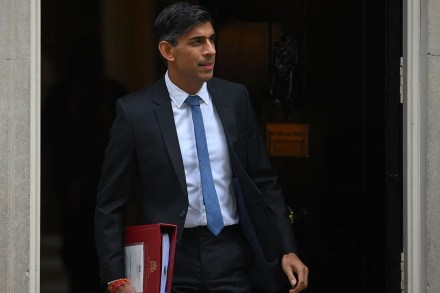
Is Rishi retreating from net zero?

11 min listen

Immigration and the economy are priorities for Rishi Sunak's government. But under Boris Johnson and Theresa May, net zero was also a major policy focus for Conservative governments. Is Sunak as keen on it as his predecessors were?  James Heale speaks to Fraser and Isabel Hardman.

What does Rishi want from the G7 in Hiroshima?

10 min listen

Rishi Sunak is in Hiroshima for the G7 summit. President Zelensky has said he'll be making a surprise appearance, and Sunak will be meeting with President Modi on the sidelines. What does Sunak want from the trip?  Max Jeffery speaks to James Heale and Isabel Hardman.

Truss in Taiwan warns of new Cold War with China

Liz Truss is in Taiwan this week, urging the West to take a stronger stance against China. Her message is clear: Europe's future is 'inextricably linked' to that of the island, you can't trust Beijing to follow the rules and Britain and its allies must now take action. Citing Chinese naval expansion, military build-up, economic decoupling and diplomatic initiatives, Truss warned that 'There are those who say they don’t want another Cold War. But this is not a choice we are in a position to make... they have already made a choice about their strategy. The only choice we have is whether we appease and accommodate – or we take action to prevent conflict.' Her solution?

Rishi’s ECHR battle at the Council of Europe

11 min listen

The Prime Minister has gone to Iceland today to see the Council of Europe, where he has been talking about immigration and the ECHR with other European leaders. On the episode, Katy Balls explains his mission to get other leaders on board with the UK's hardline approach to immigration. Cindy Yu also talks to James Heale about the second day of the National Conservatism Conference and Michael Gove's recommendation for conservatives. Produced by Cindy Yu.

Why did Braverman’s immigration speech ruffle feathers?

14 min listen

Home Secretary Suella Braverman said that there is no good reason the UK can't train its own lorry drivers and fruit pickers in order to bring immigration rates down. Katy Balls speaks to James Heale and Isabel Hardman about why this has rubbed some up the wrong way and Keir Starmer's speech over the weekend, outlining Labour's vision for the future.

Tory grassroots plot to ‘take control’

Insurrection was in the air in Bournemouth this weekend as MPs and activists descended on the seaside town for a Tory grassroots jamboree. ‘Take control’ was the aim of the Conservative Democratic Organisation’s inaugural meeet, with 250-odd diehards defying the ‘communist barricades’ of the rail strikes to pitch up at the Bournemouth International Conference. The venue was the scene of Margaret Thatcher’s final conference and the long shadow of the Iron Lady looms large over her greying party today. Most attendees were middle-aged with fond memories of the Thatcherite heyday: of party conferences by the seaside, Mrs T in her pomp, three election triumphs and nights out celebrating in Blackpool and Brighton.

Where next for Richard Tice and Reform?

The local elections last week proved to be a disappointing night for Reform UK. Prior to polling day, its leader Richard Tice had talked up the 'huge appetite' among voters for Reform but the party averaged a mere six per cent of the vote in the wards where it stood. It won just half a dozen seats on on Derby City Council out of 471 hand-picked seats. Ukip, its effective forerunner, lost all its remaining councillors, going from almost 500 in 2016 to zero. Tice's response was to argue that 'Rome wasn't built in a day' and to focus instead on the next electoral test: the London mayoralty. Petrolhead Howard Cox, the founder of the Fair Fuel UK campaign, is running as Reform's candidate in the capital.

Can Kemi brush off the Brexiteers on EU law?

11 min listen

Will Kemi Badenoch, the business and trade secretary, lose her supporters in the ERG, after the government confirmed that it would be going back on its pledge to remove all EU legislation from UK law by the end of 2023? James Heale speaks to Katy Balls and Kate Andrews.

Welby leads the Lords against Braverman’s boats bill

Today in parliament has been dominated by the Upper House, where peers are scrutinising the Illegal Migration Bill at its second reading. The debate is only halfway through but the legislation has been subject to something resembling a turkey shoot as noble lord after noble lord has queued up to attack the government's proposals. The Archbishop of Canterbury made perhaps the day's most memorable speech when he told his fellow peers that it was: Morally unacceptable and politically impractical to let the poorest countries deal with it alone and cut our international aid. This is an attempt at a short-term fix.

Starmer struggles on the coalition question

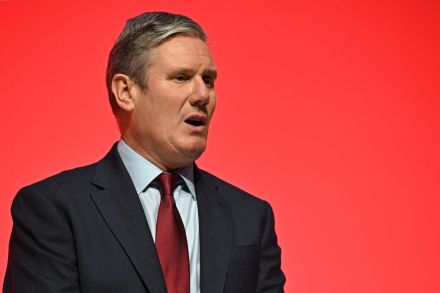
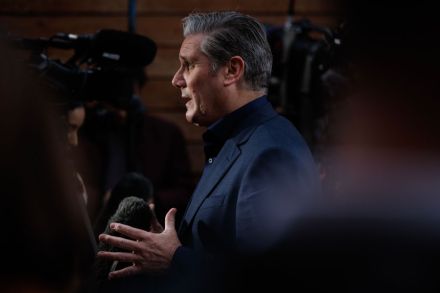
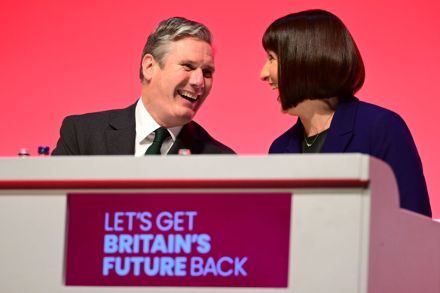
With gains of 643 councillors and 22 authorities, Labour clearly had a good result in Thursday's local elections. Yet with the BBC and Sky both publishing vote share projections which show the party falling short of an overall majority – winning just shy of 300 seats rather than the necessary 326 – the spectre of a hung parliament looms large over British politics once more. It was that subject which dominated Sir Keir Starmer's broadcast round this afternoon. The Labour leader refused seven times in an interview with Sky to rule out a deal with the Liberal Democrats if his party found themselves short of a majority, insisting that he is 'not answering hypotheticals.

Inside the clash between Boris and Charles

Conversations between the Prime Minister and the monarchy are, by convention, kept strictly confidential - and taken to the grave. But Boris Johnson has always been someone who thinks rules are there to be broken. His former spin chief, Guto Harri, has just confirmed something that they tried to cover up at the time: the extent of the clash between Johnson and now-King Charles. They squared off against each other at a Commonwealth summit, apparently, after Charles described the government’s Rwanda deportation policy as ‘appalling’ within political earshot. At the time, word of Charles's disapproval leaked out suspiciously quickly – and via Westminster channels.

Local elections 2023: Tories lose 1,000 councillors

Labour leader Sir Keir Starmer says his party is on track to win the next general election after the Tories were hammered in local polls across England. The story of these local elections however appear to be Tory disaster rather than Labour triumph. The BBC's Projected National Share (PNS) of the vote – based on key wards – suggests that Labour would struggle to win a majority at a general election on the basis of last night's performance. The BBC's PNS gives Labour 35 per cent, Conservatives on 26 per cent, the Liberal Democrats 20 per cent and others 19 per cent. It is the biggest Labour lead over the Conservatives at the local elections since 1997 – but it's also the same vote share which the party won last year.

Tory big beasts at risk in 2024

Results are still coming in fast but one of the big stories of this local election night has been the Tories' southern discomfort. Onetime safe seats in the once-impregnable 'Blue Wall' have fallen overnight to the Liberal Democrats and to a lesser extent, the Greens and Labour too. The leaders of Windsor and Mid Suffolk council lost their seats to Lib Dem and Green challengers respectively; the regions where the Tory vote share has fallen most is by 5.7 per cent in the south west and 3.7 per cent in the south east. Conversely, CCHQ is keen to talk up the areas where the party performed best: this occurred in the north where the swing to Labour was 4 per cent, less than the national average.

What does success look like in the local elections?

It's local election week which means all parties are engaged in the great game of expectation management. Just over 8,000 seats in 230 unitary, metropolitan and district councils are up for grabs this time, with seven in ten voters in England able to cast their votes on Thursday. The last time these seats were contested was May 2019 – when Labour and the Tories both did poorly, polling just 28 per cent each. Jeremy Corbyn actually lost dozens of seats, becoming the least successful Opposition leader in 40 years. Theresa May was forced to quit three weeks later, having shed 1,300 councillors. This time, the picture looks similarly bleak for the Tories – but much better for Labour.