James Heale

James Heale

James Heale is The Spectator’s deputy political editor.

Is Keir Starmer a Tory?

19 min listen

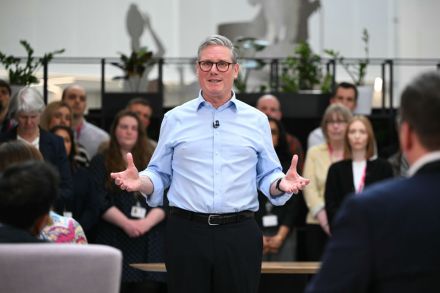
Slashing the winter fuel allowance, maintaining the two child benefit cap, cutting international aid, cutting the civil service, axing NHS bureaucracy, possibly slashing welfare expenditure... you'd be forgiven for thinking the Conservatives were in power. But no, these are all policies pursued by the current Labour government. So on today's Saturday Shots Cindy Yu asks Michael Gove and James Heale, is Keir Starmer a Tory? While Michael admits to giving Starmer a 'painful' two cheers, he does say there is historic precedent for Labour governments enacting right-leaning measures: from Jim Callaghan's migration policies to the economic ones of Ramsay MacDonald. How has Starmer got away with it? And what does his premiership of pragmatism tell us about the future direction of Labour?
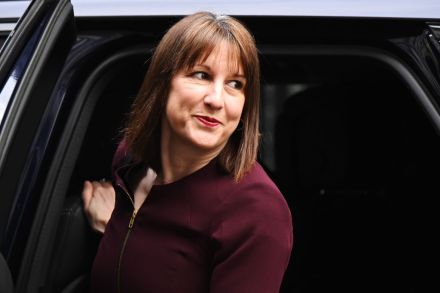
The UK economy is shrinking – how much pressure is Rachel Reeves under?

14 min listen

New figures from the Office for National Statistics show the UK economy unexpectedly shrunk by 0.1% in January. This comes only a few weeks after the Chancellor's pro-growth speech, and a fortnight ahead of her Spring Statement. Just how much pressure is Rachel Reeves under? And how likely is it that Labour will change their approach? Economics editor Michael Simmons and deputy political editor James Heale join Patrick Gibbons to discuss, as well as a look ahead to next week's expected announcement on reducing the welfare bill. Produced by Patrick Gibbons.

Why Labour are abolishing NHS England

10 min listen

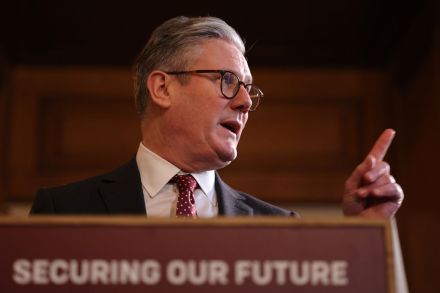
It was widely briefed that the main focus of Sir Keir Starmer’s speech in Yorkshire today was his plan to do away with Whitehall red tape. What was kept under wraps was the Prime Minister’s plans for the NHS – specifically to scrap NHS England. In a bid to tackle bureaucracy in the health service, the PM this morning told reporters that the ‘arms-length NHS’ needed to go – adding that the move will ‘shift money to the front line’ and free the health service to ‘focus on patients’. What's the point of abolishing NHS England? And are Labour 'doing the things that the Tories only dreamed of'?  Lucy Dunn speaks James Heale and Michael Gove.  Produced by Oscar Edmondson and Megan McElroy.

The trouble with Starmer’s plan for change

At his speech at a Hull business campus this morning, Keir Starmer was introduced by a man who proudly noted that the site was home to various brands, including Durex. So it was fitting that 'protection' was a constant theme throughout the Prime Minister's speech on his planned reforms to the civil service – and his announcement that NHS England is to be scrapped. 'National security for national renewal', the PM promised, stressing the need to have an 'active state' to deal with challenges both abroad and at home. The beginning of the Ukraine war gave Boris Johnson's premiership purpose in 2022; the conflict's looming close offers Starmer a narrative for overhauling warfare and welfare. It was a critique which will have many Tories nodding along in agreement.

What will Nicola Sturgeon’s legacy be?

12 min listen

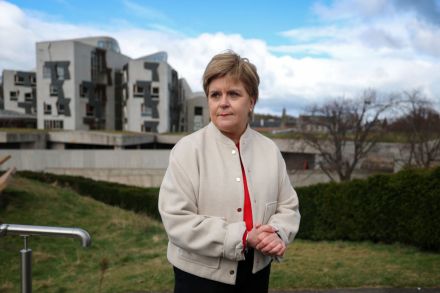
Nicola Sturgeon has announced her intention to step down at the next Scottish Parliament election in May 2026. One of the original MSPs elected to Holyrood in 1999, Sturgeon has dominated Scottish and UK politics over the past two decades. The Salmond-Sturgeon era began in 2004 and she went on to serve as First Minister for the best part of a decade. Stewart McDonald, former SNP MP for Glasgow South 2015-24, and Lucy Dunn join James Heale on this special Coffee House Scots to discuss Sturgeon's legacy. She brought Scotland the closest to independence for 300 years, yet resigned in 2023 under a cloud over party management. Attention turns to next year's election, could the SNP's winning streak continue without her? Produced by Patrick Gibbons and Natasha Feroze.

Trump escalates his tariff war on Canada

He has done it again. Donald Trump has announced that, from tomorrow, tariffs on Canadian steel and aluminium imports will be doubled to 50 per cent. In a statement on Truth Social, the President reiterated his call for Canada – which he labelled ‘one of the highest tariffing nations anywhere in the world’ – to become ‘the Fifty First State’. He explained that he was imposing the latest tariffs in response to a decision by Ontario premier Doug Ford to slap a 25 per cent tax on electricity exports to northern US states. Doug Ford’s policy was itself issued in retaliation to the sweeping 25 per cent tariffs that Trump had initially placed on imports from Canada. It is fair to say that this trade equivalent of tit-for-tat is not impressing the markets.

Starmer facing welfare rebellion

15 min listen

There is a row on the horizon over welfare cuts. Yesterday’s meeting of the Parliamentary Labour Party (PLP) was packed, with many lobby journalists expecting fireworks. The Prime Minister got a positive reaction for his message on Ukraine, with MPs impressed by his strong response since Trump took office, but there was some scepticism in the room about his plan to make £6 billion in welfare cuts. This is a difficult topic that cuts to the heart of the Labour Party and its position as the party of welfare – about 80 Labour MPs are said to oppose the government’s proposals. Can Keir Starmer weather the storm? James Heale speaks to Katy Balls and John McTernan, former political adviser to Tony Blair. Produced by Oscar Edmondson.

Have Reform blown it?

18 min listen

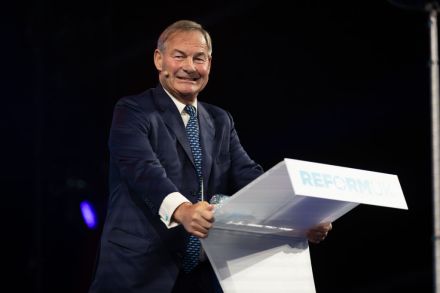
Loyal listeners will remember that just three months ago we released a podcast asking: Is 2025 Farage’s year? The answer was ‘yes’, provided Reform UK can keep their five MPs in line... As predicted – and despite all the talk of professionalisation – Nigel Farage’s latest political outfit is following the pattern of the parties that came before: infighting. On Friday night, the Reform party stripped Rupert Lowe of the whip after referring him to the police. Lowe stands accused of workplace bullying and threatening behaviour towards party chair Zia Yusuf. These are allegations that he strongly denies, calling the whole affair a ‘witch hunt’. How long has there been tension between Lowe and the party leadership?

Mark Carney is Canada’s new PM

The race to replace Justin Trudeau has been not so much a contest, as a coronation. Mark Carney, the former Governor of the Bank of England, won the Liberal leadership in a landslide last night, obtaining 85 per cent of the vote and crushing rival Chrystia Freeland. He will now be sworn in as Prime Minister in the coming days, with a general election expected to be called within weeks. Speaking after his victory in the two-month-long contest, Carney says his nation faces 'dark, dark days, brought on by a country we can no longer trust'. That is a reference to the single issue which has dominated his leadership campaign: Donald Trump's tariff threats.

mark carney

Mark Carney is Canada’s new prime minister

From our US edition

It is difficult to overstate how much Donald Trump has changed the dynamics of Canadian politics. When Justin Trudeau resigned on January 6, his Liberal party was on just 16 percent in the polls — 25 points behind Pierre Poilievre’s Conservatives. Within six weeks, that had narrowed substantially, with Nanos suggesting there was just two points between the two parties. The top issue of national concern? Donald Trump and US relations. Visiting Ottawa in January, I was struck by the remark which one Member of Parliament made to me. “We don’t see America and tariffs as foreign affairs — we see them as actually an extension of our domestic economic policies.

Who would be a Conservative? – Kate Andrews vs Michael Gove

25 min listen

It’s a special (and emotional) edition of Coffee House Shots this Saturday because it is the last with Kate Andrews on this side of the Atlantic. She joins our editor Michael Gove and political correspondent James Heale for a debate on ideology. Kate – a liberal, in the classical British sense – explains exactly why she is not a Conservative and the various tenets that distinguish liberalism from conservatism, whilst Michael makes the case for being a 'pessimistic' conservative.  So, what makes a liberal? What makes a conservative? And was Hayek right in saying that while there isn’t much to choose between these two political creeds, ultimately, they need each other.  Produced by Cindy Yu and Oscar Edmondson.

Reform refer Rupert Lowe to the police

After months of leading in the polls, Reform UK is now in meltdown. This afternoon, the party chairman, Zia Yusuf, and the chief whip, Lee Anderson, released a joint statement which says that they have now referred Rupert Lowe to the police. The pair say that they have ‘received complaints from two female employees about serious bullying’ in Lowe’s offices and that ‘we understand complaints have been made to parliamentary authorities’. They allege that evidence has been provided of workplace bullying, with female staff who raised concerns being targeted. They suggest too that Lowe made ‘derogatory and discriminatory remarks’ about women, ‘including reference to a perceived disability’.

How long will Starmer’s ‘war bounce’ last?

11 min listen

Trump has been stealing the headlines when it comes to Ukraine this week, but Europe – and whether it can stay united in the face of the US pulling its support – remains an important subplot. At a summit yesterday, 27 countries backed the plan to increase spending on defence, but when will the cracks start to show? Thankfully, it seems that the Prime Minister is good in a crisis. Back at home, he has seen a modest bounce in popularity and he is making a good impression in Brussels, coming across as assured without grandstanding. He has also been leading on defence spending – could defence be the way in for Starmer to renegotiate a new position within the EU? Is Starmer having a good crisis?

Labour’s ‘two tier policing’ headache

12 min listen

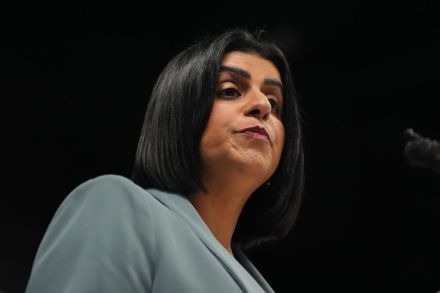
Labour have found themselves facing accusations of enabling ‘two tier policing’ following new guidelines from the Sentencing Council. Shadow Justice Secretary Robert Jenrick has been quick to criticise the government, but Labour’s Justice Secretary Shabana Mahmood has also urged the council reconsider their recommendations.  Yvette Cooper’s former adviser Danny Shaw joins Katy Balls and James Heale to discuss the row. While Danny points out that the issue is more nuanced than the row makes out, to the public the very perception of ‘two tier policing’ will damage the government - and at a time when confidence in the justice system is at an all-time low. How will they fix the problem? Produced by Patrick Gibbons.

Rupert Lowe’s warning shot to Nigel Farage

There is a striking interview in today’s Daily Mail between Andrew Pierce and Rupert Lowe. The Reform MP is known for speaking his mind and he certainly does not hold back. Asked whether he thinks Nigel Farage would make a good prime minister, Lowe praises him as a ‘fiercely independent individual’ but says that ‘it's too early to know whether Nigel will deliver the goods. He can only deliver if he surrounds himself with the right people.’ Lowe adds: ‘He has got messianic qualities. Will those messianic qualities distil into sage leadership? I don't know.’ Such remarks about Farage are unlikely to improve the often-strained relationship between the two men. The Great Yarmouth MP goes on to express his concerns about Reform’s lack of a policy platform.

The Special Forces scandal is not going away

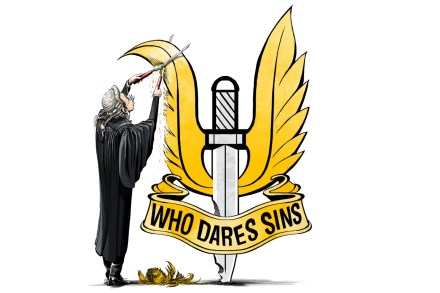
What was the most important moment at Prime Minister's Questions today? It was not the somewhat pedestrian back-and-forth between Keir Starmer and Kemi Badenoch on support for Ukraine. It was instead a subsequent point raised by David Davis on the subject of Britain's Special Forces. Davis – a textbook example of a free-thinking backbencher – asked the Prime Minister about a ruling last month by Northern Ireland’s presiding coroner. The government has given no signal that it intends to pursue a judicial review The ruling concerned a 1992 SAS ambush at St Patrick's Church in Clonoe, County Tyrone. It found that the use of lethal force by British soldiers against four members of the IRA was not justified or reasonable.

Where does Trump’s suspension of Ukraine aid leave Europe?

13 min listen

Overnight President Trump made another extraordinary move in his ongoing attempt to broker a deal between Ukraine and Russia, suspending all U.S. military aid to Ukraine. Katy Balls talks to James Heale and geopolitical analyst Mark Galeotti about how serious this development is and where it leaves Ukraine's European supporters. Produced by Natasha Feroze and Cindy Yu.

Keir Starmer’s bridge to Trump is crumbling 

So it turns out he wasn’t bluffing after all. Six weeks after taking office, Donald Trump has made two big decisions overnight: pausing all American aid to Kyiv and imposing 25 per cent tariffs on Canada. Both will cause consternation in Whitehall – but it is the situation in Ukraine which is of most immediate concern. Less than 24 hours after Keir Starmer unveiled his 'four-point plan' in parliament, it already risks falling apart. Speaking in the Commons, the Prime Minister said yesterday that the West must keep military aid flowing to Ukraine. Asked by Stephen Flynn about the prospect of a pause in contributions, Starmer replied 'As I understand it, that is not its position.' But hours later, Donald Trump did exactly that.

Priti Patel attacks Nigel Farage over Zelensky comments

During the early days of the Gaza crisis, there was an unofficial refrain doing the rounds in the Foreign Office: 'Foreign policy doesn't win votes – but it can lose them.' In recent days, the same could be said of Ukraine's peace negotiations. The drama between Presidents Trump and Zelensky which played out in the Oval Office on Friday horrified Westminster. Both Keir Starmer and Kemi Badenoch were quick to signal their support for Zelensky, aware that – three years after the war with Russia began – public support for Ukraine remains rock solid. It poses a difficulty for Nigel Farage That poses a difficulty for Nigel Farage.

Can Starmer stick to his promises to Ukraine?

14 min listen

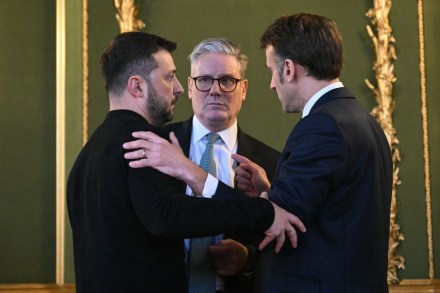
Along with the French President Emmanuel Macron, Keir Starmer seems to be spearheading Europe's diplomatic efforts to secure a lasting peace deal for Ukraine in light of the new American administration's animosity towards Zelensky. Among the proposals being discussed are a peace-keeping force in the country, as a part of efforts to show the Trump administration that Europe is taking responsibility, as it were, for its own security. But will Starmer really get the Americans on board? And if not, does he risk over-promising to Ukraine? James Heale talks to Kate Andrews and Katy Balls. Produced by Cindy Yu.