James Heale

James Heale

James Heale is The Spectator’s deputy political editor.

Bridget Phillipson tries to rebrand her education reforms

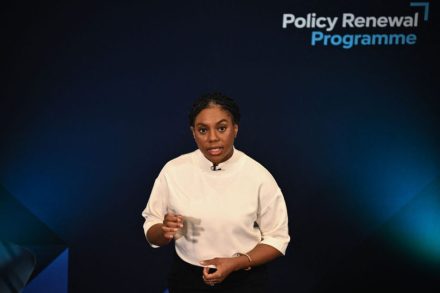
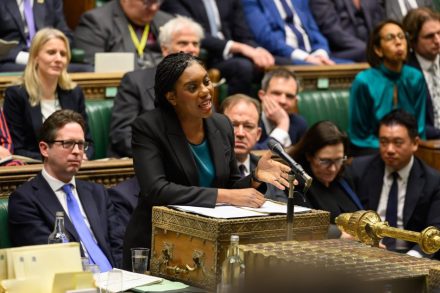
Education has been in the spotlight in recent weeks, as the government’s Schools Bill makes it way through parliament. So far, the legislation has grabbed headlines precisely for all the wrong sorts of reasons. Critics claim it will water down standards and that Bridget Phillipson, the Education Secretary, is effectively doing the teaching union’s bidding. Particular attention has been paid to the thorny issue of Ofsted school inspections, following the suicide of headteacher Ruth Perry. Today was Phillipson’s chance to respond. In her first major speech since taking up the role, the Education Secretary sought to shift her rhetoric – while ardently standing by the changes she proposed.

Was Peter Mandelson the right pick for ambassador to the US?

22 min listen

‘An absolute moron’ – those were the words used by Chris LaCivita, a senior campaign advisor to Trump, to describe Peter Mandelson. Lord Mandelson is Keir Starmer’s choice for the next ambassador to the US, but Trump may yet refuse his letters of credentials. How wise is this appointment at the dawn of an uncertain era of US-UK relations? Cindy Yu talks to James Heale and Sophia Gaston, UK foreign policy lead at the security think tank ASPI. Produced by Cindy Yu.

John Prescott’s legacy, plus Labour & the Tories grapple with migration

15 min listen

Labour heavyweight John Prescott's funeral took place yesterday with former Prime Ministers Tony Blair and Gordon Brown leading the tributes. What is Prescott's legacy? And does the current Labour Party have politicians that emulate his appeal? Lucy Dunn speaks to James Heale and former Blair adviser John McTernan about how Prescott was the glue that held Labour together during the Blair-Brown years. Also on the podcast, they discuss the borders and migration bill which Labour published this week. The bill sees the government adopt many measures that they voted against when in opposition. Does this show that Labour have what it takes to tackle immigration?

Priti Patel’s migration defence was a serious misstep

This week looks to be a significant one for polling in British politics. For the first time, every poll released across seven pollsters has had the Reform ahead of the Conservatives. So it is regrettable for Tory chances then, that an interview by Priti Patel has reignited debate around her party's failure on mass migration. This failure is cited as the single biggest reason why 2019 Tory voters abandoned the Conservatives last year, according to the most comprehensive study to date. Speaking to Harry Cole on TalkTV, the Shadow Foreign Secretary was asked about the explosion of arrivals on her watch. As Home Secretary under Boris Johnson, net migration figures rose from 271,000 in 2019 to 872,000 in 2022 when she left office. Asked to justify this, Patel sought to defend her record.

Can Reform turn more Tory donors?

15 min listen

Tuesday night's Reform fundraiser was designed to spook the Conservative party, says Conservative peer and journalist Paul Goodman on today's episode. He talks to Cindy Yu and James Heale about whether Kemi Badenoch can keep her cool under Reform's domination of the airwaves. Produced by Cindy Yu.

Will Marco Rubio kibosh the Chagos deal?

There's a new sheriff in town. Trump's election means a new Secretary of State; the world's most powerful foreign minister is now a Republican. Out goes Anthony Blinken, Joe Biden's longtime Francophone aide. In comes Marco Rubio, the three-time Florida Senator. Unlike some of Trump's cabinet picks – like the unorthodox Pete Hegseth at Defence – Rubio sailed through his Senate confirmation, winning the unanimous approval of his former colleagues. This is partly because the ideological switch from Blinken to Rubio is less dramatic than in other cabinet posts. Both men are staunch supporters of Nato; both received a big thumbs up from national security establishments across the West. Europe is important to the worldview of both men.

Labour’s Richard Hermer problem

13 min listen

Richard Hermer was one of the surprise announcements from Keir Starmer’s first Cabinet, and one of the most controversial since. Starmer’s old pal came with some notable baggage: his former clients include Sri Lankan refugees to the Chagos Islands and ex-Sinn Féin leader Gerry Adams, as well as British-Bangladeshi Isis bride Shamima Begum. In government, Hermer has played a key role in several contentious decisions, such as the government’s withdrawal of the UK’s objections to the International Criminal Court’s arrest warrant for Benjamin Netanyahu, and his involvement in the Chagos Islands deal. And today he admitted that he has had to recuse himself ‘from certain matters’ due to potential conflicts of interest. Is the government hamstrung by Hermer?

Home Office: ‘two-tier’ police claims are an ‘extreme right-wing’ narrative

You can tell a government report has gone down badly when ministers are distancing themselves before it has been officially published. Today, it’s the Home Office’s ‘Rapid Analytical Sprint,’ commissioned in the aftermath of the Southport riots last August to determine future counter-extremism policy, that is causing trouble for ministers. The leaked document claims that fears over two-tier policing are an 'extreme right wing narrative'. It also says that grooming gangs – referred to as 'alleged group-based sexual abuse' – are an issue exploited by the far-right to stir hatred against Muslims.

What Labour and the Tories can learn from Pierre Poilievre

13 min listen

For the past fortnight, Canada’s Parliament has been empty. After Justin Trudeau resigned as Liberal leader, all the polls are pointing to the likelihood that Canada will become another example of the West’s shift to the right. This is partly due to the incumbency problem (and the ongoing internal struggles in the Liberal Party), but also the Canadian Conservatives’ firebrand leader: Pierre Poilievre. A skilled communicator who seamlessly mixes the online and offline world, Poilievre is in many ways one of the first Conservative influencers. And he has been picking up a number of admirers in the UK: Kemi Badenoch and Robert Jenrick have visited Canada to try to learn from his playbook, and Starmer seems to have been taking tips as well.

Do Reform want to bring back the death penalty?

10 min listen

Reform MP Rupert Lowe has called for the death penalty to be re-established in the wake of the sentencing of the Southport killer Axel Rudakubana. With the Assisted Dying Bill still making its way through Parliament, it has been decades since the topic of death has been so hotly debated by MPs.  Katy Balls speaks to James Heale and Isabel Hardman about the political reaction to Rudakubana's sentencing. How popular is the death penalty with both MPs and the public? Should we even be debating the issue? And could Reform officially back its return soon? Produced by Patrick Gibbons and Natasha Feroze.

John Healey hails Rolls-Royce’s £9bn nuclear submarine deal

A £9 billion deal for nuclear submarine reactors was announced this morning between the Ministry of Defence and Rolls-Royce, the biggest-ever agreement between the two. The eight-year contract, called Unity, is to design, make and provide support services to nuclear reactors that power the Royal Navy’s fleet of submarines. John Healey, the Defence Secretary, says the deal will make British reactors both greener and more efficient. A difficult battle looms between John Healey and Chancellor Rachel Reeves ‘It’s a boost to British jobs, British business. It’s a boost to our nuclear deterrent,’ he told Sky on a visit to the Rolls-Royce plant in Derby. ‘It really shows the way that defence is part of the engine for economic growth in this country.

Reeves vs Miliband

10 min listen

After last week’s bond market jitters, the Chancellor pledged to go ‘further and faster’ to improve the UK’s anaemic economic growth. It looks as though Rachel Reeves’ hunt for growth could come at the expense of Labour’s green agenda. Reeves is poised to make a series of announcements over the next month, starting with a softened stance on non-doms and approval for Heathrow’s third runway – as well as expansions at Gatwick and Luton airports. The move indicates a shift in priorities, with economic growth taking precedence over climate targets. Ed Miliband, the Energy Secretary, is believed to be privately opposed to the airport expansion scheme. What happened to the ‘green Chancellor’?

How Pierre Poilievre led Canada’s Conservatives back from the wilderness

Ottawa For the past fortnight, Canada’s parliament has been empty. When Justin Trudeau resigned as Liberal leader, he announced a prorogation so his party could focus on a two-month succession battle rather than the business of governing. Excited Tories see the empty assembly as symbolic of the void in national leadership. They are confident their party will soon fill it. If they do soon manage to end a decade of Liberal rule, it will chiefly be thanks to Pierre Poilievre, who has been Conservative leader since 2022. There are few party leaders who excite British Conservatives more: both Kemi Badenoch and Robert Jenrick have visited Canada to try to learn from his playbook.

Can Reeves get Heathrow’s third runway off the ground?

After last week’s bond market jitters, the Chancellor pledged to go ‘further and faster’ to improve the UK’s anaemic economic growth. An early test of that resolve looks now to be looming in the familiar form of a third runway at Heathrow airport. As I reported earlier this month, Reeves is poised to make a swathe of announcements intended to increase economic growth in a speech later this month. Among them includes giving a political green light to Heathrow’s third runway and an expansion of Gatwick and Luton airports, according to Bloomberg. Successive governments – of various stripes – have ducked Heathrow expansion for decades, with the airport’s last remaining diagonal runway being decommissioned in 2003.

Why wasn’t the Southport killer stopped?

13 min listen

At a press conference this morning, Keir Starmer moved quickly to announce a public inquiry into the Southport murders. This comes after Axel Rudakubana pleaded guilty to murdering three girls in a knife attack at a Taylor Swift–themed dance class last year. The Prime Minister promised that ‘no stone’ will be ‘left unturned’ when it comes to asking the ‘difficult questions… unburdened by cultural or institutional sensitivities’. Chief among these difficult questions is why – when Rudakubana had been referred to the counter-extremism Prevent programme three times – he wasn’t stopped? And is there any substance to claims by Nigel Farage of a ‘cover-up’? Katy Balls speaks to James Heale and Danny Shaw, former adviser to Yvette Cooper.

Trudeau’s assassin could be Canada’s next leader

Less than 24 hours after Mark Carney's launch, Chrystia Freeland announced her bid to be the next Liberal party leader of Canada. The former finance minister – whose resignation last month triggered Justin Trudeau's downfall – put out a pithy six word statement this morning. 'I'm running to fight for Canada', it said, simply. She intends to officially launch her campaign on Sunday, having already gained public endorsements from Mark Holland and Diane Lebouthillier. The leadership field has narrowed considerably this week as possible contenders Christy Clark, Dominic LeBlanc, Francois Phillipe Champagne and Mélanie Joly all ruled themselves out. It leaves Freeland and Carney as the only two serious candidates for the post of Canada's next Prime Minister.

Mark Carney launches bid to succeed Trudeau

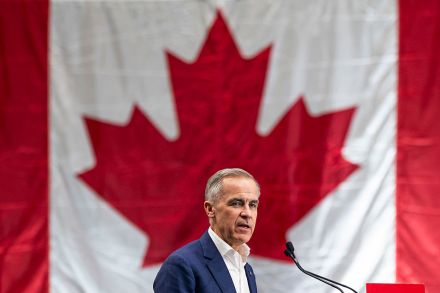
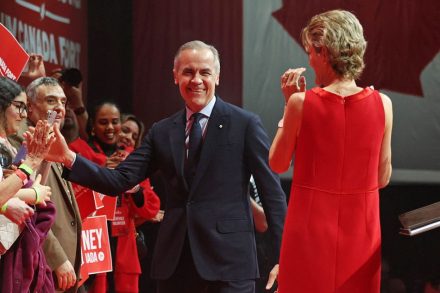
After nearly a decade of speculation about his political aspirations, Mark Carney has today formally declared that he wants be Canada's next Prime Minister. The former Bank of England Governor kicked off his campaign to be the next Liberal party leader at a community centre in Alberta, promising to build the fastest-growing economy in the G7 if elected. 'I'm doing this because Canada is the best country in the world, but it still could be even better,' he said. Carney was tipped as one of the first names to replace Justin Trudeau when the latter announced his resignation timetable ten days ago. He teased a bid on Tuesday when appearing on the Daily Show with Jon Stewart, suggesting that for the Liberals to win an election 'in a situation like this, you need change.

Why Labour is cosying up to China

It used to be said that parties were Eurosceptic in opposition but Europhile in government. The same might be true of China too. Under Keir Starmer’s leadership, Labour initially adopted a Sinosceptic stance, strongly condemning the Hong Kong crackdown and promising to recognise China’s treatment of the Uyghurs as genocide. Yet in office, they have abandoned such postures and instead sent various ministers out East. The latest to go and tout for trade is Rachel Reeves, in her never-ending quest for growth. For the first time in five years, the Chancellor will hold an Economic and Financial Dialogue between China and the UK tomorrow in Beijing.

Can Musk oust Starmer?

11 min listen

The war between Labour and Elon Musk continues to rage. Today the Financial Times reports that the tech tycoon has had discussions about ousting Keir Starmer before the next election, while the Mirror holds a report that the Home Office has been assessing Elon Musk's tweets as a part of their efforts to tackle online extremism. Cindy Yu talks to Katy Balls and James Heale about whether Musk can really threaten Starmer's position. Produced by Cindy Yu.

Borrowing costs soar – will Rachel Reeves have to go back on her word?

12 min listen

Long term borrowing costs for the government have reached levels not seen since 1998, and 10 year UK gilts are now at their highest point since the 2008 financial crash. Both surpass the levels seen during the Liz Truss premiership - and this hasn't gone unnoticed by the former PM. A set of similar circumstances, but could the consequences be the same? What are the economic - and political - challenges facing Keir Starmer and Rachel Reeves? James Heales speaks to Kate Andrews and Katy Balls to unpack the latest tranche of economic data. Produced by Patrick Gibbons.