James Heale

James Heale

James Heale is The Spectator’s deputy political editor.

Can Farage navigate the Trump-Zelensky maze?

9 min listen

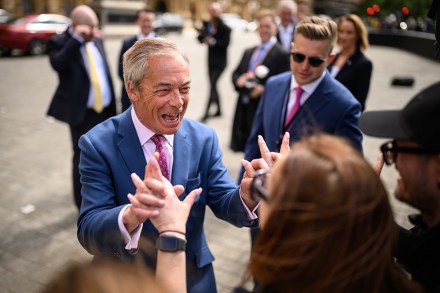
Donald Trump's latest comments on Ukraine and its leader have united the British political spectrum in condemnation – almost. Nigel Farage has tread a careful path given his friendship with the U.S. President, but also the fact that the majority of the British public disagree with Trump's critical attitude towards Ukraine. Can he keep this up? Cindy Yu talks to Katy Balls and James Heale. Produced by Cindy Yu.

Why the SNP can’t lose

What does a party get after nearly two decades in office, collapsing public services, an internal civil war and a £2 million police investigation? Re-election, again – perhaps with an even bigger majority. Last spring, under the hapless Humza Yousaf, the SNP’s grip on power in Scotland finally appeared to be loosening. But eight months on, the nationalists have managed a remarkable turnaround. The party now has a 15-point poll lead and it looks as though John Swinney will remain in Bute House at next year’s Holyrood elections. ‘The caretaker manager has got the job permanently,’ says one rival. The party’s change in fortunes owes less to Swinney’s skill as an operator and more to the spectacular collapse of Scottish Labour.

Why Rachel Reeves is safe, for now

14 min listen

Foreign affairs are inescapable this week, with the readout from the meeting yesterday between Russian and American diplomats in Saudi Arabia. We understand that Trump told Putin that Ukraine will be part of the next round of peace talks. However, Trump’s shock-and-awe foreign policy continues to deliver significantly more shock than awe, especially after he seemingly blamed Ukraine for starting the war. What is he thinking? Could there be more to Trump's foreign policy than he is letting on?  Back in the UK, pressure is mounting on Rachel Reeves as more inaccuracies in her CV come to light, and inflation rises to 3 per cent. There have been murmurs that she could be replaced, but is there a viable candidate to replace her?

How Europe’s consensus on Ukraine broke down

14 min listen

The future of Ukraine is being decided in a meeting between US and Russian diplomats in Saudi Arabia today. So far, we understand that America will insist that Ukraine is recognised as a sovereign nation, but NATO membership remains off the table. Meanwhile, European leaders have been cut out of the conversations. In response, they held their own summit yesterday, but it didn’t seem like they were all singing from the same hymn sheet. While the UK is pushing for higher defence spending and is willing to commit troops, other European nations seem more dovish, especially Germany and Italy. This is reflected in opinion polls as well. What's going on?  Oscar Edmondson speaks to James Heale and James Johnson, director at JL Partners. Produced by Oscar Edmondson.

Can Starmer be the bridge between Europe and the US?

14 min listen

There is lots to make sense of today in a huge week for European and world politics, with the fallout of the Munich Conference and today’s emergency summit in Paris. European powers are trying to navigate peace in Ukraine in the face of a belligerently isolationist Trump administration. The UK is caught between preserving its privileged position with the US and the desire for a European reset, as well as the need for an end to the war in Ukraine without giving in to Russia. Can Starmer bridge the transatlantic chasm that has opened up? Do the Europeans want us, and do the Americans need us?  Events in Europe will be incredibly consequential here in the UK.

What does Kemi Badenoch believe in?

Kemi Badenoch likes a good Thatcher comparison. The current Tory leader is presently reading Patrick Cosgrave's account of the Iron Lady's rise to the top. It was another book – John Ranelagh's Thatcher's People – that recorded how in one 1970s Conservative policy meeting, a speaker started to argue that the party should adopt a pragmatic middle way. Thatcher removed her copy of Hayek’s Constitution of Liberty from her handbag, slammed it down on the table and declared, ‘This is what we believe.’ This morning was Badenoch’s attempt to do something similar. Appearing at the Arc conference in London, the Tory leader used a 1,700 word speech to set out her vision to some of the 4,000 attendees assembled from across the globe.

Why JD Vance’s Munich speech matters

When was the last time a new U.S Vice President gave a truly memorable speech? The post has traditionally been regarded as being 'not worth a bucket of warm spit'. But JD Vance is now changing all that, after two striking speeches in as many days. First, there were his comments in Paris on the EU and AI. Then, yesterday, he shocked the Munich Security Conference, by lambasting Europe's record on free speech. Delegates arrived, thinking they would hear Vance address the key question of America's involvement in European security, after a week of confused messaging by his cabinet colleague Pete Hesgeth. Instead, he delivered a double-barrelled assault on various European governments – including that of Britain.

Kemi vs Nigel: who would Thatcher have backed?

15 min listen

It is 50 years since Margaret Thatcher was elected Conservative leader, and at this week’s shadow cabinet meeting, Lord Forsyth was invited as a guest speaker to mark the occasion. He noted the similarities between 1975 and 2025. Back then, the party was broke, reeling from defeat and facing the fallout from a reorganisation of local government. But, despite threadbare resources, Thatcher managed to rebuild to win power four years later. ‘You have the potential to do the same,’ Forsyth told Kemi Badenoch. However, when asked if a young Thatcher would have been drawn to the right’s insurgent Reform Party, Nigel Farage replied, ‘I don’t think there’s any doubt about it.’ He even claimed that Thatcher had voted UKIP in 1999.

James Heale, Andrew Kenny, Lara Prendergast, Ysenda Maxtone Graham and Nina Power

41 min listen

On this week’s Spectator Out Loud: James Heale wonders what Margaret Thatcher would make of today’s Conservatives (1:28); Andrew Kenny analyses South Africa’s expropriation act (6:13); Lara Prendergast explores the mystery behind The Spectator’s man in the Middle East, John R Bradley (13:55); Ysenda Maxtone Graham looks at how radio invaded the home (30:13); and, Nina Power reviews two exhibitions looking at different kinds of rage (35:13).  Produced and presented by Patrick Gibbons.

The UK’s balancing act over Trump’s ‘Ukraine peace plan’

13 min listen

Leaders from around the world are gathering at the Munich Security Conference, with the UK represented by Foreign Secretary David Lammy. All attention has turned to Ukraine, given statements this week by President Trump that he had spoken to Putin (and later Zelensky) about ending the Russia-Ukraine war. Trump's statements, for example that NATO membership should be off the table, put him at odds with European allies. The UK signed a joint statement with leaders from France, Germany and others, that Ukraine's independence and territorial integrity are unconditional. Is the UK walking a tight-rope between the US and Europe? Where does this leave the NATO alliance? And, with a strategic defence review underway, what should the UK's approach to defence spending be?

Kemi vs. Nigel: who would Thatcher have backed?

It is 50 years since Margaret Thatcher was elected Tory leader and at this week’s shadow cabinet meeting, Lord Forsyth was invited as guest speaker to mark the occasion. He noted the similarities between 1975 and 2025. Back then the party was broke, reeling from defeat and facing the fallout from a reorganisation of local government. But, despite threadbare resources, Thatcher managed to rebuild to win power four years later. ‘You have the potential to do the same,’ Forsyth told Kemi Badenoch. Yet there is a crucial difference between then and now: a rival on the right. Nigel Farage’s Reform party is vying with Badenoch to inherit Thatcher’s mantle. Each leader is competing for the same voters, members and donors.

Was that Kemi Badenoch’s worst PMQs?

14 min listen

Today was the final PMQs before recess, and Kemi Badenoch had been hoping to leave on a high before the break. She started promisingly, opening with the case of a family from Gaza being granted asylum in the UK under the scheme designed for Ukrainians. Starmer replied to say he disagreed with the decision of the courts and that the Home Secretary was already looking at how to close the ‘legal loophole’ enabling that decision. But Badenoch seemingly hadn't prepared for his rebuttal, exposing once again the weakness of her own technique. Does she risk being outshone by her own backbenchers? Also on the podcast, Kim Leadbeater is having to duck suggestions that she has watered down the safeguards in the Assisted Dying Bill by removing the need for a High Court judge.

Have Kemi Badenoch’s first 100 days been a success?

18 min listen

Kemi Badenoch has been Conservative Party leader for 100 days. Her party is fighting for survival, and she faces an uphill task greater than many of her predecessors: Reform UK surging in the polls, a depleted talent pool of just 121 MPs, and the hangover of 14 years of Conservative rule leaving her hamstrung on issues such as immigration and the economy. Has she managed to transform the party? What will the next 100 days look like? Oscar Edmondson speaks to James Heale and Paul Goodman. Produced by Oscar Edmondson.

Have Kemi Badenoch’s first 100 days been a success?

Leader of the opposition is regarded by many as the worst job in British politics. Peter Hennessy called the post ‘a transit camp – to either glory or oblivion’; Denis Healey quoted The Odyssey, saying it was better to be the ‘meanest swine heard on earth’ than ‘king of all the shadows’. Denied Whitehall's legions of functionaries, they must work on a shoestring, painfully aware that historical odds suggest their efforts are likely to fail. Yet few holders of the role have faced a more awesome challenge than Kemi Badenoch. Today she marks 100 days as party leader, with the Conservatives facing a fight for survival. Her task is harder than many of her predecessors’.

Have the Tories thought through their immigration policy?

12 min listen

The Bank of England has cut interest rates for the third time since the inflation crisis, taking the base rate to 4.5 per cent. The Monetary Policy Committee voted by seven to two to further reduce rates by 0.25 percentage points – a move that was widely expected by markets, but had been put into doubt after government borrowing costs surged in January and President Donald Trump announced his plans for substantial tariffs last week. Why have the Bank of England decided to cut rates? Also today, Kemi Badenoch has announced some policy! Ahead of the Labour government’s Border Security, Asylum and Immigration Bill being debated in Parliament next week, the Tory leader has unveiled her party’s latest offering on immigration. But have they actually thought it through?

Should Starmer stand up to Trump?

14 min listen

Trump has blown the Overton window wide open. In a press conference yesterday alongside Benjamin Netanyahu, the US president outlined his intention to ‘take over the Gaza Strip’, displacing 1.8 million Palestinians in the process. His plan – if you can call it that – is to build ‘the Riviera of the Middle East’. Many of the countries Trump has earmarked to resettle displaced Gazans have already condemned the takeover. How will the international community respond? Elsewhere, Keir Starmer seems more motivated by a desire to observe the rule of international law than his buddy across the pond. The Chagos deal seems set to be completed in the ‘coming weeks’.

Kemi let Keir off the hook on Chagos

This is Keir Starmer's worst week in politics since last week. With the Chagos deal eliciting criticism in cabinet, the PM is now under pressure over claims he potentially broke lockdown rules. Expectations were therefore low at today's Prime Minister's Questions. But with his back against the wall, Starmer produced a performance that left the Opposition benches frustrated and despairing. Kemi Badenoch started her six questions by asking about Chagos. Was it true, she asked, that the costs of this 'immoral' handover have now risen to £18bn? 'When Labour negotiates', she jibed, 'our country loses.' It was a decent opener – but Starmer had his answers ready. In a lengthy reply, he slowly explained how, 'without legal certainty, the base cannot operate in practical terms as it should.

Reform in ‘poll’ position

13 min listen

It's happened. Reform are now ahead of Labour, according to a voting intention poll by YouGov. Reform leads the landmark poll with 25 points, with Labour languishing all the way down in second place on 24 points. Meanwhile, the Conservatives place third on 21 per cent, the Liberal Democrats are on 14 per cent and the Greens on 9 per cent. While there have been a handful of polls to date putting Reform in the lead, they have so far been regarded as outliers. It's a slim lead, but does it point to a long term shift in UK politics – or can it be dismissed as a blip? Does this make a Tory-Reform pact more likely?  Oscar Edmondson speaks to Katy Balls and James Heale.  Produced by Oscar Edmondson.

Will Starmer choose Brussels or Trump?

Europe or America – the eternal British dilemma. Keir Starmer made clear he rejects such a binary approach in his Guildhall speech in December. But with Donald Trump threatening tariffs on the European Union, Labour’s attempts to ‘reset’ the European relationship face an almighty challenge. Yet that hasn’t deterred Nick Thomas-Symonds – Starmer’s trusted lieutenant – from giving it an almighty try. Speaking in Brussels this morning, Thomas-Symonds gave the optimist’s case for how better EU-UK relations would benefit security, resilience and economic growth for both sides.

Angela Rayner to create Islamophobia council

Today's Telegraph splash could have been designed in a laboratory to trigger Tory tempers. After months of deliberation, the paper reports that Angela Rayner's department now plans to create a council on Islamophobia. This will draw up an official government definition for anti-Muslim discrimination and provide advice to ministers on how best to tackle it. The person chosen to head the 16-strong council? Dominic Grieve, the uber-Remainer and former Attorney-General. Grieve wrote the foreword to the All Party Parliamentary Group on British Muslims report in 2018 that set out the definition of Islamophobia which the Labour party subsequently adopted. It stated that 'Islamophobia is rooted in racism and is a type of racism that targets expressions of Muslimness or perceived Muslimness.