James Heale

James Heale

James Heale is The Spectator’s deputy political editor.

Tories will remember this assisted dying vote

'I judge a man by one thing, which side would he have liked his ancestors to fight on at Marston Moor?' So said Isaac Foot, the Liberal MP and father of Michael. For some Tories, both in and out of parliament, Friday's assisted dying debate will carry a similar weight in judgements of character. Some 80 per cent of Tory MPs voted against Kim Leadbeater's Bill at Third Reading, with 92 against, 20 in favour and five registered abstentions. Of the 25-strong new intake, elected last year, just four backed Leadbeater's Bill: Aphra Brandreth, Peter Bedford, Ashley Fox and Neil Shastri-Hurst. Social conservatives note that the Tories were much more aligned on assisted dying than Reform UK, which narrowly opposed the change by three votes to two.

Jeremy Hunt on Trump, Budgets and Welsh whisky

18 min listen

On this week’s special Saturday edition of Coffee House Shots, James Heale sits down with Jeremy Hunt to discuss his new book, Can We Be Great Again?. The former chancellor and foreign secretary argues that Britain remains one of the world’s most influential nations – but is in danger of losing its nerve. He reflects on working in the Foreign Office during Donald Trump’s first term, makes the case for the BBC as a tool of soft power, and admits he wanted to be the first chancellor since 1997 to deliver a Budget with a whisky in hand. Produced by Oscar Edmondson and Patrick Gibbons.

MPs back assisted dying: what next?

13 min listen

MPs have voted – by a narrow 23-vote margin – in favour of legalising assisted dying. Bizarrely, the 51.9 to 48.1 per cent breakdown is the exact same as the 2016 referendum result, although hopefully this issue doesn't divide the Labour party in the same way that Brexit did for the Tories. The whole process is far from ‘Parliament at its best’, as it has often been claimed. Despite hours of passionate and emotional debate, key concerns about the drafting of the bill forced some who would naturally back assisted dying to oppose it. The overwhelming feeling is that a private member’s bill was not the right forum for this kind of legislation. So what comes next? The bill will now pass to the House of Lords, after which comes the business of putting the measures into practice.

Commons passes the assisted dying bill

The House of Commons has voted in favour of assisted dying by a narrow majority of 23. After four and a half hours of debate, MPs this afternoon backed Kim Leadbeater’s bill by 314 votes to 291. That is a marked drop in support from the legislation’s second reading in November, when MPs endorsed it with a majority of 55. The bill will now go to the House of Lords, where peers will scrutinise it. In the Lords, peers have mixed feelings Today’s debate was striking for the number of considered speeches made across the House. Diane Abbott spoke for a sizeable chunk of MPs when she said she backed the principle of assisted dying, but was against the specifics of this legislation.

What you need to know ahead of the assisted dying vote

14 min listen

It’s a historic day in Westminster, where MPs will vote on the assisted dying bill – the outcome of which could have huge repercussions for healthcare, politics and the courts. It’s such a significant day, in fact, that we’ll be recording another podcast just after the result is announced at around 2.30 p.m. Kim Leadbeater’s camp remains confident that the bill will pass, although many anticipate a much closer vote than at the second reading. This is in no small part due to high-profile members of the party being opposed to the legislation, and Keir Starmer remaining characteristically evasive on the issue. The backdrop, of course, is the resignation of a government whip, Vicky Foxcroft – though over a separate issue: Liz Kendall's plan to cut personal independence payments.

The understudied importance of political slogans

'Make America Great Again'. 'Take Back Control'. 'Yes We Can'. There are many political slogans – but only a handful are truly memorable. Done properly, they can win votes, define narratives and shape the great issues of our times. Yet, oddly, there are few, if any, publications which centre on election slogans – despite a plethora of political books being published since 2016. Now, a new work seeks to rectify this deficiency. 'Eight Words That Changed The World' centres on the specific words which help political parties win elections. Chris Bruni-Lowe, a veteran election strategist, has created an impressive database of 20,000 slogans from two centuries of elections across the globe.

The inside story of how Labour is dealing with Iran

16 min listen

This week, our new political editor Tim Shipman takes the helm and, in his cover piece, gives us the inside track on how Labour is dealing with Iran, Donald Trump and the prospect of escalating war in the Middle East. He writes that this could be the moment when all of Keir Starmer’s chickens come home to roost: his well-curated international image is at risk of crumbling as global crises present greater challenges; his hands are tied by legal advice from the controversial Lord Hermer; the Chagos Islands are being drawn into the US’s retaliation plans; and there remains the looming threat of backbench rebellion over Labour’s national security strategy. Tim is joined by James Heale and Lucy Dunn to discuss what may be Starmer’s biggest test yet.

Westminster waits for Donald’s decision

14 min listen

Westminster waits with bated breath to discover whether Donald Trump will ally with Israel in striking Iranian nuclear sites. The President called for ‘UNCONDITIONAL SURRENDER!’ from Tehran overnight. The day to day of domestic politics appears diminished by comparison with the ever-looming threat of an escalated conflict… But the show must go on: today’s PMQs saw Chris Philp (why not Robert Jenrick?) and Angela Rayner deputising for their absent leaders; Liz Kendall introduced legislation to enact cuts to personal independence payments for disabled people; the Commons voted to decriminalise abortion at any point until birth; and the Office for National Statistics (ONS) is up to its old tricks, announcing that inflation has fallen when the reality is much more complicated.

Assisted dying risks being Labour’s Brexit

On Friday, the Commons will vote on the third reading of the assisted dying bill. Most MPs expect it to pass by a narrower margin than the majority of 55 MPs last time. There has been a shift in momentum throughout the bill’s passage through parliament, with at least a dozen more names now voting against Kim Leadbeater’s legislation. This shift has coincided with the steady erosion of much of the goodwill which characterised second reading in November. The subsequent committee stage was characterised by fraught exchanges, with the changes Leadbeater made to the bill infuriating some colleagues. The private tensions within the Labour party were on public display last Friday.

Kemi Badenoch defends the Tories’ record on grooming gangs

Kemi Badenoch said that 'survivors and their families' have been 'ignored for far too long' as she appeared alongside those affected by the grooming gangs' scandal. 'What this morning is about is not the politics, but giving...(victims) a platform to say what they want to see from a national inquiry,' the Tory leader said at a press conference in Westminster. The Tory leader was on less safe turf when she claimed, slightly implausibly, that she wanted to 'take the politics out of' the issue Marlon West, the father of grooming gangs' victim Scarlett, asked about local-led inquiries and whether 'local authorities are going to be answering their own homework.' Fiona Goddard, a survivor who waived her anonymity, urged law enforcement to continue.

Can you ‘take the politics out’ of the grooming gangs scandal?

13 min listen

Yesterday Yvette Cooper announced a national inquiry into the grooming gangs scandal after the Casey Review found that a disproportionate number of Asian men were responsible and that governments and authorities had failed to step in over fears of racism. Anxious to press Labour on their U-turn – memorably, Starmer accused the Tories of ‘jumping on the far-right bandwagon’ – Kemi Badenoch held a press conference, joined by victims of the gangs. ‘I’m not doing politics now, when I’m in the Houses of Parliament, when I’m in the Commons, I will do politics’, she said. But can you really take the politics out of the grooming gangs scandal? Elsewhere, Donald Trump has fled the G7.

The British right is embracing direct action

First, it was Robert Jenrick tackling fare dodgers. Then it was Gareth Davies pursuing a thief. You might be forgiven for thinking that copies of Marvel’s Avengers were circulating in Portcullis House. But among elements of the British right there is a renewed appreciation of the benefits of direct action. Shut out of office until at least 2029, Tory and Reform politicians are finding ways to channel their frustrations into novel, low-cost, forms of protest. Nigel Farage’s aides have embraced humorous stunts such as beaming their membership numbers onto CCHQ and handing out blank books to journalists titled Highlights from my first 100 days, by Kemi Badenoch. Others, like Jenrick, try to think of new ways to land messages.

Israel strikes Iran – how will Iran retaliate?

14 min listen

Israel struck military and nuclear targets in Iran overnight in a major escalation of hostilities in the Middle East has begun further strikes on Friday. Iran has vowed retaliation though President Trump has warned Iran and encouraged the Iranians to continue negotiations over their nuclear programme. Further talks had been due to take place this weekend. What’s Israel’s objective? And does this underline the unpredictability of geopolitics, at a time when the UK has pledged significantly more money for defence?  Patrick Gibbons speaks to James Heale and Michael Stephens, associate fellow at RUSI. Plus: updates on assisted dying and the government’s plans for welfare. Produced by Patrick Gibbons.

Rachel Reeves, the Iron Chancer

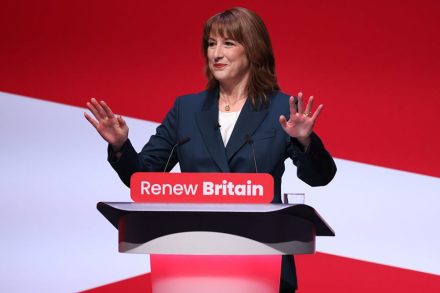
Gordon Brown may not be every teenager’s political pin-up. But as an Oxford student, Rachel Reeves proudly kept a framed photo of him in her bedroom. It was Brown who introduced the first multi-year spending review in 1998: the kind of big political set-piece speech which he relished. Reeves’s speech on Wednesday showed the level of constraints facing the Treasury this decade vs the 1990s. Chess, not poker, is the Chancellor’s chosen game of recreation. As a player and a politician, she prides herself on making decisions guided by skill, care and thought. Yet this week she staked her government’s future on a series of political bets. Her tax rises and changes to Treasury rules gave her some £300 billion to spend across Whitehall – including £113 billion in capital funding.

Spending review: smoke, mirrors and no strategy

10 min listen

There were few surprises in Rachel Reeves’s spending review today. Health was the big winner, with a £29bn increase in day-to-day spending and £39bn was announced to build social and affordable housing. The main eyebrow-raiser was the announcement that the Home Office will end the use of hotels for asylum seekers within this parliament; this could save £1bn or it could become Labour’s ‘stop the boats’ moment. The bigger picture was confusing – with increases measured against levels three years ago, is there really as much cash as Rachel Reeves wants you to think there is? And what’s the strategy behind it all?

Labour goes nuclear while Reform turns to coal

17 min listen

Rachel Reeves has pledged a ‘new era of nuclear power’ as the government confirms a £14.2 billion investment in the Sizewell C nuclear plant in Suffolk. This comes on the eve of Labour’s spending review, with the government expected to highlight spending pledges designed to give a positive impression of Labour’s handling of the economy. However, as Michael Simmons tells James Heale and Lucy Dunn, there are signs that the government’s National Insurance hike is starting to bite. Plus – Nigel Farage has made two announcements in as many days. This morning, he unveiled Reform’s new chairman, former MEP Dr David Bull, taking over from the recently returned Zia Yusuf.

David Bull is Reform UK’s new chairman

‘There are no disasters, only opportunities.’ Boris Johnson’s famous mantra is being embraced by Nigel Farage as he tries to turn Reform into a vehicle for government. Zia Yusuf’s un-resignation as party chairman last week offered Farage the chance to restructure his top team. At a press conference this morning, a chastened Yusuf handed over the baton to his successor, shaking hands under Farage’s watchful eye. Reform’s new chairman is Dr David Bull, a former GP, TalkTV personality and onetime MEP for the Brexit party. Yusuf lavished praise on Bull, declaring him a ‘more affable and charming man than I am’ and ‘universally loved across the party’.

Reeves cannot afford more episodes like the winter fuel U-turn

This afternoon Rachel Reeves finally completed the longest U-turn in British politics. Ahead of her spending review on Wednesday, the Chancellor confirmed she intends to reverse most of the cuts to winter fuel that she announced last summer. In July, she removed the benefit from ten million pensioners; today she admitted she will restore it to nine million of them. All those with an income of less that £35,000 will have their payments of between £200 to £300 restored this winter. Roughly two million pensioners with an income above £35,000 will lose it via PAYE or self-assessment. Cutting winter fuel was forecast to save £1.25 billion; today’s U-turn whittles that sum saved down to around £450 million.

Labour try to silence ‘austerity-lite’ accusations

13 min listen

James Nation, formerly a special adviser to Rishi Sunak and now an MD at Forefront Advisers, joins the Spectator’s deputy political editor James Heale and economics editor Michael Simmons, to talk through the latest on the government’s spending review, which is due to be announced on Wednesday. The last holdout appears to be Home Secretary Yvette Cooper, pushing for more police funding. But, against a tough fiscal landscape, what can we expect? And how much does it matter with the wider public? Plus – former chairman Zia Yusuf returned to Reform just two days after resigning, what’s going on? Produced by Patrick Gibbons.

Why Zia Yusuf changed his mind about quitting Reform

Well, that was quick. Within 48 hours of his resignation as party chairman, Zia Yusuf has returned to the Reform fold. In a joint Sunday Times interview with Nigel Farage, Yusuf has admitted to making a ‘mistake’. He will now take up a new revised role within the party, focusing on policy formation and leading on the party’s DOGE mission in local government. A new chairman will be named on Tuesday, amid a backroom shake-up focused on sharing the load on Reform’s leadership. ‘Welcome back Zia,’ wrote Richard Tice on one internal Reform WhatsApp group. ‘Hope you enjoyed your holiday!’ What led Yusuf to change his mind? The obvious precedent here is Farage himself in May 2024.