James Heale

James Heale

James Heale is The Spectator’s deputy political editor.

Andrew Rosindell defects to Reform

Reform UK has gained its seventh MP after Andrew Rosindell switched sides on Sunday night. The longtime Member for Romford was unveiled after a rapid series of talks earlier today. In a statement Nigel Farage said that ‘Andrew is a great patriot. The Tories’ lies and hypocrisy over the Chagos Islands betrayal has tipped him over the edge, and we are delighted to welcome him to our ranks.’ Rosindell is a longtime champion of the British Overseas Territories, an ardent Brexiteer and – at the time of his defection– a serving member of Priti Patel's shadow foreign affairs team. Two factors are understood to be responsible for his defection. The first is the aforementioned Chagos deal, the handling of which by the Tory front bench had come to increasingly exasperate Rosindell.

Debate: what’s the point of the Lib Dems?

24 min listen

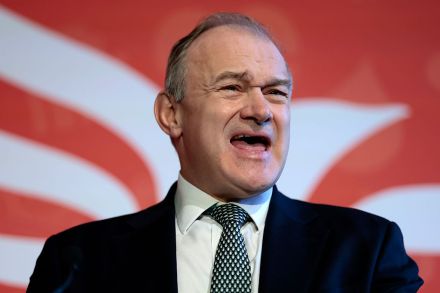
As Ed Davey condemned Donald Trump's military manoeuvres abroad, Annabel Denham looked on and asked 'what's the point of the Liberal Democrats?'. Thinking about the Lib Dem's longstanding europhile stance, the senior political correspondent at the Telegraph wrote: 'the party that once stood on a tradition of civil liberties now wants us to rejoin a bloc which regulates everything'. Calum Miller MP – foreign affairs spokesperson for the Liberal Democrats – joins Annabel and deputy political editor James Heale to address Annabel's challenge that the party is defined more by opposition the other parties than by their own policies. So, from localism and the UK's place in the world to free markets and social care, what do the Lib Dems stand for? And what constitutes 'liberalism' today?

Jenrick vs Badenoch: who won yesterday’s defection?

10 min listen

Yesterday was a breathless day in Westminster. The defection of Robert Jenrick spawned plenty of headlines and even more memes. But now that the dust has settled, how has the news been received? Was it a total victory for Reform, and evidence that they are slowly swallowing up the Tory party, or is Kemi still in the race? Today, the assisted dying bill is back in the Lords. As discussions about this legislation drag on, does its implementation look increasingly unlikely? Oscar Edmondson speaks to Tim Shipman and James Heale. Produced by Oscar Edmondson.

Jenrick vs Badenoch: who won yesterday's defection?

Inside Jenrick & Reform’s shotgun marriage

15 min listen

Robert Jenrick has sensationally defected to Reform. After a day that started with his sacking from the Conservatives – over plotting to reject – continued with the will-he-won’t-he drama of whether Farage would accept him as a new Reform member this afternoon; it ends with a press conference welcoming him to Farage’s gang. So what happens now? Kemi Badenoch was praised for her show of strength in swiftly expelling Jenrick, but she is undoubtedly weakened after this news and her frontbencher looks considerably lighter. Is this an inflection point for the Conservative party? And what role will Bobby J play in Reform – could he be their new shadow chancellor? Oscar Edmondson, Tim Shipman and James Heale discuss a hectic day on the British right. Produced by Oscar Edmondson.

Inside Jenrick & Reform's shotgun marriage

Robert Jenrick joins Reform

Robert Jenrick has rounded off an extraordinary day on the British right by formally joining Reform. Sacked by Kemi Badenoch at 11 a.m., he was in Milbank Tower announcing his defection at 4:30 p.m. A grinning Nigel Farage gave him a brief introduction – only for there to be an awkward 30-second pause before Jenrick finally appeared. The Newark MP gave a 15-minute speech which set out his reasons for quitting. After a fairly dry first half which echoed his 2024 leadership campaign – with a detailed litany of state capacity failings – he then moved onto the crucial section of the speech: a denunciation of the party he served for two decades.

Is Jenrick joining Reform?

8 min listen

Kemi Badenoch has sacked Robert Jenrick from the shadow cabinet, removed the Tory whip and suspended his party membership. In a video on X she claims, ‘I was presented with clear, irrefutable evidence that he was plotting in secret to defect in a way designed to be as damaging as possible’. The Tories compiled a bundle of evidence that included a dinner between Jenrick and Nigel Farage last month, and the fact that he had discussed switching to Reform with at least two allies. It is understood that he left a copy of his defection speech lying around, which included passages criticising Conservative colleagues. Is this – as we all suspect – the prelude to perhaps Reform's biggest coup yet? Tim Shipman and James Heale discuss. Produced by Megan McElroy and Oscar Edmondson.

Kemi sacks Robert Jenrick

Kemi Badenoch has sacked Robert Jenrick from the shadow cabinet, removed the Tory whip and suspended his party membership. In a video on X she claims she was ‘presented with clear, irrefutable evidence that he was plotting in secret to defect in a way designed to be as damaging as possible’. The Tories compiled a bundle of evidence that included a dinner between Jenrick and Nigel Farage last month, and established that he had discussed switching to Reform with at least two allies. It is understood that he left a copy of his defection speech lying around, which included passages criticising Conservative colleagues. Nick Timothy is also understood to be replacing him in his role as shadow justice secretary.

Starmer’s gags fail to save his PMQs

It used to be said that Keir Starmer had a magic lamp, such was his fortune in opposition. If this genie did exist, it has long since crossed the floor. The U-turn on digital ID last night gave Kemi Badenoch yet another stick with which to beat Starmer at today's session of PMQs. The Tory leader took full advantage of it with relish. 'Can I start by saying that I welcome the Prime Minister's U-turn?', she began. 'I feel like I say that every week'. Starmer's response was to seek refuge in humour, deploying a series of gags to mixed effect. 'They had more positions in 14 years than the Karma Sutra', he guffawed. 'No wonder they're knackered – and they left the country screwed.

What’s the future of the Scottish Tories?

19 min listen

The leader of the Scottish Conservatives, Russell Findlay MSP, sits down with James Heale to look ahead to May's pivotal Holyrood elections. He pushes back against the threat from Reform, arguing that Nigel Farage is trying to be 'all things to all people', and he is scathing about the lack of loyalty shown by those who have defected from the party – not just to Reform, but to the Liberal Democrats too. But with the collapse of the support Labour received in the 2024 general election – which Findlay calls their 'loveless landslide' – why aren't the Tories benefitting more? Plus, how did being the victim of a vicious acid attack in 2015 shape his politics? Produced by Patrick Gibbons.

Why Ed Davey is happy being boring

15 min listen

The Liberal Democrats have unveiled a new strategy on the NHS. Sir Ed set out his big, bold plan this morning: scrapping the UK–US pharmaceutical deal to redirect £1.5 billion into social care. It sounds like a substantial sum – until you remember it amounts to less than 1 per cent of the NHS’s annual budget. In today’s podcast, the team discuss why Ed Davey is leaning into being deliberately boring, in an effort to appeal to the perceived sensibilities of Middle England. Meanwhile, with the dust settling after Nadhim Zahawi’s defection, is Reform at risk of losing its outsider appeal, given that his resignation from government caused such a public outcry? Megan McElroy is joined by Luke Tryl, UK Director of More in Common, and James Heale.

Why Ed Davey is happy being boring

The Sopranos is not an obvious starting point when discussing the Liberal Democrats. But a TV programme about mafia, murder and manicotti offers a useful analogy for comparing Ed Davey’s strategy to that of Reform UK. David Chase, the Sopranos creator, recalls once meeting a TV exec who wanted LOP – ‘Least Offensive Programming’, the idea that the more palatable and likeable a character, the more they would be popular with audiences. It is a theory which Davey seems to have taken to heart, donning cricket whites and wetsuits in a bid to appeal to the perceived sensibilities of Middle England. His party’s policy offering is carefully calibrated not to offend the tastes of such voters. Today’s offering was a classic of the genre.

Zahawi defects: are Reform becoming Tories 2.0?

15 min listen

How many Tories is too many? That’s the question Westminster is asking after the unveiling of Reform’s latest defector. Nadhim Zahawi, Boris Johnson’s brief-lived Chancellor of the Exchequer, is Nigel Farage’s latest recruit. He told journalists that the UK had reached a ‘dark and dangerous’ moment, and that the country needed ‘a glorious revolution’. But are Reform just turning into the Tories 2.0? And what will Zahawi’s role be – is he the elusive shadow chancellor Farage has been searching for? Oscar Edmondson speaks to Tim Shipman and James Heale. Produced by Oscar Edmondson.

Why Nadhim Zahawi joined Reform

How many Tories is too many? That’s the question that Westminster is asking after the unveiling of Reform’s latest defector. Nadhim Zahawi, Boris Johnson’s brief-lived Chancellor of the Exchequer, is Nigel Farage’s latest recruit. He told journalists that the UK has reached a ‘dark and dangerous’ moment, and the country needed ‘a glorious revolution’. Farage is the William III to whom Zahawi is now turning. Zahawi said he was also joining Reform because he has concerns about free speech His motive, he said, was overhauling the British state. He attacked the ‘over-powerful’ civil service and quangos conceived under Tony Blair and fostered under the Tories.

Mums for Reform?

14 min listen

Britain’s mums are backing Nigel Farage. One in five Mumsnet users intend to vote for Reform at the next general election, the first time a party other than Labour has topped its poll. Having been more negative towards Farage and the right in the past, why are its politically engaged users changing their minds? Are they swayed by issues like single-sex spaces, or does it reflect a wider collapse of confidence in the establishment? James Heale speaks to Tim Shipman and Sonia Sodha. Produced by Megan McElroy.

How Reform plans to govern

18 min listen

2025 was the easy part for Reform. If they win the election, however, how do they actually govern? In The Spectator this week, Tim Shipman writes about the party’s plans to tackle Whitehall bloat, bypass the Lords and restore the authority of the Prime Minister over the various institutions of state. The man tasked with working this out is Danny Kruger, who is working up plans to push change through using Orders in Council – a device in the Privy Council – as well as statutory instruments and ministerial guidance to avoid the need for primary legislation. But the party is only in the foothills, and one source warns that ‘Nigel doesn’t trust other politicians’: can he build a winning team? Who has his ear? And does he actually want to be Prime Minister?

Labour’s next rebellion

When Bridget Phillipson arrived at the Department for Education, she knew which issue would define her tenure. Within days, she was facing dozens of new Labour MPs grilling her about how she planned to overhaul the system for special educational needs and disabilities (SEND). ‘From the outset we have gone out there to speak to the parliamentary Labour party,’ says an ally. ‘We know that this is a key postbag issue.’ Over the past ten years, the number of claims for special needs has exploded. A fifth of all children in England are now reported to have SEND; in Scotland, 43 per cent of pupils have some sort of additional learning need.

Can Laila Cunningham win London for Reform?

Laila Cunningham has been unveiled as Reform’s candidate for the 2028 London mayoralty race. Cunningham, who was elected as a Tory Westminster City councillor in 2022 and defected to Reform last June, has since become Reform’s most prominent female face, frequently handling media appearances and speaking out on crime during last summer’s campaign as a former Crown Prosecution Service lawyer. ‘She was the standout candidate,’ says one senior Reform figure. ‘A massive hit with London branches and members.’ ‘Cunningham was the standout candidate,’ says one senior Reform figure Inevitably, crime was the predominant focus of Cunningham’s initial remarks at Reform's press conference this morning. She promised that there was ‘A new sheriff in town.

International statesman or ‘never here Keir’?

18 min listen

From 'regime change' in Venezuela to Russia's war in Ukraine, the Labour government is trying to navigate complicated situations across foreign affairs. Having appeared to weather the domestic reaction to the situation in Venezuela, Keir Starmer is in Paris today to discuss Ukraine alongside Chancellor Merz and Presidents Macron and Zelensky. This is undoubtably important – but to what extent will this fuel the criticism that the Prime Minister spends too much time abroad? And how can Starmer reconcile the demands of foreign affairs with his domestic priorities? James Heale and Tim Shipman join Patrick Gibbons to discuss. Produced by Patrick Gibbons.

Regime change in Caracas … but not Westminster

20 min listen

It’s our first podcast back in the office of 2026 – and the year has started with a bang, of course, after the successful US operation to remove Nicolas Maduro from Venezuela. He will appear in a Manhattan court later today. This throws up all sorts of problems for Labour and the left more broadly – they seem to be hedging their bets on whether to condemn this as a breach of, if not international law, then certainly international norms, or to celebrate the removal of a corrupt regime. Could this be a dividing line for the Labour party? Elsewhere, the battle that Labour want to focus on is the cost of living crisis.

John Curtice: what to expect in 2026

21 min listen

James Heale sits down with Sir John Curtice, the doyen of British polling, to take stock of an extraordinary year in UK politics and to look ahead to what 2026 might hold. Curtice explains why the rise of Reform UK during the spring local elections marked a historic turning point – establishing the longest period in polling history where a party outside the traditional Conservative–Labour duopoly has led nationwide and assesses Labour’s continued slide, the unprecedented collapse in support for both major parties, and the growing influence of the Greens under new leadership.