James Forsyth

James Forsyth

James Forsyth is former political editor of The Spectator.

Will May continue to avoid naming a date for her departure?

The executive of the 1922 Committee have decided not to change its rules which prevent another vote of no confidence in Theresa May until December. But the chairman of the 1922 Committee Sir Graham Brady will ask the Prime Minister to provide more clarity on the timetable for her departure in all circumstances. What this means is that May will be required to say more than just that she will go when the withdrawal agreement passes. She will need to set out when she will leave even if the withdrawal agreement does not pass, which right now seems the most likely scenario. This is a compromise solution.

What would the Brexit party winning the European Elections actually change?

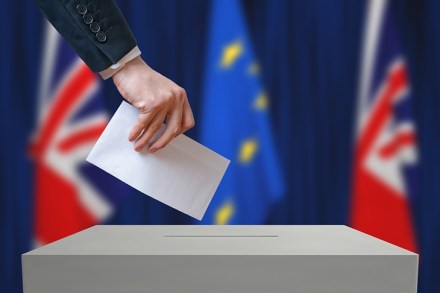
Even with all the volatility in British politics right now, it is still remarkable that the Brexit party are favourites to win the European Elections just a week after launching. But will the Brexit party winning actually change anything, I ask in The Sun this morning. I think there are a several ways it which it will have an impact. First, it’ll make MPs more cautious about a second referendum. One of the reasons why support for the idea has grown in parliament is a belief that Remain would triumph. A Brexit party victory would challenge that assumption. Next, I suspect that Farage’s new party topping the poll would make the Tory Brexit holdouts less inclined to compromise.

The Brexit backlash

One of the oddities of this parliament has been that, despite everything, the government has remained ahead in the polls up to now. But the political price of failing to pass a deal and leave the EU is now becoming apparent. Labour is ahead, Nigel Farage is back, and the right is split again. In the past month, Tory support among Leave voters has fallen by 20 per cent. In normal circumstances, such numbers would extinguish any hopes of a fourth term for the Tories. But Labour’s own divisions over Brexit and Jeremy Corbyn’s political weaknesses mean that this isn’t necessarily the case. A big argument is taking place within the Tory party about the correct response to the situation.

Richard Burgon should apologise for misleading the public

Sadly, politician misleads public is regarded by most people as a dog bites man story. But it is still quite rare for a politician to be caught in a straight untruth. This is what happened to Richard Burgon today, though, when video emerged of him saying that ‘Zionism is the enemy of peace’ when he had repeatedly denied in an interview with Andrew Neil that he had ever used that phrase, saying it didn’t represent his views. Burgon has now issued a statement, text here. In it, Burgon says that he regrets having used the phrase and ‘the simplistic language used does not reflect how I now think about this complex issue’. Burgon points out that he used the phrase before he became an MP.

Which way will Corbyn go on Brexit?

In September, Labour conference will impose on Jeremy Corbyn a policy of backing a second referendum in all circumstances. So, I say in The Sun this morning, what will he do between now and then? Corbyn has two paths open to him. He can either decide to embrace a second referendum now or do a deal with Theresa May so that the UK is out of the EU before Labour conference meets. If Corbyn went the second referendum route, he would ensure that Labour did well in the European Parliament elections next month as it scoops up the votes of energised Remainers while the Tories have lumps taken out of their support by Nigel Farage’s Brexit party and Ukip. He’d also take the wind out of Change UK’s sails.

This medium extension has reduced the chances of a general election 

If the EU had granted the UK an extension until the end of this year or for another 12 months, there would have been a Tory leadership contest and then a general election. Yesterday, key figures in the party were discussing a timetable that would have seen a new leader in place by the summer, a blitz on domestic policy and then a general election in the autumn. But the 31 October deadline complicates matters. Any new Tory leader would have to go to the country straight away, which is not an appealing prospect given the Tory party’s current travails. So, the chances of a Tory leadership contest and a general election have receded. The irony of the situation is that both the Macron and Merkel approaches might have broken the Brexit impasse.

Brexit’s last best chance

It’s been even more humiliating second time round. The United Kingdom has again been reduced to asking the European Union for an extension to the Article 50 process. Once was bad enough but twice marks a profound failure of government and Parliament. It has left the EU deciding the country’s future. In Westminster, there is no sign of a resolution to the Brexit impasse. Cross-party talks between Labour and the Tories continue. Sources close to those talks feel that a common position is unlikely to be found. A deal between the two parties would require that Theresa May and Jeremy Corbyn both be prepared to split their parties. This seems unlikely.

Theresa May’s Brexit strategy is brewing trouble within her party

The Commons has voted by 420 to 110 to approve Theresa May’s decision to ask for an extension to the Article 50 process to the 30th of June. It isn’t a surprise that this motion passed, there is an anti no-deal majority in the Commons, but the 97 Tory votes against and the number of abstentions, including several Cabinet Ministers, highlights how controversial May’s approach is within her own party. May’s approach would become even more controversial if she agreed to a customs union as part of a deal with Labour, as Liam Fox’s broadside against it showed. The talks between the government and Labour finished for the day earlier and will now not resume until after the European Council.

Are both May and Corbyn prepared to risk splitting their parties?

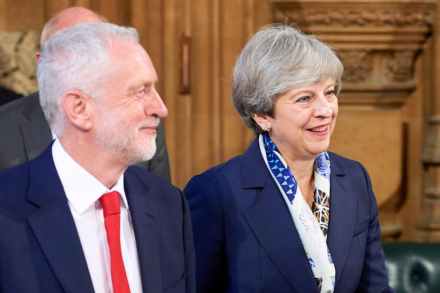
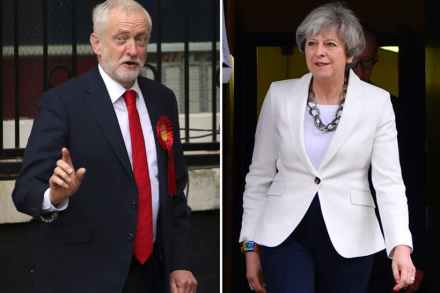
The irony of the stalemate in the cross-party Brexit talks is that Theresa May and Jeremy Corbyn are not that far apart on the issue, as I say in The Sun this morning. They might use different language, but what they want is really quite similar. But while they may not be that far apart, their parties are. A deal would require not one of them, but both of them to be prepared to split their parties. If Theresa May was to soften her deal to try and get Labour support, she would exacerbate the divide within her own party. I am told that in the talks, the government has tried to point out to Labour that the deal does, in the backstop, effectively include a customs union. But Labour has been insistent that the phrase ‘permanent customs union’ must be in any deal.

Theresa May’s Brexit talks with Corbyn run into trouble

Talks between Labour and the government over Brexit aren’t going anywhere. Labour has released a statement this evening saying that: “We are disappointed that the government has not offered real change or compromise.” The Guardian’s well informed Heather Stewart is reporting that Labour are saying that the government weren’t offering any changes to the political declaration, but just a memorandum to sit alongside the deal. This is, obviously, not enough for Labour. The impasses in these talks is not that surprising. Both sides know that a deal risks splitting their own party and the prospects of two parties being prepared to take that risk simultaneously was fairly low.

The losing game

Iraq, the financial crisis, the expenses scandal — all of these undermined trust in politicians. They created an impression of a governing class that was devious, inept and venal. But the damage they did to public faith in politics is nothing compared with the damage that will be done by a failure to deliver Brexit. Brexit is the result not just of a referendum but of two general elections. The Tories would not have won a majority in 2015 without their pledge to hold a referendum on Britain’s EU membership. In 2017, Labour wouldn’t have been able to deny the Tories a majority if they had not been committed to respecting the result of that referendum. Yet Brexit is now in danger of being cancelled altogether.

One vote in it as Yvette Cooper’s bill passes

Yvette Cooper’s bill, requiring the Prime Minister to seek an Article 50 extension to avoid no deal, has passed by 1 vote—going through all its Common stages in a single evening.  The passage of this bill at such speed even though Theresa May has said she’ll ask for an extension, is another demonstration of how committed the anti no-deal majority in parliament is. But before these anti no-deal MPs pat themselves on the back, they should realise the limits to their action. Parliament is sovereign, but it isn’t sovereign over the EU27; and it is they who’ll decide whether to grant the UK an extension to the Article 50 process.

Theresa May admits she will have to soften Brexit

Theresa May’s statement in Downing Street was very different in tone to what she said a fortnight ago. She praised the best efforts of MPs and tried to strike a more conciliatory pose. May said she would request another Article 50 extension but she wanted it to be short so the UK would not have to participate in the European Elections. She invited Jeremy Corbyn in for talks, with the aim of either agreeing a common position on the future relationship or agreeing on a series of propositions to put to MPs with the government being bound by the result. In adopting this approach, May is essentially admitting that she can’t get the votes from her own governing bloc to pass her deal and so will have to soften Brexit. This will cause unhappiness in her own party.

All Brexit options fail again. So, what happens now?

The second round of indicative votes has failed to break the Brexit deadlock. Again, none of the options got a majority. The customs union came closest for a second time, falling only three votes short on this occasion—273 to 276. Nick Boles’ Common Market 2.0 was 21 short of a majority despite the support of Labour and the SNP. If the DUP’s 10 MPs had voted for it, then it would have got exceptionally close. Boles responded to the defeat by quitting the Tory party saying that it was the Tory party’s refusal to compromise that meant no consensus could be found. The confirmatory—or second referendum—was 12 votes shy and there was a 101 vote majority against revoking Article 50 to prevent no deal. So, what happens now?

Why Norway Plus is a step too far for the Tories

The Norway Plus campaign has had a big boost today with both Labour and the SNP saying they’ll whip in favour of it. Given that the plan might well be acceptable to the DUP – as it means that the backstop wouldn’t come into force – and the Cabinet will be abstaining, it has a chance of getting a majority tonight. Though the number of Labour MPs who won’t want to back continuing free movement or are holding out for a second referendum means it’ll probably fall just short. If it does pass, then the chances of a general election go up again. Fighting an election on the customs union would be a hard ask. It is difficult to see how other issues wouldn’t crowd it out after the first few days of the campaign.

How can you break the Brexit impasse?

MPs could have voted to take back control yesterday, instead—as I say in The Sun this morning—they decided to hand control to the EU. The EU Council will meet on the 10th of April to decide whether to offer the UK a further extension or not. It remains unlikely that the EU will force a no deal outcome on the UK. But any extension they offer the UK is going to involve this country taking part in the European Elections. On Monday, MPs will vote again on various Brexit options. The options that might get a majority, though, would go directly against what the Tories said in their election manifesto. Could a government really seek to negotiate something that was directly contradictory to its manifesto? This is the question preoccupying Cabinet Ministers this weekend.

May’s loss means Britain is heading for a lengthy Brexit delay 

The chances of a lengthy delay to Brexit have just increased substantially. The withdrawal agreement has been defeated by 58 votes, which means that there’s little point in the government bringing it back next week even if it could find a procedural way to do so. The 34 Tory rebels means that even if some way could be found to reassure the DUP, the government still wouldn’t have the numbers to win. Parliament’s actions mean that this country’s immediate future is now in the hands of the EU. There’ll be a special EU Council on the 10 of April to decide whether or not to grant the UK a further extension.

After May

The most effective political insult of modern times was delivered by Norman Lamont in 1993, when he declared that John Major’s government gave ‘the impression of being in office but not in power’. But it is truer of Theresa May than it ever was of Major. Lamont argued that Major paid too much attention to opinion polls, meaning that the government reacted to events, rather than shaping them. But May’s position is far, far worse: she has lost control of the House of Commons. On the most important issue of the day, there is something close to a shadow government operating. Such is May’s predicament that the best card she had left to play was the precise timing of her departure. She told Tory MPs that she'd quit if they passed her deal; she didn't say when.

The DUP delivers a big blow to Theresa May’s Brexit deal hopes

The DUP have just delivered a big blow to Number 10’s strategy for winning meaningful vote 3. They have announced that they won’t vote for it because the changes they wanted to the backstop have not been delivered. Without the DUP, it is very hard – if not impossible – to see how Theresa May can win any meaningful vote. So, where do the government go from here? Well, I suspect there’ll be a mad dash in the next 24 hours to see what further reassurances can be provided to the DUP on the Union. I wonder if there might be legislation to ensure the Northern Ireland First Minister’s role on the joint committee, for instance. But there is a fundamental difference between the DUP and the Tory Brexit rebels.