James Forsyth

James Forsyth

James Forsyth is former political editor of The Spectator.

Talking about Brexit won’t be enough for the next Tory leader

The Tory leadership contest has been dominated by Brexit so far. To a large extent, this is inevitable: Brexit is the biggest issue facing the country and the Tory party. But dealing with Brexit is a necessary but not sufficient condition for a Tory recovery. If the Tories are to win a fourth term in office, they are going to have a compelling domestic agenda as well. So far, the ideas put forward in this contest haven’t been particularly imaginative—doubling defence spending and a penny off the basic rate are standard Tory fare. The biggest question, to my mind, for the Tories is how to revive the ownership society. The Tories cannot expect people who don’t have any hope of obtaining capital, to be capitalists.
The Labour meltdown means Corbyn must choose sides on Brexit

These results are dire for both main parties: the Tories finished fifth and Labour third. Theresa May’s resignation has taken some of the sting out of the Tory humiliation, but Jeremy Corbyn finds his leadership under more pressure than it has been since the 2017 general election result. Most worryingly for him, the membership is not behind him on Brexit. The results for Labour are awful. Look at Scotland and Wales, former Labour strongholds. In Scotland, the Brexit Party came second and Labour finished fifth with just 9 per cent of the votes, down from 26 per cent last time. In Wales, the Brexit Party won in 19 of the 22 council areas. For the first time ever, Labour has finished behind Plaid Cymru.

The two sides of the Tory leadership contest

The way to think about the Tory leadership contest is—I say in The Sun, this morning—that it is like a tournament with two sides of the draw, with each side sending one candidate into the final, membership round. One side of the draw is for full-on Brexiteers. Here Boris Johnson, Dominic Raab, Andrea Leadsom, Steve Baker and Esther McVey will duke it out. The other side of the draw features the Cabinet candidates: Jeremy Hunt, Sajid Javid, Michael Gove, Matt Hancock and Rory Stewart. Whoever comes out of the full-on Brexit side of the draw will go into the final round as the strong favourite given Tory members’ views on the subject. I understand that Boris Johnson has edged ahead of Dominic Raab on this side of the draw.

May’s speech is a message to Brexiteers: compromise

One of the aims of Theresa May’s resignation statement was to try and shape the Brexit debate in the Tory party ahead of the forthcoming leadership contest. Her decision to emphasise the need to find consensus in parliament was a clear pop at those such as Boris Johnson, Dominic Raab, Esther McVey and Andrea Leadsom who have accused her of compromising too much. Though the irony of this is that May didn’t level with her party in 2017 on what her loss of the Tory majority meant for Brexit, and what could be achieved. Equally telling was that May didn’t talk at all about her successor going to Brussels and seeking changes from the EU. May clearly believes that the solution to this impasse will have to be found at Westminster.

What will happen if Theresa May tries to cling on?

On Friday, Sir Graham Brady, chairman of the 1922 committee, will go and see Theresa May. It is expected that she’ll tell him and then the country the date of her departure as Tory leader. If May tries to hang on, Brady will have to open the sealed envelopes which reveal whether the '22 executive has voted to change the rules and allow an immediate no confidence vote in May—even those on the executive who oppose a rule change accept that there is a majority for one. Number 10 know this too, which is why I don’t think there’ll be any attempt by May to argue that she’s not going anywhere. But May will not resign immediately. Rather she’ll name a date in the next few weeks.

May’s grave mistake

The European elections were a gift for Britain’s two new political parties, Change UK and the Brexit party. But only the latter seized the opportunity. Change UK have had myriad problems. They have been unable to settle on a name and a logo. Their MPs, exiles from the two main parties, have struggled to understand how minor parties get noticed. But the biggest problem seems to be that their strategy almost assumes Brexit has happened: how else to explain their failure to propose some kind of Remain alliance for this contest? In order to get lift-off, Change UK need Labour to have ‘betrayed’ Remain voters. But the Labour leadership has consistently tacked towards a second referendum to avoid a full-on breach with its Remain base.

Will Theresa May resign rather than be pushed?

The upshot of today’s drama is that Graham Brady, chairman of the 1922 committee, will go and see Theresa May on Friday. Now this might not seem like much. But I understand that the ‘22 Executive will meet again if necessary on Friday. In other words, this meeting is Theresa May’s chance to resign rather than be pushed. Cabinet and ministerial support for May is draining away at a rapid rate. It is a sign of the end when No. 10 is having to refuse requests for meetings. If May doesn’t go, then it is almost certain that there’ll be a move against her as soon as parliament returns from recess. As one of those involved in today’s discussions tells me, this is now a question of precise timings.

Theresa May’s time is almost up

Things are moving fast in Westminster. Theresa May’s position is now more precarious than it has been at any point in her premiership and that’s saying something. Three things have changed. First, it is clear that May’s last roll of the dice hasn’t worked—the Withdrawal Agreement Bill isn’t going to pass second reading. As a consequence of that, Tories who want a deal – as well as those who favour no deal – are now moving towards the belief that May should go. The third thing that has happened is that cabinet ministers, who up to now have thought that a delay to a leadership contest was in their interests, are now realising that association with this package is toxic in party terms.

Change UK’s latest transformation is its worst yet

As Change UK struggle for relevance, they have become a Revoke party. This is a significant shift from being a second referendum party. One might disagree with having a second referendum before the result of the first one has even been implemented; but there would be a check on the decision through the fact that the public would get to have a say before their previous vote was discarded. Parliament simply revoking Article 50, though, would be a fundamental breach of faith with the electorate. It would do untold damage to the democratic fabric of this country. Change UK’s argument, as made by Chuka Umunna on the Marr Show yesterday, is that there isn’t time for a second referendum now and that they would seek to have one after having revoked Article 50.

The Brexit Party’s success should be a wake-up call to MPs

On Thursday, voters will deliver a wake-up call to this parliament. They’ll vote in numbers for a party that was only launched last month and has no MPs. As I say in the Sun this morning, the Brexit Party’s success will be a sign of how frustrated voters are that Brexit hasn’t happened yet. But there’s no sign that parliament is going to heed this wake-up call. The collapse of the Labour Tory talks is a sign of that. Next, the Commons will almost certainly vote down the withdrawal agreement bill at second reading. This would leave Brexit in great danger. If Britain looked set to leave the EU without a deal, then the parliamentary majority against no deal would try and stop it. Already, 191 MPs have voted to simply revoke Article 50 to avoid no deal.

Theresa May is clinging on – but not for much longer

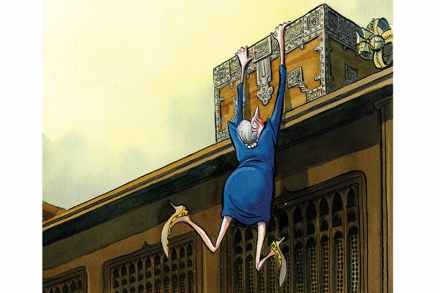
Theresa May’s promise to bring the withdrawal agreement bill to the Commons next month has proved enough for the 1922 Executive. A statement just released by its chairman Sir Graham Brady following their meeting with the Prime Minister says simply that he and her ‘will meet following the 2nd reading of the bill to agree a timetable for the election of a new leader of the Conservative and Unionist Party’. If second reading of the bill fails, Theresa May will be out of options. At that point, she will have little choice but to stand down. Some loyalist MPs fear that a desire to hasten her departure will lead to MPs voting the bill down. Today’s statement attempts to head that off by saying that the timetable will be set regardless of what happens with the vote.

Cometh the hour

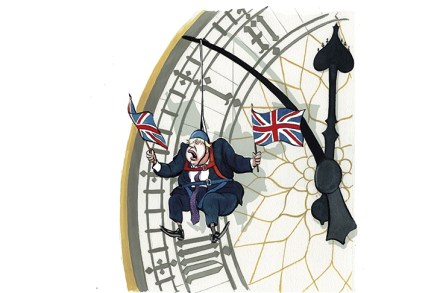
The worse things are for the Tories, the better for Boris Johnson. If the Tories were ahead in the polls, he’d have little hope of becoming leader. MPs would choose someone more clubbable, less divisive, and more interested in them personally: who didn’t annoy so many of them so much. But Tory MPs are now contemplating an existential crisis. Tory voters are defecting en masse to Nigel Farage’s Brexit party. The Conservative party’s survival may well turn on winning these voters back, and the former foreign secretary — the tribune of Leave, the buccaneering Brexiteer, the darling of the grassroots — is the most obvious person to do that. Suddenly, Boris is back and in contention for the leadership again.

When will Theresa May bring the Withdrawal Agreement Bill to the Commons?

Theresa May has one last hope for getting her Brexit deal through. As I say in The Sun this morning, she can bring the Withdrawal Agreement Bill to parliament and try and get MPs to vote for it. Not John Bercow, or anyone else, can stop her from using this as a fourth attempt to get her deal through. But if MPs defeat it again, then Mrs May will have nothing left. If the WAB was voted down, then a new Queen’s Speech would be required to bring it back—and Mrs May would struggle to pass one of those. This is why there’s such intense debate about when to bring this bill to the Commons. Number 10 is more gung-ho than the Brexit Department which worries about the consequences of bringing the bill and losing it.

May’s compromising position

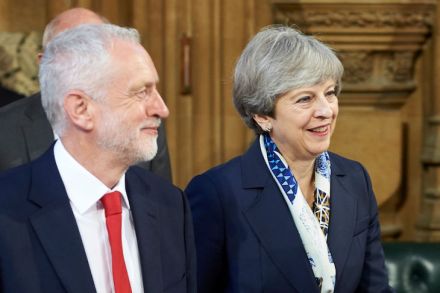
Can Theresa May and Jeremy Corbyn reach a satisfactory compromise on Brexit? The two leaders’ positions are not, in fact, that far apart. Neither wants a second referendum. They both think that the referendum result means that Britain has to leave the EU. Yet neither wants a dramatic rupture. They would prefer to inch away from the union. Gavin Barwell, Theresa May’s chief of staff, has remarked that half of what Labour has asked for in the cross-party Brexit talks has already been requested from the EU but to no avail. Even on customs, the standout issue, the differences between Labour and the Conservatives are more semantic than anything else.

Will Theresa May bring her Brexit bill back to Parliament next week?

At tonight’s meeting of the 1922 Committee, Graham Brady told Tory MPs that Theresa May would see the executive of the Committee next week to discuss their request for more clarity on her departure plans. He also told Tory MPs that Theresa May was committed to making progress on the withdrawal agreement bill in the near future. I understand that this means an attempt at second reading before the European Elections on the 23rd of May. Now, if you are looking for a clue as to when this second reading might be attempted, consider that next Thursday is a three line whip for Tory MPs despite the fact that all that is currently scheduled is a general debate.

What a May / Corbyn Brexit deal would look like

The local election results showed that both main parties are paying a price for the Brexit impasse. This, as I say in The Sun this morning, means that the cross-party talks have a better chance of succeeding than they did. Those in the talks are more optimistic than they have been about getting some kind of agreement, if not a full-blown deal. But they know that things could change very quickly. I understand that the compromise being drawn up goes as follows. The UK would initially enter into a ‘comprehensive customs arrangement’ with the European Union. This would be very similar to a customs union.

How the Tories can turn their dire election results around

The local election results are dire for both the Tories and Labour. The Tories have lost over a thousand seats—and that is with the Brexit Party not standing in these elections. If Nigel Farage’s new party had been on the ballot paper, who knows how bad the Tory loses would have been. But at the same time, Labour—after nine years in opposition and coming from the low base of 2015—are going backwards. They have, so far, lost council seats. The two main parties are, in national projected vote share, tied on 28 per cent of the vote. This is a reminder of just how much of an ugly baby contest British politics is right now. Both Labour and the Tories appear to be relying on the other’s failings to win the next election.

Nigel’s revenge

Something’s been missing from Westminster these past few days. Normally, in an election week, there is a buzz about the place. Politicians feast off their encounters with the voters, coming back from the campaign trail with new theories about what the public really want. But this time, few MPs from any party seem keen to talk about this week’s local elections — or the impact they are likely to have on Brexit, Theresa May’s tenure in No. 10 and the future of British politics in general. This is because they know that the European elections, which are just three weeks away, will have a huge influence on all of these questions. The European elections are the vote that was never meant to happen.

Theresa May will have to give the ’22 an answer

Next week, Theresa May will sit down with Graham Brady, the chairman of the 1922 Committee. He will ask her for more clarity on her departure plans. As I say in The Sun this morning, the answer that Mrs May gives will go a long way to determining her future. On Wednesday, the executive of the 1922 Committee rejected a change to its rules which would allow another vote of confidence in Mrs May’s leadership. But this decision was taken narrowly, 9 to 7 with 2 abstentions, and the executive did decide to ask the Prime Minister for more detail on when she will go. If Mrs May simply carries on saying that she’ll leave if the withdrawal agreement passes, that will not be enough.

Ripe for reform

Any hopes that the parliamentary recess would help resolve the great Brexit impasse have been dashed. MPs have returned from their break more entrenched in their positions. The essential facts remain. Theresa May doesn’t have enough votes to pass the withdrawal agreement. Equally, no Brexit option from a second referendum to a customs union has demonstrated that it can command the support of the Commons either. Tory MPs lack confidence in May’s leadership but can’t agree on who should succeed her, which keeps May in place. The consequence of all this: the drift continues. On the Tory side, the debate is fast coming down to what are MPs more scared of: May staying as Prime Minister until December or Boris Johnson taking her place? Most Tory MPs would reject both.