James Forsyth

James Forsyth

James Forsyth is former political editor of The Spectator.

Lockdown easing is a tricky balancing act for Boris

The progress of the vaccine programme — and the falling death toll — will reopen the debate in the Tory party about how quickly restrictions should be eased, as I say in the magazine this week. This will be tricky for Boris Johnson. He is inclined to go slowly to ensure that this is the last lockdown; just look at how he is now talking about a national tier system, not a local one, to avoid once more over-promising and under-delivering. But Tory MPs see the fast pace of vaccination as meaning that it will soon be safe to open up again. One long-time ally of the Prime Minister admits that as deaths start to fall there will be increased pressure for easing up.

Vaccine success is a boost for Boris – and the Union

Imagine for a minute what British politics would be like without a Covid vaccine. The cabinet would be deeply, and possibly irrevocably, split between those who favoured another year of lockdown on public health grounds and those who thought that the country had no alternative in the circumstances but to ease restrictions and learn to live with the virus. The 100,000 death toll would have been reached with no hope in sight and a public sense that, almost inevitably, things were going to get worse. The vaccine has changed so much. It has given people hope. There is a belief in the general public that this will be the last lockdown, which is bolstering morale and compliance.

Boris’s easy ride at PMQs

13 min listen

At PMQs today, Keir Starmer denied Boris Johnson's claims that he wanted the UK to remain in the EU's vaccine procurement scheme. Could a successful domestic rollout, away from the bloc's programme, be seen by the public as an upside of Brexit and cause the opposition problems? Katy Balls speaks to Isabel Hardman and James Forsyth.

How the EU can help calm Brexit tensions in Northern Ireland

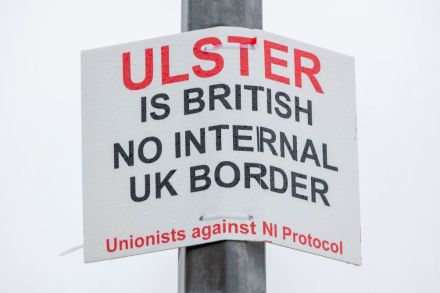
The next Northern Ireland assembly election must take place by 5 May next year. The MLAs voted in then will decide whether or not to continue the Northern Ireland protocol, which requires the UK authorities to apply EU rules on various goods entering Northern Ireland. If a majority voted against (that is all that would be needed as the petition of concern, which requires a higher threshold, would not apply), then the protocol would fall. At the moment, it looks very unlikely that the election will result in an anti-protocol majority. But it would clearly be bad for stability in Northern Ireland if the campaign turned into an attempt by Unionists to rally a majority that could vote down the protocol.

Will Joanna Cherry’s sacking strengthen Sturgeon?

13 min listen

Joanna Cherry was sacked from the SNP's Westminster frontbench today. The former justice spokesperson, who is an ally of Alex Salmond, was dropped as the party continues to row over transgender rights. Has the move strengthened leader Nicola Sturgeon's position? Katy Balls speaks to James Forsyth and Stephen Daisley.

Where the vaccine debate goes next

10 min listen

The EU's row with AstraZeneca came to a head on Friday, with the bloc publishing its contract with the pharmaceutical giant and introducing vaccine export controls. With the UK's rollout continuing at pace, where will the vaccine debate go next? Isabel Hardman speaks to James Forsyth and Katy Balls.

Covid has proven the benefits of ‘Made in Britain’

Thatcherite Tories have long been suspicious of the idea of an industrial strategy. Their view was that it wasn’t the job of government to pick winners (or, more likely, protect losers). But the pandemic has changed all that, I say in the Times this morning. The old certainties of globalisation have come crashing down. One influential secretary of state’s view is that ‘it proves the error once and for all of the Blair-era assumption that the location of your manufacturing doesn’t matter.’ The last year has shown that even in this globalised age the nation state trumps the market.

Should Britain give away its vaccines?

13 min listen

Novavax's vaccine has shown 89 per cent efficacy in UK trials. The government has bought 60 million doses of the jab, and it's expected that production will begin in Teesside later this year. But, as the EU's rollout languishes and their row with AstraZeneca escalates, should Britain consider giving away its vaccines? Katy Balls speaks to James Forsyth and Fraser Nelson.

Why shouldn’t the Prime Minister visit Scotland?

14 min listen

Boris Johnson visits Scotland today. To nobody's surprise, Nicola Sturgeon has criticised the visit coming at this moment in the pandemic; while Keir Starmer has defended the PM's right to do so as the Prime Minister of the United Kingdom. Cindy Yu talks to Katy Balls and James Forsyth about the visit and whether or not it will backfire.

This is just the start of the Brussels-Britain bust-ups

This is a crucial year for the UK’s two most important relationships, I say in the magazine this week. If the Johnson/Biden diplomatic relationship has got off to a better start than expected, the same cannot be said of the post-Brexit UK/EU one. The alignment between Johnson and Biden on climate change, Russia and China is helping the alliance. This relationship should become closer still given the two side’s agreement on China, the most important geo-political issue of the decade. The EU will attempt, often in not particularly edifying ways, to assert itself as the bigger partner.

Britain will prove more Biden-friendly than the EU

This is a crucial year for the UK’s two most important relationships. The Anglo-American alliance, our strongest diplomatic and security partnership, now needs to adjust to a new president in the White House. Meanwhile we are also starting our new relationship with the EU. The question is: can the two sides move on from the wrangling of the Brexit negotiation? To great relief in British diplomatic circles, the new US administration and the UK have got off to a good start. Joe Biden has shown that he is keen to move on from the Donald Trump era.

How the EU vaccine row could escalate

The EU is now insisting that AstraZeneca use vaccine produced at its UK site to make up for a shortfall in its supplies to the EU. This is likely to kick off a major row as the UK went to great trouble to ensure that it had first refusal on all the Oxford vaccine produced in the UK. Indeed, AstraZeneca’s willingness to accept that condition is a major reason why Oxford ended up partnering with them. It is not hard to see how this situation could escalate. The EU is already saying that companies should notify them before exporting vaccine out of the bloc, and the German government is going further, calling for full on export controls on vaccines.

Will Tory MPs accept a March return of schools?

16 min listen

In his statement to the Commons today, Boris Johnson suggested March 8 as a date for schools to return. This is earlier than some predictions but certainly later than many were expecting when schools were shut earlier this month. Katy Balls talks to James Forsyth and Isabel Hardman about what this tells us about when a more general lockdown easing may happen.

Could the EU’s vaccines spat impact the UK’s supply?

10 min listen

In the last 24 hours, the EU has threatened to place export controls on vaccines manufactured in the EU; while a German paper has been corrected by Berlin for misreporting that the German government thought the Oxford-Astrazeneca jab was only eight per cent effective in over-65s. Isabel Hardman talks to Katy Balls and James Forsyth about what's going on and whether it could impact Britain's supply.

How will history remember Brexit?

25 min listen

In his upcoming book, the historian Robert Tombs writes that Brexit may not be the historically significant event we think it is. On the podcast, Katy Balls speaks to him and James Forsyth about just how history will remember Brexit, and what are the future events that can still change our memory of it.

Boris can’t just say no to Nicola

By May, the acute phase of the Covid crisis should be over. But the elections scheduled for that month threaten to throw the government into a fresh crisis. Nicola Sturgeon looks set to lead the Scottish National Party to a majority in the Holyrood elections. Given that the SNP manifesto will commit the party to a second independence referendum, she will claim this victory as a mandate for holding one. But no legal referendum can take place without Westminster’s consent, which will be refused. As Covid recedes into the distance, a fresh justification will be needed for saying no But, as I argue in the Times today, the danger is that a two-letter answer with no further explanation could be seen as typical Tory, or English, arrogance.


Is the Cabinet divide on Covid back?

11 min listen

The Guardian reported today that the Department of Health is considering offering a £500 isolation fee to encourage more people with symptoms to get tested. But the Treasury hit back fast saying that they had not seen these proposals and that the idea was 'bonkers'. Katy Balls talks to James Forsyth and Fraser Nelson about what the row says about the conversations behind the scenes.