Will there be a new PM by tomorrow?
14 min listen
Katy Balls, James Forsyth and Fraser Nelson discuss the latest party leader endorsements by MPs and the likelihood that the next Prime Minister will be in 10 Downing Street by tomorrow.


James Forsyth is former political editor of The Spectator.
14 min listen
Katy Balls, James Forsyth and Fraser Nelson discuss the latest party leader endorsements by MPs and the likelihood that the next Prime Minister will be in 10 Downing Street by tomorrow.
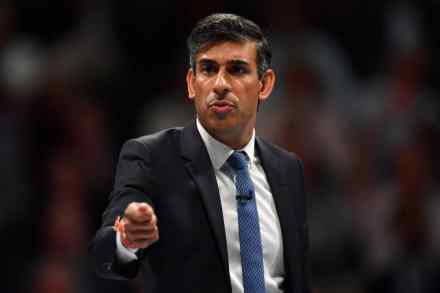
Rishi Sunak has now formally declared that he is running to be Prime Minister and leader of the Conservative party. In a statement released online, he says he is running to ‘fix our economy, unite our party and deliver for our country’. With well over 100 backers, Sunak — who I should say I have known for years — is guaranteed to be on the ballot on Monday. This morning, sources close to Boris Johnson have been emphasising that he is going for it too, even though he isn’t yet formally declared. This suggests that there’ll be no joint ticket between the two men. The pair met last night, but nothing has come out about the meeting.
16 min listen
James Heale, James Forsyth and Katy Balls discuss whether the Tories are an impossible coalition to preside over.
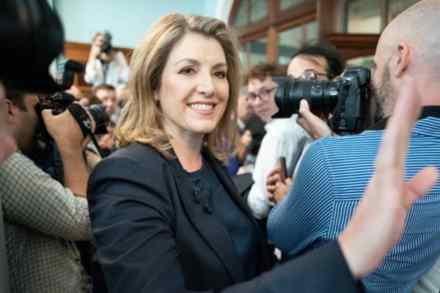
We have the first declared candidate of this Tory leadership contest. Penny Mordaunt has just taken to Twitter to announce she is running. Given that Mordaunt got more than 100 votes in the final parliamentary round, she has a pretty good chance of making the 100 nominations threshold. Now we wait to see if there is now a big push from her team to get more supporters to go public (you can keep tabs on those numbers here). https://twitter.com/PennyMordaunt/status/1583466532344328193?ref_src=twsrc%5Etfw The biggest question at the moment is over whether Boris Johnson runs or not.
15 min listen
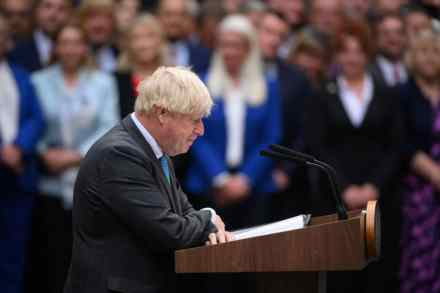
Whilst no candidate has officially declared their candidacy for the Tory leadership race, speculation is rife about a possible Boris Johnson return. Could he get the 100 supporters he needs? Will he extend an olive branch to Rishi Sunak?James Heale speaks to James Forsyth and Katy Balls.Produced by Max Jeffery and Oscar Edmondson.
The question on everyone’s lips tonight is whether Boris Johnson can get 100 MP nominations by Monday. This is the bar that the 1922 committee have set. Johnson’s supporters have been coming out tonight at pace: he is up to 20-odd supporters already. But the question of whether he can get to 100 is difficult given the circumstances that led to his departure and the coming privileges committee investigation. Johnson’s advocates, though, think that if he can get that 100 and make it to the member’s round, then he will become the favourite.

41 min listen
On this week's podcast: After the markets saw off Kwarteng, Trussonomics and now Truss herself, James Forsyth writes in The Spectator that the markets will be driving British politics for the foreseeable future. He is joined by Britain economics editor at the Economist Soumaya Keynes to discuss the institutions now dictating government policy (00:56).Also this week:Looking ahead to the American midterms next month, are we heading for a 'red wave'? Freddy Gray says in his piece for the magazine that the Democrats could be in for a shellacking come November. He is joined by Washington editor at Spectator World, Amber Athey (13:41).And finally:Should the Parthenon Marbles be returned to Athens?
11 min listen
Forty-four days into her premiership, Liz Truss said she was resigning as Prime Minister. There will now be a week-long race to elect a new leader. Who will be the contenders?Isabel Hardman speaks to Katy Balls and James Forsyth.Produced by Natasha Feroze.
‘Governments don’t control markets,’ the new Chancellor, Jeremy Hunt, likes to say. But there are times when markets control governments. The market, or the fear of how the market might react, is now the driving force in British politics. It explains the dramatic developments of the past week and will determine the new Prime Minister’s fate. Last month’s ‘mini-Budget’ was doomed because it required that the government borrow £70 billion more than had been planned. This money would have to be raised in the gilts market, and Liz Truss and Kwasi Kwarteng assumed that the markets would be happy to continue to lend so much at such low rates. But they missed the fact that attitudes were changing.

75 min listen
Fraser Nelson, James Forsyth, Katy Balls and Kate Andrews discuss plans to stop spiralling inflation – and a spiralling government.
10 min listen
Suella Braverman has resigned as Home Secretary over a row on immigration measures. Grant Shapps has been selected to replace her. Will more follow?Isabel Hardman speaks to Katy Balls and James Forsyth.

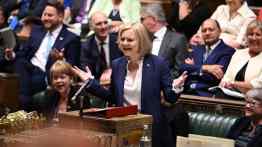
Whenever a PMQs is meant to be a crunch moment, it rarely turns out to be. Having sat through pretty much everyone since David Cameron versus Gordon Brown, my experience is that a prime minister under pressure turns up with a series of well-prepared, defensive lines that they fall back on in answer to every question. The leader of the opposition’s questions are too long, allowing the prime minister some wriggle room as they grit their teeth and get to the end of the session. The consensus is that it wasn’t as much of a disaster as it could have been and Westminster moves on to the next crunch point. Now, today is a unique occasion. I cannot think of another PMQs where the prime minister has turned up having U-turned on so much of what they said the week before.
13 min listen
Another day, another u-turn. Liz Truss met with her Cabinet today and is reportedly considering u-turning on the pensions triple lock. Are ministers heading for more ‘lengthy discussions’ on public spending? Should we brace ourselves for resignations?Also on the podcast, as Hunt looks at which departments to cut, what could this mean for the NHS?Katy Balls speaks to James Forsyth and Isabel Hardman.Produced by Oscar Edmondson.
14 min listen
This afternoon Leader of the House Penny Mordaunt stepped in for Liz Truss to field an urgent questions called by the Leader of the Opposition. What could the Prime Minister have been doing which was so urgent that she couldn't attend?Also on the podcast, after Jeremy Hunt reverses nearly all of Trussonomics, will there be a raft of departmental cuts? Could we be looking at a number of Cabinet resignations? James Heale speaks to Fraser Nelson and James Forsyth. Produced by Natasha Feroze and Oscar Edmondson.

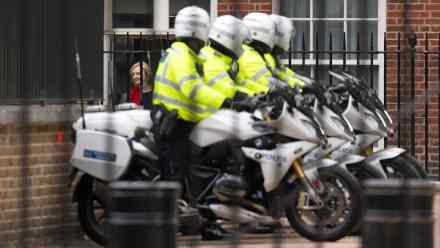
The safest place for a minister to be in a crisis is at the despatch box of the House of Commons, one old hand used to say. His argument was that at the despatch box you at least had a modicum of control, you could respond to events in your own words. But Liz Truss has taken the opposite view, she is dodging Keir Starmer’s urgent question in the House of Commons. Instead, the woman she pipped to the members’ round of the Tory leadership contest, Penny Mordaunt, will take her place. One expects that Mordaunt, a strong Commons performer, might rather enjoy the chance to show Tory MPs how she goes up against Keir Starmer. Truss’s absence will only serve to highlight how mute she has been.
18 min listen
Chancellor Jeremy Hunt gave a statement this morning in which he outlined plans to scrap 'almost all' the tax measures announced by his predecessor, Kwasi Kwarteng just four weeks ago. In one of the largest U-turns in history, the markets have become the most important force in British politics.James Forsyth, Katy Balls, Kate Andrews and Fraser Nelson discuss what may happen over the next few weeks.Produced by Max Jeffery and Natasha Feroze.

In a few hours’ time, Liz Truss will have to sit next to Jeremy Hunt as he announces the reversal of all but a handful of measures announced in Kwasi Kwarteng’s mini-Budget. It is the biggest and most rapid U-turn in recent British political history. The Prime Minister will sit there as her agenda – and the platform on which she ran for the leadership – is dispatched by the Chancellor, who is now her gaoler; just imagine the market reaction if he ever resigned. It is a remarkable development and one that leaves Truss holding the seal of office, but not much more. Her intellectual and political project is over.

In a sign of how nervous the government still is about the state of the gilts market, the Treasury has just made a pre-market announcement that Jeremy Hunt will bring forward further measures from the ‘Medium Term Fiscal Plan’ today – in other words, more measures from the mini-Budget will be abandoned. The Treasury says Hunt has briefed Andrew Bailey, the Governor of the Bank of England, and the Debt Management Office on these plans. We will get details on these measures when Hunt makes a statement to the Commons later today. Presumably this is what Hunt and Liz Truss agreed at Chequers when they met on Sunday. The fact that Hunt is making this statement is another illustration of the power he now holds in government, he is Truss’s gaoler.
Liz Truss’s gaoler has just done another BBC interview. Jeremy Hunt continued to try and give himself maximum room for manoeuvre, saying ‘I’m not taking anything off the table’. He repeated his message: We are going to have to take some very difficult decisions both on spending and on tax. Spending is not going to increase by as much as people hoped, and indeed we're going to have to ask all government departments to find more efficiencies than they'd planned. And taxes are not going to go down as quickly as people thought, and some taxes are going to go up. It will be fascinating to see if Truss is as direct on this when she is asked the question at PMQs next week.
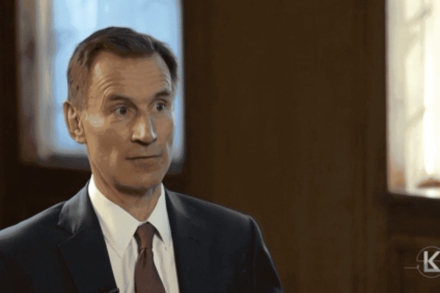
Jeremy Hunt is a man who thinks he is in clear charge of government fiscal policy. After Liz Truss’s press conference yesterday which abandoned the corporation tax cut and opened the way to spending cuts, there were briefings to the papers that no more U-turns were coming. But on the media round on Saturday morning, Jeremy Hunt put the whole mini-Budget under review. He was clear that taxes would rise – in direct contradiction of what Truss had said on the campaign trail, spending wouldn’t go up as much as expected and that every department will have to find savings. The Sunday Times is now reporting that the cut in income tax will be delayed for a year, and return to the date that Rishi Sunak had originally proposed.