James Forsyth

James Forsyth

James Forsyth is former political editor of The Spectator.

Why Starmer’s going after the Lords

It’s not just the government that’s now beholden to forecasts from the Office for Budget Responsibility. Keir Starmer told the BBC that Labour doesn’t ‘quarrel with the number that the OBR put out as a target or trying to get the debt down’. So Starmer accepts that the government needs to find around £50 billion through spending cuts or tax rises to get debt falling as a percentage of GDP in the medium term. This applies not only to the current government, but to any government he may run in the future. Of course, Labour stress that they would make ‘different choices’ to the Tories in how they close a fiscal gap of more than £50 billion.
Can Rishi weather his first Tory rebellion?

14 min listen

Rishi Sunak is facing his first Tory Commons rebellion on the issue of UK house building targets. Could this be game over?  Also on the podcast, after Chloe Smith announced that she will be leaving politics at the next election, could more follow her out of parliament? Katy Balls speaks to James Forsyth and Isabel Hardman.  Produced by Oscar Edmondson.

Is the government trying to soften Brexit?

13 min listen

Over the weekend, government briefings that they will be looking towards a Swiss-style arrangement with the EU reignited the Brexit rows. Dormant Brexiteers like Nigel Farage and the European Research Group resurfaced, making it clear that they would not accept a so-called 'Chequers 2.0'. On the record, the government has been keen to reject this briefing. So what really happened? Katy Balls speaks to Fraser Nelson and James Forsyth. Produced by Cindy Yu.

Austerity 2.0: is all the pain really necessary?

34 min listen

It's no doubt a depressing time for the British economy, but how much that is the fault of the government, either for getting us to this stage and/or for not setting out a more optimistic exit route? On this episode, Cindy Yu moderates a debate between Fraser Nelson, James Forsyth and Kate Andrews who battle out their respective views. Produced by Cindy Yu and Matt Taylor.

Britain needs its missing workers back

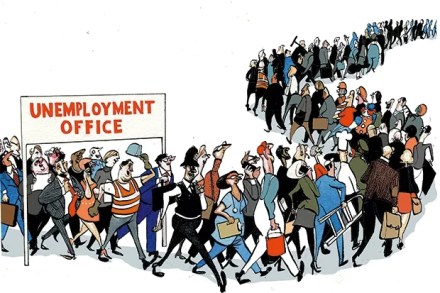
Amid all the economic gloom at the moment, the unemployment figure is one bright spot. It is just 3.6 per cent, down from 3.8 per cent this year, and close to a historic low. But, as I say in the Times this morning, even this glimmer of hope is tarnished. The low unemployment number disguises how many people have left the labour force: more than 20 per cent of working-age Brits are economically inactive, meaning they are neither in work nor looking for it. More than five million are claiming out-of-work benefits.  Even in the coming recession, unemployment won’t exceed 5 per cent, according to the Office for Budget Responsibility. (Remember how in the 1980s, unemployment went into double digits).

Will Hunt’s budget survive scrutiny?

9 min listen

The front pages are almost universally bad today, but the government is more concerned with the reaction from the markets, which, so far, have not turned against yesterday's budget. Could this high tax low spend fiscal statement yet pass scrutiny, given the torrid economic climate at large? Cindy Yu talks to James Forsyth and Katy Balls. Produced by Cindy Yu.

Will the Autumn Statement break the Tory truce?

12 min listen

The Conservative party is still digesting Rishi Sunak and Jeremy Hunt's Autumn Statement, a far cry from the last fiscal statement from this party. Have the Prime Minister and the Chancellor managed to deliver a budget that hits the political sweet point of cornering Labour without splitting their own party? Isabel Hardman talks to James Forsyth and Katy Balls. Produced by Cindy Yu.

Three ways Hunt’s Autumn Statement will be judged

The government expects its Autumn Statement to be judged on three tests. First of all, how do the markets react? The decisions announced today by the Chancellor Jeremy Hunt mean that the government will be issuing £31 billion less in gilts – in other words, in borrowing – than expected after the mini-Budget. The initial market reaction to this has been positive. However, the new fiscal rule – to have debt falling as a percentage of GDP by the end of the five-year forecast period – is still relatively loose. Hunt and Sunak are relying on their credibility and their willingness to make difficult choices to reassure the markets.   Perhaps the biggest challenge for the government though is just how bad the economic situation is.

What do we know about the Polish missile tragedy?

12 min listen

Last night there were fears of a direct attack from Russia on a NATO country, after a missile struck two Polish nationals on the border with Ukraine. An investigation is now underway, but who is responsible for these deaths? Also on the podcast, Dominic Raab took PMQs today despite bullying allegations against him gathering pace. What are the latest developments in the bullying row?  Cindy Yu speaks with James Forsyth and Katy Balls.  Produced by Cindy Yu and Oscar Edmondson.

The contours of the next election have been set

Since the 2008 financial crash, British politics has been moving faster and faster, and becoming less stable. This frenzy reached its apogee with Liz Truss’s 44-day stint in No. 10 which had enough drama for a ten-year premiership. One of the challenges for Rishi Sunak is to calm things down and to return politics to a more normal pace. It will be a good sign for the government if the World Cup dominates newspaper front pages for the next month. However, there is one area where Sunak needs politics to move faster than normal. Jeremy Hunt’s Autumn Statement is the kind of fiscal event that you would expect at the beginning of a parliament. It is about dealing with a difficult fiscal inheritance. It is designed to fix the ‘mistakes’ of the previous administration.

Nato to meet amid uncertainty over missile that hit Poland

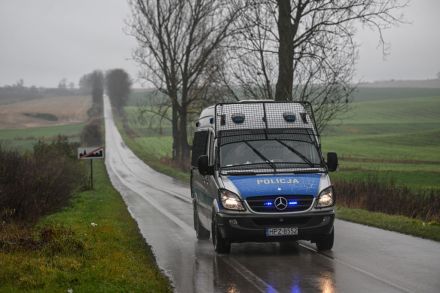
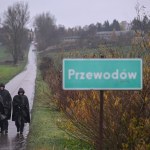
Uncertainty still surrounds what happened with the missile that struck the village of Przewodów in Poland, around four miles from the Ukrainian border, which killed two farm workers last night. President Joe Biden has said that the missile’s trajectory means it is ‘unlikely’ it was fired from Russia. At the moment, it is unclear whether it was a missile fired by Russian forces in Ukraine, one knocked off its course by a Ukrainian interception – or a Ukrainian air defence missile gone astray. There are reports this morning that the initial US verdict is that it was probably a Ukrainian air defence missile.

Why is the workforce shrinking?

11 min listen

Figures released today show that the number of people in employment has dropped by 50,000 since September, despite a national worker shortage of 1.25 million. Does this shed some light on the recession? Are these shortages simply because of disputes over pay or could the NHS waiting list be to blame?  Also on the podcast, as public sector pay stagnates, how many will be lost to the private sector?  Cindy Yu speaks to Fraser Nelson and James Forsyth.  Produced by Cindy Yu and Oscar Edmondson.

Has the next cold war been put on hold?

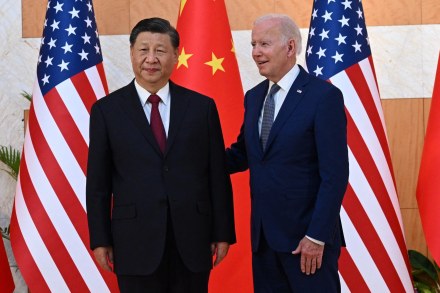
The Biden-Xi meeting at the G20 seems to have been relatively productive, and has at least improved the lines of communication between the two superpowers. The Chinese readout has them declaring that the relationship is ‘not what the international community expects from us’.   The first in-person meeting between Biden and Xi since Biden became president does seem to have moved US-China relations on from the depths they fell to after Nancy Pelosi’s visit to Taiwan. In a sign of the relative détente, the US Secretary of State Antony Blinken is expected to visit China in the New Year. But the aggressive Chinese language about the status of the island is a reminder of how problematic this factor remains to the relationship.

What can we expect from the G20 summit?

11 min listen

The G20 summit kicked off as world leaders arrived in Bali overnight. Ahead of the summit, Biden and Xi met to discuss tensions over trade, tech and human rights. The two claim they are ready for candid exchanges as China-US relations are at their lowest in decades.  Rishi Sunak also flew to his first G20 summit. The Prime Minister is expected to hold multiple bilateral meetings as he tries to make his mark on the world stage. Meanwhile, can he keep a grip on domestic issues ahead of the Autumn Statement this Thursday? Isabel Hardman speaks to Fraser Nelson and James Forsyth.

Is the UK on the brink of recession?

11 min listen

The ONS forecasts reveal that UK output fell by 0.2 per cent between July-September. Whilst not a recession yet, it is increasingly likely the next quarter will see another dip following a surge in interest rates. Will the government's messaging change ahead of the Autumn Statement next week? Also on the podcast, Kate and James discuss Kwasi Kwarteng's interview in The Times as he reflects on his short time as Chancellor.  Isabel Hardman is joined by Kate Andrews and James Forsyth. Produced by Natasha Feroze.

Was Kwasi Kwarteng to blame for the mini-Budget fallout?

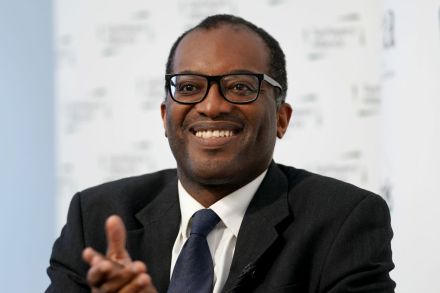
Kwasi Kwarteng is clearly right about one thing in his interview with Talk TV: his departure hastened the end of Liz Truss's premiership. Sacking a Chancellor is a dramatic, and risky, move for a Prime Minister at the best of times. But when the Prime Minister and the Chancellor are known to have been in lockstep, it is particularly risky. Truss could never answer the question of why, if Kwarteng had to go over the mini-Budget, she did not.   What is also right is that Kwarteng was more prepared to talk about spending cuts than Truss was.

Nurses on strike: how can the NHS cope?

18 min listen

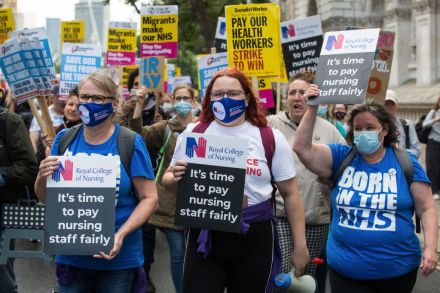
For the first time in history, nurses have voted to go on strike. As the NHS grapples with record wait lists and excess deaths, how will it cope this winter? Also on the podcast, James and Isabel discuss the ongoing situation in Northern Ireland. And how will Matt Hancock fare in the jungle? Natasha Feroze is joined by Isabel Hardman and James Forysth.

How much has the Williamson row damaged Rishi Sunak?

11 min listen

Though Gavin Williamson has now resigned, Rishi Sunak still had to fend off a number of questions on the disgraced minister at today's Prime Minister's Questions. How much damage has the row done to the Prime Minister? Cindy Yu talks to James Forsyth and Isabel Hardman. Produced by Cindy Yu.

What Liz Truss got right

Soon after Kwasi Kwarteng’s not-so-mini-Budget, I found myself in conversation with former aides to David Cameron and Boris Johnson respectively. They were both irritated by the way Liz Truss was being praised as a ‘true Tory’ in some Conservative circles, compared with her more cautious predecessors. One of them remarked, as the other nodded, that people will soon ‘find out there’s a reason why we didn’t do those things’. Sure enough, the mini-Budget collapsed spectacularly and cost Truss her premiership. One of her mistakes had been simply to reject what had gone before, rather than to try to understand why compromises had been made. Her year-zero approach was one of the things that led to her being ejected from office so quickly.

Will Hunt protect the pensions triple lock?

12 min listen

Ahead of the Autumn Statement next week, questions remain over whether the government intends to protect the pensions triple lock. With pensioners being such an important part of the Conservative party's demographic, will Jeremy Hunt risk the inevitable backlash? Also on the podcast, what will Rishi Sunak do about Gavin Williamson as the bullying claims grow? Cindy Yu is joined by Isabel Hardman and James Forsyth. Produced by Cindy Yu and Natasha Feroze.