James Forsyth

James Forsyth

James Forsyth is former political editor of The Spectator.

It’s on

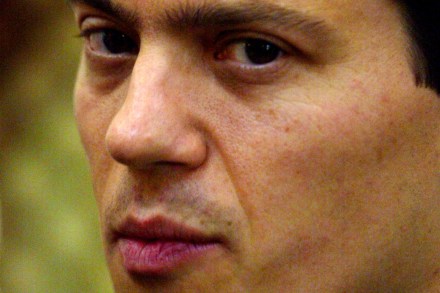
I’ve just been watching the Miliband press conference on TV and it is clear that Miliband isn’t going to back down. He didn’t actually declare he was standing for the leadership but he turned down countless opportunities to rule himself out. Typical of Miliband’s approach was that when he was asked if the Labour party would be mad to change leader before the next election, he jokingly replied that as a loyal Labour member he would say that the Labour party does anything mad. Miliband had clearly not been scared off by the assault on him in The Evening Standard by anonymous Brownite sources. The Sunday papers are becoming ever more critical.
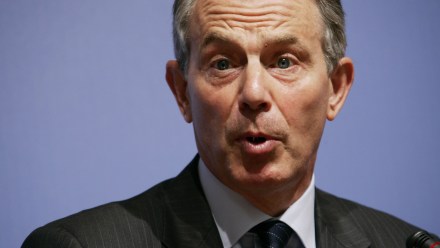
Turmoil ahead for Labour

The atmosphere in Westminster right now is incredibly febrile, no idea or speculation seems too outlandish to contemplate. But it does seem to me that a couple of things are being overlooked. 1). The Brownites won’t go quietly: All this talk about delegations, letters and rolling resignations often forgets that if the Brownites decide to stay and fight then this process will be very long and bloody. The reason that getting Blair to give a date for his departure in September 2006 was comparatively easy was that Blair did not want to get engaged in an unseemly struggle to stay in power. But it would be a major surprise if the Brownites walked away. After all, from the top down they have nothing else to go to. 2).

A nudge from the past

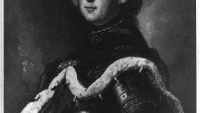
Rory Sutherland, The Spectator’s Wiki Man, sends along a historical example of nudging, the Cameroons’ new favourite idea: Frederick the Great of Prussia saw the potato's potential to help feed his nation and lower the price of bread, but faced the challenge of overcoming the people's prejudice against the plant. When he issued a 1774 order for his subjects to grow potatoes as protection against famine, the town of Kolberg replied: "The things have neither smell nor taste, not even the dogs will eat them, so what use are they to us?" Trying a less direct approach to encourage his subjects to begin planting potatoes, Frederick used a bit of reverse psychology: he planted a royal field of potato plants and stationed a heavy guard to protect this field from thieves.

Miliband sets out his stall

Forget anonymous quotes, we now have a David Miliband op-ed to analyse.  In a 900-odd word Guardian article explaining why he believes that “the times demand a radical new phase” in the New Labour project Miliband does not mention Gordon Brown once. (Interestingly, Jack Straw is the only Labour politician Miliband name-checks ).  Indeed, the article takes several not-so-subtle shots at the Prime Minister. For instance, Miliband concedes that “With hindsight, we should have got on with reforming the NHS sooner” when everyone knows that it was Brown who blocked NHS reform. In a supposed dig at the Tories he declares that “in government, unless you choose sides, you get found out” but many will take this as a criticism of Brown’s dithering.

Power out

If you haven’t already, do read Melissa Kite’s column in the Telegraph today. It contains this very telling anecdote about Gordon Brown’s attempt to shoot the breeze with the press: "As is the tradition when travelling with the press, the Prime Minister came back during his flight from Baghdad to talk to the lobby hacks. After summarising his view on Iraq, which included a lot of baffling figures about economic growth in Basra, Mr Brown attempted some "small talk". It was so alarming, it felt as if the entire plane was adopting the brace position. A couple of people looked like they were about to open the cabin doors for some air. All that was missing was a pilot's announcement urging us to place the overhead masks on our faces and stop panicking.

Harriet tries to be helpful

Harriet Harman has denied The Times story about her preparing a leadership bid but I’m sure this part of her denial will not go down well in Southwold: "I do not accept 'it is over'."  With a few more protestations of loyalty like this, it might soon be over.

The Times: Harman and Miliband are readying themselves for a contest

I’m sure most readers are sick of anonymous quotes and accusations but with so few people prepared to go on the record they do give a far better sense of what is being talked about in Westminster than the public protestations of loyalty that are coming from ministers and MPs. The Times has just published a story online by Sam Coates and Francis Elliot which contains a fascinating, if anonymous, insight into Harriet Harman’s current thinking: It is alleged that Ms Harman was spotted on Thursday night, watching the scale of Labour's defeat in the Glasgow East by-election on the television, telling aides "this is my moment".

The dilemma

Steve Richards’s column in The Independent is absolutely essential reading. Steve dismisses the argument that Jack Straw would be prepared to wield the knife just for the sake of the caretaker’s broom. If Straw does strike, he’s in it for the long haul—one reason why David Miliband would almost certainly challenge Straw if there was a vacancy. Steve concludes by summing up the dilemma that Labour MPs face:  “If I were a Labour MP, I would note the polls, all of which suggest the Tory lead is soft and that almost as many voters identify with Labour as they do with the Conservatives. There has been no fundamental sea change and, as the last year has shown, fortunes can shift dramatically.

Another poll shows Labour heading for a Gord awful defeat

The latest Populus poll for The Times shows just what kind of defeat Labour are currently heading for at the next election. The Tories lead by 16 points from Labour who are on 27 percent. Peter Riddell report that on a uniform swing, this would lead to a Tory majority of close to 150 seats and see Labour reduced to having only three Southern MPs outside of London. 52 percent of voters say that dumping Brown would be good for Labour’s prospects. But 44 percent think that “a younger, fresher, more charismatic alternative” would not increase Labour’s chances of winning. Perhaps, most worrying for the government is how much more pessimistic voters are becoming about their own personal economic circumstances.

McCain gets a break as new poll shows him four points ahead of Obama

John McCain has not had much luck recently. Last week while Obama was receiving acres of news coverage and using iconic sights as the backdrop to his photo-ops, McCain was struggling to stay in the news and had to cancel his planned photo-op on an oil rig because of the conditions. The press were beginning to write stories filled with quotes from irritated Republicans about where it is all going wrong for the campaign. Today just to compound things, the news broke that McCain—who has had skin cancer in the past—has had a mole removed from his face threatening to spark a whole round of stories about his age, he’d be the oldest president ever inaugurated for a first term, and his medical record.

The ‘broken society’ consensus

There are increasing hints that there is a new consensus emerging about the ‘broken society.’ Take Diane Abbot’s response to the question about what causes knife crime: “Knife crime, gun crime and the gang culture all have the same roots: educational underachievement; family breakdown and the collapse of manufacturing, which used to employ so many blue-collar males.” There is nothing in that answer that Iain Duncan Smith or David Cameron would disagree with. To be sure, Abbot and the Tories would probably disagree about how to address the problem, but the fact that they agree on its causes is a significant step forward. Also in The Independent today is a detailed look by Andrew Grice at Tory policy on the broken society.

Et tu, Jackie?

Few journalists have been closer to or more respected by Brown’s inner circle than Jackie Ashley, so it is significant to see her calling on Labour to topple Brown. Ashley praises Brown as a “decent, uncorrupt, highly intelligent and serious man with good values, inspired by public service” but she warns that he is leading Labour to “meltdown”. The question is will any Cabinet minister have the coverage to confront Brown. As Ashley puts it, “at some basic level, most ministers seem almost physically scared of Brown.” (The reason for this fear is probably Brown’s temper.

What goes around, comes around

From tomorrow’s Daily Telegraph: The Daily Telegraph has learnt that a group of moderate MPs are planning a letter addressed to the entire Cabinet setting out the reasons why they are despairing about the problems facing the Labour Party - including Mr Brown's leadership. In order to resolve the issue the MPs will say that a leadership election needs to be held to clear the air.

Obama recalibrates on Iraq

Obama’s overseas trip appears to have led to at least one major shift in emphasis in his foreign policy thinking. In a Newsweek interview, he was asked how big a force he would leave behind in Iraq to conduct counter-terrorism operations and to train up Iraqi forces. Here’s how he replied: “I do think that's entirely conditions-based. It's hard to anticipate where we may be six months from now, or a year from now, or a year and a half from now.” To be sure, Obama has long talked about having some kind of strike force in the region. But he had previously seemed much less concerned about how US troop withdrawals would affect the conditions in Iraq; once even suggesting that preventing genocide was not a reason to keep US troops in theatre.

As long as it is not Johnson, the Tories have little to fear from a change of PM

There are plenty of things to put a spring in the step of Tory MPs right now. Every day seems to bring a new poll that shows them on the way to victory, one today finds them running the table in their top thirty target seats, but what should cheer them most is that the one man who could realistically turn the next election into a genuine contest—Alan Johnson—appears uninterested in the leadership. All the speculation so far is concentrating on David Miliband and Jack Straw. It is hard to see either of these men radically improving Labour’s fortunes. Miliband is not as good a communicator as David Cameron and picking him would mean that Labour could not attack Cameron on grounds of inexperience, perhaps Cameron’s greatest vulnerability.

Cameron wants us to think that the torch has passed to a new generation

One of, if not, the key theme of David Cameron’s leadership has been generational change. Back in his 2005 conference speech Cameron told the hall “We can be that new generation”, in his first PMQs he told Tony Blair that he "was the future once” and responding to the Budget in 2006 he derided Gordon Brown as an “analogue politician in a digital age.” It was, though, far harder to wield this weapon against Tony Blair than it is with Gordon Brown. (Sometimes the execution was also too self-satisfied, NB Cameron’s reference to being “bunched” at PMQs).

Remote plotting

About the only thing Gordon Brown has got right in recent months is scheduling by-elections so that when the results come in, MPs have left Westminster. This makes it more difficult for those Labour MPs who want to remove Brown to mobilise support. As Fraser noted in his papers round up last night, there is plenty of talk of a leadership challenge in the papers this morning. The quote that stood out to me came from Graham Stringer, a Labour MP who has already called for Brown to go: "A majority of Labour parliamentary private secretaries now think there should be a leadership election and the main debate is when it should take place," he said.

Darling makes sense backwards

Melissa Kite has a quite brilliant post up on Three Line Whip about the nonsense government ministers have been spouting as they attempt to defend the Prime Minister. Mr Darling goes on: "He has a very clear sense of direction where he believes we as a country ought to go." Again, he misses the point which is surely that this sentence would make much more sense if it was turned the other way around: Britain has a very clear sense of the direction it believes Gordon Brown ought to go. Do read the whole thing.

No message, no chance

In politics you need an effective positive message about yourself and a negative message about your opponent hat resonates. At the moment, Labour has neither. Its attempt at a positive message is to say ‘we’re on your side’ but this claim now just gets laughed out of court. To borrow a word from the Chancellor, people feel too "squeezed” for this message to be credible. Labour’s negative message about Cameron is all over the place. Until a few weeks ago, he was shallow salesman.