James Forsyth

James Forsyth

James Forsyth is former political editor of The Spectator.

Do you support the strikers? Vote after the jump

Judging by the reaction to my post this morning and Fraser’s one on Sunday, most Coffee House commenters appear—unlike Fraser and myself—to be on the side of the strikers and against the free movement of workers within the European Union. To see where Coffee Housers come down on this issue, please do vote in our two question poll (questions after the jump). We’ll publish the results tomorrow evening.

When to talk to the Taliban

Paddy Ashdown has an open letter to Barack Obama’s Pakistan and Afghanistan envoy, Richard Holbrooke, in The Times today. In it, Ashdown makes a crucial point about talking to the Taliban: “In the end it will probably be necessary, provided they will put aside the gun in favour of the ballot box. But they are in no mood for talking now, because they think they are winning. The first step is get them on the back foot, militarily - which is where the surge is so important. They must be convinced we have the force, the will and the staying power to beat them, before they will come to the table.” It is often said that there is a fundamental split between the Europeans and the Americans about talking to the Taliban, there isn’t.

Just in case you missed them… | 2 February 2009

Matthew d’Ancona calls the next election for David Cameron. Fraser Nelson says that Brown’s language about ‘British jobs for British workers’ has laid the ground for recession rage and Clive Davis is unimpressed by Peter Mandelson’s response to the strikers. James Forsyth argues that it is time to stand up to those who wants to stop minorities joining the Met and celebrates Iraq’s provincial elections. Melanie Phillips points out that the Iranians have reacted with contempt to Obama’s peace gambit. Pete Hoskin wonders if Ed Balls might have Mandelson’s support. Alex Massie denounces Jonathan Porritt’s call for people to have no more than two children.

Brown’s own words mean that the government can’t win the argument with the strikers

If you doubt the trouble the government is in over the wildcat strikes, just listen to Peter Mandelson’s testy interview on the Today Programme. Mandelson was making the case for economic openness, for the benefits that accrue from the free movement of people (a case I, like Alex and Fraser, broadly agree with). John Humphrys kept interrupting him, asking Mandelson to empathise with the skilled worker on Tyneside who has a wife and two children and can’t just up sticks and leave for a job somewhere else in the EU at a moment’s notice. When Humphrys referred to Poles stealing jobs from British workers, Mandelson snapped and accused him of xenophobia.

Righting the stimulus

David Broder, the dean of the Washington press corps, notes in his column today that Barack Obama needs the stimulus package to get Republican votes in the Senate if he is to maintain his momentum. Certainly, passing such a huge piece of legislation on a party line vote in both houses of Congress would undercut Obama’s reputation as someone who can bring both sides together and make it hard to see how he could get health-care or other controversial legislation through until after the 2010 mid-terms, when the Democrats are expected to pick up additional seats. In these circumstances, it is tempting for the Republicans to sit back and simply oppose the stimulus--as Alex says, there's nothing wrong with oppositions opposing.

It is time to stand up to those who want to stop minorities joining the Met

The appointment of Sir Paul Stephenson as the new commissioner of the Metropolitan Police has been broadly welcomed. As this magazine puts in its editorial this week, “Unlike his predecessor, Sir Ian Blair, and his chief rival for the job, Sir Hugh Orde — head of the Police Service of Northern Ireland — Stephenson is not a politician in uniform” but a policeman. But the welcome for Stephenson has not been universal. The Observer reports that the National Black Police Officers Association will “step up its campaign to dissuade black and Asian people from joining the force under the new commissioner.” It is disgusting that senior Met officers are, via the NBPA, trying to prevent minorities from joining the force.

Without an educated workforce Britain is doomed

One question we don’t spend nearly enough time discussing is where, once this crisis has passed, will the growth come from in the British economy. Gordon Brown serves up platitudes when asked about this, as he did on the Politics Show today, and the Tories are doing their most interesting thinking on this question in private. The growth will have to come at the top of the value chain as, realistically, further down the chain British workers can’t compete with East European ones let alone the Chinese. But high value growth requires a highly-skilled workforce which is something we don’t have as Alasdair Palmer points out: “The Government has said that it wants to get 50 per cent of the population up to the standard where they can get into university.

Iraq votes

Here’s the lede of The New York Times’ story on today’s Iraqi provincial elections: “Iraqis voted on Saturday for local representatives, on an almost violence-free election day aimed at creating provincial councils that more closely represent Iraq’s ethnic, sectarian and tribal balance. By nightfall, there were no confirmed deaths, and children played soccer on closed-off streets in a generally joyous atmosphere." To be sure, there seem to have been problems with voter registration which might have reduced turnout. But 14,400 candidates running for 440 seats and the peaceful nature of these polls is testament to the progress that has been made in Iraq since the surge and the change in US tactics.

Republicans Steele themselves for the future

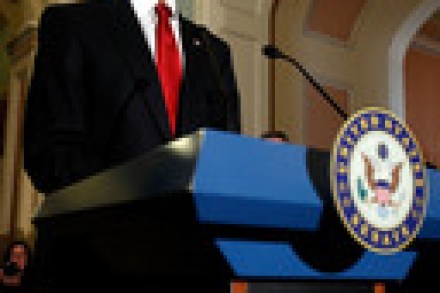
One of the biggest dangers for the Republican Party right now is that it becomes a rump, a regional party. So, it is hugely encouraging that the newly elected head of the Republican National Committee, the titular leader of the party, is from the Democratic voting, mid-Atlantic state of Maryland. The Republicans will have to change if they want to win nationally again. The voting coalition that they use to rely on has both fractured and lost demographic weight. Michael Steele (pictured), the new RNC head, seems to have grasped this better than most in the party. When he ran for the Senate from Maryland in 2006, he shaped an effective message and actively reached out to non-traditional Republican voters.

The first Brown to sack Mandelson rumour

Ben Brogan’s piece in the Mail today about a possible reshuffle in June after the local and European elections which would see Alistair Darling and Jacqui Smith moved from their current posts, contains the first report of a rumour that Peter Mandelson might be sacked. It ends with this line: “There are also fears that the number of ministers being targeted could be expanded in coming months to include Peter Mandelson.” Realistically, I don’t think Brown will, or could, drop Mandelson. But it says something about the mood within the Labour party that these rumours are even circulating.  PS The cui bono on this story seems pretty obvious.

The blame game | 31 January 2009

Matthew Parris’s column in The Times today contains this excellent advice for the Tories: “The Tory task is to move the angry inquiry forward from the geography of origin to the geography of recuperation. Which economies will heal first? Which fastest? And when chaos recedes and a weakened West picks itself up again, who will be shakiest on their legs? As we move into the new century's second decade, will Britain have moved up or down the international economic league? If, as I believe, the answer is sharply down, the Tories must be merciless in pinning the collapse on the decade that went before; and on the man in charge of the economy throughout - the present Prime Minister.

The Tories are right to be thinking about how to buy time once they are in government

The incoming Tory government are going to inherit a mighty mess. Not only will the economy still be in bad shape but the military will have been running hot for seven years without adequate funding, the country will be on the verge of an energy crisis as soon as the economy starts growing again and all the problems of the broken society will still exist. The Tories will have to hit the ground running if they are going to have a hope of a successful first term. It is extremely unlikely that the Tories will have a Blair-style honeymoon; the situation that they will inherit is too dire and there is not the same enthusiasm for Cameron that there was for Blair.

The government doesn’t know what to do about the Muslim Council of Britain’s boycott of Holocaust Memorial Day

On Monday, The Guardian reported that the Muslim Council of Britain has boycotted the “Holocaust Memorial Day commemoration in protest at the Israeli offensive in Gaza this month”. This was a big deal as the government had made clear that attendance at Holocaust Memorial Day was a “significant factor” in the government’s view as to whether the MCB had become more moderate or not. On Monday lunchtime, I called the Department of Communities and Local Government and asked for a comment. On Tuesday morning, I received this statement: "Officials here are due to meet representatives of the Muslim Council of Britain in the coming days. At that meeting the issue of their non attendance at the Holocaust Memorial Day will be discussed.

The Illinois Senate tries to end the embarrassment, convicts Blagojevich

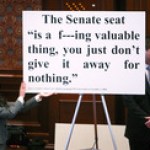
Rod Blagojevich, the Illinois governor accused of trying to auction off Barack Obama’s old Senate seat, has been convicted in a unanimous vote of the Illinois Senate in his impeachment trial. Blagojevich has come up with a string of increasingly bizarre and amusing defences, for more see Alex’s post from last Friday, and his closing argument (video here) was no disappointment on this front.

Heathrow hilarity

The contortions that Labour and its supporters are going through over the third runway at Heathrow are increasingly comic. The attraction of backing a third runway was all political to Brown central. It hoped that it would show Labour as pro-business, prepared to take the ‘tough decisions’ that the Tories duck and, above all, split the Tories between the greens and the ‘pro-business’ wing. But this has all blown up in Brown’s face which, perhaps, was why he was reportedly so emotional as he tried to persuade Labour rebels to back the measure. It failed to factor in that those who oppose the third runway do so with such ferocity that it is one of the key things that will determine their vote.

Budget Holyrood

Alex has an intriguing post on the failure of the SNP to get its budget through at Holyrood. Here’s his view on what will happen next: “Will there be an election? I hae ma doots as we say up here, not least because I doubt any of the parties can truly afford a fresh campaign right now. But having tried an failed Salmond and Swinney are now in a markedly weaker position. If the opposition parties have any sense they will increase their demands, knowing that the Nats are playing a weak hand. It's always tough when your bluff is called. For all that the Nats blame the Greens for their (admittedly surprising) behaviour, it's hard to see the electorate being terribly impressed by the idea of fresh elections.

Cruddas on Cameron’s progress

Tory sallies into Labour territory on fairness and progress, two words that the left have long taken for granted as their own, are beginning to worry folk in the Labour party if Jon Cruddas’s interview in The Independent is anything to go by. Cruddas, who was at the launch of Phillip Blond’s Progressive Conservatism Project, says:   "It is very, very sophisticated, very worrying for us," he said. "It is not just about policy but language. We [Labour] still have a one-dimensional take on Cameron. I think Cameron is doing well.” Cruddas confirms that the mood in the Parliamentary Labour Party is increasingly grim:"People were wildly optimistic before Christmas; they are wildly pessimistic now".

A cry for help | 29 January 2009

Sky News’s John Craig has a must-read on reports of Gordon Brown’s behaviour before the vote on the third runway for Heathrow which Labour won narrowly: ‘Labour MPs claim a "tearful and dewy eyed" Prime Minister called the Labour waverers into his Commons office one by one and pleaded with them to back the Government. "If we lose this vote it will de-stabilise the Government and de-stabilise the markets," said the embattled Prime Minister, according to one MP who voted with the Tories despite the emotional appeal.’ If Brown did get this emotional over the Heathrow vote, one dreads to think how he responded to the IMF's report saying that Britain would be the country hit hardest by the recession.

The next American economy

Obama’s $819 billion stimulus package has just passed the House, albeit without a single Republican vote. But too often lost from the conservation about the stimulus and how effective it will be is what the US economy will, and should, look like once this storm has been weathered. In short, where will the growth come from? David Leonhardt has a fantastic piece in the upcoming New York Times magazine looking at this question. His argument is that education is the absolute key to this question. As he notes: “The median male worker is roughly as educated as he was 30 years ago and makes roughly the same in hourly pay. The median female worker is far more educated than she was 30 years ago and makes 30 percent more than she did then.