James Forsyth

James Forsyth

James Forsyth is former political editor of The Spectator.

Petty Brown tried to bar Cameron from Thatcher dinner at No 10

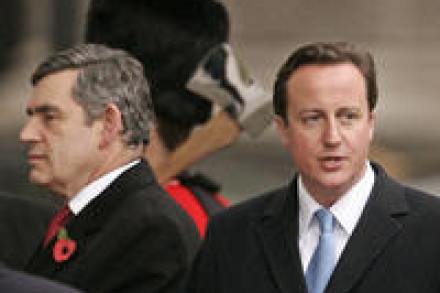
Matt’s column tomorrow in The Sunday Telegraph contains this scoop: “Later this month, Gordon Brown is hosting a dinner to mark the unveiling of a new portrait of Margaret Thatcher. Naturally, No 10 asked the Iron Lady for the names of guests she wanted to attend. No less naturally, it was suggested by her office that the present Conservative leader should be invited. But when Downing Street heard that David Cameron was on the list, there was, I gather, a preposterous attempt to strike him off.” This really is pathetic. Indeed, judging by the qualifications coming out of Downing Street tonight they realise just how small this makes the Prime Minister look. Downing Street is trying to distance itself from the story. But senior Tories are backing it up.
A costly victory

The stimulus package is now ready to be signed into law by the President. On the one hand, this is a pretty major legislative achievement for Obama within the first month of his administration. On the other, Obama has taken a few knocks in the process and has lost a decent chunk of his reputation for being able to bring the two parties together and for transparency. In the House, in both votes not a single Republican voted for it. In the Senate, only three Republicans crossed party lines; the post-conference version of the bill only passed the Senate with the minimum 60 votes. In the meantime, Obama saw his Republican nominee for Commerce Secretary withdraw under political pressure. For good or ill, Obama and the Democrats own the stimulus.

Burns scolds Brown’s regulatory system

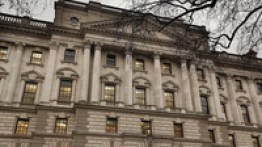
Tucked away on page six of The Guardian is a hugely important story that somehow everyone seems to have missed. Patrick Wintour writes that Terry Burns, the Perm Sec at the Treasury when Brown arrived, gave evidence this week to the Economic Affairs committee of the House of Lords and made clear that the flaws in the tripartite regulatory structure that Brown introduced had led to problems in the banking sector not being spotted. Wintour writes: “Burns said the tripartite structure covering the Bank of England, the Treasury and the Financial Services Authority, had not properly overlapped - with the result that failed business models in British banking were not spotted.

Labour is heading back to the dark days of August

James Kirkup and Andrew Porter’s guide to the moods of Gordon Brown, the Cabinet and Labour MPs is absolutely essential reading. They write that Labour MPs are increasingly convinced that the next election is lost, cabinet is becoming increasingly fractious and that Brown is heading back to his dark place, he has apparently had to give up exercising on a treadmill because of the strain it puts on his knees. The apology debate is still raging according to Kirkup and Porter: “The truth is, nobody saw this coming and we all got it wrong, Gordon included," says one minister close to Downing Street. "He's going to have to level with people and say so, or we'll never be listened to.

Balls’ ambition

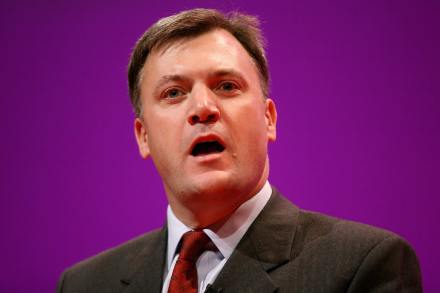
Everyone in Westminster expects that when there is a Labour leadership election, Ed Balls will stand. It is tempting to see Balls as a bit of a joke: he’s bad on TV, has been comprehensively out manoeuvred in his brief by Michael Gove and has had a fair few photo-op disasters, the short shorts snap still causes much amusement in the village. But as John Rentoul points out in his profile of Balls, his positioning has been astute—he is always slightly to the left of the New Labour consensus. Although, the economic disaster has, to put it mildly, rather soured Ball’s pitch for the leadership Rentoul’s profile is worth reading in full.

Jacqui Smith: why didn’t we think it was a bigger story?

When I read the scoop about Jacqui Smith’s housing arrangements in The Mail on Sunday my first reaction wasn’t shock or outrage, but a general feeling of there’s another one. Several other stories struck me—and other Coffee House contributors—as more interesting. As the day went on without any comment on it from us, commenters started asking why we hadn’t blogged on it. That afternoon, I added this PS to a post on the News of the World’s scoop about unemployment being expected to hit 3.5 million: “Some Coffee Housers have asked why we haven’t blogged on Jacqui Smith's housing arrangements.

The importance of behavioural economics

David Brooks is the finest American political commentator. But he dedicates one of his two columns a week to brain science. Brain science is, even to someone like me who gladly gave up science at 16, absolutely fascinating. It also has a real relevance to charting a way out of this current crisis. Brooks’ column today is a look back at why the economy might not recover because of social factors. His focus is on the US, but his insights apply equally well to this country. Here’s the key section of it: “During 2010, the economic decline abated, but the recovery did not arrive. There were a few false dawns, and stagnation. The problem was this: The policy makers knew how to pull economic levers, but they did not know how to use those levers to affect social psychology.

Lincoln’s words are his memorial

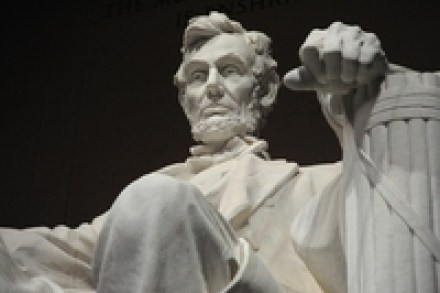
The view from the top of the steps on the Lincoln Memorial on in Washington, DC is one of the finest views in the American capital. You look across the reflecting pool, down the national mall to the Washington Monument and to the Capitol beyond. Standing there, at the place where Martin Luther King delivered his ‘I have a dream' speech, you can almost feel the arc of American history bending towards justice. This tilt would not have been possible without Lincoln’s determination to win the Civil War and his realisation as the war continued that slavery could not be contained, as he had argued in his first inaugural, but must be destroyed.

The post-election dynamics

Shmuel Rosner has an interesting post up at Commentary about the coalition negotiations in Israel following the elections. Rosner argues that there’s no point following then hour by hour developments during the next few days as all that is going to come out is spin and bluff and counter-bluff.  The key dynamics to watch, he says, are that Israeli voters want a unity government and that Netanyahu does not want to be on the left of his own coalition. As Rosner writes: “Don’t buy the smiling faces of Netanyahu and the leaders of right wing parties that he is now courting. Sitting with them in a coalition — in which they will have the final say — is Netanyahu’s worst nightmare.

Far more than shallow speech

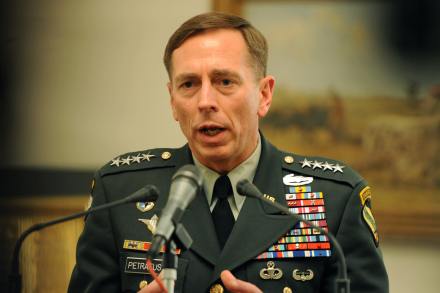
In debates about Afghanistan, and previously Iraq, people like to puff themselves up and declare that ‘there is no military solution’ and that ‘we must talk to those who are prepared to give up violence’. They then rest back in their chairs and wait for everyone to applaud their wisdom. But in fact they have merely made two obvious and shallow statements. In his speech to the Munich Security Conference, General Petraeus pointed out the flip side to these statements of the obvious. On the first point, while there is not a purely military solution there can be no solution without the military. In these kind of conflict / post-conflict situations only the military can provide security. Without security, no sustainable progress will ever be made.

Are they trying to teach Gordon how to say sorry?

The apologies, however hedged, from the disgraced bankers at today’s Treasury Select Committee hearing, highlighted that there has been no apology from the Prime Minister for his role in all this. Indeed, Brown’s consistent refusal to acknowledge his errors has diminished whatever was left of his Prime Ministerial authority. Just remember that Today Programme interview where Brown claimed that, with the benefit of hindsight, the one thing he wished he’d done differently was keep a closer eye on the American sub-prime market. But Martin Bright reports that Downing Street is considering a change of tack: “word reaches The Bright Stuff that the man who has never knowingly apologised for anything is preparing his very own "mea culpa".

Israeli elections: Kadima set to be the largest party but Netanyahu appears more likely to be able to form a government

The exit polls all suggest that Kadima will, by a small margin, win the most seats in the Knesset. However, with Likud coming a close second and Labor appearing to have been forced into fourth by the unsavoury Yisrael Beitenu party of Avigdor Lieberman, Netanyahu appears to have a better chance of forming a government. But remember these are exit polls and so much could change. Also, the course of coalition negotiations are notoriously hard to predict.

A sign of the times: Salter standing down

News reaches Coffee House that Martin Salter, Labour MP for Reading West, is standing down at the next election. Salter’s seat is, according to UK Polling Report, the 107th Tory target and thus a seat the Tories need to win to have an overall majority in the Commons. PS Salter standing down was not expected. Indeed, he rebelled for the first time since Brown became PM in the recent third runway vote.

The bankers should learn from Profumo

Watching the bankers’ appearance before the Treasury Select Committee today, it struck me that it is going to take more than an apology that is rapidly hedged as the proceedings go on to assuage public anger. These bankers have become fantastically rich from doing their jobs in a way that led to their banks being dashed against the rocks when the current storm blew in and people who earn far less money than them now find their taxes being used to bailout and prop up the institutions that these men were so handsomely rewarded for running.

The bankers say sorry

The four bank execs summoned by the Treasury Select Committee hearing have apologised. Although, I suspect that the impact of their apologies has been rather undermined by Sir Fred Goodwin claiming that big bonuses were a 'source of angst' for British banks!

Playing politics with injured veterans

Derek Draper has just posted a remarkably crass item on LabourList. Headlined ‘A challenge to Dave: Get your councillors to help Joe Townsend NOW’, he demands that Cameron get the Tory controlled Wealden District Council to reverse their decision and allow planning permission for a bungalow to be built for Joe Townsend, a Marine who lost both legs serving his country in Afghanistan. I think we can all agree that permission should be granted for this bungalow, it is the least that can be done for someone who has sacrificed so much for us. Indeed, both David Cameron and Gordon Brown have already called on the council to change tack. Draper writes: “David Cameron had sent a message of support. BUT Cameron can do more than support this.

Going down the tube

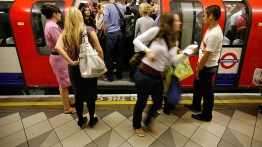
Those of us who have to travel by Tube every morning are wearingly familiar with the announcement that lists the bits of the tube that aren’t working—this morning, it was that the Circle Line was suspended because of a signal failure at South Ken—and ends with the self-congratulatory announcement that ‘a good service is operating on all other lines’, some days one is left wondering what other lines are there. What makes the poor state of the Tube all the more galling is the crazy sums that the bureaucrats of Transport for London are paid. As Andrew Gilligan writes in the Standard today: “One hundred and twenty-three top TfL managers, we report, earned more than £100,000 last year.

The politics of the surge

Tom Ricks’ series on the surge in The Washington Post continues with a riveting account of how David Petraeus beat back both a chief of Central Commander who wanted to return to the pre-surge tactics that had failed and Congressional Democrats who wanted to admit defeat. Ricks’ account shows Petraeus and his team to be almost as skilled at the art of politics as they are at counter-insurgency. When you consider that Admiral Fallon, the head of Central Command, wanted to halve the number of US combat forces in Iraq and downgrade the importance of security as a goal, you realise that the man above Petraeus in the chain of command was—essentially—prepared to lose.

When Cameron faced down Paxman

Reading Decca Aitkenhead’s profile of Jeremy Paxman in The Guardian today, I was reminded of David Cameron’s Newsnight interview back in November 2005. Cameron’s electrifying conference speech and his victory in the MP’s ballot had made him the prohibitive favourite to win the leadership. The Paxman interview, though, was widely regarded as the time when we would see if Cameron could take a heavyweight punch. Cameron turned in a superb performance (you can watch it here), one that sealed the leadership for him and established him as a heavyweight on the scene. He threw Paxman onto the defensive, telling him, “This is the trouble with these interviews, Jeremy.