James Forsyth

James Forsyth

James Forsyth is former political editor of The Spectator.

Bagehot’s blog

Bagehot, The Economist’s political columnist, has started a blog which promises to be well worth reading. In one of his early entries, Bagehot wonders about the effect of the recession on non-economic areas of policy and life. It seems almost inevitable that the lack of money and the mounting public debt are going to lead to a restructuring of the way public services are provided. The head of the Audit Commission warned on the Today programme this morning, that there are going to have to be “very substantial expenditure cuts” once the economy begins to recover.  He said that these cuts would have to be “substantially” larger than £30 billion.  Interestingly, he also said that he did not expect the economic recovery to start until mid 2010.
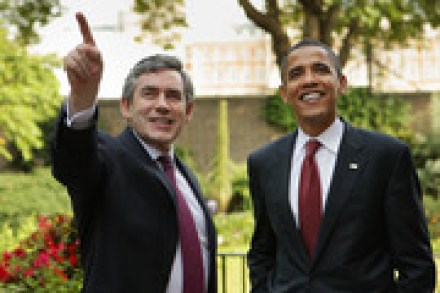
What can Brown get from the Obama meeting?

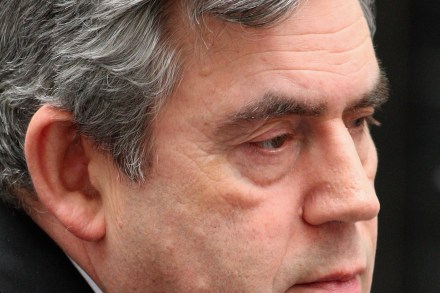
It is an achievement for Gordon Brown to be the first European leader to visit the Obama White House. The invitation to the Prime Minister to address a joint session of Congress next week is also impressive. One imagines that these scenes of Brown on the world stage will, at least temporarily, help his ratings at home. But Brown appears to be hoping for much more from that from the visit. As Tom Baldwin writes in The Times today: “While Mr Brown does not expect any immediate improvement in his domestic fortunes, a seasoned party strategist said that the trip represented his “best — if not last — chance” of holding power at an election next year.

Good banking needs a bad bank

The editorial page of The Wall Street Journal Europe rips into the Asset Protection Scheme the government announced yesterday: “It's little surprise that U.K. financials rallied yesterday on the news that the British state will guarantee more than £500 billion of the banks' toxic assets. It's like getting car insurance after having crashed the vehicle into a wall. The "Asset Protection Scheme" is a great relief for everyone around -- shareholders, managements, creditors -- except for the people who share no responsibility for the mess: taxpayers. In a sign of how bad markets believe this deal will be for taxpayers, prices for U.K. government bond futures initially slid more than a full point on Thursday.

California Dreamin’

Fraser’s piece in the magazine this week on how California is inspiring the Tories is well worth reading. Fraser makes the point that the Tories are attracted to California because family friendly policies and dynamic businesses go together there. The important thing to appreciate is that these businesses are family friendly not because of regulation but because this is the way to attract the best talent and thus to maximise the company’s profitability. On one trip to California a couple of years back to visit a friend who was at Stanford business school, I was struck by how Google was regarded as the place to work by the student there not because it offered better salary or stock options but because of the maternity and paternity leave and childcare options it offered.

An embarrassment for the Prime Minister

The Standards and Privileges Committee has now reported on the complaint against Gordon Brown and it has concluded that Brown did breach the rules, albeit inadvertently: “We conclude that Mr Brown should not have sub-let part of his accommodation paid for from Parliamentary allowances. However, neither Mr Brown nor the Labour Party derived any financial benefit from this arrangement and there was no intention to deceive. We accept that Mr Brown's breach of the rules of the House was inadvertent and that he took steps to rectify it as soon as it was drawn to his attention. Mr Brown has apologised and in our view no further action is necessary.

The Iranian nuclear problem will not wait

Coalition negotiations are ongoing in Israel and so you’d expect them to be the main story for the media there. But every time I go to Haaretz’s site or that of the Jerusalem Post, the top story is about Iran and its nuclear programme. Israel is acutely aware of the threat it faces. The more time passes without the United Nations or an ad-hoc alliance taking serious action to try and deter Iran from going nuclear, the more Israel will feel that it will have to deal with this threat itself. That feeling must only have increased with Obama’s failure to mention Iran in his speech last night and the delay in rolling out the new administration’s Iran policy.

Jindal stumbled last night but he’ll be back on his feet soon enough

Bobby Jindal’s response to Barack Obama’s speech last night flopped. In terms of content it fell back far too often on simplistic anti-government platitudes and did not offer anywhere near enough of an alternative vision for how to chart a course out of this crisis. But the content was not its biggest problem, the delivery was. It was far too infomercial-esque. Some commenters on my earlier post on Jindal, in which I tipped him to be the next Republican president, are rushing to say that this proves that Jindal is overrated, that he’ll never make it on the national stage etc. But it is worth remembering that Bill Clinton’s debut on the national stage at the 1988 Democratic Convention was even more of a disaster.

Lives touched by tragedy

The speeches by Gordon Brown, William Hague and Vince Cable in the Commons just now were moving proof that there are times when Westminster can set party politics to one side. Watching it one couldn’t help but reflect on how many of our national leaders’ lives have been touched by tragedy. Brown and Cameron have both suffered the agony of losing a child, Vince Cable’s wife died from cancer. It is often said that politicians do not know how the rest of the country live. But fate has dictated that Brown, Cameron and Cable have had to endure things that the vast majority of us will never have to.

The British civil war in Afghanistan

Today’s splash in The Independent about British citizens attacking the British military in Afghanistan is yet another reminder of the challenges we as a county face from Islamic extremism. The fact that these people choose to fight with the Taliban, proponents of the most repressive form of Islam, against the military of their liberal democratic homeland sums up the problem we face. The Independent reports that the number of British voices being picked up by ground and air surveillance in Afghanistan has increased in recent months. As one Army officer tells the paper, "We are now involved in a kind of surreal mini-British civil war a few thousand miles away".

Who Labour MPs would put in their top team

Last week I noted that if Labour returned to opposition, the Parliamentary Labour Party would elect the shadow Cabinet. Politics Home has now asked their panel of Westminster experts who they think will be voted in--and out--by the PLP. The results, which they’ve kindly advanced to me, make for interesting reading. The majority of the panel predict that Jon Cruddas will stroll in if he stands. Across the ideological spectrum, there’s a sense that Tony McNulty and Liam Byrne are also likely to make the cut.

Obama heads to The Hill

 Tonight President Obama addresses a join session of Congress in a televised, prime-time address. It will be in style, if not title, just like a State of the Union speech. So expect special guests—notably Captain Sullenberger who landed that plane in the Hudson, lots of glad-handing as Obama walks to the Speaker’s chair and wave after wave of standing ovations. One thing to watch for is how much the Republicans applaud the President. The unified Republican opposition to the stimulus in the House and the fact that only three Republicans crossed over to vote for it in the Senate has come to define the Republicans.

How revealing are Madoff’s quirks?

I must admit to being rather fascinated by the details about the lives of the fraudsters who are being caught out now that the financial tide has gone out. New York Magazine has a set of pieces on Bernie Madoff this week that not only suggest he was slightly relieved to be caught—when the FBI told him they were there to see if there was an innocent explanation for everything he immediately said ‘There’s no innocent explanation’—but also highlight his odd side. Consider his loathing of curves: “Bernie—whose office is in the famously ovoid Lipstick Building—couldn’t bear curves. “He was paranoid about them,” says one employee.

A poll to undermine Brown’s authority

Today’s Guardian poll suggesting Labour would do better with someone other than Gordon at the helm is another blow to Brown. Realistically I can’t see Brown being replaced as Labour leader before the next election, there’s no stomach for the bloody struggle that it would take to prise Brown out of Downing Street and it is not obvious that anyone would actually improve Labour’s fortunes once installed in the job. But the idea that Brown is dragging down Labour’s numbers being splashed across the front page of The Guardian reduces Brown’s authority. It is harder for him to tell the Cabinet and the party that they have to listen to him on issues like the Post Office when he is seen as being part of the problem not the solution for Labour.

The next Republican president

Tomorrow night, Bobby Jindal, the governor of Louisiana, will give the Republican response to Barack Obama’s televised speech to a joint session of Congress. Jindal is the rising star of the Republican party. Only 37, Jindal is the governor of Louisiana having already been a Congressman and an assistant secretary at Health and Human Services in the Bush administration. He’s a fiscal and social conservative and is rapidly developing a deserved reputation for competent governance; just compare the state of Louisiana’s response to hurricanes Gustav and Katrina.

How Brown’s backtracking on school reform 

Ever since Gordon Brown became Prime Minister and Ed Balls Secretary of State for Children, Schools and Families, there has been a steady attempt to undermine the academies programme. Brown and Balls have set about rolling back the freedoms that the academies had been given and quietly bringing them back under the dead hand of the local education authorities. This letter (reprinted in full below) to Jim Knight, the Schools Minister, from the Independent Academies Association details just what the Brown government is trying to do and how pernicious it is.

Corporate criminals should be brought to book

There’s much I disagree with in Ken Macdonald’s piece in The Times today but he is right that the authorities’ attitude to corporate crime is disgracefully lax. As Macdonald writes: “In Britain, no one has any confidence that fraud in the banks will be prosecuted as crime. But it is absolutely critical to public confidence that it should be. If there was fraud in RBS or in any of the other failed banking institutions, if there was fraudulent misselling or corruption or any other criminal activity, it needs to be uncovered and dealt with. The alternative is the worst possible lesson for our national life. Do people believe this will happen?

The weakening of the New Labour coalition

As Martin says, the divide in the government right now is whether the right legislative response to the recession is to--in political shorthand-- ‘ease the burdens on business’ or ‘protect workers more’. Today’s splash in The Times about Peter Mandelson’s plan to postpone the plans for more generous maternity leave and tougher equalities legislation which Harriet Harman has been pushing for, and were announced in the Queen’s Speech in December, shows that this debate is live not theoretical. Stoking the tension is that everyone knows that, in the Labour leadership contest that would follow a defeat at the next election, those who are ‘on the side of workers’ will benefit.

The real number two at the White House

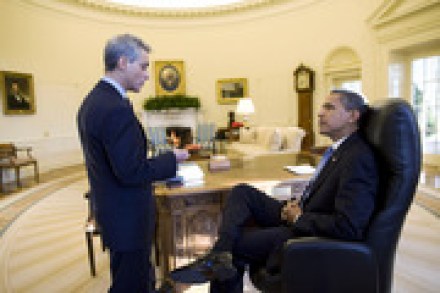
The Obama campaign was a no-drama operation. Partly this was a matter of the candidate’s temperament but it was also to create a contrast first with the drama-filled Clinton campaign that suffered from a surfeit of egos and then with the McCain campaign whose principal seemed, at times, to be almost addicted to the dramatic gesture. But the decision to bring in some of the most colourful figures in the Democratic Party into the administration has, though, rather changed things.  Take the hyper-competitive Rahm Emanuel, the former Clinton White House staffer—Josh Lyman in the West Wing is based on him—turned Congressman, who Obama drafted in to be his chief of staff. Ryan Lizza’s New Yorker profile of him paints a brilliant portrait of him.

I worry about the anti-politics mood our politicians are fostering  

Read pretty much any Sunday newspaper today and you’ll come across stories of politicians making expenses claim that, to put it mildly, stretch the spirit of the regulations. The Jacqui Smith story has prompted the press to go digging and they have come up with a lot of stuff. The MPs involved are not all from one party and so all this strengthens the public’s sense that they are all at it, that the political class is fundamentally corrupt. The tax-paying public, who in many cases are desperately worried about their own finances because of the recession, look at the gravy train which exists at local, national and European levels of government and are understandably disgusted. These are the circumstances that demagogues and extremists crave.

Clarke’s comments suggest the Tories are moving towards favouring a ‘bad bank’ 

Ken Clarke’s interview with Patrick Hennessy of The Sunday Telegraph is notable both for Clarke’s continuing message discipline and for his hint that the Tories are moving towards favouring a ‘bad bank’. When pressed on what he would do if David Cameron did call a referendum on Lisbon with the Tories calling for a no vote, Clarke replies:  “"If we have a referendum, I doubt that Central Office [Tory HQ] will be on the phone asking me to campaign on it. I think if the other campaign got hold of me I'd have to say I am not available." This answer gives almost nothing to anyone trying to write a Tory splits story.