James Forsyth

James Forsyth

James Forsyth is former political editor of The Spectator.

Emails show that Charlie Whelan was copied into Draper and McBride’s exchange about Red Rag

Here are some of the early emails exchanged between Damian McBride and Derek Draper about Red Rag (email addresses and phone numbers have been removed). Note who else is copied into the emails:  On 13 Jan 2009, at 18:34, "Damian McBride" wrote: Gents A few ideas I've been working on for Red Rag. For ease, I've written all the below as I'd write them for the site, but obviously Andrew will want to adapt for his own house style, length, etc. The first one is a solid investigative story, so may be a good one to use early. The other 3 are gossipy and mainly intended to destabilise the Tories. I'm not sure how to set up easy links in the copy of the text, so I've stuck in the full links below each bit of relevant text.

McBride’s self-destruction is a tonic for the Tories

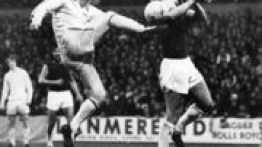
On Wednesday night I was in the Westminster Arms watching the football. Damian McBride was in there as well. Much to the chagrin of my drinking companions, his presence dominated the place. He swaggered around with total confidence. Whatever the polls and logic said, this was one Brown praetorian who gave no outward sign that he thought the game was up. You might not like what McBride did, but he was effective--think of the role that Billy Bremner played for Don Revie’s Leeds United--at least against Labour opponents. As Bagehot notes, McBride’s performance at last year’s Labour conference was brilliant. But he and the rest of the Brown team have never had the same kind of success against the Tories.

The Tory plan for victory

Today’s Telegraph piece on how the Tories plan to fight the next election is worth reading in full. But there are some points in it that deserve special attention. First, the Ashcroft marginal seats campaign is still delivering with the Tories enjoying a 14 point lead in the main marginals. Second, love-bombing the Lib Dems seems to have worked. There has been a swing of 15 percent from them to the Tories since the 2005 election. Third, the Tories are confident that a desire to kick Labour out will be enough to motivate the base. As one Tory strategist tells the paper, "There is no point in focussing on immigration, Europe and other traditional right-wing areas as it will no longer attract voters as they are already on side. But it might put some voters off.

What could bring down McBride

Just a quick follow up on Pete’s excellent post on Damiengate, there are two potential resignation issues here. The first is the one that appears in the Telegraph today, the use of a Number 10 email account for a partisan political purpose. Downing Street has conceded this point and appears confident that it can ride it out. The Brown spin team is also keen to separate it from the second one which is that, from what I’ve heard, the suggested attacks go way beyond the usual party political rough and tumble. Word is that they contain stuff that is genuinely shocking. As Martin says, tribalism is back in the Labour party and the Cameron Osborne combination seems to have brought out some of its members’ most unpleasant prejudices.

Are texting and emailing making us incapable of normal human interaction?

In his New Yorker blog, George Packer relays a thought-provoking conversation with his roofer: “It turned out that cell phones had become a major headache in his work. Customers called him all the time, expecting him to hear every little complaint even while he was wrestling with a roof hatch. Meanwhile, they were more and more unreliable, not answering their phones, missing scheduled appointments. Even worse: they had no common sense any more. They called him about a leak in the first-floor ceiling—two stories below the roof—without bothering to check the second-floor radiator, which he discovered to be standing in a pool of water. It had all begun in the last couple of years, and it was driving him and every other contractor he knew crazy.

Russia indicates it is ready to take a tougher line on Iran

It is encouraging that President Medvdev is prepared to concede to Obama that American “assessments have been more right than ours” about Iran’s nuclear programme. If Russian really is prepared to acknowledge (trust but verify and all that) that Iran is attempting to develop nuclear weapons it brings into play the prospect of far tougher UN sanctions on Iran. As an Obama administration source told Fox News, “We have laid the basis for much more severe consequences”. But time is running out, as the administration source conceded. Iran will reach a nuclear weapons capability within the next year or two. So, the diplomacy needs to be speeded up so we can see if anything short of military action can persuade the Iranians to give up their nuclear ambitions.

Richards’ law

In The Independent today, Steve Richards sets out a fundamental truth about public services: “In order to measure the effectiveness of big public institutions it is necessary to ask only two questions: To whom is the organisation accountable? To whom are its leaders accountable within the organisation? If the answers are clear, the organisation and its leadership will almost certainly be robust. But if the answers to those questions begin with the words, "Well it's all a bit complicated..." you know for certain that the organisation and its leaders are in trouble.” This ambiguity allows institutions to believe that they accountable only to themselves. As Steve says you can see this problem in the Civil Service, local government and the BBC—to name just a few places.

Is a 2009 election still a possibility?

Steve Richards reports in the New Statesman that Cabinet ministers are again talking about the prospect of an election this year not next. The thinking goes that if Labour clings on until the last minute they’ll lose so better to take the initiative and call an election as soon as they are within striking distance. One rumour doing the rounds in Westminster is that the Pre Budget Report in October will contain a second stimulus and Brown will then go to the country after that. But as Steve writes, “the dilemma for Brown is that, if he goes on to the bitter end, unlike Major, he is doomed to lose; and yet it is quite hard to envisage a period this year when the poll ratings would be remotely safe enough for him to call an election.

The productive and the unproductive

Camilla Cavendish’s column in The Times today contains a message that the right urgently needs to get across before the cuts debate kicks off in earnest: “There are two public sectors in Britain today: the “front line” that does jobs the public understands, often for low to middling wages, and the “back room” that is firmly on the gravy train. The back-room boys are using the front line as human shields in a battle for self-preservation.” This might be a bit simplistic but it contains a lot of truth and, politically, makes it far harder for the left to scream blue murder at any suggested cut. P.S.

Labour embraces the Norma Major strategy

Back in September 1996, the Tories sent Norma Major onto the campaign trail. John Major said that his wife had been his “secret weapon for the past 26 years" and declared “Norma has been accompanying me on tours like this for a very long time. But she now proposes to do that a good deal more in the future. I am delighted she is here. She is a very great asset to me first and then to the Conservative Party as a whole." The thinking was that, while the country might be bored of the Tory party and the Prime Minister, they would listen to his appealingly normal wife. The party did receive a couple of good days press from the move. But in truth, the decision to major on Norma was a demonstration just how desperate and badly out of ideas the party was.

Another blow to public confidence in the police

It is hard not to be shocked by this video of the police and Ian Tomlinson last week in London. The footage (after the jump) strongly indicates that Tomlinson was no threat to anyone or anything. He was just someone slowly going about their business. This incident will be yet another blow to public confidence in the police. There were clearly people demonstrating that day whose main intention was to start a violent confrontation with the police but, judging by this footage, there is no possible way that a reasonable person could think that Tomlinson’s behaviour suggested he was one of them.

Yet another Balls up | 7 April 2009

Nearly everyone would accept that education is the key to advancement in the globalised, knowledge economy and that now is the worst time in almost a generation to look for a job. So, it is a huge error for the government to now be telling sixth-form and colleges that there is a £60 million shortfall in funding. In the days before we became inured to governmental incompetence, this kind of mistake would have led to calls for ministerial resignations.

Three faltering steps

Steve Richards sets out Brown’s three-step strategy for the coming weeks in his Independent column: ‘The first is to link the G20 decisions to those that are made in Britain. Instead of suggesting that he is moving on to British politics as if it was a separate entity, he will seek to show that there is a direct connection. The attempt began yesterday with the meeting between Brown, Alistair Darling and senior figures from the Financial Services Authority to begin implementing some of the regulatory changes in Britain agreed by world leaders last week. Next, Brown knows that he needs to find a language that makes more sense of a crisis that is complex and distant as well as frighteningly immediate.

The hubristic science

There is a great piece by Harvey Mansfield in The Weekly Standard about economists and their role in the current crisis. It is hard not to agree with Mansfield’s contention that economists became far too confident about what they could achieve. As Mansfield writes: “The economists I know are generally, as individuals, sober and cautious, the most respectable of all professors and in their honesty and reliability representing the best in bourgeois virtue. But when they get together as economists, they give way to boyish irrational exuberance over the accomplishments and prospects of economics as a science.

A shock to Stanford’s system

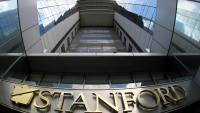
Allen Stanford, the Texan millionaire who English cricket leapt into bed with but is now expected to be indicted, has given a quite remarkable interview to ABC News. In it, he emotionally denies that he was running a ponzi scheme or laundering money for drug cartels. But it is this comment that caught my eye:   ‘He was forced to fly on a commercial plane for the first time in almost two decades after the government seized his fleet of six private jets. "They make you take your shoes off and everything, it's terrible," he complained about the airport security that apparently came as a surprise to him.’ One really does wonder how out of touch you have to be to not have heard that airport security got tightened up after 9/11.

No G20 bounce for Brown in Populus poll

A Populus poll out tonight suggests that Labour has not had any kind of sustained bounce from the G20. It has Labour steady at 30, the Tories up one to 43 and the Lib Dems down one to 18. This is, obviously, only one poll but, as Anthony Wells notes, it combined with the mild three point bounce in the YouGov poll it does suggest the G20 was not a game-changer. Interestingly, voters do give credit to the Prime Minister for how he handled the summit. 26 percent say they feel more positively towards him because of it and 11 percent say the opposite with the rest unchanged. What I suspect will make the headlines, though, (it is what The Times has led on) is the fact that two thirds of voters think that all or a majority of MPs are fiddling the expenses' system.

Career-ending receipts

Over at Boulton and Co, Joey Jones points out that many in Westminster think that the publications of the 2005 to 2008 expense receipts will be career-ending for some MPs. A senior Tory MP tells Jones that six or so will have to step down because of it. The other day a campaigner involved in this issue, remarked to me that he thought the number who would have their careers effectively ended would be far higher. He was speculating about 40 or so MPs choosing not to stand at the next election because of the backlash that will follow publication. The word is that the MPs discredited by disclosure will be spread across both parties. The Tories will find their own sleaze in the headline again. There is, though, a sliver lining, for Cameron.

The scale of the problem

Today’s IFS briefing sets out what needs to be done if the Budget is to be back balance by in 2015-16: “For £39 billion to be raised without any further tax-raising measures, growth in total public spending over this period would need to be reduced by 1.1 percentage points a year, i.e. there would need to be a five-year real freeze in total public spending. Because of rising real spending on debt interest payments, tax credits and social security benefits, this would require real cuts in most other areas of government spending, and even favoured areas such as health and education would undoubtedly see much lower spending growth than they have received in recent years.