James Forsyth

James Forsyth

James Forsyth is former political editor of The Spectator.

The European Court of Human Rights is a threat to British law that must be dealt with

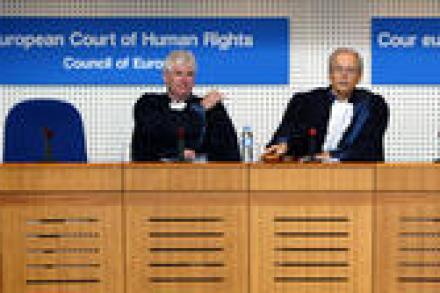
The most underreported story of the past few weeks has been Lord Hoffmann’s attack on the European Court of Human Rights. Hoffmann, a senior Law Lord, declared in a lecture to the Judicial Studies Board that the court “has been unable to resist the temptation to aggrandise its jurisdiction and to impose uniform rules on Member States. It considers itself the equivalent of the Supreme Court of the United States, laying down a federal law of Europe.
The global temptation

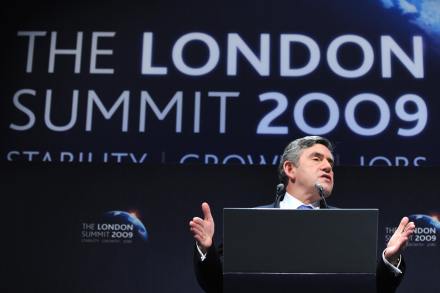
Whatever one thinks about the substance, the G20 summit was a presentational success for Brown. But as Andrew Rawnsley writes today, there is a danger for Brown if he decides to try and repeat this move: ‘After his summit high, the temptation for him will be to look for further kicks of this kind. He palpably enjoys being Chancellor of the World. He looks much more comfortable in his skin playing that part than he ever did when he was simply prime minister of Britain. How warm is the glow of international summitry; how cold is the chill of bad poll numbers, rising unemployment figures and angry voters. Global Chancellor plays to his strengths, feeds his self-confidence, garners approving headlines and wins the applause of his international peer group.

Not a good way to go

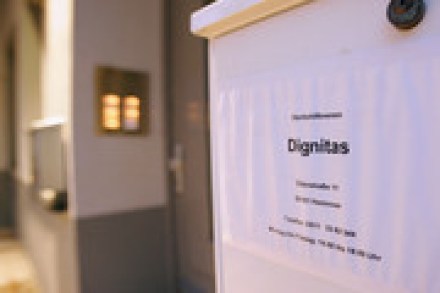
Lost amidst the hoopla of the G20 was the shocking admission from the founder and director of Diginitas that he was prepared to help the mentally ill die. This breaches the fundamental importance of the idea that any patient who chooses to have their life ended, and I’m dubious as to whether people should be able to choose to do this, must be of sound mind. Jenny McCartney neatly sums up the contradictions in the Dignitas argument and just how dangerous the slippery slope that we are sliding down if we legalise euthanasia is: “There is also a troubling contradiction at the heart of one of Mr Minelli's arguments, that he is perfectly entitled to facilitate the suicide of the mentally unwell.

Do they really expect us to believe this?

The weather is so fantastic today that it is hard to work up much outrage but this quote from an anonymous cabinet minister in today’s Telegraph about going to the IMF really is, as Iain Martin says, an insult to our collective intelligence: "Previously, a country would only go if they were in a very bad state. It was a bit like going to accident and emergency to get urgent help. This new facility will not be like that. It is a bit more like getting wellbeing care or even like going to a spa to recuperate." If this country does have to go to the IMF, it will be definitive proof of what a total disaster for Britain Brown’s time at both the Treasury and at No 10 has been.

Pakistani Taliban claim responsibility for upstate New York attack

This story is moving on the wires: “Pakistani Taliban commander Baitullah Mehsud claimed responsibility for the attack on an immigration services center in Binghamton, N.Y., the Press Trust of India reported Saturday. Mehsud said that a Pakistani and another man carried it out the attack, which left 14 people, including a man the police suspected of being the gunman, dead during a killing spree Friday.” But the principal gunman was a 42 year old Vietnamese immigrant who had recently lost his job which is hardly the usual profile of an Islamist terrorist.

Live by the spin, perish by the spin

Peter Oborne’s column this morning is magnificent, a thorough demolition of the more hyperbolic claims being made for the G20 agreement. But it is his final paragraphs on the consequences of Brown’s double counting and all the other statistical dodges that he perfected at the Treasury that is especially devastating: “The problem with this kind of duplicity is that you always get caught out in the end. So will be the case with the G20 summit. Gordon Brown has achieved brilliant headlines in the short term, and it is likely that Labour's rating in the polls will soon start to rise as a result. However, in the long term, very little has changed.

Blears takes on the MCB

Over the past month, there has been a dispute going on between Hazel Blears, who has been on the right side of the debate over Islamism, and the Muslim Council of Britain. Blears has had the government break off contact with the MCB because of Daud Abdullah, its deputy secretary general, signing the Istanbul declaration. The dispute has now moved to a new level with Daud Abdullah threatening legal action against Blears as Secretary of State. Blear’s department is not backing down, it has released this statement: “We have received correspondence from Dr Daud Abdullah’s solicitors.

Expenses and extremists

I’ve said it before, but I think it bears repeating: those MPs who stretch the rules and abuse the public’s trust when it comes to expenses are helping the BNP and other extremists. When the public hear about Jacqui Smith claiming for a bath plug, let alone porn films; Tony McNulty claiming taxpayer support for a second home just nine miles from his main residence; and the MP for Kensington and Chelsea—Sir Malcolm Rifkind—being reimbursed for flights to Edinburgh, it fuels the sentiment that the political class are living it up at everyone else’s expense. This plays right into the BNP’s narrative about a conspiracy against the white working man.

Darling picks an unfavourable metric

“Everything we do is about jobs,” Alistair Darling declared on The Today Programme this morning. In one sense this is the right thing to say politically, it is the prospect of losing their job and not been able to find another one that worries people most in a recession. Indeed, after the Democrats had polled and focus-grouped how best to sell their stimulus plan, they moved to a message almost solely about the jobs it would save and create. But on another level, Darling has picked the worst metric for the government to be judged on. Unemployment is a lagging indicator and the Department for Work and Pensions predicts that it will peak at 3.5 million in October 2010.  If the electorate judge this government by what it does about jobs, it will not judge it favourably.

Should Boris be answerable to a Commons select committee?

Boris’s evident frustration with the House of Commons’ Transport Select Committee (footage above) is making waves. Yesterday in Parliament devoted about a quarter of the programme to it today, and Martin Bright writes that: “Walking out of a select committee hearing (however tedious it is for the Mayor of London to be asked awkward questions about the job he is doing) is just unacceptable.” But I fail to see why the London Mayor should be answerable to a Commons Select Committee for London Transport? The Mayor of London is elected by the people of London and should be held accountable both by them and the Assembly Members that they elect, not a Committee chaired by the MP for Liverpool Riverside.

Is this Brown’s new ‘PBR moment’?

In the PBR, the government predicted that the British economy would start growing again by the third quarter of this year. Brown and Darling have both subsequently tried to put some wiggle room into this pledge, which now they seem almost certain to fail to meet. I wonder if this prediction from Brown today, reported by the Washington Post, will come back to haunt him in the same way: "Together, these actions give us confidence that the global economy can return to trend growth even faster than the International Monetary Fund is predicting," Brown said. The IMF is predicting that the global economy will start growing again in 2010.

Mandelson: Don’t throw the baby out with the bath water

Peter Mandelson’s op-ed in the Telegraph today makes an obvious but important point that is in danger of getting lost amidst all the talk of new settlements and a new capitalism: “In the rush to build a new capitalism, we need to preserve what worked from the old. Politicians need to agree not just what failed to work over the last decade, but what worked well. The increasing retreat of economic nationalism in the 20th century and the growing reach of open markets fall squarely into that category.” Say what you like about Mandelson, but his commitment to free trade and opening up markets is admirable.

The consequences of Iran going nuclear

Alex flags up Jeffrey Goldberg’s fascinating interview with Benjamin Netanyahu. Like Alex, I wouldn’t have voted for Netanyahu. If I was an Israeli, my preference would have been for Tzipi Livni’s Kadima. But I don’t think Netanyahu’s strategic analysis of the consequences of Iran going nuclear can be easily dismissed: “Several bad results would emanate from this single development. First, Iran’s militant proxies would be able to fire rockets and engage in other terror activities while enjoying a nuclear umbrella. This raises the stakes of any confrontation that they’d force on Israel. Instead of being a local event, however painful, it becomes a global one.

Almost as bad as the Region One DVDs…

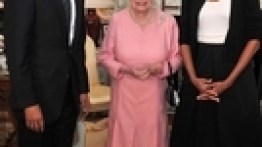
After Obama’s embarrassingly bad gift to Gordon Brown, we all assumed that the Obamas would be putting a bit more thought into their presents from now on. Indeed, when Robert Gibbs, Obama’s press man, was asked what the Queen would be getting in the pre-trip press briefing, he replied: “We don't want to give away all our good news on the briefing call.” So, what did the Obamas give the Queen? An iPod with footage of her 2007 visit to the US loaded on to it. This is hardly a gift that suggests a huge amount of thought especially as it is public knowledge that the Queen already has one. Now, in the grand scheme of things this isn't that important.

Clegg’s Obama regret?

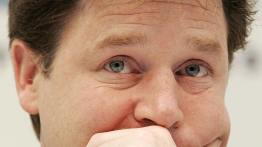
There’s a hilarious item in Richard Kay’s diary today about Nick Clegg—and it isn’t an April Fool. Here are the key quotes: "'I am really annoyed,' [Clegg] told me. 'As it was not a state visit I understood I wouldn't get to see [Obama]. But when I found out Obama was meeting the Queen and David Cameron I got on the phone to David Miliband to ask him what was going on. 'Frankly, it doesn't look good for Cameron to see him and for me not to.' … At one point he turned to Cable and told him: 'If I do get to go, I will give Obama a copy of your book.'" Clegg’s office says that Clegg did not speak to Richard Kay. They also emphatically deny that he has called Miliband to try and get in to see Obama.

Exploiting divides

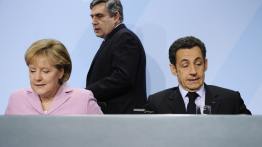
Listening to the Today Programme this morning I had a flashback to the run up to the Iraq war. I wondered if Sarkozy’s radio interview declaring that he was so unhappy with the options on the table that he might walk out was the equivalent of Jacque Chirac’s declaration on French TV that there were no circumstances under which he would vote for a second resolution on Iraq; that this would be the cue for Labour going on offence and blaming the French for everything. Obviously, Brown doesn’t have a Commons vote to win on the G20 and any attack on Sarkozy now would doom the summit. But if the summit is a damp squib, Brown must be tempted by the idea of indulging in some French-bashing to minimise.

In search of a broader shadow Cabinet

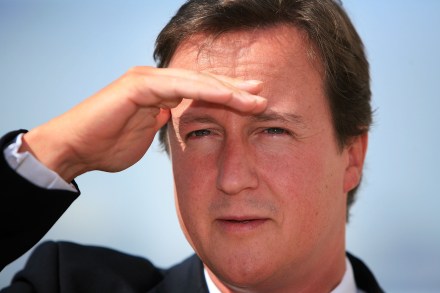
Steve Richards offers a rather back-handed compliment to the Tories in his column today, which Pete flagged up earlier. Steve writes: "The Shadow Cabinet is not bad (in terms of political talent it is the equal to Labour's in 1997)" I think this is right. The party’s decision to use Cameron for pretty much every significant announcement has obscured the fact that there are seven or so, admittedly not a huge number, members of the shadow Cabinet who would impress in most Cabinets. The problem for the leadership is that most of the members of the shadow Cabinet who are impressive are all quite similar in style and appeal. When Cameron has tried to broaden the range of the party’s principal spokesmen he has run into trouble.

There are good expenses as well as bad expenses

Reading the coverage of MP’s expenses in the papers today there is a tendency to view those MPs who are the cheapest as the best value. But think this isn’t necessarily true. Take the MP’s staffing allowance: I’d wager that those MPs who spend close to the full amount and don’t employ family members are actually better MPs both in terms of serving their constituents and holding the executive to account than those who don’t claim as much. Now, there are obviously expense claims which are being made that abuse the public’s trust. For instance, even if MPs should have a second home there is no justification for them being full of top-range furniture and gadgets paid for with the taxpayers’ money.

Hillary’s party of hawks inside the administration

On the Chris Matthews Show, David Ignatius set out the internal debate in the administration about Af-Pak policy: “Vice President Biden and the deputy secretary of state Jim Steinberg argued for this narrow focus on al-Qaeda, a kind of minimal definition of the US role. Richard Holbrooke, our new emissary to that part of the world, Hillary Clinton argued with General Petraeus for a broader nation-building effort. And as near as I can tell--we'll have to sort this out over the next week--the president came--leaned on the side of the Biden narrower definition, because I think he's nervous about getting in too deep, the very question you raised at the outset.

Out of control | 30 March 2009

New York Magazine has a great piece this week by the man who wrote the software that so many bankers used to turn mortgages into bonds. It’s a gripping read and best summed up by his mentor telling him that the process was like putting “chicken into the grinder and out comes sirloin”. This exchange with someone who parcelled up auto sub-prime loan illustrates how the banks hoped to make money out of sub-prime: “Who’s paying 16 percent for a car loan?” I asked. The current loan rate was then around 8 percent. “Oh, people who have defaulted on loans in the past. That’s why they’re called subprime,” he informed me. … “But if they defaulted on loans at 8, how can they ever pay back a loan at 16 percent?