James Forsyth

James Forsyth

James Forsyth is former political editor of The Spectator.

The perverse incentives of the benefits system

A new analysis by the charity Care shows how the benefits system penalises people for staying together.  As the Daily Mail notes in its report on it “A husband and wife with two children and earning nearly £35,000 a year between them – well above the average income – are now the biggest losers for keeping their family together. If they were to live apart they would be better off by £186 a week – an increase in the money they can spend of nearly 60 per cent.”  Care looked at 98 families with different incomes and numbers of children to see whether they would be better off apart or together. They found that 76 would have more money if they split.
Cameron has learned from Blair’s failure to use his mandate and to command Whitehall

James Forsyth reviews the week in politics The Tories go on holiday this summer knowing that it may be the last proper break they get for five years, or possibly longer. Once in government, taking the whole of August off won’t be a possibility for either ministers or special advisers: the pace of events won’t allow it. Indeed, one of the few things cheering people up on the Labour side at the moment is telling their Tory opposite numbers — or their spouses — just how crushing the workload in government is. No one in the Cameron circle wants to be publicly caught talking like the election is in the bag: complacent talk costs seats and all that.

US Commander in Afghanistan expected to ask for more troops

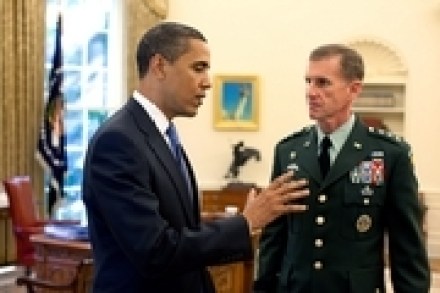
It seems that the new US Commander in Afghanistan, General McChrystal, and the Obama administration might be on a collision course. The Washington Post reports today that an advisory group McChrystal set up will say that the US needs more troops on the ground in Afghanistan, something Obama’s National Security Advisor has made it quite clear he opposes. To be sure, more US troops on the ground isn’t a silver bullet. There also needs to be an improvement in both the Afghan security forces and the quality of governance. But more troops are a necessary if not sufficient condition for progress. Only with more manpower can the US hope to be able to protect the main population centers.

What would FDR do

Peggy Noonan has a clever device in her column this week, she imagines what FDR and Nixon would tell their respective parties if they could come back to this earth and advise them. She has FDR offering Obama his take on healthcare, the first major issue on which Obama has ended up on the wrong side of public opinion. FDR points out to Obama that his problem is that if he, Obama, doesn’t get his bill he looks weak but if he does get it, it won’t work. Then he says:  “But I have an idea, and hear me out. You already have Medicare, a single-payer national health-care system for those 65 and older. Little Harry Truman was the first American to get a Medicare card in 1965, did you know that? LBJ hauled him in for a ceremony. Anyway, Americans like Medicare.

Westminster’s West Wing watching

Mark Lawson inveighs against the influence of the West Wing in his Guardian column today, arguing that the whole desire for TV debates between the party leaders comes from the British political class’s obsession with the show. Lawson is right that the show has had a huge influence on British politicos; on a small level, I think the whole fashion for pedeconferencing can be dated to the show’s arrival on our screens. But having been in the States for two campaigns worth of presidential debates, I suspect that their importance is slightly exaggerated. Reagan Carter moments are rare. Indeed, the Bush Kerry debates didn’t change the contours of the race and nor did the McCain Obama ones.

After 12 years of Labour, the poor pay more tax than the rich

My old friend Allister Heath has just sent me over some stats which show that the poor pay more of their income in tax than the rich. Allister reports that “the bottom fifth of earners pay 38.7 of their gross income in total tax, the next fifth 32.7 per cent, then 34.6 per cent, 35.4 per cent, falling to 34.9 per cent for the top fifth of higher-earning households.” The reason that the poor pay more in tax than the rich is that indirect taxes, especially sin-taxes, have been so jacked up under Labour. When only direct taxes are taken into account, the bottom fifth only pay 10.8 percent and the top fifth pay 24.9 percent of their gross income in tax.

Now Cameron is too committed to a TV debate to back-out, Brown should say yes to this potentially game-changing moment

The Tories are pushing the TV debate line. They’ve just press-released a letter from David Cameron to Gordon Brown asking for a clarification on Labour’s position on the issue. It is understandable that the Tories are keen to capitalise on what appears to be a split in Labour’s high command over whether Brown would be game or not. The Tories are also keen to highlight the Cameron Brown contrast, one that undoubtedly plays to their advantage. I also suspect that they rather hope that in a debate, Brown’s temper and his evident disdain for Cameron would boil over and drag Labour down even further. But if Brown has any political nous left, he’ll say yes to the debate. .

Mandelson’s strategies

If you haven’t already, do watch Peter Mandelson’s Newsnight interview with Nick Robinson from last night. In it, we see, Mandelson previewing what I expect will be two key Labour lines between now and the next election. First, Mandelson repeatedly criticises the Tories for, what he calls, their “undisguised glee” at the need for spending cuts. I suspect that this is how Labour will counter any attempt by the Tories to specify what cuts they would make. One party’s straight talk is another’s undisguised glee. Mandelson also kept stressing that Labour were “the underdogs”, “the insurgents”. Two reasons for him doing this spring to mind.

Glad we’ve cleared that up

Kevin Maguire, one of the few journalists to have remained loyal to Gordon Brown, takes on the talk that Brown throws mobiles phones when he gets angry in his column today: “For the record, Brown doesn't throw mobile phones. No. 10 officials say he's more of a sweeper, clearing tables with a swing of his arm, or pushing chairs across the floor, when the red mist comes down.” So, that’s alright then.

Calm down, calm down

The FT’s excellent Westminster Blog is getting rather excited by a leaked version of the Tory conference agenda which has the session on the economy featuring an ‘appearance by “Hammond and Osborne”. (Or perhaps, it is just entering into the spirit of the silly season) Jim Pickard connects this to the speculation that Osborne might not end up as Chancellor after all. But I suspect that the explanation is actually rather more mundane: Hammond will deliver remarks early in the session before Osborne winds it up with the keynote speech on the economy.   That Osborne will end up as Chancellor, is - to borrow a phrase from Daniel Finkelstein - “a nailed on certainty” barring some bizarre unforeseen event.

We need a bigger army

Successful counter-insurgency requires an army to be able to clear an area of insurgents and hold it. Only then will the population believe that it is safe both to resume something approaching normal life and — crucially — to co-operate against the insurgents, offering intelligence on their whereabouts and the like. If you try and do counter-insurgency with too few troops, you end up just playing whack-a-mole with them as the US did in pre-surge Iraq. The comments from Tim Radford, the commander of Task Force Helmand, that his force will be fully deployed holding an area of Helmand the size of the Isle of Wight and unable to take the offensive to the Taleban again without reinforcements is further proof that we need more boots on the ground in Afghanistan.

How can the Tory leadership solve its DD problem?

As Tim Montgomerie points out, David Davis’s article in The Times today, which Pete flagged up earlier, is just the latest in a string of public disagreements Davis has had with the Tory leadership. A couple of these disagreements seem to have been designed specifically to rock the boat; I’m thinking of the comments on grammar schools and today’s attack on a caricature of Tory policy on health records. The most telling thing about Davis’s article is the tone it is couched in.

Increased scrutiny means the Tories will not enjoy a long honeymoon

The next Conservative government will face an unprecedented level of scrutiny. The rise of the internet means that every statement made by David Cameron and the rest of the Shadow Cabinet is on-line; any back-sliding can be easily and instantly highlighted. By contrast, you can only find Tony Blair’s 1996 conference speech via subscription-only cutting services. Second, the internet has vastly reduced the barriers to entry for those groups that want to hold the government to account. This month’s Propsect reports that Will Straw intends to set up a blog called Left Foot Forward, modelled on the aggressively pro-Democrat Think Progress blog.  The idea would be to keep constant pressure on the Conservatives, denying them any sort of honeymoon.

Cameron’s agenda

In private, many Tories have whispered that the debt crisis is an opportunity to get the size of the state—which has grown faster here than in any other OECD country in recent years—back under control. Today on the Andrew Marr Show, David Cameron endorsed this analysis: “I think you know we mustn't see this effort at getting public spending down and getting the budget balance, we mustn't see it as some dreadful catastrophe. We've got to see it as a big opportunity to deliver public services in a different and a better way, and to totally reform our government and put people back in control.

The extremists are losing but the modernisers aren’t yet winning

Tom Friedman’s analysis of where the war on terror stands in the New York Times today is well worth reading. Here’s the crux of his argument: “it is obvious that everywhere they have won or seized power, the Islamists — in Iran, Pakistan, Afghanistan, Iraq, Algeria, Lebanon or Gaza — have overplayed their hands, dragged their societies into useless wars or engaged in nihilistic violence that today is producing a broad backlash from mainstream Muslims. ...

Labour’s referendum gambit won’t work with Brown in charge

Toby Helm reports in The Observer that Downing Street is considering the idea of holding a referendum on a move from first past the post to alternative vote on the same day as the general election. (Alan Johnson proposed a referendum on PR on the same day as the election a few months back). Downing Street’s thinking is that because Cameron would oppose the move, Labour could then portray him as a defender of the discredited political status quo, someone who doesn’t grasp the need for change. Leaving aside the propriety of introducing huge constitutional change just to discomfort the opposition, it strikes me that this strategy can only work with a fresh Labour leader.

Moore: Cameron is the best Tory opposition leader since Disraeli

Charles Moore pays David Cameron quite a compliment in his Telegraph column today, calling him the most skilful Tory leader of the opposition since Disraeli. This is high praise indeed, especially as it comes from Margaret Thatcher’s official biographer. But, as Charles goes on to say, there are still significant gaps on policy: “In 1978/9, [voters] would have known that the Tories promised something different on taxes, inflation, trade unions, and the Cold War. What do they know now? Nothing terrible, but also, nothing much. The vagueness of these impressions might not matter politically if in fact the Tories did know what they wanted to do.

The Tories have a chance to secure both momentum and a mandate over the summer

 Matthew Parris has some typically sound advice for the Tories in his column. He proposes that over the next few months:   "They should declare and emphasise as much as they dare of what may be unwelcome in their plans. If there are big and controversial ideas to float--as in health policy, for instance there surly must be--now, not in the angry confusion of an election campaign, is the time to get them out into the open."   Matthew is right that if the Tories are far more likely to succeed in government if they have prepared the electorate for what they are going to try and do. It will be far harder for the public sector unions and other vested interests to oppose the Tories if the party has a clear mandate for what it is doing.

Some good news from the Middle East

The polling of the Pew Global Attitudes Project is probably the most comprehensive guide we have to global public opinion. This year’s survey is mostly attracting headlines because of the way in which Obama has transformed views of the United States; 86 percent of Brits are now confident that the US President will do the right thing in world affairs compared to just 10 percent in the final year of the Bush presidency (see table below). But interestingly a majority in pretty much every country surveyed, including Britain, disapproves of his decision to send more troops to Afghanistan. However, what really stood out to me from the report was this finding: “There is as much support for the free market in the Middle East as there is in Western Europe.